


1


Kasım 2026 tarihinde güncellendi · popülerlik puanımıza göre sıralanmıştır (her bir eser için aramalar, ziyaretler ve siparişler) · 12 eser Barent Gael kataloğumuzda
Özetle
Peasants by a cottage with a horse stalling (1655), Barent Gael tarafından yapılan ve en çok ilgi çeken tablodur. Ardından göz, Pig Trade (1664) ve Rest Before the Tavern (1662) üzerine yoğunlaşır. Kataloğumuzdaki Barent Gael imzalı 12 eser arasından seçilen bu 11 eser; yapıldığı yıl, sergilendiği müze ve zamana meydan okuma nedenleriyle birlikte sunulan en ünlü ve her biri eşsiz orijinal çalışmalardır.


Bu sayfadaki tabloların çoğuna ev sahipliği yapan 6 müze.
| Müzeler | Şehir | Barent Gael Eserleri | Bu listedeki tablolar |
|---|---|---|---|
 Bavarian State Painting Collections |
Münih | 4 | Pig Trade, Rest Before the Tavern, Farmhouse |
 Museum Boijmans Van Beuningen |
Rotterdam | 2 | The Pancake Cook, Rest at a Village Inn |
 Museum Flehite |
Amersfoort | 1 | Riders and Infantry near a Smithy in a Village |
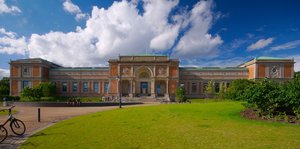 Statens Museum For Kunst |
Kopenhag | 1 | Horsemen by an Inn |
 Belçika Kraliyet Güzel Sanatlar Müzeleri |
Brüksel | 1 | The inn |
 National Gallery of Ireland |
Dublin | 1 | Landscape with Figures |
O dönemi tanımlayan orijinal eseri görmek için bir on yıl seçin.
Peasants by a cottage with a horse stalling (1655). Ardından Pig Trade (1664) ve Rest Before the Tavern (1662) geliyor.
25 yaşında: Peasants by a cottage with a horse stalling 1655 yılına aittir ve Barent Gael 1630 yılında doğmuştur.
Peasants by a cottage with a horse stalling, Pig Trade, Rest Before the Tavern, Riders and Infantry near a Smithy in a Village, Horsemen by an Inn, The Pancake Cook, Rest at a Village Inn, The inn, Farmhouse ve Landscape with Figures. Yukarıdaki sıralama, her birinin yapım yılını ve bulunduğu müzeyi göstermektedir.
Kataloğumuzda Barent Gael tarafından 1655 ile 1680 tarihleri arasında üretilmiş 12 eser bulunmaktadır.
Çoğunlukla Bavarian State Painting Collections (Münih), Museum Boijmans Van Beuningen (Rotterdam) ve Museum Flehite (Amersfoort) bünyesinde yer almaktadır. Yukarıdaki müze tablosu tümünü listelemektedir.
1660s döneminde: Bu sayfadaki 11 eserin 4 tanesi o dönemde yapılmıştır, bunların Pig Trade tanesi ise Pig Trade arasındadır.
Bu sayfadaki en eski eser Peasants by a cottage with a horse stalling (1655), en yeni eser ise The Pancake Cook (1680)'dir.
Pig Trade, Rest Before the Tavern ve Farmhouse: Bavarian State Painting Collections, Münih, bu sayfadaki eserlerden 4 tanesine ev sahipliği yapmaktadır.
In the bustling heart of the Dutch Golden Age, a period defined by a profound appreciation for the tangible world, Barent Gael emerged as a painter of quiet observation. Born in Haarlem, his life was deeply intertwined with the cultural pulse of the Netherlands. He was a man of particular temperament, possessed of a certain stubborn independence that occasionally put him at odds with those who sought his services. There is a story of a patron who arrived at his home for a viewing, only to be told by the artist that he was not at home. This refusal to bend to the whims of others followed him; when the same patron later met him to receive a finished work, Gael reportedly claimed he was once again not at home, leading the insulted man to refuse payment.
His artistic path was shaped by the rigorous traditions of the Haarlem school. While the archives do not provide a definitive record of his apprenticeship, he showed a strong influence from his Haarlem colleagues and the style of Philips Wouwerman. This connection is visible in his ability to compose scenes involving animals and travelers with a sense of structured harmony. He mastered the art of atmospheric perspective, layering subtle tones of color to create an illusion of vast, receding space. Through this method, distant hills and hazy horizons seem to breathe, pulling the spectator into the painted environment.
Gael’s work often focused on the serene beauty of the countryside, finding a sense of permanence in the mundane. He moved from the established artistic circles of Haarlem to the bustling streets of Amsterdam between 1661 and 1673, remaining in the latter city until his death. His canvases provide a window into a soul captivated by the simplicity of rural existence, from the soft glow of sunlight hitting a wayside inn to the delicate interplay of light and shadow upon a shepherd’s path.
His technical approach was marked by a deliberate and understated hand. Rather than relying on flamboyant strokes, he employed a restraint that allowed him to focus on the nuances of texture. His subjects often included:
Though his large oeuvre is sometimes described as somewhat monotonous, his dedication to realism and tonal balance remained constant. He was a prominent figure in the Haarlem Guild of St. Luke by 1642, and his presence in the artistic community was noted long after his most active years. His latest known dated painting dates to 1679, yet his work continues to offer a view into a world where time slows down, inviting the viewer to find meaning in the details of the natural landscape.
