Early Life & Artistic Foundations: From Illustration to Realism
American realism was a movement in art, music and literature that depicted contemporary social realities and the lives and everyday activities of ordinary people. The movement began in literature in the mid-19th century, and became an important tende...
William James Glackens, born in Philadelphia in 1870, embarked on a path that would fundamentally alter the course of American art. His early artistic inclinations weren’t directed towards grand historical narratives or idealized landscapes; instead, they found expression in the pragmatic world of newspaper illustration. This formative experience proved crucial, honing his observational skills and instilling a keen awareness of urban life – qualities that would later define his signature style. While formally trained at the Pennsylvania Academy of the Fine Arts under Thomas Anshutz, Glackens quickly grew restless with the academic constraints of the time. A pivotal journey to Holland in 1891 exposed him to the Dutch Masters, particularly their mastery of light and genre scenes, while subsequent travels to Paris ignited a passion for Impressionism and its celebration of modern life. However, it wasn’t mere imitation that captivated Glackens; he sought to synthesize these influences with his own distinctly American sensibility, one rooted in the bustling streets and diverse communities of Philadelphia and, eventually, New York City.
The Eight and the Ashcan School: Challenging Artistic Conventions
 Robert Henri
Robert Henri (1865-1929) was a pivotal figure of the Ashcan School, championing American Realism & capturing everyday life with striking honesty. Influenced artists like Edward Hopper.
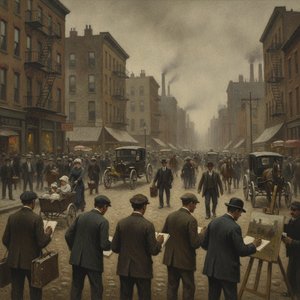
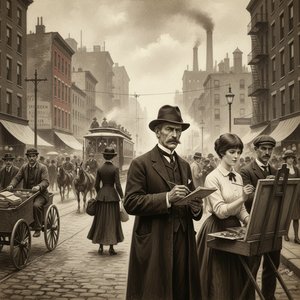
By the turn of the century, Glackens found himself at the epicenter of a burgeoning artistic rebellion. Along with Robert Henri, George Luks, Everett Shinn, John Sloan, and others, he formed a group that challenged the conservative norms dictated by the National Academy of Design. This collective, initially known as “The Eight,” rejected the idealized subjects favored by the establishment in favor of portraying the raw realities of everyday life – the crowded tenements, lively street scenes, and working-class neighborhoods often overlooked or deliberately ignored. The term “Ashcan School,” though initially pejorative, came to encapsulate their gritty realism and unflinching depiction of urban existence. Their 1908 exhibition at Macbeth Galleries sparked a national debate, forcing audiences to confront the unvarnished truth about American society. Robert Henri, as a mentor and driving force, championed an “art for life’s sake” philosophy, encouraging his colleagues to find beauty and significance in the mundane. Glackens, while sharing this ethos, distinguished himself by focusing on moments of leisure and joy within the urban landscape—a subtle but significant divergence from the more overtly critical perspectives of some of his peers.
Glackens' Urban Visions: Depicting New York and Paris with Vibrancy
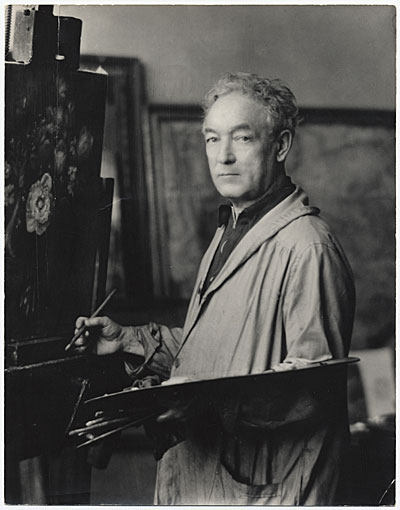 Wikipedia: William Glackens
William James Glackens (March 13, 1870 – May 22, 1938) was an American realist painter and one of the founders of the Ashcan School, which rejected the formal boundaries of artistic beauty laid down by the conservative National Academy of Design. He ...
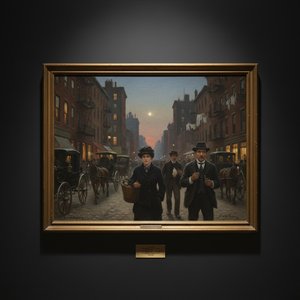
New York City became Glackens’ primary canvas, a dynamic backdrop for his evolving artistic vision. He wasn’t interested in grand monuments or picturesque vistas; instead, he focused on the fleeting moments of everyday life – children playing in Washington Square Park, crowds thronging department stores, and the vibrant energy of Coney Island. His paintings are characterized by a remarkable sense of immediacy, capturing the sights, sounds, and atmosphere of the city with striking detail. Parade, Washington Square, for example, is a masterful depiction of urban life in motion, its lively composition and bold brushstrokes conveying the excitement and energy of a bustling neighborhood. He also spent significant time in Paris, where he absorbed the Impressionist aesthetic but adapted it to his own unique style. Unlike the idyllic scenes often depicted by French artists, Glackens’ Parisian paintings reflect a more cosmopolitan sensibility, capturing the city's diverse communities and modern rhythms.
Evolving Style & Influences: Impressionism, Renoir, and a Personal Palette
Throughout his career, Glackens’ style underwent a fascinating evolution. Initially drawn to the dark, dramatic colors of European masters like Velázquez and Hals, he gradually embraced a more luminous palette influenced by Impressionism. Renoir, in particular, exerted a profound influence on his work, inspiring him to capture the fleeting effects of light and atmosphere with greater sensitivity. However, Glackens never simply replicated Renoir’s style; instead, he infused it with his own distinctly American sensibility, creating paintings that are both vibrant and emotionally resonant. His later works demonstrate a remarkable mastery of color, employing a rich and nuanced palette to convey the warmth and vitality of modern life. This shift towards brighter tones wasn't merely aesthetic; it reflected a growing optimism and a desire to celebrate the joys of everyday existence.
Legacy and Impact: Barnes Foundation & The American Realist Tradition
William Glackens’ legacy extends far beyond his own artistic achievements. He played a pivotal role in shaping the landscape of American art, challenging conventional norms and paving the way for future generations of artists. His association with Albert C. Barnes, a prominent collector and philanthropist, proved particularly significant. Glackens assisted Barnes in acquiring an extraordinary collection of European paintings – including works by Renoir, Cézanne, Matisse, and Picasso – which formed the nucleus of the famed Barnes Foundation in Philadelphia. This act solidified his reputation as a visionary within the art world, demonstrating his commitment to fostering artistic appreciation and supporting emerging talent. Furthermore, Glackens’ advocacy for independent artists through organizations like the Society of Independent Artists helped create new opportunities for experimentation and innovation. His influence can be seen in the work of countless American painters who followed in his footsteps, embracing realism as a means of capturing the complexities and contradictions of modern life.
Key Works & Lasting Appeal: A Celebration of Everyday Life
Glackens’ enduring appeal lies in his ability to capture the essence of everyday life with warmth, authenticity, and remarkable skill. Paintings like “Nude with Apple” and “Chez Mouquin” exemplify his mastery of composition, color, and light. These works are not merely depictions of scenes; they are celebrations of human connection, moments of joy, and the beauty found in the mundane. His paintings offer a glimpse into a bygone era, yet their themes – the pursuit of happiness, the importance of community, and the simple pleasures of life – remain universally relevant today.
- His work continues to resonate with audiences worldwide, reminding us of the power of art to illuminate the human experience.