Introduction
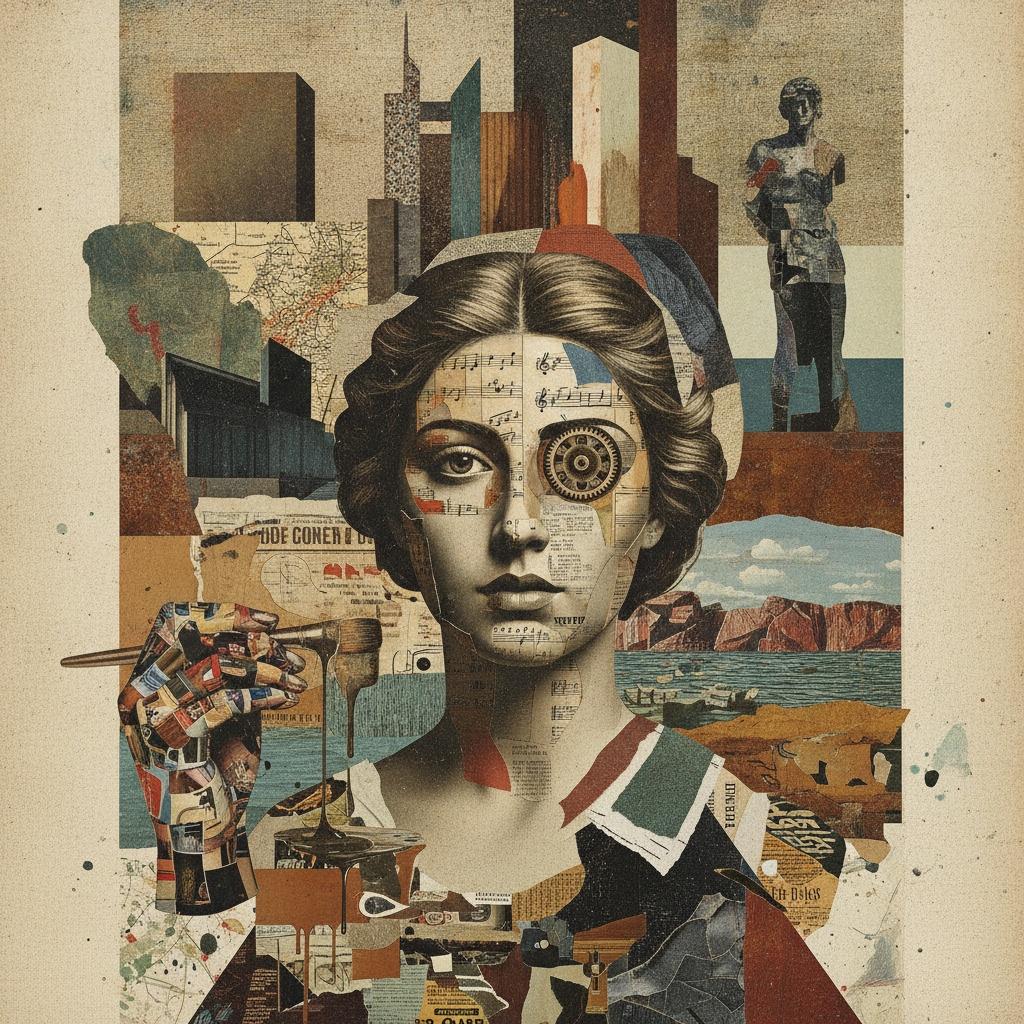
Imagine walking through a quiet, sun-drenched gallery where the boundaries of reality begin to dissolve. You encounter a canvas that does not merely depict a scene, but assembles a world—a fragment of a newspaper, a scrap of patterned fabric, a weathered piece of sand, all meticulously layered to tell a story far more complex than a single brushstroke could ever convey. This is the profound magic of collage, an art form that redefined the very essence of creativity by teaching us that beauty can be found in the unexpected union of disparate elements.
Historically, the birth of collage marked a seismic shift in the cultural landscape. Emerging from the radical movements of the early 20th century, such as Cubism and Dada, it shattered the traditional illusionism of the Old Masters. Artists began to reject the idea that art must only be a window into another world; instead, they turned to the tangible textures of our daily lives, bringing the grit, the news, and the physical remnants of modern existence directly onto the canvas. It was an act of rebellion, a way to reconstruct a fragmented reality in the wake of global upheaval.
Today, these masterpieces remain deeply resonant. In an era defined by digital layering and the constant remixing of images, the spirit of the collage artist lives on in every way we perceive the world. These works remind us that meaning is not just found, but constructed; that through the careful curation of fragments, we can create a cohesive, breathtaking whole. They invite us to look closer at the textures of our own lives and find the extraordinary within the ordinary.
As we embark on this curated journey, we shall explore ten legendary works that did more than just experiment with technique—they fundamentally altered the DNA of art history. From the revolutionary geometric dissections of Picasso to the provocative, chaotic assemblages of the Dadaists, prepare to witness the moments when the world was torn apart, only to be beautifully reimagined.
Just what is it that makes today’s homes so different, so appealing. - richard hamilton
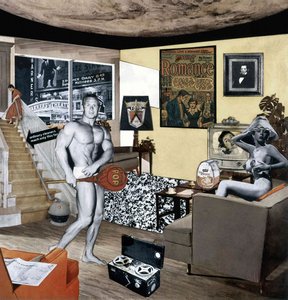 Just what is it that makes today’s homes so different, so appealing. - richard hamilton
To step into the mid-century era is to encounter a world vibrating with new desires and the glossy sheen of emerging consumerism. At the heart of this revolution lies Just what is it that makes today’s homes so different, so appealing. by Richard Hamilton . Created in 1956, this seminal work serves as the very blueprint for Pop Art, marking a definitive departure from traditional fine art toward the vibrant, fragmented reality of mass media.
The composition is a masterful, surrealist tableau; a dense layering of magazine cut-outs, advertisements, and comic book fragments that creates a palpable sense of depth and theatricality. One is drawn into a room where the muscular physique of a central figure meets the soft, reclining grace of a woman, all set against a saturated palette of warm reds, golds, and deep browns. The flattened perspective and sharp, graphic lines evoke a sense of voyeurism and modern alienation, yet the work remains undeniably captivating. By transforming everyday debris into a sophisticated cultural critique, Hamilton’s collage continues to inspire contemporary interiors, proving that even the most fragmented memories can be woven into a timeless, prestigious masterpiece.
Red Race Riot - Andy Warhol
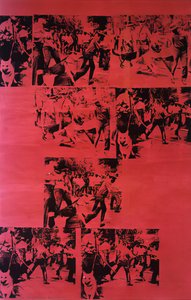 Red Race Riot - Andy Warhol
To stand before Andy Warhol’s 1964 masterpiece, Red Race Riot , is to be thrust into the visceral heart of a nation in upheaval. The atmosphere is thick with tension, dominated by a saturated, bleeding red that pulses behind fragmented, black-and-white photographic panels. This is not merely a collage; it is a cinematic collision of memory and movement. Warhol utilizes a layered, poster-like aesthetic to capture the chaotic energy of the Civil Rights era, where silhouettes of protest and communal gathering emerge from the crimson void.
The technique is strikingly graphic, blending elements of Pop Art with a raw, street-art urgency. The high-contrast imagery and jagged edges evoke the frantic pulse of newsprint and the heavy weight of history. For the discerning collector, this piece serves as a profound conversation starter—a window into the cyclical nature of resistance and social justice. Integrating such a powerful work into a contemporary interior brings an undeniable intellectual depth and emotional gravity, transforming a sophisticated space into a sanctuary for reflection and enduring cultural dialogue.
La tristesse du roi - Henri Matisse
 La tristesse du roi - Henri Matisse
In Henri Matisse’s La Tristesse du Roi , a profound, melancholic crimson anchors the composition, casting a heavy, emotive shadow over the scene that immediately arrests the viewer's soul. This masterwork stands as a pivotal moment in our exploration of legendary masterpieces because it demonstrates how color can transcend mere pigment to become a psychological force. Matisse’s Fauvist rebellion—utilizing bold swathes of yellow, deep blue, and verdant green—rejects traditional perspective in favor of an expressive, flattened plane that prioritizes raw feeling over realistic depiction.
For the discerning interior designer or collector, integrating a reproduction of this piece into a modern living space offers a sophisticated way to curate emotional lighting. The painting's vibrant yet somber palette can serve as the definitive focal point in a dining room, where the interplay of warm reds and cool blues establishes an atmosphere of quiet contemplation and refined luxury. By bringing Matisse’s revolutionary use of color into your home, you invite a legacy of artistic rebellion and timeless elegance into your architectural landscape.
Blue Nude - Henri Matisse
 Blue Nude - Henri Matisse
What story does the ethereal, monochromatic void of Blue Nude by Henri Matisse tell about the resilience of the human spirit? Emerging from a period of profound physical frailty, this masterpiece represents the pinnacle of Matisse’s late-career revolution: the invention of "drawing with scissors." As one of the most legendary collage masterpieces in art history, it broke ground by replacing traditional brushwork with the rhythmic, tactile liberation of cut-paper gouache. Matisse bypassed anatomical realism to capture a pure, Fauvist essence, using bold contours and deep blue pigments to sculpt a figure that feels both weightless and eternal.
For the modern collector or interior designer, this work offers more than mere decoration; it provides a curated escape into a serene, dreamlike atmosphere. The interplay of negative space and saturated blue tones creates a sophisticated focal point, perfect for bringing a sense of tranquil, modern elegance to a high-end residential or hospitality setting. It is a profound meditation on light and form that remains an essential pillar in the evolution of 20th-century collage art.
Llama en el espacio y mujer desnuda - Joan Miró
 Llama en el espacio y mujer desnuda - Joan Miró
In 1932, Joan Miró achieved a profound psychological breakthrough with Llama en el espacio y mujer desnuda , a work that stands as a cornerstone of the Surrealist movement. This masterpiece captures the raw, irrational impulses of the subconscious, blending cosmic abstraction with an intimate, organic human presence. As one of our selected legendary collage masterpieces, it exemplifies how Miró used the meticulous layering of construction paper to create a tactile, pulsing depth that transcends traditional painting.
The composition is a mesmerizing dance: a nude woman sits amidst ethereal, flame-like shapes, accompanied by a bird-like creature poised in silent song. The palette—a soulful tribute to Catalan landscapes featuring earthy ochres and fiery reds—creates a tension between stability and chaos. For the modern collector or interior designer, this piece offers an unparalleled way to introduce movement and intellectual intrigue into a space. Its fluid, organic lines echo the architectural genius of Gaudí, making it a perfect focal point for sophisticated, contemporary interiors seeking a touch of avant-garde history and emotional resonance.
The Snail (L'escargot), eller - Henri Matisse
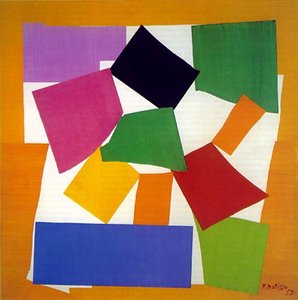 The Snail (L'escargot), eller - Henri Matisse
In the vibrant pulse of The Snail (L'escargot) by Henri Matisse, color does not merely sit upon a surface; it breathes, dances, and swirls in an eternal rhythm of light and life. As one of the most legendary collage masterpieces that changed art forever, this 1953 triumph transcends mere paper and pigment to become a monumental exploration of pure form. Matisse, masterfully 'drawing with scissors,' deconstructed tradition to create a rhythmic spiral of saturated blues, greens, and yellows that evoke the very essence of organic growth.
The texture of the papier découpé technique offers a tactile depth where sharp, geometric edges meet the soft warmth of a sun-drenched background. This work stands immortalized for its radical shift from representation to pure visual emotion, proving that abstraction can possess profound soul. In a contemporary setting, the balanced energy of this composition brings an unparalleled sense of sophisticated vitality and modern harmony to any curated space, inviting the viewer into a world where movement is frozen in a beautiful, chromatic dance.
Scène - Max Ernst
 Scène - Max Ernst
To step into the realm of Surrealism is to abandon the logic of the waking world for the profound mysteries of the subconscious. Nowhere is this dissolution of reality more palpable than in Scène by Max Ernst . As a pioneer of both Dada and Surrealist techniques, Ernst utilizes a hauntingly beautiful tableau to bridge the gap between dream and existence. The composition centers on an enigmatic avian figure, poised in predatory contemplation before a stark blue box trimmed in vibrant red—a geometric intrusion into a primal landscape.
The work is a masterclass in tactile depth; Ernst’s surfaces evoke the ruggedness of burlap and paper pulp, creating a sense of automatism that bypasses rational thought. Through layered textures and a palette of deep, melancholic blues punctuated by sharp crimson, he constructs a psychological ecosystem where every bird feels heavy with unspoken meaning. This masterpiece remains essential in our collection of legendary collage-inspired works because it does more than depict a scene; it invites the viewer into a sensory journey. For the discerning collector, such a piece offers a timeless emotional resonance, transforming any modern space into a sanctuary of intellectual intrigue and profound mystery.
untitled (7055) - Max Ernst
 untitled (7055) - Max Ernst
In untitled (7055) , Max Ernst invites us into a meticulously crafted dreamscape where the boundaries of reality dissolve into a hauntingly beautiful vision. As one of the most profound entries in our exploration of the Top 10 Legendary 'Collage' Masterpieces That Changed Art Forever , this 1943 work serves as a psychological gateway, utilizing the fragmented language of Surrealism to navigate the depths of the subconscious. Ernst’s technical mastery lies in his ability to fuse disparate textures—reminiscent of weathered burlap and ancient stone—to create a tactile complexity that mirrors the jagged nature of human thought.
The composition is anchored by a celestial tension: a silvery moon juxtaposed with a sun-like orb, casting an ethereal glow over a somber, castle-like structure. For the modern collector or interior designer, this piece offers more than mere decoration; it provides a sophisticated focal point that resonates with contemporary interests in abstract symbolism and atmospheric depth. In today's curated spaces, Ernst’s ability to find harmony within contradiction remains a powerful cultural talking point, making this collage a timeless testament to the enduring power of the imagination.
Still-Life with Chair Caning - Pablo Picasso
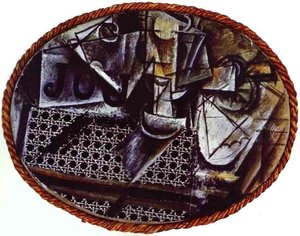 Still-Life with Chair Caning - Pablo Picasso
In the annals of modernism, few works possess the disruptive elegance of Still-Life with Chair Caning by Pablo Picasso. This masterpiece marks a pivotal moment in our list of the top 10 legendary collage masterpieces , as it fundamentally redefined the boundaries between reality and representation. By integrating a piece of oilcloth printed with a chair-caning pattern, Picasso did more than just paint; he introduced the concept of the objet trouvé , inviting the physical world to inhabit the canvas.
The composition serves as an interrogation of perception, where fragmented planes and muted ochres challenge the viewer to reconstruct a shattered reality. It is a profound meditation on how we perceive stability in an era of rapid change—a sentiment that remains strikingly relevant today. For the discerning collector or interior designer, this work offers a sophisticated dialogue between historical avant-garde rebellion and contemporary spatial design. Incorporating such a radical deconstruction of form into a curated collection brings an intellectual depth that transforms a room into a gallery of timeless, philosophical inquiry.
Self-portrait with L'Humanitie - Salvador Dalí
 Self-portrait with L'Humanitie - Salvador Dalí
In Self-portrait with L'Humanitie , Salvador Dalí does not merely paint a subject; he composes a psychological sonata. Created in 1923, this pivotal work serves as an immersive plunge into the turbulent landscape of the subconscious. To gaze upon this masterpiece is to witness the birth of Surrealist consciousness, where the artist uses light not just to illuminate, but to invent new dimensions of reality. The striking blue of the central figure’s jacket acts as a vibrant anchor amidst a chaotic, meticulously constructed assemblage of books, clocks, and fragmented memories.
Dalí masterfully layers disparate elements—a technique echoing the Dadaist embrace of absurdity—to challenge our very perception of identity and time. The composition feels alive, as if the light itself is breathing through the textures of the collage. This work stands in our Top 10 because it transcends traditional portraiture; it is a window into a dreamscape where logic is suspended. For the discerning collector, owning such a profound exploration of the human psyche means inviting a portal of infinite inspiration into one's private gallery.
Conclusion
As the light fades from the gallery walls and the shadows of these fragmented wonders lengthen, we are left with a profound realization: these masterpieces are far more than mere relics of a bygone era or clever arrangements of paper and pigment. They are living, breathing dialogues that refuse to be silenced by time. Each layer, each torn edge, and each unexpected juxtaposition serves as a heartbeat, reminding us that beauty often finds its most poignant expression in the act of reconstruction—in the way we piece together our own fragmented experiences to find meaning.
To stand before a collage is to witness the courage of the avant-garde, a courage that continues to pulse through our modern aesthetic. These works do not merely sit within the history books; they inhabit our contemporary spaces, breathing soul into our homes and providing a window into the eternal human impulse to create something new from the remnants of the old. They invite us to look closer, to find harmony in the disparate, and to recognize that even in pieces, there is an unbreakable wholeness.
Whether you are seeking to anchor a room with the revolutionary spirit of Cubism or looking for a subtle touch of texture to inspire daily reflection, we invite you to continue this journey through the fragments of greatness. Explore our full collection and discover how these timeless echoes of innovation can become a permanent part of your own story.