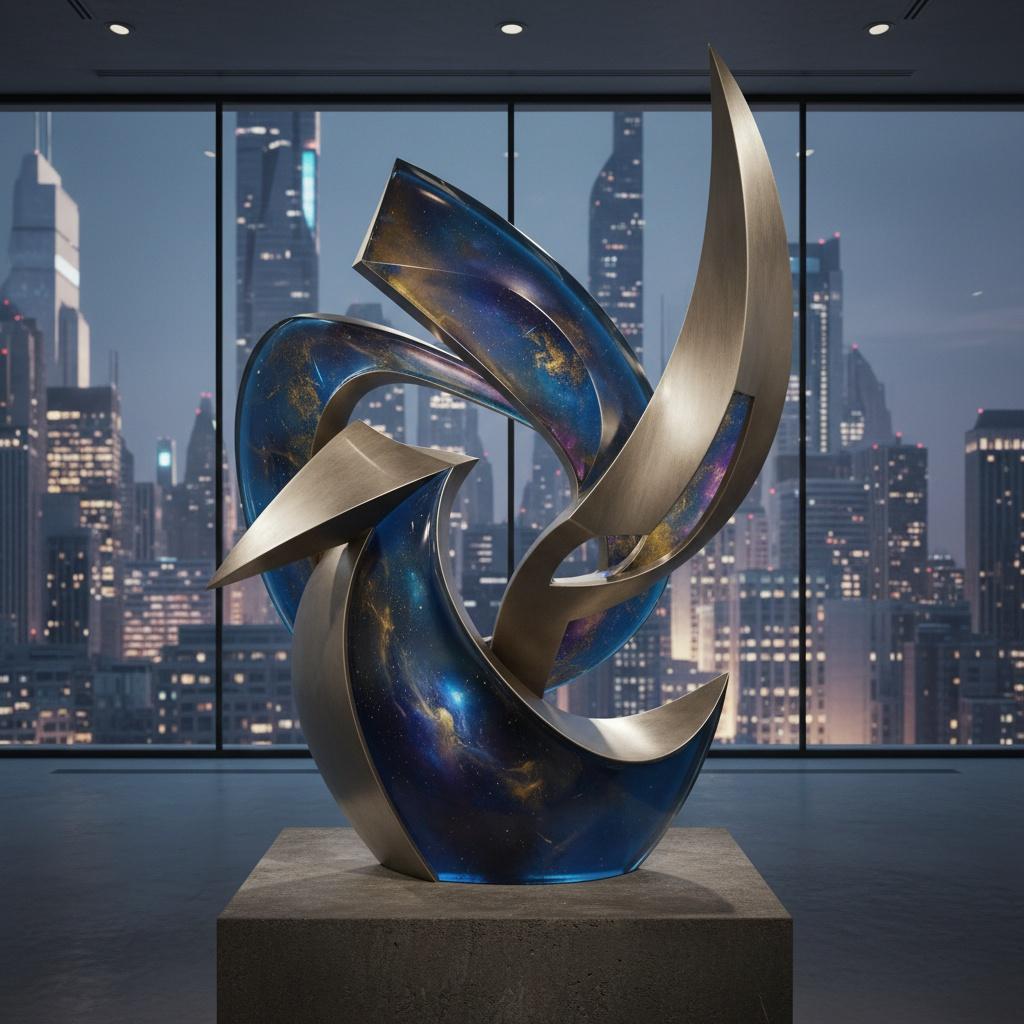
The Essence of Abstraction: Deciphering Form, Color, and Emotion
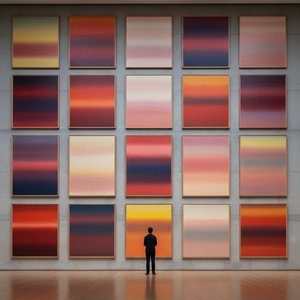
To encounter abstract art is to embark on a journey that transcends the limitations of the visible world. Unlike representational painting, which seeks to mirror the tangible landscape or the human visage, abstraction invites the viewer into a realm where meaning is not dictated by recognition, but felt through resonance. It is an intimate dialogue between the canvas and the soul, a space where color ceases to be merely a descriptor of objects and becomes a vessel for pure emotion. When we gaze upon a field of deep ultramarine or a sudden fracture of crimson, we are not looking at a sky or a wound; we and instead experiencing the weight of melancholy or the sharp sting of passion.
The true power of the abstract lies in its ability to bypass the intellect and speak directly to the subconscious. By stripping away the narrative scaffolding of recognizable figures, the artist presents a distilled reality. This distillation allows for a profound sense of freedom; the viewer is no longer a passive observer of a story, but an active participant in the creation of meaning. In this way, every brushstroke becomes a rhythmic pulse, and every tonal shift serves as a psychological cue, guiding the observer through a landscape of pure sensation that exists entirely beyond the boundaries of physical reality.
Geometric Precision and the Language of Modernism
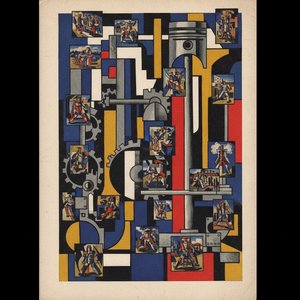
As the twentieth century unfolded, the language of abstraction found a new, rigorous vocabulary in the realm of geometry. This movement sought to find order within the chaos of modernity, utilizing the clarity of lines, circles, and polygons to communicate universal truths. One cannot contemplate this era without acknowledging the profound impact of Suprematism, where artists like Olga Rozanova utilized sharp angles and bold, non-objective compositions to challenge the very foundations of perception. Here, the painting is not a window, but an object in itself—a construction of weight, balance, and mathematical elegance.
This geometric discipline extends into the dynamic structures of American modernism, exemplified by works such as Vaclav Vytlacil’s Abstract Composition [Triptych]. In such pieces, the interplay of black and white, combined with textured geometric shapes, creates a structural rhythm that anchors the viewer's gaze. The use of the triptych format further enhances this architectural quality, allowing the composition to expand across space, much like a modern sculpture. Through these precise forms, abstraction achieves a sense of permanence and cosmic order, offering a sanctuary of logic amidst an increasingly complex world.
The Kinetic Pulse: Op Art and the Illusion of Movement
If geometry provides the structure, then Op Art provides the heartbeat. This fascinating subset of abstraction explores the physiological limits of human vision, utilizing high-contrast patterns and mathematical precision to induce a sense of motion on a static surface. It is an art of optical phenomena, where the eye is tricked into perceiving vibration, flickering, or depth where none exists. The works of masters like Victor Vasarely, particularly his mesmerizing Untitled 26, demonstrate this mastery through dynamic circles and geometric abstractions that seem to swell and recede with every glance.
The brilliance of Op Art lies in its ability to turn the act of looking into a physical experience. As the viewer moves around the piece, or even as their eyes scan the intricate patterns, the artwork appears to breathe and shift. This kinetic energy creates a mesmerizing tension, pulling the observer into a state of heightened awareness. It is an art form that demands presence; it does not merely sit upon a wall but actively engages with the light and the perspective of the spectator, transforming the gallery space into a living, pulsating environment.
Abstract Expressionism: The Intersection of Tradition and Spontaneity
Moving away from the rigid control of geometry, Abstract Expressionism introduced a more visceral, emotive approach to the canvas. This movement embraced the concept of the "action" within the painting, where the artist’s physical gestures—the drip, the splash, the heavy impasto—become the primary subject. It is a fusion of profound tradition and raw spontaneity. Pioneers such as Fahrelnissa Zeid masterfully bridged disparate worlds, weaving together Islamic, Byzantine, and Western traditions into large-scale, vibrant compositions that capture the turbulent energy of the human spirit.
In these works, the canvas becomes an arena for psychological struggle and triumph. The layers of paint are not merely decorative; they are archaeological records of a moment in time. The texture of the pigment, often applied with great intensity, creates a topographical map of emotion. This style of abstraction does not seek to represent a feeling so much as it seeks to embody it, leaving behind a trace of the artist's movement and breath, ensuring that the energy of the creation remains eternally preserved within the fibers of the canvas.
Curating the Unseen: Integrating Abstract Masterpieces into Sophisticated Interiors
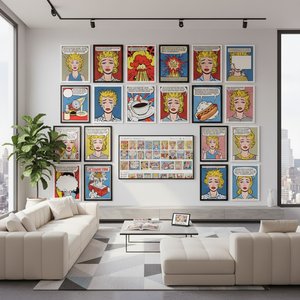
For the discerning collector, integrating abstract art into a curated space is an exercise in architectural harmony. Unlike traditional landscapes which may dictate a specific mood or setting, abstract works act as sophisticated anchors that can unify or transform an interior design. A large-scale geometric piece can provide a sense of structural stability to a minimalist room, while a vibrant, expressive work can serve as the focal point of a grand salon, injecting life and conversation into the atmosphere.
The key to successful curation lies in understanding the relationship between color, scale, and light. An abstract painting with a muted, monochromatic palette may offer a serene backdrop for a contemporary study, whereas a high-contrast Op Art piece requires sufficient space to allow its visual vibrations to resonate without overwhelming the surrounding decor. When placed thoughtfully, these works do more than decorate; they define the very character of the architecture, turning a house into a gallery of personal expression and intellectual depth.
The Tactile Dimension: Why Texture Defines the Abstract Experience
Ultimately, the true distinction between a mere image and a masterpiece lies in its tactile dimension. In the realm of abstraction, texture is the bridge between the visual and the physical. The presence of visible, heavy brushstrokes—the impasto technique—adds a three-dimensional quality that invites the eye to wander over the ridges and valleys of the paint. This depth creates a "living" quality in the artwork, where shadows cast by the texture itself change as the light in the room shifts throughout the day.
To appreciate abstract art is to appreciate this physical presence. Whether it is the smooth, precise lines of a geometric print or the thick, sculptural layers of an oil reproduction, the texture provides the soul of the piece. It is this materiality that ensures the artwork retains its spirit and depth, offering a sensory richness that flat imagery can never replicate. In the hands of a master, the paint becomes more than pigment; it becomes a landscape of touch, ensuring that the beauty of the abstract form remains as profound to the sense of touch as it is to the eye.
Discover the pinnacle of artistic excellence at OriginalUniqueArt.com, where we specialize in bringing the profound depth of masterworks and custom commissions to collectors worldwide.