The Aesthetic of the Untamed: Defining Primitivism in Western Art
 Primitivism
In the arts of the Western world, Primitivism is a mode of aesthetic idealization that means to recreate the experience of the primitive time, place, and person, either by emulation or by re-creation. In Western philosophy, Primitivism proposes that ...
To understand the seismic shifts that occurred within the late 19th and early 20th centuries, one must first confront the concept of Primitivism—a term that, while complex and often debated, describes a profound mode of aesthetic idealization. In the context of Western art history, Primitivism was not merely a stylistic choice but an attempt to recreate the experience of a perceived primitive time, place, and person through emulation or re-creation. It represented a yearning for a lost simplicity, a desire to bypass the increasingly cluttered and industrial urban value systems of Europe in favor of something more elemental.
This movement drew heavily from the techniques, motifs, and styles found in the arts of Asian, African, and Australasian peoples. To the Western eye of the era, these cultures were perceived as primitive in relation to the sophisticated, often rigid, urban civilizations of Europe. By integrating these "exotic" elements, artists sought to inject a sense of raw vitality into their canvases. This was not an attempt at ethnographic accuracy, but rather a pursuit of a certain spiritual and aesthetic purity that many felt had been eroded by the relentless march of modern progress.
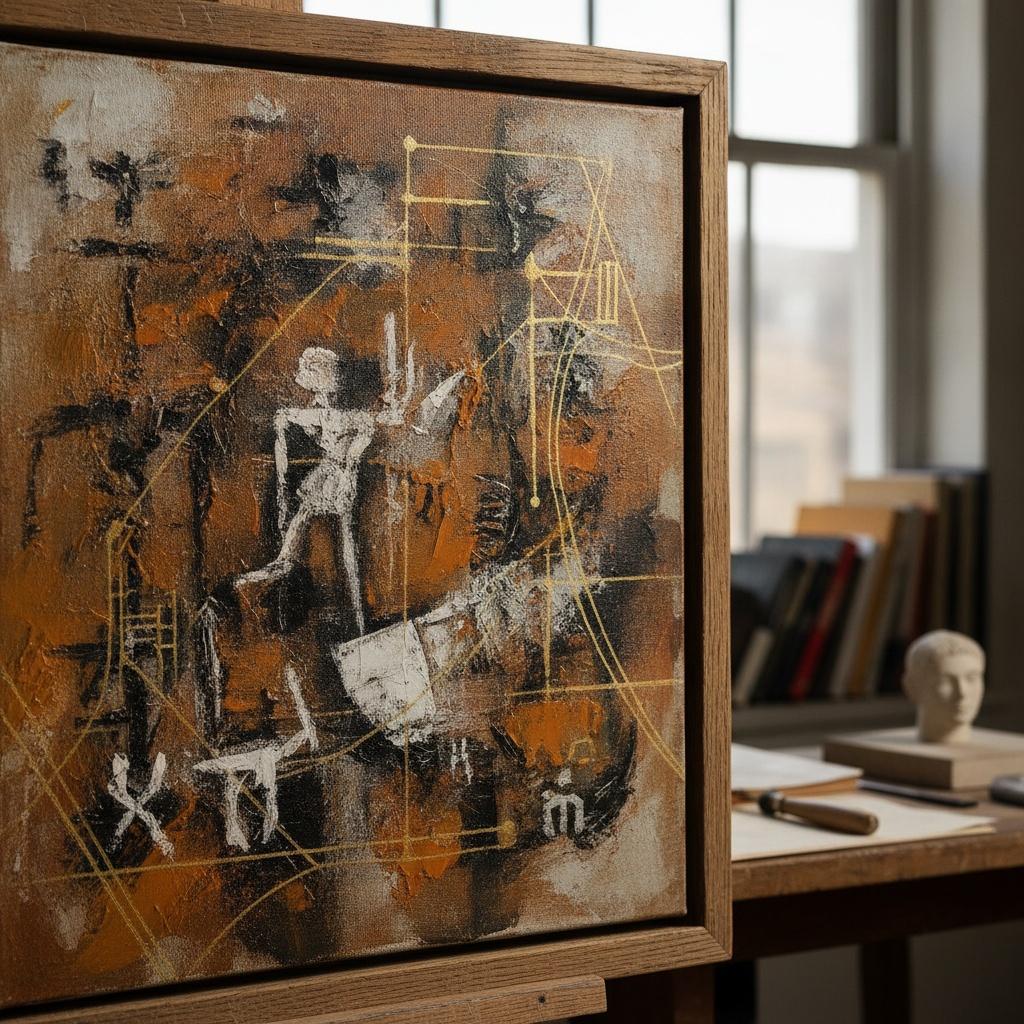
The beauty of this movement lies in its ability to challenge the very definition of "refined" art. It introduced a vocabulary of bold outlines, flattened perspectives, and non-naturalistic colors that would eventually dismantle the long-standing dominance of academic realism. For the discerning collector today, recognizing these foundational elements is essential to appreciating how the boundaries of what constitutes "fine art" were first expanded by this pursuit of the untamed.
Beyond the Surface: The Philosophical Roots of Primitive Idealization
--- title: Primitivism - Wikipedia url: https://en.wikipedia.org/wiki/Primitivism hostname: wikipedia.org sitename: Wikimedia Foundation, Inc. date: 2005-07-04 --- # Primitivism In the arts of the [Western world](https://en.wikipedia.org/wiki/Western...
The impulse toward Primitivism was deeply rooted in a broader Western philosophical movement. At its core, it proposed a utopian vision: the belief that societies perceived as primitive possessed a morality and an encounter with nature that were inherently superior to the complex, often cynical, ethics of civilized urban life. This philosophy manifested as a romanticized search for a "golden age"—a mythical era of pre-societal harmony where humanity existed in a seamless, unmediated relationship with the natural world.
This philosophical underpinning can be categorized into two distinct streams: chronological and cultural Primitivism. Chronological Primitivism looked backward through time, seeking to evoke the innocence of an ancestral past through pastoral genres and mythological themes. Cultural Primitivism, conversely, looked outward toward contemporary non-Western societies, finding inspiration in their living traditions. Both streams shared a common goal: to use art as a vehicle for spiritual renewal by stripping away the layers of "civilized" artifice.
This search for essence often led artists to reject the meticulous detail and atmospheric subtlety found in earlier movements like Impressionism. While the Impressionists were masters of capturing the fleeting dance of light, the Primitivist-leaning artists sought something more permanent and structural. They were not interested in how light hit a surface at 4:00 PM; they were interested in the eternal, unchanging truth of the form itself. It was a quest for a deeper, more visceral reality that resided beneath the ephemeral surface of perception.
From Impressionism to Rebellion: How Post-Impressionists Embraced Raw Form
 Beyond Impressionism: Exploring the Emotional Depth of Post-Impressionist Painting
The Seeds of Rebellion: From Impressionism’s Light to New Visions Wikipedia: Post-Impressionism Post-Impressionism (also spelled Postimpressionism) was a predominantly French art movement which developed roughly between 1886 and 1905, from the last I...
The transition from the light-drenched canvases of Impressionism to the emotionally charged works of Post-Impressionism marks one of the most significant rebellions in art history. While artists like Claude Monet and Pierre-Augustable Renoir had successfully liberated color from its descriptive role, a new generation began to feel that this focus on the momentary was insufficient. They found the purely optical experience of Impressionism to be lacking in structure, weight, and emotional depth.
Post-Impressionism emerged roughly between 1886 and 1905 as a nuanced dissatisfaction with the fleeting beauty of their predecessors. Artists such as Paul Cézanne, Vincent van Gogh, and Paul Gauguin did not seek to abandon the innovations of Impressionism, but rather to build upon them. They took the vibrant palettes of the Impressionists and applied them to much more profound subjects: the underlying geometry of nature, the turbulent landscapes of the human soul, and the symbolic weight of cultural motifs.
<This era was characterized by a move toward subjectivity. Where an Impressionist might paint a landscape to show how the sun warms the haystacks, a Post-Impressionist would use those same colors to convey a sense of heat, passion, or even dread. This shift from "what is seen" to "what is felt" laid the groundwork for much of the 20th-century avant-garde. The rebellion was not against beauty itself, but against a beauty that lacked meaning. By embracing rawer, more distorted forms, these artists paved the way for a new era where the artist's internal vision became the ultimate authority.
Masters of the Unconventional: Analyzing Gauguin, Rousseau, and the Avant-Garde
--- title: Primitivism and Modern Art (article) | Khan Academy url: https://www.khanacademy.org/humanities/art-1010/beginners-guide-20th-c-art/xdc974a79:key-concepts/a/primitivism-and-modern-art hostname: khanacademy.org sitename: Khan Academy date: ...
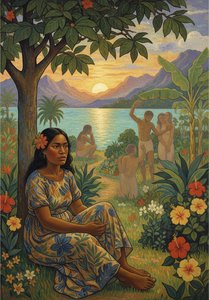
Few names resonate with the spirit of Primitivism as powerfully as Paul Gauguin and Henri Rousseau. Gauguin’s journey was perhaps the most literal embodiment of the movement's ideals. His departure from Paris to Tahiti was a deliberate attempt to escape the "decay" of Western civilization and find a more primal way of living and painting. His Tahitian works, characterized by bold, flat planes of color and heavy outlines, integrated indigenous motifs into a new, symbolic language that fundamentally altered the course of Modern art.
In contrast, Henri Rousseau, often referred to as "Le Douanier" (the customs officer), represented the charm of Naïve art. Though he lacked formal academic training, his lush, dreamlike jungle scenes possessed a profound, almost surrealist power. Rousseau’s work, such as In a Tropical Forest: Struggle between Tiger and Bull, exemplifies the "re-creation" aspect of Primitivism—he was not painting from direct experience in the tropics, but rather constructing an idealized, imagined wilderness that spoke to the viewer's deepest subconscious desires for adventure and mystery.
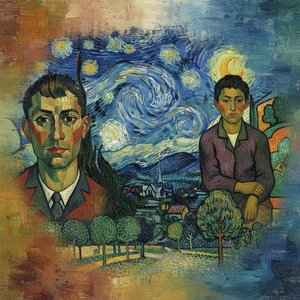
These masters, along with others like Van Gogh, utilized a technique that prioritized emotional impact over anatomical or botanical accuracy. The use of impasto—thick, visible brushstrokes—added a tactile dimension to the work, making the artist's physical struggle with the medium part of the narrative. For those who appreciate the depth of these historical masters, owning a high-quality oil reproduction allows one to experience the texture and tonal range that a mere print cannot capture, bringing the very essence of this rebellion into the modern home.
The Legacy of the Primitive: Shaping the Visual Language of Modernism
Modernist film is related to the art and philosophy of modernism as early modernist film came to maturity in the era between World War I and World War II, with characteristics such as montage and symbolic imagery, manifesting itself in genres as dive...
The ripples of the Primitivist movement extended far beyond the late 19th century, acting as a primary catalyst for the birth of nearly every major modernist movement that followed. The fragmentation of form seen in Cubism owes a direct debt to the structural lessons learned from Cézanne’s investigations into geometric essence. Similarly, the distorted, emotive landscapes of Expressionism find their roots in the raw, uninhibited color palettes of the Post-Impressionists.
Even in the realm of modern cinema and film, the influence of this era is palpable. The use of montage, symbolic imagery, and the exploration of psychological depth seen in early modernist films like The Cabinet of Dr. Caligari echoes the way Primitivist painters used non-naturalistic elements to evoke internal states. The movement taught the world that art does not need to mirror reality perfectly to be true; it only needs to be honest in its expression.
Today, we see the legacy of Primitivism in our continued fascination with authenticity and the raw power of individual expression. Whether through the lens of contemporary digital art or the enduring allure of a hand-painted classical masterpiece, the quest for the "primitive" continues to inspire us to look beneath the surface of our modern lives. At OriginalUniqueArt.com, we celebrate this enduring legacy by offering meticulously crafted reproductions that allow collectors to preserve and inhabit these pivotal moments of human creativity.