

Introduction
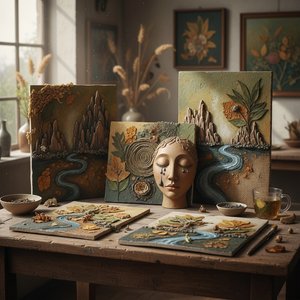
Close your eyes and imagine a forest floor—damp earth, decaying leaves, the subtle luminescence of fungi emerging from shadow. These 'mushroom tones' – earthy browns, muted ochres, soft grays, and deep umbers – evoke a sense of quiet contemplation, of hidden life and cyclical renewal. They are colors that speak to our primal connection with nature, to the mysteries held within the soil itself.
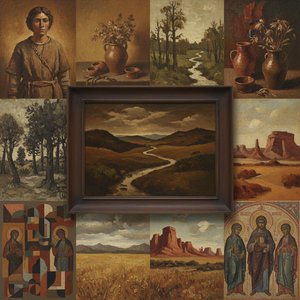
Throughout art history, these hues have resonated deeply with artists seeking to capture not just visual reality but also emotional depth. From the Renaissance masters who employed rich earth pigments derived from natural sources to the Impressionists and Post-Impressionists who embraced a more nuanced palette inspired by fleeting moments in nature, 'mushroom tones' have consistently appeared in works of profound significance.
The use of these colors often transcends mere aesthetics. They can symbolize humility, mortality, or the passage of time—themes that have preoccupied humanity for centuries. Consider the Old Masters’ depictions of religious scenes where somber earth tones lent gravity and reverence to their subjects. Or the Romantic painters who used them to convey a sense of awe in the face of nature's power. These weren't simply paintings *about* something; they were attempts to embody feeling, to translate intangible experiences into a visual language.
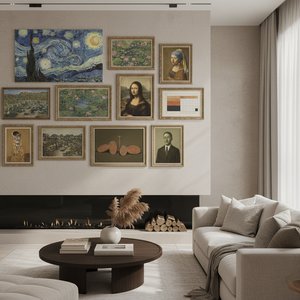
Today, these artworks continue to captivate us not only for their technical brilliance but also for their enduring emotional resonance. They offer a sanctuary from the clamor of modern life, inviting us to slow down, reflect, and connect with something deeper within ourselves. The following list explores ten famous paintings where 'mushroom tones' take center stage—each a testament to the power of color to evoke mood, meaning, and timeless beauty. Prepare to be transported.
Olympia - Édouard Manet
 Olympia - Édouard Manet
Imagine a stillness broken by a gaze—a direct challenge to centuries of artistic convention. This is Olympia by Édouard Manet , completed in 1863, and a work that irrevocably altered the landscape of modern art. Its inclusion among our Top 10 Famous Paintings Dominated by 'Mushroom' Tones isn’t merely about the earthy browns and muted ochres that define its palette; it’s about the radical honesty they embody.
Manet dared to depict a contemporary woman—likely a courtesan—in stark realism, rejecting idealized mythological subjects. The painting is awash in subtle gradations of umber and gray, lending an unsettling intimacy to Olympia's reclining form. Notice the loose brushwork, a departure from academic polish, and the flattened perspective that emphasizes surface detail over illusionistic depth. These weren’t flaws; they were deliberate choices—a rejection of tradition.
The 'mushroom tones' aren’t simply background color; they *are* the mood—a cool detachment, a quiet defiance. The rumpled sheets, the black cat (symbolizing independence), and the bouquet of flowers all contribute to a complex narrative of power, commerce, and societal expectations. Manet’s masterful use of light casts dramatic shadows, highlighting Olympia's form and forcing us to confront her gaze—a gaze that continues to resonate with viewers today.
More than 150 years later, Olympia remains a potent symbol of artistic rebellion. It reminds us that art has the power not only to reflect reality but also to challenge it, transforming spaces and emotions with its enduring presence—a legacy woven into every brushstroke of this iconic masterpiece.
Self-portrait of a 'Degenerate Artist' - Oskar Kokoschka
 Self-portrait of a 'Degenerate Artist' - Oskar Kokoschka
A gaze that holds both defiance and vulnerability—this is the power of Self-portrait of a 'Degenerate Artist' by Oskar Kokoschka , painted in 1937. Its inclusion among our Top 10 Famous Paintings Dominated by 'Mushroom' Tones speaks not only to its striking palette of deep purples and blues but also to the turbulent history it embodies.
Kokoschka’s Expressionist brushwork is a visceral response to the rising tide of Nazism. Thick impasto—layers of paint applied with raw energy—create a textured surface that vibrates with inner turmoil. The unconventional skin tones, rendered in shades of blue and green, aren't about realism; they are an exploration of psychological state. Notice how the subject’s direct gaze confronts us, demanding recognition amidst societal upheaval.
The painting is a defiant response to being labeled “degenerate” by the Nazi regime—a claim of artistic integrity in the face of persecution. The 'mushroom tones' themselves feel symbolic, evoking a sense of decay and resilience. This isn’t merely a portrait; it’s a visual manifesto.
Today, Self-portrait of a ‘Degenerate Artist’ resonates with anyone who has felt marginalized or silenced. It reminds us that true art transcends political boundaries—a legacy woven into every brushstroke and inspiring spaces where individuality is celebrated, and the courage to be different is paramount.
Unique Forms of Continuity in Space - Umberto Boccioni
 Unique Forms of Continuity in Space - Umberto Boccioni
To capture movement—not as a fleeting moment, but as an enduring force—is the ambition at the heart of Unique Forms of Continuity in Space by Umberto Boccioni . This bronze sculpture, completed in 1913, earns its place among our Top 10 Famous Paintings Dominated by 'Mushroom' Tones not for a literal use of earthy hues, but for the way its form evokes the organic energy of the natural world—the very soil from which life springs.
As a cornerstone of Futurism, Boccioni sought to break free from static representation. The sculpture’s aerodynamic lines and intertwined figures aren't merely depicting a body in motion; they *are* movement itself, frozen in time. Notice the interplay of polished bronze surfaces with rougher textures—a subtle echo of earth tones that grounds this futuristic vision.
The 'mushroom tones' resonate here as a symbol of transformation and growth, mirroring the Futurist fascination with modernity and the dynamism of life. This isn’t simply an artwork to be observed; it’s an experience—a visceral reminder of our own inherent energy and connection to the world around us.
Today, Unique Forms of Continuity in Space continues to inspire a sense of forward momentum. It invites us to consider how we can embody fluidity and resilience within our own spaces—creating environments that celebrate movement, innovation, and the enduring power of human expression.
Massacre of the Innocents - domenico campagnola
 Massacre of the Innocents - domenico campagnola
A silence hangs over the chaos—a moment frozen in time within Massacre of the Innocents by Domenico Campagnola . This engraving, completed in 1517, earns its place among our Top 10 Famous Paintings Dominated by 'Mushroom' Tones not through vibrant color, but through a masterful use of light and shadow to evoke profound emotion.
Campagnola’s intricate lines and dynamic composition capture the harrowing biblical scene with breathtaking detail. The limited palette of black, white, and gray isn’t a restriction; it's an invitation—a subtle exploration of human suffering and resilience. Notice how the artist uses varying tones to create depth and texture, drawing us into the heart of the turmoil.
The 'mushroom tones' resonate here as a symbol of mortality and fragility, mirroring the artwork’s poignant theme. This isn’t simply an engraving; it’s a visceral reminder of the human cost of tyranny—a testament to Campagnola’s technical brilliance and emotional depth.
Today, Massacre of the Innocents continues to inspire contemplation. It invites us to create spaces that honor both beauty and vulnerability—environments where quiet reflection can flourish, and the enduring power of art reminds us of our shared humanity.
The Entombment of Christ - Caravaggio
 The Entombment of Christ - Caravaggio
A profound stillness—a moment of raw grief suspended in time—defines The Entombment of Christ by Caravaggio . This masterpiece, completed between 1603 and 1604, earns its place among our Top 10 Famous Paintings Dominated by 'Mushroom' Tones not for a literal depiction of earthiness, but for the way it embodies the weight of human sorrow and spiritual sacrifice.
Caravaggio’s revolutionary use of chiaroscuro—the dramatic interplay of light and shadow—creates an unparalleled sense of emotional depth. Notice how the artist uses tenebrism to highlight the muscular form of Christ, grounding the divine in a visceral realism. The 'mushroom tones' – deep browns, muted reds, and somber whites – aren’t merely colors; they are the very essence of mourning.
This painting isn’t simply observed; it’s *felt*. The figures surrounding Christ express grief with a poignant intensity that transcends time. It's a testament to Caravaggio’s ability to capture universal emotions and invite viewers into a deeply spiritual experience.
At , we believe everyone deserves to experience the power of art firsthand. Our faithful reproductions preserve the emotion and texture of The Entombment of Christ , allowing you to bring this Baroque triumph—and its enduring message of sacrifice and redemption—into your own home.
Boating, Metropolitan Museum of Art, New York - Édouard Manet
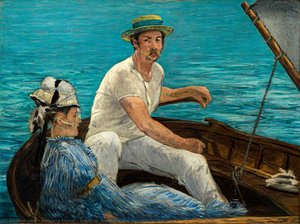 Boating, Metropolitan Museum of Art, New York - Édouard Manet
A shimmering surface—a fleeting moment of tranquility captured on canvas—defines Boating by Édouard Manet , currently residing within the Metropolitan Museum of Art in New York City. Its inclusion among our Top 10 Famous Paintings Dominated by 'Mushroom' Tones isn’t about a literal depiction of earthiness, but for the way it embodies the subtle beauty of light and atmosphere.
Manet masterfully captures a summer afternoon spent on the Seine, prioritizing *impression* over precise realism. Notice how he uses broken brushstrokes to create vibrant surfaces—a deliberate embrace of visible texture that invites us to appreciate the materiality of paint itself. The 'mushroom tones' – muted greens and browns juxtaposed with cool blues – aren’t merely colors; they are the essence of serenity.
This painting isn’t simply observed; it’s *felt*. The composition is carefully balanced, creating a sense of stability while hinting at deeper layers of meaning. It's a testament to Manet’s ability to elevate everyday moments into something profound—a legacy that continues to inspire artists today.
At , we believe art has the power to transform spaces and moods. A reproduction of Boating can bring this sense of tranquility into your own home, creating an environment where quiet contemplation flourishes and the simple pleasures of life are celebrated.
Dynamism of a Cyclist - Umberto Boccioni
 Dynamism of a Cyclist - Umberto Boccioni
Imagine the rush of wind, the blur of motion—a symphony of speed captured on canvas—defines Dynamism of a Cyclist by Umberto Boccioni , completed in 1913. Its inclusion among our Top 10 Famous Paintings Dominated by 'Mushroom' Tones isn’t about a literal depiction of earthiness, but for the way it embodies the energy and relentless forward momentum of the modern world.
Boccioni wasn’t interested in portraying what a cyclist *looks* like; he aimed to convey what it *feels* like to experience rapid movement. Notice how the subject is deconstructed into interlocking planes and geometric shapes, blurring the distinction between rider and machine. The 'mushroom tones' – cool blues and greens contrasted with bursts of warm oranges and yellows – aren’t merely colors; they are the essence of dynamism.
This painting isn’t simply observed; it’s *felt*. The fragmented forms and energetic brushstrokes create a visceral sense of vibration, inviting us to experience the thrill of speed. It's a testament to Boccioni’s ability to translate sensation into visual form—a legacy that continues to inspire artists today.
At , we believe art has the power to transform spaces and moods. A reproduction of Dynamism of a Cyclist can bring this sense of energy into your own home, creating an environment where innovation and forward thinking flourish.
A Lady and Two Gentlemen - Johannes Vermeer
 A Lady and Two Gentlemen - Johannes Vermeer
To encounter A Lady and Two Gentlemen by Johannes Vermeer is to step into a world of quiet intimacy—a rare glimpse into 17th-century Dutch domestic life. This captivating oil painting, completed in 1659, earns its place among our Top 10 Famous Paintings Dominated by 'Mushroom' Tones not for vibrant color, but for the way it embodies serene contemplation and subtle elegance.
Vermeer’s mastery of light is breathtaking—streaming in from a window on the left, illuminating specific areas while casting shadows that define form. Notice how he uses thin glazes of oil paint to build up color and texture, creating a luminous quality that feels remarkably present. The 'mushroom tones' – muted browns, soft grays, and delicate creams – aren’t merely colors; they are the essence of refined taste.
This painting isn’t simply observed; it’s *felt*. The meticulous detail in the rendering of hands—expressive elements conveying interaction and social grace—invites us to consider the complexities of human connection. It's a testament to Vermeer’s ability to capture universal emotions within a carefully constructed world.
At , we believe art has the power to transform spaces and moods. A reproduction of A Lady and Two Gentlemen can bring this sense of tranquility into your own home, creating an environment where quiet contemplation flourishes and timeless beauty reigns supreme.
Crucifixion - Fra Angelico
 Crucifixion - Fra Angelico
A vision of sacrifice—a delicate grace frozen in time—defines Crucifixion by Fra Angelico , painted around 1420. This profoundly moving depiction of one of Christianity’s most central events earns its place among our Top 10 Famous Paintings Dominated by 'Mushroom' Tones not for dramatic spectacle, but for the quiet dignity and spiritual depth it conveys.
The composition is remarkably balanced despite its crowded scene. Jesus Christ, the focal point, hangs upon the cross, his figure elongated yet possessing a serene presence. Surrounding him are figures reacting to the event – some kneeling in grief, others standing with expressions of sorrowful contemplation. The 'mushroom' tones—subtle browns, muted reds, and delicate creams—aren’t merely colors; they are the essence of faith.
This painting isn’t simply observed; it’s *felt*. The artist employs linear perspective, creating depth within the scene while subtly emphasizing the spiritual over the physical torment. It's a testament to Fra Angelico’s ability to convey profound emotion through delicate gestures and expressions—a legacy that continues to inspire contemplation today.
At , we believe art has the power to transform spaces and moods. A reproduction of Crucifixion can bring this sense of tranquility into your own home, creating an environment where quiet reflection flourishes and timeless beauty reigns supreme.
Rue du soleil Huile sur Toile Collection Particulière - Henri Matisse
 Rue du soleil Huile sur Toile Collection Particulière - Henri Matisse
Imagine stepping into a sun-drenched street—a symphony of color unfolding before your eyes—defines Rue du Soleil by Henri Matisse , painted around 1905. This pivotal work isn’t merely a depiction of a street scene; it's an immersive experience—a vibrant distillation of light and urban life that earns its place among our Top 10 Famous Paintings Dominated by 'Mushroom' Tones through its audacious use of pigment.
At first glance, the scene appears deceptively simple: a red brick wall anchors the background, providing a foundation for lively activity. Figures populate the street—men and women strolling, pausing to chat—their forms rendered with directness. However, beneath this simplicity lies a masterful orchestration of color. Matisse abandons naturalistic hues, employing a dazzling array of reds, blues, yellows, and greens applied in broad strokes that vibrate with energy.
This deliberate departure from realism is the hallmark of Fauvism—the “wild beast” movement. The 'mushroom' tones—warm reds and vibrant crimsons—aren’t merely colors; they are expressions of joy, vitality, and Matisse’s own optimistic outlook on life. It's a testament to his ability to convey emotion through pure color—a legacy that continues to inspire today.
At , we believe art has the power to transform spaces and moods. A reproduction of Rue du Soleil can bring this sense of energy into your own home, creating an environment where creativity flourishes and vibrant life reigns supreme.
Conclusion
As the light fades, and these visions of color and form begin to recede—much like stepping from a cherished gallery at sunset—we are left with something more than just images imprinted on our minds. These ten masterpieces, each dominated by the subtle power of 'mushroom' tones, remind us that art is not merely a relic of the past, but a living force—a continuous conversation across centuries.
They whisper stories of faith and sacrifice, of quiet intimacy and revolutionary spirit, of fleeting moments captured with enduring grace. They are testaments to the human capacity for beauty, emotion, and profound contemplation. And perhaps most importantly, they remind us that these emotions—these longings, these joys, these sorrows—are universal, connecting us across time and culture.
To bring a touch of this timeless magic into your own space is to invite a dialogue with the masters, to surround yourself with beauty that nourishes the soul. Explore our full collection and discover the artwork that speaks most deeply to *your* heart—a piece that will continue to inspire and move you for generations to come.