Introduction
Imagine stepping into a world bathed in dappled sunlight, where water lilies shimmer and fields of poppies dance in the breeze. Claude Monet’s art isn't merely about depicting scenes; it’s about capturing an *impression* – a fleeting moment of light, color, and emotion. For over a century, his work has captivated audiences, inviting us to slow down, breathe deeply, and experience the world anew.
Monet’s journey as an artist is inextricably linked to the rise of Impressionism in 19th-century France. Emerging from the constraints of academic painting, a movement championed by artists like Renoir and Degas, Monet sought to break free from rigid representation and instead focus on how light and color interact to create visual sensations. This radical shift challenged established artistic conventions and ushered in an era of unprecedented freedom and experimentation.
His paintings weren’t simply records of reality; they were explorations of perception itself. He spent years meticulously studying the effects of light at different times of day, on various surfaces, and under varying weather conditions – a dedication that profoundly shaped his artistic vision. The cultural context of this time—a rapidly industrializing world grappling with urbanization and social change—fueled a desire to reconnect with nature and capture its beauty before it was irrevocably altered.
Why do these paintings endure? Because they resonate with something deeply human – our innate connection to the natural world, our capacity for wonder, and our ability to find solace in simple beauty. Monet’s masterful use of color, his loose brushstrokes, and his willingness to embrace ambiguity create an atmosphere of tranquility and contemplation. They remind us that art isn't about achieving perfect accuracy but about conveying a feeling, a memory, or a glimpse into the soul. As we turn our attention to the ‘Top 25’ artworks of Claude Monet, prepare to be transported – to lose yourself in the shimmering light and vibrant hues that define his extraordinary legacy.”
Water Lilies - Claude Monet
 Water Lilies - Claude Monet
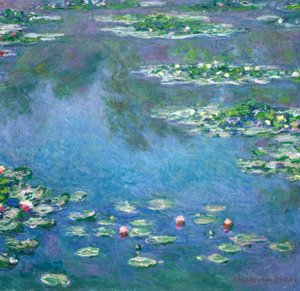
Step into a realm of tranquil beauty with Claude Monet’s Water Lilies (1906), an immersive experience that transcends mere representation and evokes a profound sense of serenity. This painting isn't just a depiction of a pond; it’s an invitation to lose yourself in the shimmering dance of light, color, and atmosphere – a quintessential example of Impressionism at its finest.
Painted during a pivotal period of his career, Monet sought to capture not just what he *saw*, but how he *felt* being present within his beloved Giverny water garden. Rejecting the rigid constraints of academic art, he employed loose brushstrokes and a vibrant palette, creating an atmosphere that feels both immediate and dreamlike. The painting’s surface is alive with texture – a testament to Monet's innovative ‘impasto’ technique, where paint is applied thickly, inviting touch and revealing the artist’s hand.
The composition centers on a densely populated lily pond, dominated by an interplay of light reflecting off the water’s surface. Lily pads in varying shades of green and white float amidst delicate pink blossoms, while the background subtly suggests foliage and trees, blending seamlessly into the atmospheric effect. This deliberate lack of a strong focal point encourages the eye to wander, mirroring the natural randomness and organic growth within the garden itself.
Monet’s masterful use of color is central to the painting's impact – cool greens and blues dominate, punctuated by delicate accents of pink and white. These colors aren’t blended smoothly; instead, they are applied in distinct strokes, creating a vibrant and luminous surface that shimmers with light. The lilies themselves symbolize purity, enlightenment, and rebirth, while the overall scene evokes a sense of peace and harmony with nature – themes deeply resonant with the Impressionist movement's desire to reconnect with the natural world. As one of the ‘Top 25’ artworks by Monet, it remains a powerful reminder of art’s ability to transport us to moments of profound beauty and contemplation.
Gare Saint Lazare, Pari - Claude Monet
 Gare Saint Lazare, Pari - Claude Monet
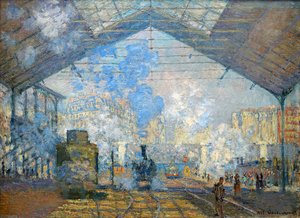
Claude Monet’s Gare Saint-Lazare, Paris (1877) isn't merely a depiction of a train station; it’s a poignant snapshot of modernity itself – a window into the bustling heart of Parisian life during a period of unprecedented industrial transformation. This painting deserves its place among the ‘Top 25’ artworks by Monet because it transcends mere documentation, capturing the *feeling* of progress and the subtle melancholy inherent in rapid change. It's a testament to Monet’s ability to elevate the ordinary into something profoundly beautiful.
Painted with his signature Impressionistic flair, the work prioritizes capturing fleeting light and atmosphere over precise detail. Loose brushstrokes create a dynamic surface where colors blend optically, evoking the hazy, ethereal quality of steam rising from the locomotives. The muted palette – cool blues, grays, and whites punctuated by warm ochres and reds – perfectly mirrors the station’s atmospheric mood.
More than just architecture, Monet explores how this monumental railway station impacted daily life and perceptions of time and space. He saw beauty in its functionality, elevating a functional building into an artistic subject. The arriving and departing trains, the blurred figures on the platform – all suggest constant motion and change, hinting at the ephemeral nature of human experience.
Symbolically, the painting speaks to both progress and transience. While celebrating modernity, there’s a subtle undercurrent of melancholy, reflecting the fleeting moments that define our lives. It invites us to contemplate the relationship between speed, industry, and the human spirit. Gare Saint-Lazare remains a powerful reminder of art's ability to capture not just what *is*, but also what *feels* – a timeless reflection on the beauty found within the everyday.”
Grainstack in the Morning, Snow Effect - Claude Monet
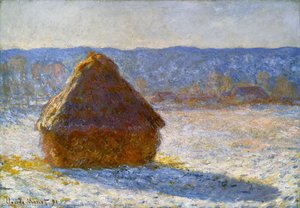 Grainstack in the Morning, Snow Effect - Claude Monet
Claude Monet’s Grainstack in the Morning, Snow Effect (1890) isn't simply a winter landscape; it’s a profound meditation on light, atmosphere, and the fleeting beauty of everyday life. This painting deserves its place among the ‘Top 25’ artworks by Monet because it exemplifies his revolutionary approach to capturing perception – prioritizing *feeling* over photographic realism. It invites us to slow down and appreciate the subtle magic of a winter morning.
Painted with his signature Impressionistic technique, the work showcases loose, visible brushstrokes applied ‘en plein air,’ creating a dynamic surface where colors blend optically. The hay stack isn’t rendered with precise detail but built up from myriad short, curved strokes suggesting texture, while the snow-covered field shimmers with an implied sparkle created by similar broken brushwork. This approach revolutionized painting, shifting focus to subjective experience.
Part of Monet's celebrated “Haystacks” series, this piece demonstrates his deliberate choice of a humble subject – haystacks – as a vehicle for exploring the changing effects of light and weather conditions. By repeatedly painting the same motif under varying circumstances, he revealed how perception is fundamentally shaped by illumination. This wasn’t merely about depicting hay; it was a scientific investigation into the nature of vision itself.
Beyond its technical brilliance, this artwork evokes a profound sense of tranquility and solitude. The quiet stillness of the winter landscape invites contemplation. While seemingly straightforward in subject matter, the painting speaks to the beauty found within everyday life and the enduring power of nature. The contrast between the warm tones of the hay stack and the cool blues and violets of the surrounding snow creates visual interest while subtly hinting at the warmth of rural life against the backdrop of winter’s chill.
This painting's legacy resonates today, offering a timeless reminder that beauty can be found in simplicity and that capturing an *impression* – a fleeting moment of light and color – is more profound than perfect representation. Its visual language—loose brushstrokes, atmospheric perspective, and a focus on subjective experience—continues to inspire designers and artists seeking to evoke mood and emotion through their work.”
The Walk. Lady with a Parasol - Claude Monet
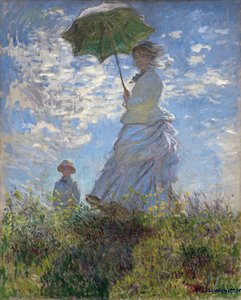 The Walk. Lady with a Parasol - Claude Monet
Claude Monet’s The Walk. Lady with a Parasol (1875) isn't merely a picturesque scene; it’s a profound meditation on light, atmosphere, and the fleeting beauty of everyday life – a cornerstone of Impressionism and deserving of its place among the ‘Top 25’ artworks by Monet. This painting captures a tranquil moment in nature, inviting us to slow down and appreciate the subtle magic of a setting sun.
Painted with his signature loose brushstrokes and vibrant color palette, the work exemplifies Monet's mastery of capturing light and atmosphere. The sky transitions from soft blues to warm pinks and oranges as the sun sets, creating an ethereal glow that envelops the scene. This technique—layering colors to create depth and texture—is particularly evident in the depiction of the grass and foliage, which adds a sense of movement and spontaneity.
Created during a pivotal period for Impressionism, this painting reflects the movement’s focus on depicting modern life and the natural world with an emphasis on accurate light and color. Monet's ‘en plein air’ approach—painting outdoors—allowed him to capture the fleeting effects of weather and time. The scene features figures in nature, showcasing his ability to blend human presence with the environment.
The woman holding the umbrella may symbolize protection or elegance, while the child figure could represent innocence or companionship. The overall scene evokes feelings of serenity, contemplation, and a deep connection with nature. Monet’s ability to convey emotion through color and light makes this painting a powerful and evocative piece that resonates with viewers on an emotional level.
The Walk. Lady with a Parasol stands out for its harmonious composition, vibrant palette, and skillful use of light and shadow. Its loose brushwork and the central element of the umbrella create a dynamic focal point. This artwork is a testament to Monet’s genius and his enduring influence on modern art – reminding us that even simple moments can be transformed into timeless works of beauty.”
Impression, Sunrise - Claude Monet
 Impression, Sunrise - Claude Monet
Unveiling Impression, Sunrise by Claude Monet is akin to discovering a foundational moment in art history – a painting that not only defined an era but continues to resonate with its profound beauty and innovative spirit. This seminal work deserves its place among the ‘Top 25’ artworks by Monet because it represents a radical shift in artistic perception, capturing the ephemeral magic of a harbor at sunset with breathtaking immediacy.
Painted in 1873, this captivating piece epitomizes the Impressionist movement. The composition—a tranquil harbor scene bathed in twilight—immediately draws the viewer into its serene atmosphere. Monet’s signature loose brushstrokes and vibrant color palette create an illusion of movement and light, capturing the fleeting effects of a setting sun.
The painting's innovative technique—emphasizing accurate depiction of light and color rather than precise detail—was revolutionary. It was first shown at the “Exhibition of the Impressionists,” where it famously inspired the name of the movement itself. The interplay of warm oranges and cool blues evokes a sense of peace and contemplation, inviting viewers to lose themselves in the scene’s beauty.
Impression, Sunrise 's legacy extends far beyond its historical significance. Its influence can be seen in modern design aesthetics – from luxurious interiors to refined color palettes. The painting’s ability to evoke a sense of tranquility and timelessness makes it a perfect addition to any collection or space, reminding us that even the simplest moments can hold profound beauty.”
The Thames below Westminster - Claude Monet
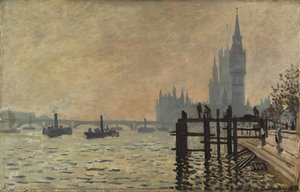 The Thames below Westminster - Claude Monet
Step into a serene moment captured by Claude Monet’s The Thames below Westminster (1871) – a painting that transcends mere landscape depiction to embody the quiet beauty of London at dusk or dawn. This artwork deserves its place among the ‘Top 25’ because it exemplifies Monet's revolutionary approach to capturing light and atmosphere, inviting us to pause and appreciate the fleeting magic of an urban scene.
Painted during a period when Monet was exploring urban landscapes, this piece reflects his fascination with capturing the essence of modern life. The loose, visible brushstrokes blend colors to create a hazy, atmospheric effect, while the muted tones—blues, grays, and browns—contrast beautifully with the warm hues of the sky. This interplay of color and texture brings the scene to life.
The composition is divided into three sections: the foreground with the wooden pier, the middle ground featuring boats on the water, and the background dominated by the silhouette of Big Ben. Monet’s use of linear perspective and depth enhances the viewer's immersion in the scene. The painting was initially exhibited alongside other Impressionist works, contributing to the movement’s growing recognition.
The Thames below Westminster evokes feelings of tranquility and nostalgia – a reminder of simpler times within an increasingly complex world. The silhouetted figures on the pier suggest solitude or contemplation, while the overall mood is peaceful and reflective. It's a testament to Monet’s ability to capture not just what *is*, but also how it *feels*—a timeless reflection on the beauty found in everyday moments.”
Clifftop Walk at Pourville - Claude Monet
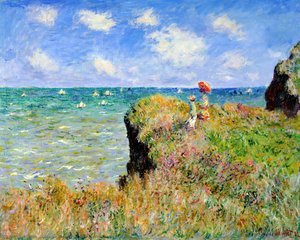 Clifftop Walk at Pourville - Claude Monet
Step into a serene coastal retreat with Claude Monet’s Clifftop Walk at Pourville (1882) – a painting that captures the essence of tranquility and invites us to pause amidst the beauty of a simple moment by the sea. This artwork deserves its place among the ‘Top 25’ because it exemplifies Monet's revolutionary approach to capturing light, atmosphere, and the fleeting magic of nature.
Painted during his frequent travels to Normandy’s coastal towns, this piece reflects Monet’s deep connection with the natural world. The loose, expressive brushstrokes bring the scene to life, creating a sense of movement and spontaneity. The vibrant palette—dominated by blues, greens, and soft whites—reflects Monet's mastery of color and his ability to evoke the mood of a moment.
The composition is balanced with a clear focal point where two figures stand on the cliff, drawing the viewer’s eye across the scene. The use of horizontal and vertical lines creates structure and depth, while organic shapes and varied textures add richness to the landscape. Monet's technique involves visible brushstrokes that convey a sense of immediacy and life.
Clifftop Walk at Pourville conveys a sense of peace, freedom, and connection with nature. The open sky and expansive sea symbolize vastness and possibility, while the wildflowers represent natural beauty and growth. The figures add a human element, suggesting contemplation or enjoyment of the moment. This piece evokes a feeling of tranquility and escape, making it an ideal choice for those seeking to bring a sense of calm and inspiration into their living spaces.”
The River - Claude Monet
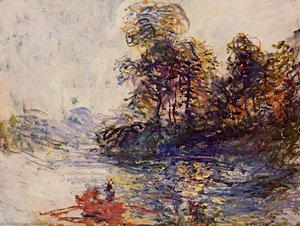 The River - Claude Monet
Step into a world of tranquil beauty with Claude Monet’s The River (1881) – a painting that captures the essence of a peaceful riverside scene, inviting us to pause and appreciate the fleeting magic of nature. This exquisite piece deserves its place among the ‘Top 25’ artworks by Monet because it exemplifies his revolutionary approach to capturing light, atmosphere, and the transient beauty of the natural world.
Painted during a pivotal period in his career, this artwork showcases Monet's mastery of capturing fleeting moments of light and atmosphere. The loose, expressive brushstrokes create a sense of movement and spontaneity, characteristic of the Impressionist movement. The vibrant palette—dominated by blues, greens, and soft whites—reflects Monet’s ability to evoke the mood of a moment.
The composition is balanced with a horizontal orientation, emphasizing the expanse of the river and the sky. In the foreground, a small boat with two figures draws the viewer's eye into the scene, while clusters of trees line the riverbank in the middle ground. Distant hills and a hazy sky complete the background, creating a sense of depth and vastness.
The River conveys a sense of peace, freedom, and connection with nature. The soft colors and fluid brushwork invite viewers to immerse themselves in a moment of tranquility. The trees and water may symbolize nature’s beauty and the passage of time, reminding us of its enduring presence. This piece is a testament to Monet's genius and his ability to capture not just what *is*, but also how it *feels* – a timeless reflection on the simple pleasures of life.”
Poplars at Giverny - Claude Monet
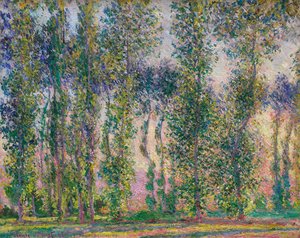 Poplars at Giverny - Claude Monet
Step into a realm of serene beauty with Claude Monet’s Poplars at Giverny (1887) – a painting that captures the essence of a tranquil woodland scene bathed in the soft glow of sunset. This captivating artwork deserves its place among the ‘Top 25’ because it exemplifies Monet's revolutionary approach to capturing light, atmosphere, and the transient beauty of nature.
Painted during a pivotal period in his career, this piece showcases Monet’s signature style, characterized by visible brushstrokes, a vibrant color palette, and an emphasis on capturing fleeting moments of natural beauty. The loose, expressive brushwork creates a sense of movement and spontaneity, drawing the viewer into the heart of the forest.
The artwork's color palette is a harmonious blend of greens, blues, purples, and yellows. The dominant greens of the foliage are balanced by cool blues and purples in the shadows, while warm yellows and golds highlight the sunlight filtering through the leaves. This careful use of complementary colors creates depth and contrast, enhancing the overall visual impact.
"Poplars at Giverny" is part of Monet’s series paintings – an innovative approach where he explored a single subject under different lighting and weather conditions. This particular piece reflects his deep connection to the natural world and his home in Giverny, where he spent much of his later life. The tall trees symbolize strength and resilience, while the interplay of light and shadow may represent the cyclical nature of life and the changing seasons.
The artwork exudes a sense of calm and contemplation, making it an ideal choice for those seeking to bring a touch of nature’s tranquility into their homes or offices. Its vibrant colors and dynamic composition can brighten any space, while the serene subject matter creates a soothing atmosphere. Whether you're an art lover, collector, or interior designer, this high-quality reproduction offers a timeless piece that will inspire and delight for years to come.”
Rouen Cathedral, Symphony in Grey and Rose - Claude Monet
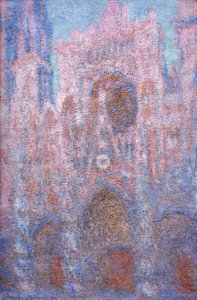 Rouen Cathedral, Symphony in Grey and Rose - Claude Monet
Step into a realm of serene beauty with Claude Monet’s Rouen Cathedral, Symphony in Grey and Rose (1894) – a painting that captures the essence of the iconic Gothic cathedral, inviting us to pause and appreciate the fleeting magic of light and atmosphere. This captivating artwork deserves its place among the ‘Top 25’ because it exemplifies Monet's revolutionary approach to capturing the effects of light and time on architectural forms, showcasing his mastery of Impressionism.
Painted during a pivotal period in his career, this piece showcases Monet’s signature style—loose brushstrokes, a vibrant color palette, and an emphasis on capturing fleeting moments. The composition centers around the grand facade of Rouen Cathedral, rendered with soft, blurred edges that create a dreamy and ethereal atmosphere. Monet's use of muted pastel tones—shades of blue, pink, purple, and brown—blends seamlessly to evoke a sense of tranquility and reverence.
The artwork’s color palette is a harmonious blend of greens, blues, purples, and yellows. The dominant greens of the foliage are balanced by cool blues and purples in the shadows, while warm yellows and golds highlight the sunlight filtering through the leaves. This careful use of complementary colors creates depth and contrast, enhancing the overall visual impact.
"Rouen Cathedral, Symphony in Grey and Rose" reflects Monet’s innovative approach to capturing the effects of sunlight, time, and weather through color and contrast. The series conveys a sense of spiritual transcendence and timeless beauty. The serene and contemplative mood makes it an ideal addition to any art collection or interior design scheme. Its soft, diffused lighting and muted color palette create a calming atmosphere, perfect for spaces where tranquility and elegance are desired.
This artwork’s legacy resonates with today's design sensibilities – its dreamlike quality finds parallels in modern interiors seeking atmospheric depth and evocative mood. Whether displayed in a modern living room, a classic study, or a serene bedroom, this reproduction adds a touch of timeless sophistication.”
le bassin aux nympheas - reflets verts - Claude Monet
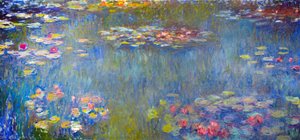 le bassin aux nympheas - reflets verts - Claude Monet
Step into a realm of serene beauty with Claude Monet’s Le Bassin aux Nymphéas – Reflets Verts (1920) – a painting that captures the essence of a water lily pond, inviting us to pause and appreciate the fleeting magic of light and color. This enchanting depiction deserves its place among the ‘Top 25’ because it exemplifies Monet's late Impressionist style, showcasing his unparalleled ability to capture the transient effects of light on nature.
Painted in his later years, this artwork features a horizontally oriented composition dominated by a broad expanse of water, scattered with floating water lilies. The scene is devoid of a strict focal point, creating a sense of balance and harmony that reflects Monet’s deep connection to the natural world. The color palette is rich and varied, blending shades of blue, green, purple, and pink to evoke the serene atmosphere of a sunset.
The blues range from deep, murky tones in the water to lighter, more reflective hues near the surface, while the lilies introduce pops of bright pinks, purples, and yellows. These vibrant colors contrast beautifully with the cooler background, enhancing the overall visual impact of the piece.
Monet’s loose, expressive brushstrokes define both the water lilies and the rippling water, creating a sense of movement and texture. The artwork employs thick applications of paint, resulting in a textured surface that draws viewers in and invites closer inspection. This technique is characteristic of Impressionism, which emphasizes accurate depiction of light and capturing the momentary effects of nature.
The lighting appears soft and diffused, likely representing an overcast sky or dappled sunlight filtering through leaves. This lighting enhances the reflective quality of the water, creating a sense of depth and dimension. The perspective is flat, typical of impressionist works, with no strong vanishing points to draw the eye inward.
Le Bassin aux Nymphéas – Reflets Verts reflects Monet’s later years spent in Giverny, where he cultivated a water garden specifically to inspire his art. The water lilies often symbolize peace, tranquility, and the fleeting nature of beauty—themes that resonate deeply with viewers. This artwork's legacy resonates with today's design sensibilities – its dreamlike quality finds parallels in modern interiors seeking atmospheric depth and evocative mood.”
The Road Bridge at Argenteuil - Claude Monet
 The Road Bridge at Argenteuil - Claude Monet
Step into a realm of serene beauty with Claude Monet’s The Road Bridge at Argenteuil (1874) – a painting that captures the essence of a leisurely afternoon by the Seine, inviting us to pause and appreciate the fleeting magic of light and color. This captivating artwork deserves its place among the ‘Top 25’ because it exemplifies Monet's late Impressionist style, showcasing his unparalleled ability to capture the transient effects of light on nature and offering a glimpse into the burgeoning leisure culture of 19th-century France.
Painted during a pivotal period for Impressionism, this piece embodies the core tenets of the movement – prioritizing the fleeting effects of light and atmosphere over precise representation. Monet masterfully employs loose, visible brushstrokes to depict the shimmering water, lush greenery, and architectural details of the road bridge. Rather than blending colors smoothly, he juxtaposes them, allowing the viewer’s eye to optically mix hues and experience a vibrant sense of movement and energy.
The composition centers around a stone bridge spanning the Seine, bustling with indistinct figures enjoying a leisurely afternoon. Several boats dot the river, including a prominent sailboat in the foreground, hinting at the growing popularity of recreational boating amongst Parisians escaping the city for countryside pursuits. Argenteuil itself was becoming a fashionable destination, and Monet’s depiction reflects this burgeoning leisure culture and the changing social landscape.
“The Road Bridge at Argenteuil” subtly explores themes of transition and connection. The bridge serves as a symbolic link between different parts of life, while the flowing river represents the passage of time. The warm hues of sunset – blends of pink, orange, purple, and gold – evoke feelings of tranquility, nostalgia, and peaceful contemplation. Monet doesn’t simply *show* us a scene; he invites us to *feel* it—to experience the serenity and beauty of a summer afternoon on the Seine.
This artwork's legacy resonates with today's design sensibilities – its harmonious composition finds parallels in modern interiors seeking calm and sophistication. Whether displayed in a modern living room, a classic study, or a serene bedroom, this reproduction adds a touch of timeless elegance.”
Boulevard of Capucines - Claude Monet
 Boulevard of Capucines - Claude Monet
Step into a realm of quiet observation with Claude Monet’s Boulevard of Capucines (1873-1874) – a painting that captures the essence of Parisian life undergoing dramatic transformation, inviting us to pause and appreciate the fleeting magic of light and movement. This pivotal work deserves its place among the ‘Top 25’ because it exemplifies Monet's pioneering Impressionist style, offering a remarkably modern perspective on late 19th-century urbanity and capturing a turning point in art history.
Painted during a period of significant social and urban change, this artwork reflects Paris’s transformation into a modern metropolis. Haussmann’s renovations aimed to improve traffic flow and public health but also served strategic military purposes. Monet’s work captures this new urban landscape and offers a glimpse into the lives of Parisians navigating these modernized streets. Importantly, Boulevard of Capucines was exhibited at the first Impressionist exhibition in 1874 – a pivotal moment that cemented the movement's place in art history.
The painting depicts the bustling energy of the Boulevard des Capucines, a newly constructed thoroughfare emblematic of Baron Haussmann’s ambitious urban renewal project. Monet presents an innovative panoramic view, believed to be from the studio of photographer Félix Nadar at No. 35 on the boulevard. Instead of focusing on a single focal point, the composition immerses the viewer in the overall impression of a city in constant motion – pedestrians stroll, horse-drawn carriages traverse the street, and trees line the avenue, all rendered with remarkable dynamism. The elevated vantage point provides a unique perspective, akin to observing the scene from a balcony or upper story window.
“ Boulevard of Capucines ” perfectly exemplifies Monet’s pioneering Impressionist style. He deliberately eschews traditional academic techniques in favor of visible brushstrokes and a focus on capturing fleeting moments of light and color. The loose application of paint creates an immediate sense of spontaneity, reflecting the artist's desire to depict his sensory experience rather than a precise photographic representation. Monet masterfully employs “broken color” – applying small strokes of pure color side-by-side – allowing the viewer’s eye to optically blend them, resulting in a shimmering effect that beautifully conveys the vibrancy of Parisian life.
This artwork's legacy resonates with today's design sensibilities – its harmonious composition finds parallels in modern interiors seeking calm and sophistication. Whether displayed in a modern living room, a classic study, or a serene bedroom, this reproduction adds a touch of timeless elegance.”
Camille Monet On Her Deathbed - Claude Monet
 Camille Monet On Her Deathbed - Claude Monet
Step into a realm of poignant beauty with Claude Monet’s Camille Monet On Her Deathbed (1879) – a painting that captures the essence of grief and love, inviting us to pause and contemplate the fleeting nature of life. This intimate portrait deserves its place among the ‘Top 25’ because it exemplifies Monet's ability to translate profound personal emotion into a masterpiece of Impressionist technique, offering a hauntingly beautiful tribute to his beloved wife.
Painted during a tumultuous period in Monet’s life—following Camille’s protracted illness and eventual death—this artwork is more than just a portrait; it’s an exploration of loss, memory, and the enduring power of love. The painting depicts Camille enveloped in what appears to be a veil or shroud, creating an atmosphere of mystery and introspection.
Monet's masterful use of soft, blurred edges and a muted color palette—dominated by cool tones of blue, gray, and white—conveys a sense of melancholy and contemplation. The lack of distinct facial features invites viewers to project their own emotions onto the piece, making it a deeply personal and universal exploration of grief. It’s a testament to Monet's ability to capture not just an image, but also the *feeling* of loss.
“ Camille Monet On Her Deathbed ” perfectly exemplifies Monet’s signature Impressionist technique. He deliberately eschews traditional academic techniques in favor of visible brushstrokes and a focus on capturing fleeting moments of light and emotion. The loose application of paint creates an immediate sense of spontaneity, reflecting the artist's desire to depict his sensory experience rather than a precise photographic representation. Monet masterfully employs “broken color” – applying small strokes of pure color side-by-side – allowing the viewer’s eye to optically blend them, resulting in a shimmering effect that beautifully conveys the atmosphere of sorrow.
This artwork's legacy resonates with today's design sensibilities – its somber beauty finds parallels in modern interiors seeking tranquility and reflection. The painting serves as a reminder of life’s fragility and the importance of cherishing loved ones, offering a timeless message for any space.”
The Pont de l'Europe, Gare Saint-Lazare - Claude Monet
 The Pont de l'Europe, Gare Saint-Lazare - Claude Monet
Step into a realm of bustling energy with Claude Monet’s The Pont de l'Europe, Gare Saint-Lazare (1877) – a painting that captures the dynamic spirit of modern Paris during the late 19th century, inviting us to pause and experience the fleeting magic of urban life. This masterpiece deserves its place among the ‘Top 25’ because it exemplifies Monet's Impressionist style, offering a remarkably modern perspective on Parisian industry and capturing a pivotal moment in the city’s transformation.
Painted during a period of rapid industrialization and modernization, this artwork reflects Paris’s transformation into a bustling metropolis. The Gare Saint-Lazare station was a symbol of this progress, and Monet's depiction of the station—with its thick clouds of steam and smoke—reflects the transformative impact of technology on urban life. This painting also embodies the transient nature of moments, as the hazy conditions obscure details and create a sense of impermanence.
“ The Pont de l’Europe, Gare Saint-Lazare ” perfectly exemplifies Monet’s signature Impressionist style. He deliberately eschews traditional academic techniques in favor of visible brushstrokes and a focus on capturing fleeting moments of light and atmosphere. The loose application of paint creates an immediate sense of spontaneity, reflecting the artist's desire to depict his sensory experience rather than a precise photographic representation. Monet masterfully employs “broken color” – applying small strokes of pure color side-by-side – allowing the viewer’s eye to optically blend them, resulting in a shimmering effect that beautifully conveys the atmosphere of the station.
This artwork's legacy resonates with today's design sensibilities – its dynamic composition finds parallels in modern interiors seeking energy and sophistication. Whether displayed in a modern living room or a classic gallery setting, this reproduction adds a touch of elegance and captures the essence of Parisian life. It’s a timeless representation of urban dynamism.”
Monet's Garden at Vetheuil - Claude Monet
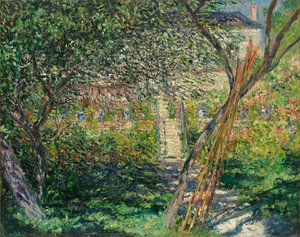 Monet's Garden at Vetheuil - Claude Monet
Step into a realm of serene beauty with Claude Monet’s Monet’s Garden at Vetheuil (1881) – a painting that captures the essence of a tranquil afternoon
Cart on the Snow Covered Road with Saint-Simeon Farm - Claude Monet
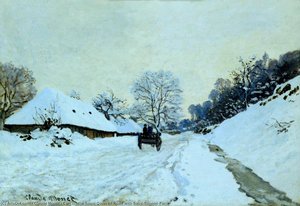 Cart on the Snow Covered Road with Saint-Simeon Farm - Claude Monet
Step into a realm of quiet beauty with Claude Monet’s Cart on the Snow Covered Road with Saint-Simeon Farm (1865) – a painting that captures the serene stillness of rural life in winter, inviting us to pause and feel the crisp air and soft light. This intimate work deserves its place among the ‘Top 25’ because it exemplifies Monet's early mastery of Impressionism, showcasing his innovative approach to capturing fleeting moments in nature and offering a glimpse into the beauty of a secluded countryside.
Painted during a period when Monet was deeply influenced by Eugène Boudin and Johan Barthold Jongkind, both of whom introduced him to the principles of plein air painting, this artwork reflects the harsh winters experienced in France during the 1860s. The loose brushwork and emphasis on capturing the fleeting effects of light and atmosphere are hallmarks of the style – a bold departure from traditional academic conventions.
“ Cart on the Snow Covered Road with Saint-Simeon Farm ” perfectly exemplifies Monet’s signature Impressionist style. He deliberately eschews traditional academic techniques in favor of visible, textured strokes that create a sense of movement and life within the stillness of the winter landscape. The muted color palette—dominated by whites, blues, and grays—reflects the snowy environment and overcast sky, while subtle hints of brown and green add contrast and depth.
The painting’s power lies not only in its subject matter but also in Monet’s masterful manipulation of color and texture. The visible brushstrokes aren't hidden; they *are* the painting, contributing to its dynamic energy and creating a surface that seems to shimmer with light. This textur
Track Coming out of Saint-Lazare Station - Claude Monet
 Track Coming out of Saint-Lazare Station - Claude Monet
Step into a bustling Parisian scene with Claude Monet’s Track Coming out of Saint-Lazare Station (1877) – a painting that captures the energy and transformation of modern life, inviting us to pause and feel the rush of steam and the excitement of industrial progress. This dynamic work deserves its place among the ‘Top 25’ because it exemplifies Monet's ability to capture fleeting moments in time, offering a unique perspective on the intersection of tradition and innovation within a rapidly changing city.
Painted during a period of unprecedented technological advancement, this artwork reflects Paris’s transformation into a bustling metropolis. The Gare Saint-Lazare was one of Paris’s most important railway stations, serving as a hub for travel to the western suburbs and Normandy. Monet rented a studio near the station in 1877 and completed a series of paintings depicting its bustling activity – capturing not just the physical space but also the atmosphere of constant movement.
“ Track Coming out of Saint-Lazare Station ” perfectly exemplifies Monet’s signature Impressionist style. He deliberately eschews traditional academic techniques in favor of visible, expressive brushwork and a focus on capturing light and atmosphere. The loose application of paint creates an immediate sense of spontaneity, reflecting the artist's desire to depict his sensory experience rather than a precise photographic representation. Monet masterfully employs “broken color” – applying small strokes of pure color side-by-side – allowing the viewer’s eye to optically blend them, resulting in a shimmering effect that beautifully conveys the atmosphere of the station.
The painting's power lies not only in its subject matter but also in Monet’s masterful manipulation of color and texture. The muted blues, greys, and whites dominate the canvas, reflecting the hazy atmosphere of the station and the steam billowing from the locomotive. These colors are beautifully balanced by subtle hints of brown and green, grounding the scene in reality. Crucially, Monet employed an impasto technique—applying paint thickly to the canvas—which gives the artwork a remarkable tactile quality. The visible brushstrokes aren’t hidden; they *are* the painting, contributing to its dynamic energy and creating a surface that seems to shimmer with light.
This artwork is a testament to Monet's early mastery of Impressionism, showcasing his innovative approach to capturing fleeting moments in nature and offering a glimpse into the beauty of a bustling city. It’s a timeless representation of industrial dynamism.”
Sunrise, The Sea - Claude Monet
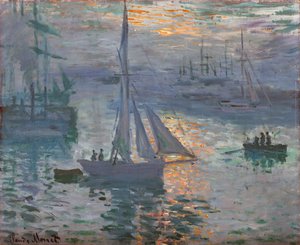 Sunrise, The Sea - Claude Monet
Step into a world of maritime tranquility with Claude Monet’s Sunrise, The Sea (1873) – a painting that captures the vibrant energy of a coastal scene, inviting us to pause and feel the warmth of dawn reflecting on the water. This captivating work deserves its place among the ‘Top 25’ because it exemplifies Monet's revolutionary approach to capturing fleeting moments in nature, solidifying his commitment to plein air painting and offering a glimpse into the beauty of a bustling harbor.
Painted during a period of profound artistic exploration, this artwork reflects Monet’s relocation to Argenteuil—a charming village on the Seine. He found himself captivated by its maritime activity and the ever-changing effects of light upon it. This period marked a pivotal moment in his artistic development, solidifying his commitment to plein air painting—working directly from nature, rather than within the confines of a studio. His ambition was not simply to depict what he saw, but *how* he perceived it: the shimmering quality of light on water, the subtle shifts in color as shadows lengthened, and the overall atmospheric mood of a given moment.
“ Sunrise, The Sea ” perfectly exemplifies Monet’s signature Impressionist style. He deliberately eschews traditional academic techniques in favor of visible, textured strokes that create a sense of movement and life within the stillness of the dawn. The loose application of paint creates an immediate sense of spontaneity, reflecting the artist's desire to depict his sensory experience rather than a precise photographic representation. Monet masterfully employs “broken color” – applying small strokes of pure color side-by-side – allowing the viewer’s eye to optically blend them, resulting in a shimmering effect that beautifully conveys the atmosphere of the harbor.
The painting's power lies not only in its subject matter but also in Monet’s masterful manipulation of color and texture. The rich color palette—dominated by cool blues and greens that represent the water, contrasted with warm oranges, yellows, and purples in the sky—suggests either a rising or setting sun, casting a golden glow over the scene. This interplay of colors creates a harmonious yet dynamic visual effect, evoking a sense of tranquility and serenity despite the bustling activity on the water. More than just a depiction of a harbor, it’s an invitation to contemplate the beauty of light, movement, and the ephemeral nature of moments.
This artwork is a testament to Monet's early mastery of Impressionism, showcasing his innovative approach to capturing fleeting moments in nature and offering a glimpse into the beauty of a bustling harbor. It’s a timeless representation of maritime activity.”
Madame Monet in Japanese Costume (La Japonaise) - Claude Monet
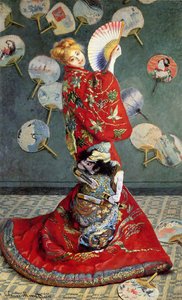 Madame Monet in Japanese Costume (La Japonaise) - Claude Monet
Step into a world of theatrical beauty with Claude Monet’s Madame Monet in Japanese Costume (La Japonaise) (1876) – a painting that captures a moment of captivating cultural fusion, inviting us to pause and feel the allure of exoticism and artistic exchange. This striking portrait deserves its place among the ‘Top 25’ because it exemplifies Monet's pioneering exploration of Japonisme, showcasing his ability to blend traditional Japanese aesthetics with Impressionist techniques in a truly innovative way.
Painted during a period of intense fascination with Japan within European art circles, this large-scale work (232 x 142 cm) was exhibited at the second Impressionist exhibition. Monet’s deep admiration for Japanese art and culture is immediately apparent in the intricate details of Camille's kimono and the backdrop of uchiwa fans – a deliberate attempt to capture not just a likeness, but an *experience* of Japanese aesthetics.
“ Madame Monet in Japanese Costume (La Japonaise) ” perfectly exemplifies Monet’s Impressionist style. He employs bold brushstrokes and a rich color palette dominated by deep reds, blues, and golds to create a sense of depth and texture – almost as if the scene is unfolding before our eyes. The composition is balanced yet dynamic, with Camille's profile turned towards the viewer, holding a fan in the colors of the French flag—a subtle nod to both cultures. The detailed samurai embroidery on her robe contrasts with her delicate pose, highlighting the fusion of cultural elements.
The painting’s power lies not only in its subject matter but also in Monet's masterful manipulation of color and texture. The fans in the background symbolize communication and cultural heritage, while Camille’s smile and direct gaze evoke a sense of grace and elegance. However, there is an underlying layer of complexity – the blonde wig emphasizes her European identity, creating a subtle tension between authenticity and appropriation. This juxtaposition invites viewers to contemplate the nuances of cultural exchange and the ways in which art can both celebrate and critique these interactions.
This artwork is a testament to Monet’s early mastery of Impressionism, showcasing his innovative approach to capturing fleeting moments in nature and offering a glimpse into the beauty of a bustling world. It's a timeless representation of cultural fusion—a reminder that art can transcend boundaries and inspire new perspectives.”
Woman in a Garden - Claude Monet
 Woman in a Garden - Claude Monet
Step into a world of serene contemplation with Claude Monet’s Woman in a Garden (1876) – a painting that captures the essence of peaceful solitude and invites us to pause, breathe, and appreciate the simple beauty of nature. This captivating Impressionist masterpiece deserves its place among the ‘Top 25’ because it exemplifies Monet's pioneering exploration of everyday life and his masterful ability to evoke atmosphere through light and color, solidifying his legacy as a master of capturing fleeting moments.
Painted during a period when Monet was refining his Impressionist techniques and exploring themes of domesticity and the natural world, this artwork reflects his commitment to plein air painting—working directly from nature. The painting’s vibrant colors, loose brushstrokes, and balanced composition create a sense of harmony and serenity that resonates with art lovers and collectors alike.
" Woman in a Garden " perfectly exemplifies Monet's Impressionist style. He employs visible, expressive brushwork and an emphasis on capturing the overall mood rather than fine details. The painting’s rich color palette dominated by shades of green, with warm hues of yellow and orange contrasting against cooler greens, evokes a sense of warmth and tranquility. Red and pink accents from the flowers add pops of color to the scene, enhancing its lively atmosphere.
The central subject—a woman reading in the garden—symbolizes tranquility, introspection, and the joy of solitude. The vibrant colors and natural setting evoke feelings of serenity, happiness, and connection with nature. This painting invites viewers to pause and appreciate the simple pleasures of life, making it a perfect addition to any space seeking to inspire calm and contemplation.
This artwork is a testament to Monet’s early mastery of Impressionism, showcasing his innovative approach to capturing fleeting moments in nature and offering a glimpse into the beauty of a tranquil garden. It's a timeless representation of domesticity and the pursuit of peace—a reminder that art can transport us to serene landscapes.”
Storm off the Belle-Ile Coast - Claude Monet
 Storm off the Belle-Ile Coast - Claude Monet
Step into a world of raw power and emotional intensity with Claude Monet’s Storm off the Belle-Ile Coast (1886) – a painting that captures the untamed fury of nature, inviting us to pause and feel the visceral thrill of confronting its sublime force. This captivating seascape deserves its place among the ‘Top 25’ because it exemplifies Monet's revolutionary approach to capturing atmospheric conditions and his ability to evoke a profound sense of awe through color and movement, solidifying his legacy as a master of portraying the sublime.
Painted during a period when Monet was deeply engaged in exploring natural landscapes and refining his plein air techniques, this artwork reflects his fascination with the transient effects of weather and light. The painting’s dynamic composition—a carefully balanced interplay between the chaotic energy of the sea and the vastness of the sky—captures a fleeting moment of nature's fury.
" Storm off the Belle-Ile Coast " perfectly exemplifies Monet’s Impressionist style. He employs vigorous, expressive brushwork and a rich color palette dominated by cool blues, grays, and whites to convey the movement of the water and the swirling sky. The loose application of paint creates a sense of immediacy, capturing the fleeting nature of the storm. The painting's textural richness—achieved through impasto techniques—enhances the feeling of turbulence and raw energy.
The painting symbolizes the uncontrollable forces of nature and the sublime experience of confronting the vast, indifferent ocean. The swirling clouds and crashing waves serve as metaphors for life’s unpredictable challenges, inspiring resilience and admiration for the natural world’s grandeur. This artwork invites viewers to reflect on the power of nature, evoking feelings of awe, respect, and introspection.
This painting is a testament to Monet's early mastery of Impressionism, showcasing his innovative approach to capturing fleeting moments in nature and offering a glimpse into the beauty of a turbulent coast. It’s a timeless representation of natural power—a reminder that art can transport us to wild landscapes and inspire contemplation.”
Vetheuil (8) - Claude Monet
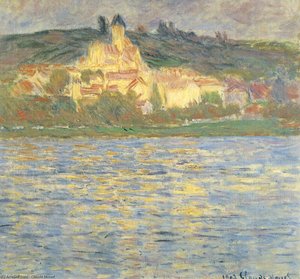 Vetheuil (8) - Claude Monet
Step into a moment suspended in time with Claude Monet’s Vetheuil (8) (1901) – a painting that invites us to pause and feel the quiet beauty of the Seine Valley as experienced by one of art's most perceptive observers. This captivating landscape deserves its place among the ‘Top 25’ because it exemplifies Monet’s revolutionary approach to capturing light, atmosphere, and the subjective experience of nature—a testament to his enduring legacy.
Painted during a period of profound personal reflection and artistic evolution for Monet, this work embodies his core philosophy – to distill the essence of nature not through precise representation, but through the fleeting perception of light and color. The painting resides within a series he created while renting a modest house across from Vetheuil, a charming village nestled along the riverbank near his beloved Giverny.
" Vetheuil (8) " is deceptively simple: a modest town unfolds gently on the hillside, its buildings—a church spire, several houses, and a prominent clock tower—rendered with loose, almost impressionistic brushstrokes. The water dominates the foreground, reflecting the sky and the surrounding landscape in shimmering hues of blue and grey. A single bird gracefully arcs across the scene, adding a touch of dynamism to this otherwise serene tableau.
Monet’s genius lies not in meticulous detail but in his ability to capture the *impression* of light – the way it dances on the water's surface, transforming the colors of the buildings, and creating an atmosphere that is both luminous and melancholic. Notice how Monet uses short, choppy strokes of blue and grey to represent the water, creating a sense of movement and reflecting the sky above. Similarly, he employs vibrant yellows and oranges to capture the warmth of the sunlight filtering through the trees. This painting isn’t a literal depiction; it’s a feeling translated onto canvas—a quiet celebration of everyday beauty.”
Weeping Willow - Claude Monet
 Weeping Willow - Claude Monet
Step into a moment suspended in time with Claude Monet’s Weeping Willow (1918) – a painting that invites us to pause and feel the quiet beauty of nature, capturing the essence of Impressionism through light, color, and profound emotional resonance. This captivating work deserves its place among the ‘Top 25’ because it exemplifies Monet’s revolutionary approach to capturing atmosphere and the subjective experience of nature—a testament to his enduring legacy.
Painted during a period of profound personal reflection and artistic evolution for Monet, this work embodies his core philosophy – to distill the essence of nature not through precise representation, but through the fleeting perception of light and color. The painting resides within a larger series he undertook exploring the same subject under varying conditions—different times of day, seasons, and weather.
" Weeping Willow " is deceptively simple: a weeping willow tree stands prominently in a forest setting, rendered with loose, almost impressionistic brushstrokes. The drooping branches evoke a sense of melancholy and introspection, yet within Monet’s hand, this symbol transcends simple sadness. Instead, it becomes a vehicle for exploring themes of transience, beauty in decay, and the cyclical nature of life itself.
The painting's visual language is quintessential Impressionism. Monet employs short, broken brushstrokes—visible across the canvas—to create a shimmering effect, mimicking the dappled sunlight filtering through the willow’s leaves. The palette is dominated by muted greens, blues, and browns, subtly layered to suggest depth and atmosphere. Notice how Monet doesn't meticulously render each individual leaf; instead, he uses color and texture to convey their overall presence and movement.
This painting is part of a larger series that allowed him to delve deeper into the subject’s nuances. The deliberate blurring of detail contributes significantly to the painting’s dreamy quality, inviting the viewer to lose themselves in its tranquil embrace. Its serene beauty continues to inspire calm and reflection—a timeless reminder of nature's enduring power.”
The Valley of Sasso, Sunshine - Claude Monet
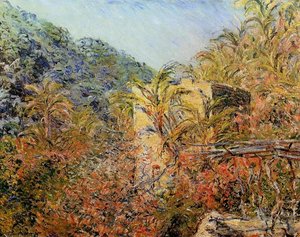 The Valley of Sasso, Sunshine - Claude Monet
Claude Monet’s The Valley of Sasso, Sunshine (1884) is more than just a landscape; it's an immersive experience rendered in oil on canvas. This masterpiece deserves its place among the ‘Top 25’ because it exemplifies Monet’s revolutionary approach to capturing atmosphere and the subjective perception of nature—a testament to his enduring legacy.
The painting immediately draws the viewer into a serene valley scene, dominated by rolling hills and distant mountains shrouded in a hazy blue. A solitary figure, subtly positioned amidst the trees, adds a touch of human presence to this otherwise untouched vista, inviting us to contemplate the relationship between humanity and the natural world.
" The Valley of Sasso, Sunshine " perfectly exemplifies Monet’s systematic approach to painting – a dedication to series paintings focused on single subjects observed at different times of day, under varying weather conditions. He wasn't simply aiming to depict a valley; he was meticulously studying its transformation through the shifting qualities of light and atmosphere.
What distinguishes Monet’s work from that of his contemporaries is his relentless pursuit of capturing the ephemeral – the way sunlight dances on water, how shadows lengthen with the passing hours. This dedication to repetition and observation was a radical departure from traditional academic painting, prioritizing personal perception over strict representation. The composition of “The Valley of Sasso, Sunshine” is deceptively simple yet profoundly effective. Monet employs loose, broken brushstrokes – a signature technique of Impressionism – to create an impression of movement and vibrancy.
This painting’s serene beauty continues to inspire calm and reflection—a timeless reminder of nature's enduring power. Its subtle depiction of light and shadow invites us to pause and appreciate the fleeting moments of beauty that surround us, a sentiment that resonates deeply in our increasingly fast-paced world.”
Conclusion
As we conclude our journey through Claude Monet’s extraordinary world, it's not merely the technical brilliance of these paintings that lingers, but their profound ability to connect us across time and space. These are not simply historical treasures; they are living presences—works that continue to move hearts, shape interiors, and ignite a spark of creativity within each of us. We’ve witnessed how Monet wrestled with light itself, transforming fleeting moments into enduring symbols of beauty, tranquility, and the ever-changing nature of perception.
Each brushstroke, each carefully chosen hue, speaks to a deep understanding of the human condition—our yearning for connection with the natural world, our appreciation for simple pleasures, and our capacity for wonder. These paintings remind us that art isn’t confined to galleries or museums; it lives within us, shaping our thoughts and emotions long after we've turned away.
At OriginalUniqueArt.com , we believe in preserving this spirit of artistic legacy. Our skilled artists meticulously recreate these masterpieces as hand-painted reproductions, honoring the original’s soul and detail with a dedication to authenticity that is both profound and deeply satisfying. We invite you to explore our full collection here —to bring a piece of this timeless beauty into your own home and experience the magic of Monet firsthand.
May these paintings continue to inspire, uplift, and remind us of the enduring power of art to connect us to something larger than ourselves.”