The Silvered Surface: The Metaphysical Significance of Mirrors in Art History To gaze into a mirror is to encounter a paradox; it is to see the world as it appears, yet to be confronted by an image that possesses no physical substance. Throughout the...
To gaze into a mirror is to encounter a paradox; it is to see the world as it appears, yet to be confronted by an image that possesses no physical substance. The silvered surface has functioned far more than a tool for vanity or a device for capturing light. It acts as a profound metaphysical threshold, a boundary between the tangible reality of the viewer and the illusory realm of the depicted. When we look at a reflective surface, we are engaging with specular reflection—the mirror-like bounce of waves from a surface where the angle of reflection equals the angle of incidence. This physics is the foundation upon which artists build their illusions.
The technical mastery required to render these surfaces is immense. An artist does not simply paint glass; they capture how light bends, how shadows soften upon impact, and how the surrounding environment is subtly distorted by the curvature of the medium. By including a reflection within a frame, the painter breaks the fourth wall, pulling the spectator into the narrative and suggesting that truth lies in the hidden layers revealed through the reflective gaze.
The Specular Window: The Mirror as a Portal to the Infinite In the grand tapestry of art history, few devices possess the profound metaphysical weight of the mirror. Far more than a mere tool for vanity or a surface for checking one's visage, the mir...
In earlier eras, mirrors were primarily narrative props embedded within tightly coded social and moral frameworks. In Neoclassical portraiture and Romantic domestic scenes, they symbolized virtue, vanity, or temptation, signifying presence and authorship. In Dutch painting, it was customary for mirrors to serve a duplicating function, repeating what existed in another space as a form of mastery. Consider Velázquez’s Las Meninas, where the mirror reflecting King Philip IV and Queen Mariana invites contemplation on the nature of art and the viewer’s role within the scene.
These reflections were not merely decorative; they were windows into the soul. In classical portraiture, the meticulous rendering of reflective surfaces was a deliberate attempt to capture the ephemeral. The mirror possessed the power to reveal intimate details of a sitter's countenance while simultaneously masking reality behind a shimmering, deceptive sheen. This duality—the emblem of both truth and deception—has remained a central preoccupation for those studying the deeper currents of art historical symbolism.
Psychic Rupture: The Surrealist Fragmentation of Self
The painting Mirror Women - Mirror Heads by Salvador Dali is a thought-provoking piece that showcases the artist's unique style and ability to blend reality with fantasy. Created in 1982, this oil painting is a prime example of Surrealist art, inviti...
As we transitioned from the structured clarity of the Renaissance into the turbulent psyche of the twentieth century, the mirror underwent a radical metamorphosis. The smooth, predictable surface gave way to the fractured and the unsettling. For the Surrealists, driven by an obsession with the subconscious, the mirror ceased to be a reliable narrator of truth. Instead, it became a site of psychic rupture, where the boundaries between the self and the "other" could dissolve entirely.
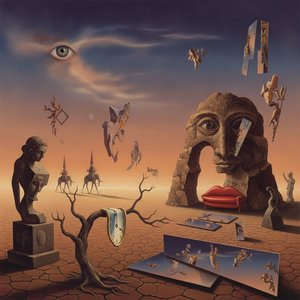
Salvador Dalí utilized this fragmentation to explore the human psyche. In Mirror Women - Mirror Heads (1982), he presents figures whose faces are replaced by mirrors reflecting objects from nature. This technique deconstructs identity, presenting a version of reality that is not a singular image but a fragmented multiplicity. Similarly, his work often explores layered reflections to create a kaleidoscopic reality, where the subject is eternalized through virtual corneas reflected in real mirrors. Here, the mirror does not depict a person; it deconstructs the very concept of being.
From Motif to Medium: The Immersive Shift
By the late twentieth century, mirrors ceased to function primarily as depicted objects and began to serve as integral materials. They transformed from motifs into mediums, collapsing the distinction between representation and participation. Michelangelo Pistoletto’s Mirror Paintings, begun in the 1960s, are pivotal in this shift. By replacing traditional painted backgrounds with polished reflective surfaces, Pistoletto renders the spectator part of the composition. The image exists only when the viewer engages; authorship becomes distributed between the artist and the moving audience.
This immersion reaches a peak in the work of Yayoi Kusama. Her Infinity Mirror Rooms dissolve individuality entirely, surrounding audiences with infinite recursive reflections. These environments destabilize the boundary between the self and the collective, real and virtual. The mirror no longer represents a space; it produces an experience that surrounds the body, making the viewer an inhabitant of the art itself.
Ian Howard: Architect of Surreal Symmetry Ian Howard, born in Aberdeen, Scotland, in 1952, isn’t merely a painter; he's an architect of perception, meticulously constructing worlds where the familiar bends and distorts. His art, characterized by intr...
Beyond the psychological, mirrors allow artists to manipulate the very mechanics of seeing. The use of symmetry—whether rotational, translational, or reflectional—serves as a tool for creating unsettling juxtapositions. Contemporary artists like Ian Howard, born in 1952, act as architects of perception, constructing worlds where the familiar bends and distorts through intricate symmetry and alchemical symbolism. His work uses repeating patterns and mirrored forms to generate disorientation, inviting viewers to question their own visual logic.
This exploration extends into the realm of optical art and structural illusion. Artists like Walter Farndon create seemingly impossible spaces, utilizing principles of Gestalt psychology to explore why we perceive movement where none exists. Similarly, Alicja Kwade utilizes intersecting concrete walls and reflective surfaces to create zones that resist simultaneous perception, forcing a confrontation with the fragmentation of sight. Through these precise geometric manipulations, the mirror becomes a tool for investigating the architecture of perception itself.
The Infinite Interface: Reflection in a Digital Age
In our contemporary era, defined by constant external stimulation and digital screens, the mirror operates like a technological interface. We see this in the way modern photography and video art utilize reflections to create layers of meaning. From the infinitely reflected models in William Klein’s Parisian photography to the way Lyle Ashton Harris uses public restroom mirrors to capture moments of self-check, the medium remains vital. Even the "glitchy" textures of digital-inspired works echo the fractured reflections of the past.
We live in an age where visibility can feel like a claustrophative compulsion, driven by the logic of "Instagrammability." Yet, the quietude found in a painted reflection offers a rare opportunity for stillness. Whether it is the way a heavy impasto brushstroke catches the light or how a fragmented composition mirrors our modern experiences, reflection invites us to pause. It challenges us to look past the surface and find the depth beneath, reminding us that even in an age of fleeting images, the act of looking remains a transformative experience.
At OriginalUniqueArt.com, we celebrate this enduring fascination with the surface and the soul. Whether through our professional digital mockups for custom commissions or our curated collection of high-impact contemporary prints, we provide the means to bring these profound visual dialogues into your own space.
Salvador Dalí'nin en iyi 25 eserini keşfedin! Sürrealizmin büyülü dünyasına dalın, rüya gibi tablolarının ardındaki hikayeleri öğrenin. Ev dekorasyonunuz için lüks sanat baskıları OriginalUniqueArt.com'da sizi bekliyor. Koleksiyonu şimdi keşfedin!
Step into the dreamscape of Salvador Dalí. Explore 25 iconic surrealist masterpieces, from melting clocks to bizarre visions. Discover the stories behind these timeless works and find museum-quality art reproductions for your decor. Explore the full collection online at OriginalUniqueArt.com.
Journey through the High Renaissance with our curated guide to Michelangelo Buonarroti’s top 25 masterpieces. From the powerful David to the Sistine Chapel, explore the stories behind these iconic works and find museum-quality art reproductions. Discover all masterpieces on OriginalUniqueArt.com.
Journey through the High Renaissance with our curated guide to Michelangelo Buonarroti's top 25 masterpieces. From the powerful David to the Sistine Chapel, explore the stories behind these iconic works and find museum-quality art reproductions. Discover all masterpieces on OriginalUniqueArt.com.
Journey through the soul of the High Renaissance with our curated guide to Michelangelo Buonarroti's top 25 masterpieces. From the powerful David to the Sistine Chapel, explore the stories behind these iconic works and find museum-quality art reproductions. Discover all on OriginalUniqueArt.com.
OStüdyo asistanıÇevrimiçi · bir dakika içinde yanıtlar
Merhaba! Bir sanat eseri seçmenize, siparişinizi takip etmenize veya garanti sorularınızı yanıtlamanıza yardımcı olabilirim. Size nasıl yardımcı olabilirim?

 Mirroring the Soul: A Curated Exploration of Reflection and Self-Perception in Art History
 Reflections of Reality: Exploring the Metaphysical Power of Mirror Images in Fine Art
 Mirror Women - Mirror Heads, 1982
 Ian Howard