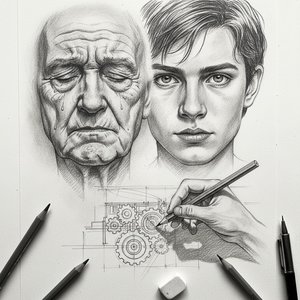
The Soul of the Line: Understanding Graphite's Versatility and Carbon Essence The Power of Graphite: Mastering Depth, Texture, and Detail in the Art of Pencil Drawing The Alchemy of Carbon: Understanding Graphite's Versatility To hold a piece of grap...
To hold a piece of graphite is to grasp a fragment of the earth’s ancient history. This concentrated essence of carbon possesses a unique ability to bridge the gap between a simple mark and a profound statement. Unlike the heavy, dramatic presence of charcoal or the permanent authority of ink, graphite offers a subtle, silvery spectrum that invites an artist into a delicate dance of light and shadow. It is a medium of intimacy, often serving as the first glimpse into an artist's unfiltered mind before a canvas is ever touched by oil or acrylic.
The physical composition of a pencil core is a functional blend of graphite powder and a clay binder. This mixture allows for a wide range of expressive possibilities. When we work with graphite, we are not merely applying pigment; we rather manipulate light itself, using the silvery sheen of carbon to capture the ephemeral qualities of atmosphere and the softest gradations of skin, stone, or silk. This fundamental connection to the earth provides a grounded, monochromatic power that strips away the distraction of color to focus on the pure essence of form.
Takeaway: Graphite is a versatile tool for capturing subtle transitions between light and shadow through its unique carbon composition.
The First Decision: Selecting the Correct Pencil Grades
The Soul of the Line: Understanding Graphite's Unique Versatility The Nuances of Graphite: Exploring Emotional Depth & Technical Mastery in Pencil Drawing A History Rooted in Earth: The Origins & Evolution of Graphite Wikipedia: Colored pencil A colo...
Every great drawing begins with a deliberate choice of instruments. For the student, understanding the technical toolkit is the first step toward mastery. The world of graphite is defined by its grades, a spectrum ranging from the hard, precise 9H to the soft, velvety 9B. These designations are not merely labels but instructions on how much clay and carbon are present in the core. Harder pencils, such as the H series, contain more clay, making them ideal for fine, light lines that do not smudge easily.
Conversely, the B series contains more graphite, resulting in a softer, darker mark that is excellent for deep shadows and blending. A professional toolkit often includes a variety of these grades to allow for different levels of pressure and tonal depth. For instance, an artist might use a 2H for initial structural outlines and transition to a 4B or 6B to build up the weight of a shadow. This selection process is essential because using the wrong grade can lead to unintended smudging or an inability to achieve necessary contrast.
Takeaway: Select harder pencils (H series) for precise details and softer pencils (B series) for deep, dark shadows.
Establishing Structure: Mastering Light and Shadow
The Soul Captured in Graphite: A Renaissance Encounter In the quiet intimacy of a pencil sketch, one often finds a more profound truth than in the grandest oil canvases. Albrecht Dürer’s Pencil Sketch Portrait of Erasmus is a breathtaking testament t...
Once the tools are selected, the focus shifts to the fundamental act of seeing. Establishing structure requires a mastery of light and shadow, often referred to as chiaroscuro. This technique involves using varying densities of graphite to sculpt form from the void. By controlling the density of lines, an artist can create a sense of three-dimensionality. In the works of masters like Albrecht Dürer, we see how a sophisticated system of hatching and cross-hatching creates weight and shadow, particularly in the deep recesses of a subject's features.
The interplay of light and dark is what gives a drawing its palpable presence. Lighter, more delicate strokes allow light to dance across surfaces like a forehead or cheekbone, while tightly packed lines suggest the heavy folds of fabric or the darkness of an eye socket. This rhythmic movement of tone transforms a flat piece of paper into a breathing, atmospheric experience. Without this careful management of value, a drawing remains a mere outline rather than a structured form.
Takeaway: Use hatching and varying line density to create three-dimensional form through light and shadow.
Adding Complexity: Techniques for Texture and Fine Detail
Pyoun Dae Sik: Exploring Texture and Space Through Graphite Lines Pyoun Dae Sik (born , South Korea) is a contemporary Korean graphite artist whose distinctive style centers on meticulous line drawings that delve into the complexities of space and re...
After the basic structure is established, the artist can begin to introduce complexity through texture. Graphite allows for an incredible range of tactile realism, from the smoothness of silk to the ruggedness of stone. This is achieved through repetitive actions and varying pressure. Some artists, such as Pyoun Dae Sik, utilize repetitive drawing actions, tracing lines over and amounts of time to create textured surfaces that capture subtle variations in tone.
Fine detail requires a steady hand and sharp tools. The ability to render intricate textures—such as the weathered skin in a portrait or the delicate veins in a leaf—depends on the artist's control over the pencil point. This level of precision can be seen in the works of Karl Buergerniss, whose drawings capture everyday objects with exceptional fidelity. By layering different grades and using varying pressures, an artist can build up layers of tone that invite the viewer to contemplate the materiality of the subject.
Takeaway: Build texture by layering different pencil grades and using repetitive, controlled strokes.
Choosing the Support: Paper Grain and Weight Considerations
The surface upon which the graphite is applied is just as important as the pencil itself. The grain, or tooth, of the paper determines how much graphite the surface can hold. A smooth paper is ideal for fine, detailed work and sharp lines, whereas a more textured paper allows for heavier applications of soft graphite, making it suitable for expressive, atmospheric sketches. The weight of the paper also plays a role; heavier stocks provide a sturdy foundation that can withstand the pressure of heavy erasing or layering.
The interaction between the graphite and the paper grain is what creates the final visual texture. On a rougher surface, the graphite may appear more broken or "toothy," which can be useful for landscapes or gritty subjects. On a smooth surface, transitions can be much smoother, allowing for the seamless gradations seen in high-end portraiture. Choosing the wrong support can frustrate even the most skilled artist by preventing the desired level of detail or tonal depth.
Takeaway: Match paper texture to your goal, using smooth paper for detail and textured paper for heavy shading.
Long-Term Care: Preservation and Professional Framing
To protect a graphite drawing, one must consider the environmental factors that affect its longevity. Because graphite is a soft medium, it is susceptible to smudging from physical contact. Furthermore, while graphite is resistant to many natural aging processes, the paper support can be vulnerable to light and moisture. To prevent damage, it is essential to use acid-free matting to create an air gap between the drawing and the glass of the frame. This prevents moisture buildup that could lead to foxing or warping.
Proper framing also enhances the presentation of the work. A well-chosen frame with solid wood—such as gold leaf, espresso, or natural finishes—provides a structural boundary that complements the monochromatic tones of the graphite. For those managing collections or decorating large spaces, ensuring that works are kept out of direct sunlight and away from high-humidity areas is vital for maintaining the clarity of the silver-grey tones for decades.
Takeaway: Use acid-free matting and avoid direct sunlight to ensure the long-term preservation of graphite works.
Elevate your sketches with our expert guide to mastering graphite. Learn professional techniques for creating high-impact depth, intricate textures, and bold contrast through the alchemy of carbon and light. Perfect for art students seeking technical mastery.
Discover the sophisticated mastery of graphite drawing. Explore expert techniques for achieving profound depth, intricate texture, and hyper-realistic detail through the alchemy of carbon, curated for the discerning art enthusiast and professional collector.
Journey through history with 10 legendary graphite pencil masterpieces. From hyperrealistic portraits to classical sketches, explore the techniques that redefined art. Find museum-quality reproductions and decor inspiration at OriginalUniqueArt.com. Discover all masterpieces on OriginalUniqueArt.com
Explore the captivating world of graphite drawing! Discover its rich history, master essential techniques like chiaroscuro, and learn how artists evoke emotion through this timeless medium. Expert insights for art enthusiasts.
OStüdyo asistanıÇevrimiçi · bir dakika içinde yanıtlar
Merhaba! Bir sanat eseri seçmenize, siparişinizi takip etmenize veya garanti sorularınızı yanıtlamanıza yardımcı olabilirim. Size nasıl yardımcı olabilirim?

 The Alchemy of Graphite: An Expert Guide to Mastering Depth, Texture, and Detail in Pencil Sketching
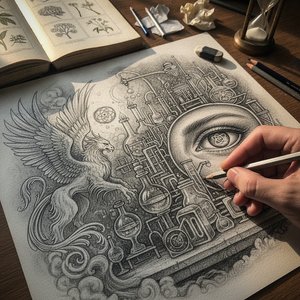 The Alchemy of Graphite: An Expert Guide to Mastering Detail and Depth in Pencil Sketching
 Pencil sketch portrait of Erasmus
 Pyoun Dae Sik