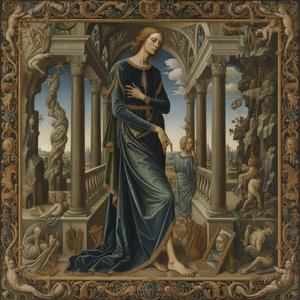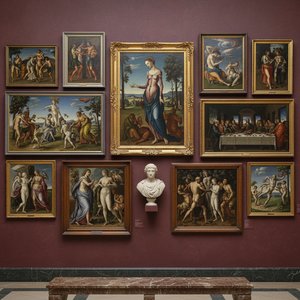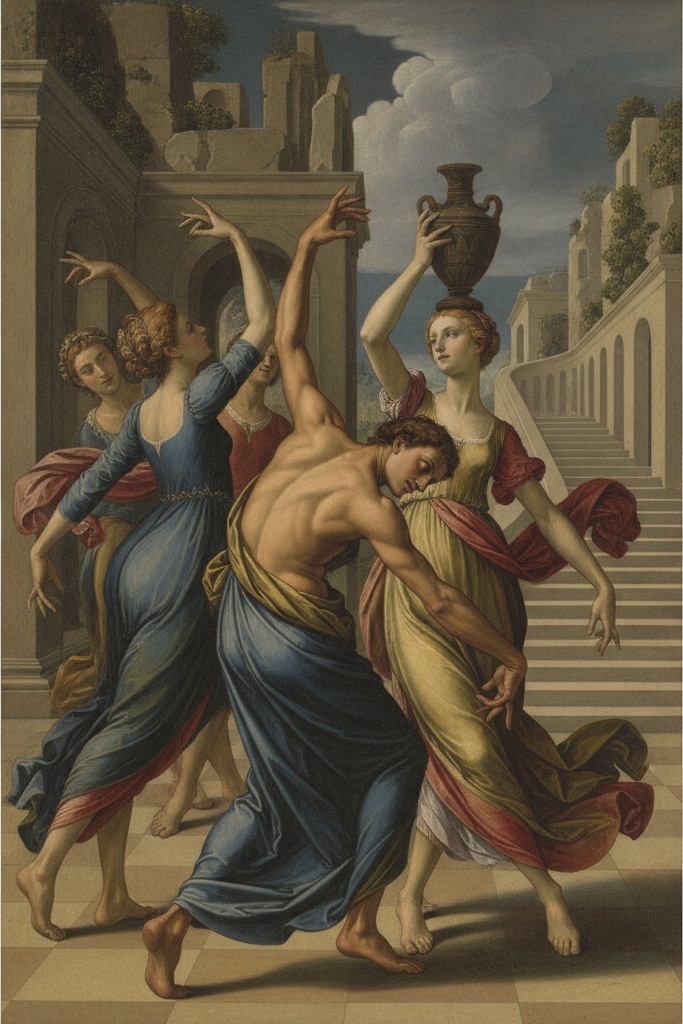
The Fracture of Harmony: Transitioning from High Renaissance Stability to Mannerist Tension
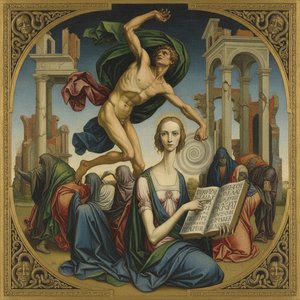 Beyond Perfection: The Dramatic Elegance and Intellectual Tension of Renaissance Mannerism
The Fracture of Harmony: Transitioning from High Renaissance Stability to Mannerist Tension Drama & Distortion: A Journey Through the Captivating World of Baroque Mannerism The Renaissance Departure: From Serene Harmony to Mannerist Tension Drama and...
To truly appreciate the breathtaking tension that defines Mannerism, one must first sit quietly with the serene equilibrium of the High Renaissance. For decades, the European artistic landscape was anchored by a pursuit of mathematical perfection—a world where perspective, anatomical accuracy, and light converged to create a window into a divine, harmonious reality. The masters of this era, such as Leonardo da Vinci and Raphael, sought to mirror the order of the cosmos through stable pyramidal compositions and a sense of tranquil permanence. There was a predictable beauty in this classical stability, a belief that art could capture the very essence of a rational and balanced universe.
However, as the sixteenth century dawned, this classical stability began to fracture under the weight of profound social, religious, and political upheaval. The certainty of the Renaissance—rooted in faith, reason, and order—was shaken by seismic events such as the sack of Rome in 1527, which fostered a pervasive sense of instability and disillusionment across the continent. This was not a sudden rupture but a gradual, deliberate departure from the predictable. The clarity of the Renaissance gave way to an era of ambiguity and psychological complexity. Where once there was balance, there emerged tension; where once there was naturalism, there arose a fascination with the artificial and the elongated.
The Aesthetic of Distortion: Exploring Elongated Forms and Artificial Elegance
 Lucrezia
The Enigmatic Gaze of Lucrezia To stand before Parmigianino’s depiction of Lucrezia is to encounter not merely a portrait, but a moment suspended in rarefied air—a breath held between earthly contemplation and divine aspiration. The subject, identifi...
Mannerism, derived from the Italian word maniera meaning “style” or “manner,” represented an era that privileged compositional tension over the clarity of earlier painting. This movement embraced an aesthetic of distortion, where the grace of the human form was intentionally exaggerated to achieve a sense of otherworldly elegance. Artists moved away from the pursuit of anatomical perfection toward a mastery of elegant distortion. Figures became unnaturally elongated, limbs stretched with a languid, serpentine grace that defied the laws of gravity and biology.
A profound example of this can be found in the works of Parmigianino, whose depictions often capture a moment suspended in rarefied air—a breath held between earthly contemplation and divine aspiration. In his portraiture, such as the enigmatic Lucrezia, one encounters an ethereal grace where the upward gaze directs the viewer beyond the frame, inviting speculation about celestial visions. This fascination with the artificial allowed artists to move beyond mere imitation of nature, instead creating a highly sophisticated, intellectualized version of reality that emphasized artifice and stylistic virtuosity over simple naturalism.
Architectural Drama: The Innovative Use of Space in Palazzo del Te and Beyond
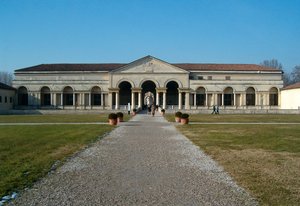 Palazzo del Tè
A Symphony of Mannerism: Unveiling Palazzo del Te in Mantua Nestled just outside the walls of Mantua, Italy, Palazzo del Te stands as a breathtaking testament to Renaissance artistry and architectural innovation. More than simply a palace, it’s an im...
The spirit of Mannerist tension was not confined to the canvas; it breathed through the very stone and mortar of the era's architecture. The Palazzo del Te in Mantua stands as a breathtaking testament to this architectural innovation. Constructed between 1524 and 1534 for Federico II Gonzaga, this suburban masterpiece was designed by Giulio Romano, a brilliant pupil of Raphael. More than simply a palace, it serves as an immersive experience—a journey into a mind that viewed architecture as a tool for illusion and power.
Unlike the rigid formality of earlier Renaissance structures, Palazzo del Te embraces asymmetry and irregularity. Its facades feature unexpected spans and a masterful interplay of light and shadow, creating an atmosphere that is simultaneously grand and intimate. Within its walls, the Hall of Giants showcases frescoes that transform every surface into a canvas for myth and allegory. This architectural approach mirrors the painterly shift toward instability, using space not as a static container but as a dynamic, theatrical element that challenges the viewer's perception of reality.
Spiritual Intensity: Examining the Emotional Depth of Late Mannerist Devotional Works
 Adoration of the Shepherds
Adoration of the Shepherds: A Visionary Synthesis El Greco’s *Adoration of the Shepherds*, completed around 1605-10, stands as a monumental testament to Mannerist artistic innovation and spiritual fervor. More than just a depiction of biblical narrat...
As the movement progressed, the stylistic flourishes of Mannerism were increasingly harnessed to express profound spiritual fervor. This era saw a transition from the tranquil devotion of the early Renaissance to an intensely personal and emotional meditation on faith. The works of El Greco stand as a monumental testament to this innovation. In his masterpiece, Adoration of the Shepherds, the artist employs a singular approach to portraying emotion that anticipates movements like Expressionism by centuries.
Through the masterful manipulation of perspective and color, El Greco transforms a familiar biblical narrative into a vision of divine grace. He utilizes dramatic chiaroscuro—stark contrasts between light and dark—to heighten the emotional impact, guiding the viewer’s gaze across a composition that pulsates with dynamism. The elongated figures and thick impasto create a palpable texture, conveying both physical presence and ethereal luminosity. In these works, the boundaries between the earthly and the divine begin to dissolve, offering a sanctuary of spiritual brilliance that speaks directly to the soul.
Mannerism’s Legacy: From the Italian Masters to Northern European Evolution
The Fracture of Harmony: Transitioning from High Renaissance Stability to Mannerist Tension Northern Mannerism: The Dramatic Evolution of Renaissance Art and the Mastery of Elegant Distortion The Transition from Renaissance Harmony to Mannerist Tensi...
While the heart of Mannerism beat most strongly in Italy, its influence spread across Europe, evolving into what is known as Northern Mannerism. This expansion brought a new layer of complexity to the style, as artists in Northern Europe integrated the elegant distortions of the Italian tradition with their own unique cultural sensibilities. The result was a dramatic evolution characterized by even greater psychological depth and a fascination with intricate, often unsettling, detail.
Even in more obscure corners of the art world, the influence of this era persisted. Painters like Giulio Cesare Amidano, working in Parma, contributed to the evolving landscape by incorporating elements of the emerging Mannerist aesthetic into serene landscapes. His works, while retaining a classical grace, possess an underlying tension and a sense of melancholy that reflect the anxieties of the age. From the grand frescoes of Rome's Oratorio del Gonfalone to the far-reaching reaches of Northern Europe, the legacy of Mannerism remains a profound chapter in art history—a period where the fracture of harmony gave birth to an enduring era of dramatic elegance and intellectual sophistication.
At OriginalUniqueArt.com, we specialize in bringing the dramatic beauty of these historical eras into modern spaces. Whether you are a professional decorator furnishing a hotel or a collector seeking a centerpiece for a corporate office, our catalog offers an unparalleled depth of classical reproductions. From the elongated elegance of Mannerist portraits to large-format architectural murals, our 100% hand-painted oil works on cotton canvas provide the texture and tonal range that only true craftsmanship can achieve. We offer professional solutions including custom sizing, multi-panel layouts for wide walls, and a dedicated Trade Program for B2B clients. Discover how we can transform your space with the timeless tension of the Old Masters.