Art Nouveau
evestar (Alphonse Mucha)
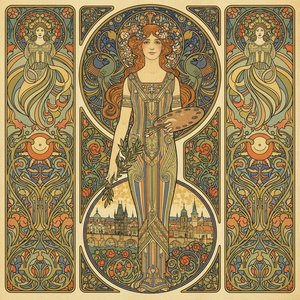
evestar, Alphonse Mucha (1860–1939) tarafından yapıldı. Art Nouveau akımına aittir. Giclée Print ile yapılmıştır.
- Giclée Print

 El Yapımı Yağlı Boya Tablo
 Paylaş
 Paylaş
 Bilgi formu


 İndir
 Benzer ürünler
 Slayt Gösterisi
 Soru & Cevap

 İstatistikler
evestar hakkında kısa bilgi
- Başlık
- evestar
- Sanatçı
- Alphonse Mucha (1860–1939)
- Sanatçının doğum yeri
- Ivančice, Çekya
- Teknik
- Giclée Print
- Akım
- Art Nouveau
- Dönem
- 19th Century
- Konu
- woman figure, flowing dress, art nouveau, graceful pose, gold frame, allegorical art
evestar neyi betimliyor?
Evostar: A Symphony of Art Nouveau Grace
Alphonse Mucha’s “Evostar,” painted in 1902, is more than just a depiction of a woman; it's an embodiment of the Art Nouveau movement at its zenith. This captivating artwork immediately draws the viewer into a world of flowing lines, organic forms, and a profound sense of movement – hallmarks of Mucha’s distinctive style. The image portrays a figure in a luxurious, billowing dress, arms outstretched as if caught mid-dance or gesture, radiating an aura of serene elegance and poised beauty. The gold frame surrounding the piece isn't merely decorative; it elevates the scene, suggesting a masterpiece worthy of display within a grand salon or private collection.
The Art Nouveau Vision
Mucha’s artistic journey began in Brno, Czech Republic, shaped by early exposure to music and a deep appreciation for nationalistic themes. His time at the Prague Academy of Fine Arts proved formative, though ultimately disillusioning, leading him to Paris in 1887 – a pivotal moment where he forged his own path. “Evostar” exemplifies this self-defined style perfectly. Influenced by artists like Pierre-Auguste Renoir and Gustave Moreau, Mucha masterfully blended classical ideals with a distinctly modern sensibility. The flowing lines of the dress, the delicate rendering of fabric, and the overall composition are all characteristic of Art Nouveau’s fascination with nature's curves and its rejection of rigid academic conventions. The piece speaks to a desire for beauty that transcends mere representation – it seeks to evoke an emotional response through form and color.
Symbolism and Narrative
The woman in “Evostar” embodies the idealized feminine figure so frequently depicted by Mucha. Her posture, with arms outstretched, suggests both grace and invitation, a timeless symbol of beauty and allure. While the precise narrative is open to interpretation, it aligns with Art Nouveau’s penchant for allegorical themes and romanticized depictions of women. The necklace she wears adds an element of opulence and sophistication, further enhancing her captivating presence. The color palette – dominated by golds, creams, and subtle greens – contributes significantly to the artwork's ethereal quality, evoking a sense of twilight or evening, hence the title “Evostar.”
Technical Mastery & Historical Context
Created in 1902, "Evostar" reflects Mucha’s refined technique. He was renowned for his meticulous attention to detail, particularly in rendering fabrics and textures. The layering of paint creates a luminous effect, capturing the play of light on the woman's dress with remarkable skill. This artwork emerged during a period of immense artistic innovation – the Art Nouveau movement was rapidly gaining momentum across Europe. Mucha’s success, largely due to his commissions for Sarah Bernhardt and his innovative poster designs, helped solidify Art Nouveau as a dominant aesthetic. Reproductions like this allow us to appreciate not only Mucha's genius but also the broader cultural context in which he worked, a world captivated by beauty, elegance, and the promise of a new artistic era.
evestar için yüksek çözünürlüklü görseller
Kamu malı: sanatçı 1939 yılında vefat etmiştir.
Alphonse Mucha, evestar. Kamu malı.
evestar hakkında sorular ve cevaplar
Alphonse Mucha imzalı "evestar" hangi teknikle icra edilmiştir?
"evestar", Giclée Print kullanılarak icra edilmiştir.
Alphonse Mucha imzalı "evestar" neyi betimliyor?
Alphonse Mucha imzalı "evestar" şunları betimler: woman figure, flowing dress, art nouveau, graceful pose, gold frame, allegorical art, muchas style.
"evestar" eseri kamu malı mı?
Alphonse Mucha imzalı "evestar", kamu malıdır - telif hakkı süresi dolmuştur statüsündedir. Bu durum, eserin görüntüsünün nasıl çoğaltılabileceğini belirler.
"evestar" eserinin yaratıcısı kim?
"evestar" adlı eserin Alphonse Mucha tarafından yapıldığı düşünülmektedir.
"evestar" hangi sanat akımına aittir?
Alphonse Mucha imzalı "evestar" adlı eserin dahil olduğu akım Art Nouveau akımıdır. Bu sınıflandırma, çalışmayı ilgili sanatçılar ve sanat eserleri arasında konumlandırır.
"evestar" adlı eser, Alphonse Mucha'in sanat kariyerinin hangi dönemini temsil ediyor?
Alphonse Mucha'in kariyerinde "evestar", Mature Period dönemine denk gelmektedir. Bu evre, eserin sanatçının diğer çalışmalarıyla kıyaslanmasına olanak tanır.
Alphonse Mucha imzalı "evestar" eserinin telif hakkı durumunu ne açıklamaktadır?
Alphonse Mucha imzalı "evestar", kamu malıdır - telif hakkı süresi dolmuştur statüsündedir. Telif hakkı süresi, sanatçının 1939 yılındaki ölümünden itibaren hesaplanmaktadır.
"evestar" adlı eser, Alphonse Mucha’in temaları ve üslubuyla nasıl bir bütünlük sağlıyor?
"evestar", temaları arasında renoir, moreau influences, czech national symbolism, bernhardt’s theatrical style, idealized feminine beauty, signature art nouveau work yer alan Alphonse Mucha'in Art Nouveau dönemine ait bir eserdir.
"evestar" adlı eser, Alphonse Mucha'in genel üretim tarzını yansıtıyor mu?
"evestar", woman figure, flowing dress, art nouveau, graceful pose, gold frame, allegorical art, muchas style konularını betimlerken; Alphonse Mucha tarafından işlenen temalar renoir, moreau influences, czech national symbolism, bernhardt’s theatrical style, idealized feminine beauty, signature art nouveau work şeklindedir. Bu iki unsurun karşılaştırılması, eserin sanatçının alışılagelmiş konularıyla nasıl bir ilişki içinde olduğunu ortaya koymaktadır.
Sanatçı hakkında, Alphonse Mucha

1860–1939, Çekya
Alphonse Mucha
Erken Yaşam ve Eğitim Doğum: 15 Temmuz 1860'ta Ivanačice, Moravya (günümüzde Çek Cumhuriyeti)'nde doğdu. Küçük yaşlardan itibaren sanatsal yetenekler sergiledi. Prag Güzel Sanatlar Akademisi’nde okudu ancak geleneksel yaklaşımlardan tatmin olmadı. Kendi stilini geliştirmek için 1887'de Paris'e taşındı.
Alphonse Mucha Hakkında Alphonse Mucha tarafından yapılmış öne çıkan eserler
Alphonse Mucha tarafından yapılan diğer eserler
 The Moon
 Nude
 The Apotheosis of the Slavs1926
 Stained-Glass Window in St. Vitus Cathedral
evestar üzerine denemeler
 French artworks of the 1880sFrench Impressionist masterpieces by Claude Monet, Pierre-Auguste Renoir, and Georges Seurat. Find museum-quality reproductions on Original…
 The Elegance of Art Nouveau: A Masterclass in Organic Forms, Sinuous Lines, and the Belle Époque AestheticExplore the exquisite world of Art Nouveau. From Alphonse Mucha’s flowing lines to the organic elegance of the Belle Époque, discover the h…
 Alphonse Mucha: A Comprehensive Exploration of Art Nouveau's Master of Decorative SymbolismExplore the life & art of Alphonse Mucha, master of Art Nouveau! Discover his iconic posters, stunning illustrations, and the monumental Sl…