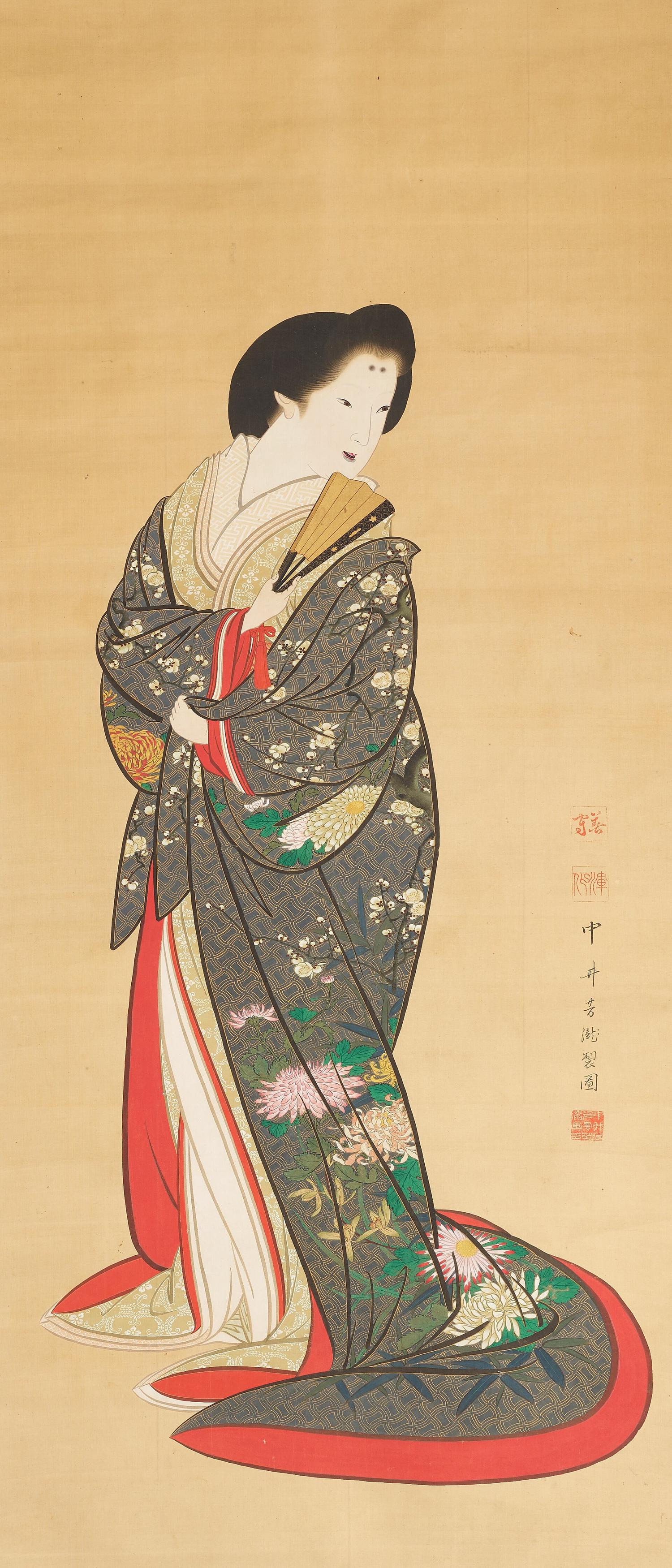
Utagawa Yoshitaki portresi

Utagawa Yoshitaki Tabloları: Bir Galerinin Gözünden En Ünlü 9 Eser

Kasım 2026 tarihinde güncellendi · popülerlik puanımıza göre sıralanmıştır (her bir eser için aramalar, ziyaretler ve siparişler) · 9 eser Utagawa Yoshitaki kataloğumuzda

Özetle

Galerinin gözünde, Utagawa Yoshitaki'in en ünlü tablosu, aslı Bujalance, Bujalance Collection içinde sergilenen Kabuki Genji. Chapter 22 (1860)'dir. Kanadehon Chushingura, act 9 (1870) ve Kabuki Genji. Chapter 2 (1880), her gözün hemen fark edeceği o üçlüyü tamamlıyor. Katalogumuzdaki Utagawa Yoshitaki imzalı 9 eser arasından galerimiz, her biri yapıldığı yıl, sergilendiği müze ve onu eşsiz kılan özellikleriyle birlikte en ünlü 9 eseri aşağıda sunmaktadır.

1841 – 1899, Osaka Ukiyo-e En çok eser: Bujalance Collection

Galerinin en iyi 10 Utagawa Yoshitaki tablosu

1
Kabuki Genji. Chapter 22 (1860) tarafından Utagawa Yoshitaki

Kabuki Genji. Chapter 22

1860 · Woodblock Print · Bujalance Collection, Bujalance

In the delicate dance between classical literature and the vibrant energy of the Kabuki stage, Ichiyōsai Yoshitaki captures a moment of profound cultural synthesis in his exquisite woodblock print, Kabuki Genji. Chapter 22. Created around 1860, this work belongs to a masterful series of fifty-four prints that weave together the legendary tales of the Genji monogatari—the masterpiece of Murasaki Shikibu—with the contemporary celebrity of the Kabuki theater. Through his skilled…

2
Kanadehon Chushingura, act 9 (1870) tarafından Utagawa Yoshitaki

Kanadehon Chushingura, act 9

1870 · Woodblock Print · Bujalance Collection, Bujalance

In this 1870 woodblock print, the stage of the Kabuki tradition is frozen in a moment of high drama. The scene captures a pivotal sequence from act 9 of the historical play Kanadehon Chushingura. A woman sits grounded on the floor, her posture suggesting a state of vulnerability or quiet resolve. She is surrounded by men in traditional Japanese attire, their silhouettes heavy with the weight of silk and duty.…

3
Kabuki Genji. Chapter 2 (1880) tarafından Utagawa Yoshitaki

Kabuki Genji. Chapter 2

1880 · Woodblock Print · Bujalance Collection, Bujalance

In the delicate interplay of color and line found within Kabuki Genji. Chapter 2, we encounter a profound moment where the ephemeral world of the stage meets the timeless elegance of classical literature. Created in 1880 by the master Ichiyōsai Yoshitaki, this exquisite ukiyo-e print serves as a bridge between two pillars of Japanese culture: the dramatic intensity of Kabuki theater and the sweeping romantic narrative of Murasaki Shikibu’s Genji…

4
Kabuki Genji. Chapter 4 (1860) tarafından Utagawa Yoshitaki

Kabuki Genji. Chapter 4

1860 · Woodblock Print · Bujalance Collection, Bujalance

In the delicate dance between literature and performance, Kabuki Genji. Chapter 4 emerges as a breathtaking testament to the artistry of Ichiyōsai Yoshitaki. This exquisite ukiyo-e woodblock print serves as a bridge between two of Japan's most cherished cultural pillars: the epic prose of Murasaki Shikibu’s Genji Monogatari and the electrifying spectacle of Kabuki theater. Within this single composition, we witness a profound synthesis of storytelling, where the rhythmic patterns…

5
Kabuki Actors (1870) tarafından Utagawa Yoshitaki

Kabuki Actors

1870 · Woodblock Print · Bujalance Collection, Bujalance

The woodblock print depicts three Kabuki actors within a crowded theatrical space. On the left, an actor wears a red plaid robe and a blue scarf around the neck. A second figure, seated in the center, is dressed in a matching red plaid garment and a blue scarf. The third actor, standing to the right, wears a robe with black and white stripes. Several spectators occupy the background, including one…

6
Kabuki Genji. Chapter 2 (1860) tarafından Utagawa Yoshitaki

Kabuki Genji. Chapter 2

1860 · Woodblock Print · Bujalance Collection, Bujalance

In the delicate interplay of line and color, Kabuki Genji. Chapter 2 emerges as a breathtaking window into the soul of Japan's Edo and Meiji eras. Created in 1860 by the virtuoso Ichiyōsai Yoshitaki, this exquisite ukiyo-e woodblock print transcends mere portraiture to become a profound dialogue between the ephemeral world of theater and the timeless grandeur of classical literature. The artwork captures a moment of quiet intensity, presenting a…

7
Kabuki Genji. Chapter 7 (1860) tarafından Utagawa Yoshitaki

Kabuki Genji. Chapter 7

1860 · Woodblock Print · Bujalance Collection, Bujalance

In the delicate interplay of woodblock printing and classical storytelling, Kabuki Genji. Chapter 7 emerges as a breathtaking masterpiece by the celebrated master Ichiyōsai Yoshitaki. This exquisite ukiyo-e print serves as a profound bridge between two pillars of Japanese culture: the high literature of the Genji Monogatari (The Tale of Genji) and the electric, larger-than-life world of Kabuki theater. Created around 1860, during the twilight of the Edo period, this…

8
Kabuki Genji. Chapter 1 (1860) tarafından Utagawa Yoshitaki

Kabuki Genji. Chapter 1

1860 · Woodblock Print · Bujalance Collection, Bujalance

In the delicate dance between literature and performance, Kabuki Genji. Chapter 1 emerges as a breathtaking testament to the golden age of Japanese woodblock printing. Created in 1860 by the master Ichiyōsai Yoshitaki, this exquisite ukiyo-e print serves as a bridge between two of Japan's most cherished cultural pillars: the epic prose of Murasaki Shikibu’s Tale of Genji and the electrifying spectacle of Kabuki theater. The artwork captures a moment…

Utagawa Yoshitaki'ın ilgisini çeken konular

Bu orijinal eserlerde en sık karşılaşılan ve her biri en seçkin örneğine sahip olan dört konu.

Utagawa Yoshitaki'in orijinal eserlerinin sergilendiği müzeler

Bu sayfadaki tabloların çoğuna ev sahipliği yapan 2 müze.

Müze Şehir Utagawa Yoshitaki Eserleri Bu listedeki tablolar
Bujalance Collection, BujalanceBujalance Collection Bujalance 8 Kabuki Genji. Chapter 22, Kanadehon Chushingura, act 9, Kabuki Genji. Chapter 2
Minneapolis Institute of Art, MinneapolisMinneapolis Institute of Art Minneapolis 1 Standing Beauty

Utagawa Yoshitaki, her on yıldan bir imza tablo

On yıllara göre eserler

O dönemi tanımlayan orijinal eseri görmek için bir on yıl seçin.

Utagawa Yoshitaki'in tabloları: galeri yanıtları

Tüm Utagawa Yoshitaki tabloları arasında en ünlüsü hangisidir?Cevabı göster

Kabuki Genji. Chapter 22 (1860), Bujalance Collection, Bujalance. Ardından Kanadehon Chushingura, act 9 (1870) ve Kabuki Genji. Chapter 2 (1880) geliyor.

Utagawa Yoshitaki, Kabuki Genji. Chapter 22 eserini tamamladığında kaç yaşındaydı?Cevabı göster

19 yaşında: Kabuki Genji. Chapter 22 1860 yılına aittir ve Utagawa Yoshitaki 1841 yılında doğmuştur.

Utagawa Yoshitaki kaç eser yarattı?Cevabı göster

Kataloğumuzda Utagawa Yoshitaki tarafından 1860 ile 1880 tarihleri arasında üretilmiş 9 eser bulunmaktadır.

Utagawa Yoshitaki'in en ünlü orijinal eserleri nerede sergileniyor?Cevabı göster

Çoğunlukla Bujalance Collection (Bujalance) ve Minneapolis Institute of Art (Minneapolis) bünyesinde yer almaktadır. Yukarıdaki müze tablosu tümünü listelemektedir.

Utagawa Yoshitaki en ünlü tablolarını ne zaman yaptı?Cevabı göster

1860s döneminde: Bu sayfadaki 9 eserin 5 tanesi o dönemde yapılmıştır, bunların Kabuki Genji. Chapter 22 tanesi ise Kabuki Genji. Chapter 22 arasındadır.

Utagawa Yoshitaki'in en erken ve en geç dönemlerine ait ünlü eserleri hangileridir?Cevabı göster

Bu sayfadaki en eski eser Kabuki Genji. Chapter 22 (1860), en yeni eser ise Kabuki Genji. Chapter 2 (1880)'dir.

Utagawa Yoshitaki en çok hangi konulara geri döndü?Cevabı göster

Kabuki (6), Genji monogatari (5) ve Japanese print (4), bu sayfadaki 9 eser genelinde.

Utagawa Yoshitaki en çok hangi teknikle çalıştı?Cevabı göster

Bu sayfadaki 9 eserin 8 tanesi Woodblock Print türündedir.

Utagawa Yoshitaki hangi akımla ilişkilendiriliyor?Cevabı göster

bu sayfadaki orijinallerine bakılırsa Ukiyo-e,

Bujalance Collection bünyesinde hangi Utagawa Yoshitaki orijinalleri bulunuyor?Cevabı göster

Kabuki Genji. Chapter 22, Kanadehon Chushingura, act 9 ve Kabuki Genji. Chapter 2: Bujalance Collection, Bujalance, bu sayfadaki eserlerden 8 tanesine ev sahipliği yapmaktadır.

Utagawa Yoshitaki: sanatçı

Ichiyosai Yoshitaki: The Maestro of Kabuki Portraits

Ichiyosai Yoshitaki (歌川 芳滝, April 13, 1841 – June 28, 1899), also known as Utagawa Yoshitaki, stands as a towering figure in the history of Japanese woodblock prints. Active primarily during the late Edo and early Meiji periods, he dedicated his life to capturing the dynamism and captivating presence of Kabuki actors—a pursuit that cemented his legacy as Osaka’s most prolific designer of *yakusha-e* (役者絵) for nearly four decades. His output, numbering over 1,200 distinct prints, offers an unparalleled visual record of a vibrant theatrical world, revealing not only the artistry of the actors themselves but also the social and cultural currents of his time. Yoshitaki’s origins were humble; born Nakai Tsunejirō in Shimizucho, Osaka, to a paste merchant father. At the tender age of twelve, he began his artistic apprenticeship under Utagawa Yoshiume (1819–1879), a respected printmaker who had previously studied under the renowned Utagawa Kuniyoshi. This early training instilled in him a foundational understanding of woodblock techniques and design principles, providing a crucial springboard for his future success. Crucially, Yoshitaki quickly surpassed his teacher, establishing himself as an independent artist by 1855, marking the beginning of a remarkable career defined by sheer volume and artistic refinement.

Osaka’s Printmaking Powerhouse

Yoshitaki's rise to prominence was inextricably linked to Osaka’s thriving printmaking scene during the mid-19th century. Unlike Kyoto, which traditionally dominated Japanese art production, Osaka had emerged as a vibrant center for commercial printing, fueled by its bustling port and burgeoning merchant class. Yoshitaki skillfully capitalized on this environment, becoming the dominant designer of *yakusha-e* in Osaka from the 1860s through the 1880s. His workshop became a hub of activity, employing numerous carvers, printers, and binders – a testament to his considerable influence and demand for his work. He wasn’t merely producing prints; he was orchestrating an entire artistic ecosystem.

A Symphony of Color and Form: Artistic Techniques

Yoshitaki's prints are characterized by their remarkable detail, vibrant colors, and dynamic compositions. He mastered the complex techniques of *nishiki-e* (錦絵), utilizing multiple woodblocks to achieve a full spectrum of hues – a significant advancement over earlier monochrome or limited-color prints. His skillful use of shading and perspective created an illusion of depth and movement, effectively capturing the theatricality of the Kabuki stage. He paid meticulous attention to costume design, meticulously recreating the elaborate robes and accessories worn by the actors, reflecting both their individual roles and the broader social status they represented. The influence of Kuniyoshi is evident in Yoshitaki’s bold outlines and dramatic lighting, but he developed a distinctly personal style characterized by a remarkable sensitivity to human expression.

Subjects: The Stars of Kabuki

Yoshitaki's oeuvre is overwhelmingly dominated by portraits of Kabuki actors – *yakusha-e*. He depicted a vast array of performers, from established stars to rising talents, capturing their distinctive personalities and stage mannerisms. His subjects included legendary figures like Enjaku Jitsukawa I (as Saijō Takanori), Wagō Soga Homare no Fuji, and countless others. These prints weren’t simply representations; they were carefully constructed narratives, conveying not only the actors' appearances but also their roles, emotions, and relationships within the larger theatrical drama. His ability to capture a fleeting expression or a dramatic pose was truly remarkable, transforming static images into vibrant snapshots of a dynamic art form.

Legacy and Historical Significance

Ichiyosai Yoshitaki’s prolific output provides an invaluable window into 19th-century Japanese society. His prints reflect the popularity of Kabuki theater, the rise of Osaka as a commercial center, and the evolving tastes of a rapidly changing nation. Beyond their artistic merit, his works offer insights into social hierarchies, fashion trends, and cultural values. Yoshitaki’s influence extended beyond his own lifetime; he trained numerous students who continued to produce *yakusha-e*, ensuring that his style and techniques remained influential for generations. Today, his prints are highly sought after by collectors worldwide, representing a crucial link in the chain of Japanese artistic heritage. They stand as a testament to one man’s dedication, skill, and profound understanding of the captivating world of Kabuki theater.