The Barnes Foundation – A Sanctuary of Vision
The Barnes Foundation stands as an unparalleled testament to Albert C. Barnes’s singular vision—a belief that art possesses its fullest power when experienced relationally, and that true understanding blossoms from direct observation. Founded in 1922 amidst the burgeoning artistic landscape of Philadelphia, this institution began as a private collection housed within Barnes’s Merion residence, nurtured by his unwavering passion for aesthetics and fueled by an intellectual curiosity that transcended conventional art historical narratives. From its inception, Barnes envisioned a space where paintings weren't merely admired but actively contemplated—a deliberate challenge to the prevailing academic dogma of his time and a radical democratization of access to beauty. This pioneering approach continues to define The Barnes today, even after its relocation to a stunning new facility on Benjamin Franklin Parkway in 2012, mirroring the intimacy of Barnes’s original galleries and ensuring that his distinctive philosophy remains powerfully intact.
-
A Revolutionary Display Method: The Ensemble Aesthetic
-
The Collection Highlights: Cézanne's Genius & Matisse's Bold Palette
-
Architectural Harmony: Cret’s Vision for Reflection
-
Beyond the Walls: Merion Arboretum – A Living Legacy
-
A Singular Educational Philosophy
A Revolutionary Display Method: The Ensemble Aesthetic
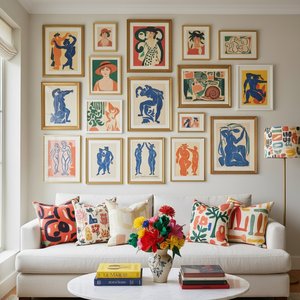
What truly distinguishes The Barnes Foundation is its revolutionary display method—the “ensemble” arrangement. Forget chronological order or artist-centric groupings; here, paintings are hung in carefully curated clusters, juxtaposing disparate styles, periods, and cultures to ignite visual connections and encourage deeper contemplation. This deliberate interplay isn’t arbitrary; it's rooted in Barnes’s conviction that art reveals its full power when experienced relationally—through contrasts of form, color, line, and light. He sought to dismantle traditional hierarchies, urging viewers to engage with artworks not as isolated masterpieces but as elements within a larger, harmonious whole. This approach demands active participation from the visitor, prompting them to forge their own interpretations and discover hidden resonances between seemingly unrelated works. The result is an exhilarating, intellectually stimulating experience that challenges conventional art historical narratives and invites a profoundly personal response. It’s a space where the eye is constantly led on a journey of discovery, finding unexpected harmonies and challenging preconceived notions about artistic value—a deliberate echo of Barnes's formative years spent studying philosophy alongside John Dewey.
The Collection Highlights: Cézanne's Genius & Matisse's Bold Palette
At the heart of The Barnes Foundation’s extraordinary collection lies Paul Cézanne, whose influence on modern art is undeniable. Housing over 181 canvases by Cézanne—arguably the largest and most comprehensive collection globally—the museum showcases his groundbreaking exploration of perspective and spatial relationships that irrevocably altered artistic conventions. *Garçon au Gilet Rouge*, a particularly compelling example, exemplifies Cézanne’s masterful use of color and composition to convey both psychological depth and formal innovation. Beyond Cézanne, The Barnes boasts significant representations of Henri Matisse's evolution as an artist—from his early Fauvist experiments to his later, more decorative compositions. Masterpieces by Van Gogh and Gauguin further enrich the collection—Gauguin’s *M Loulou* is a particularly evocative example—demonstrating Barnes’s commitment to capturing the emotional essence of artistic expression across cultures and time periods.
Architectural Harmony: Cret’s Vision for Reflection
The building itself, designed by architect Paul Philippe Cret, embodies The Barnes Foundation's ethos of contemplative engagement with art. Cret meticulously crafted a space that replicates the scale and intimacy of Barnes’s original Merion galleries—a deliberate homage to his pioneering approach to artistic appreciation. The building’s soaring atrium, bathed in natural light, serves as a central gathering point for visitors and fosters a sense of serenity amidst the vibrant artworks on display. Cret's design incorporates elements of Mediterranean architecture, reflecting Barnes’s lifelong fascination with travel and exploration—a testament to his belief that beauty can be found in unexpected places.
Beyond the Walls: Merion Arboretum – A Living Legacy
Complementing The Barnes Foundation’s artistic treasures is its adjacent Merion Arboretum—a sprawling expanse of meticulously landscaped gardens featuring rare trees, historic plant collections, and serving as a living laboratory for horticultural education. Established in 1940 by Laura Leggett Barnes, the arboretum continues to honor her dedication to fostering an appreciation for both artistic and natural beauty—a harmonious extension of Barnes’s overarching vision for enriching human experience. Today, The Barnes Arboretum stands as a powerful reminder that art isn't merely something to be admired from afar but a vital force capable of inspiring creativity and nurturing connection with the natural world.
A Singular Educational Philosophy
Inspired by John Dewey’s philosophy of education—Barnes believed that learning should be experiential—The Barnes Foundation prioritizes active engagement with art as a catalyst for intellectual growth. Courses at Penn and Columbia University were taught in partnership with Dewey, emphasizing observation, critical thinking, and dialogue—a deliberate effort to cultivate students' ability to appreciate beauty and engage thoughtfully with complex ideas. The Barnes’s enduring legacy rests on this commitment to fostering a profound understanding of artistic expression and its role in shaping human consciousness—a testament to Albert C. Barnes’s unwavering conviction that art possesses the power to transform lives."