Porträtt av Worthy Vizard

De 14 mest kända målningarna av Worthy Vizard, ett galleriselektion

Uppdaterad november 2026 · rangordnad efter vår popularitetspoäng (sökningar, besök och beställningar för varje verk) · 14 verk av Worthy Vizard i vår katalog

Kortfattat

Av alla originalverk som Worthy Vizard lämnade efter sig är det mest kända Charles Cardale Babington (1888), i samlingen hos Department of Plant Sciences, Cambridge. Tätt efter följer Alderman W. R. Barker (1902) och Portrait of a Man (1884). Vår katalog innehåller 14 verk av Worthy Vizard; galleriet har bevarat de 14 som världen beundrar mest, var och en presenterad med sitt datum, sitt museum och sin historia.

1848 – 1904 Flest verk: Manx Museum

Worthy Vizards 10 främsta målningar: galleriets utvalda verk

1
Charles Cardale Babington (1888) av Worthy Vizard

Charles Cardale Babington

1888 · Oil On Canvas · Department of Plant Sciences, Cambridge

In this 1888 portrait, Worthy Vizard captures the likeness of Charles Cardale Babington. The subject sits with a quiet, settled presence. He was a man of many disciplines, an English botanist, entomologist, and archaeologist. His gaze holds the weight of a scholar who once studied under John Stevens Henslow. There is a stillness here, the kind found in a library or a herbarium after the lamps have been dimmed.

2
Alderman W. R. Barker (1902) av Worthy Vizard

Alderman W. R. Barker

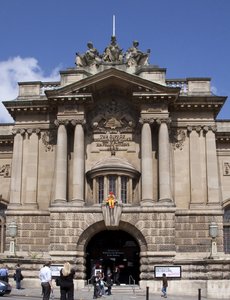
1902 · Oil On Canvas · Bristol Museum - Art Gallery, Bristol

In this 1902 portrait, we encounter Alderman W. R. Barker, a man whose presence commands the space through a quiet, settled authority. The subject is rendered with a meticulous realism that avoids the theatrical, opting instead for a sincere observation of character. He is positioned centrally, his form emerging from a dark, indistinct background that directs all attention to the textures of his person. The lighting is deliberate, sweeping in…

Urvalet av Worthy Vizard fortsätter, 11 till 14

Motiven som fångade Worthy Vizards blick

De fyra motiv som återkommer oftast i dessa originalverk, var och ett med sitt främsta exempel.

Museerna som förvarar Worthy Vizards originalverk

De 6 museer som innehar flest av målningarna på denna sida.

Museum Stad Verk av Worthy Vizard Målningar från denna lista
Manx Museum, DouglasManx Museum Douglas 3 Portrait of an Unknown Lady, Major James Spittal (c.1825–1914), Portrait of an Unknown Gentleman
Department of Plant Sciences, CambridgeDepartment of Plant Sciences Cambridge 1 Charles Cardale Babington
Bristol Museum - Art Gallery, BristolBristol Museum - Art Gallery Bristol 1 Alderman W. R. Barker
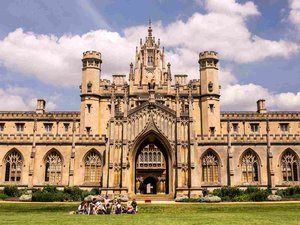
St John’s College, CambridgeSt John’s College Cambridge 1 Charles Cardale Babington (1808–1895), Professor of Botany
Torquay Town Hall, TorquayTorquay Town Hall Torquay 1 J. F. Rockhey, JP, Mayor of Torquay (1896–1897 1901–1902), Freeman of the Borough
The Council House, ChichesterThe Council House Chichester 1 Peyton Temple Mackeson, MA (Oxon) JP, Hon. Freeman of the City of Chichester, Mayor (1901– 1904)

Worthy Vizard decennium för decennium: originalen som definierar varje era

Verk per decennium

Välj ett decennium för att se originalverket som definierar det.

Samlarfrågor om Worthy Vizards målningar

Vilket verk är Worthy Vizard mest känd för?Visa svaret

Charles Cardale Babington (1888), Department of Plant Sciences, Cambridge. Alderman W. R. Barker (1902) och Portrait of a Man (1884) följer efter.

Hur gammal var Worthy Vizard när Charles Cardale Babington skapades?Visa svaret

40 år gammal: Charles Cardale Babington är från 1888, och Worthy Vizard föddes 1848.

Vilka är de tio mest kända målningarna av Worthy Vizard?Visa svaret

Charles Cardale Babington, Alderman W. R. Barker, Portrait of a Man, William Martin Rust, Mayor of Wisbech (1883), Joseph Hamlyn (1809–1888), Portrait of an Unknown Man, Portrait of an Unknown Lady, Portrait of a Man with a Moustache, Alderman J. F. Thompson och Charles Cardale Babington (1808–1895), Professor of Botany. Rankingen ovan visar varje verks årtal och museum.

Hur många målningar lämnade Worthy Vizard efter sig?Visa svaret

Vår katalog innehåller 14 verk av Worthy Vizard, daterade från 1884 till 1903.

I vilka museer hänger Worthy Vizards mästerverk?Visa svaret

Främst i Manx Museum (Douglas), Department of Plant Sciences (Cambridge) och Bristol Museum - Art Gallery (Bristol). Museitabellen ovan listar alla.

Under vilka år målade Worthy Vizard sina mest kända verk?Visa svaret

Under 1880s: 5 av de 14 verk som finns på denna sida skapades då, varav Charles Cardale Babington.

Vilka är de första och sista kända originalverken av Worthy Vizard?Visa svaret

På den här sidan är det tidigaste Portrait of a Man (1884) och det senaste Peyton Temple Mackeson, MA (Oxon) JP, Hon. Freeman of the City of Chichester, Mayor (1901– 1904) (1903).

Vilka motiv valde Worthy Vizard oftast?Visa svaret

Portrait (4), Dignified (4) och Victorian (3), fördelat på 14 verk på denna sida.

Vilken teknik använde Worthy Vizard mest?Visa svaret

Oil On Canvas, för 2 av de 14 verk som finns på denna sida.

Vilka verk av Worthy Vizard finns utställda på Manx Museum?Visa svaret

Portrait of an Unknown Lady, Major James Spittal (c.1825–1914) och Portrait of an Unknown Gentleman: Manx Museum, Douglas har 3 av verken på denna sida.

Worthy Vizard: liv och verk

Worthy Vizard: A Dignified Observer of Victorian Society

Worthy Vizard (1848-1904) wasn’t a name that immediately resonates within the grand halls of art history, yet his quietly assured portraits offer a remarkably intimate glimpse into the social fabric of late 19th and early 20th century Britain. Born in London, Vizard's career unfolded primarily through commissions – largely for prominent figures like mayors, academics, and members of the gentry – resulting in a body of work characterized by its dignified restraint and meticulous realism. He wasn’t a flamboyant innovator; rather, he excelled at capturing the essence of his subjects with a subtle grace that speaks volumes about their status and character.

Vizard's artistic training remains somewhat shrouded in mystery, though it’s believed he initially studied under John Brett, a leading figure in the British plein air movement. However, Vizard quickly developed a distinct style, moving away from the bright, open landscapes favored by his teacher and embracing a more controlled, studio-based approach. His technique was rooted in academic tradition – careful observation, precise drawing, and a masterful understanding of light and shadow – but he infused it with a remarkable sensitivity to detail and an ability to convey personality through subtle gestures and expressions. He wasn’t interested in dramatic poses or theatrical displays; instead, he sought to capture the quiet dignity and inherent worth of his subjects.

The Portraiture of Victorian Life

Vizard's most significant contribution lies in his prolific output of portraits. These weren’t merely likenesses; they were carefully constructed representations of individuals within their social context. He frequently depicted mayors, aldermen, and members of the local council – figures who held positions of authority and influence – presenting them with a respectful formality that reflected their roles. Simultaneously, he also painted academics, doctors, and other professionals, showcasing their intellectual pursuits and professional standing. His portraits of Charles Cardale Babington, a botanist, and Alderman W. R. Barker exemplify this trend; each piece meticulously details the subject’s attire, demeanor, and surroundings, offering a window into their lives and professions.

Notably, Vizard's work reflects the prevailing social values of the Victorian era – respect for authority, emphasis on decorum, and a belief in the importance of social standing. His portraits served not only as visual records but also as subtle endorsements of these values. He skillfully navigated the complexities of his role as a portraitist, capturing both the outward appearance and the underlying character of his subjects with remarkable accuracy and sensitivity.

Technique and Style

Vizard’s style is often described as “academic realism,” characterized by its meticulous attention to detail and adherence to classical principles. He employed oil paints with a smooth, polished finish, creating surfaces that shimmered with light and reflected the textures of fabrics and skin. His compositions were typically balanced and symmetrical, reflecting a desire for order and stability. He was particularly adept at rendering clothing – capturing the folds, wrinkles, and sheen of various materials with astonishing precision.

While his work lacks the bold brushstrokes or expressive intensity of some contemporary artists, Vizard’s portraits possess a quiet elegance and understated charm. His use of light is subtle yet effective, creating a sense of depth and atmosphere that draws the viewer into the scene. He avoided overt sentimentality, instead focusing on capturing the essential qualities of his subjects with a cool, objective gaze.

Legacy and Significance

Worthy Vizard’s impact on British portraiture may not be immediately apparent, but his work represents a significant contribution to the genre. He was a skilled craftsman who consistently produced high-quality portraits that captured the essence of Victorian society. His meticulous attention to detail, combined with his sensitivity to character and social context, resulted in a body of work that offers valuable insights into the lives and times of those who shaped Britain during this period.

Today, Vizard’s paintings are primarily found in private collections and museums, but they continue to be appreciated for their quiet dignity and understated charm. His portraits serve as reminders of a bygone era – an era defined by social hierarchy, respect for tradition, and the enduring power of visual representation.