Porträtt av John Ramage

John Ramages målningar: De 22 mest kända, ur ett galleris perspektiv

Uppdaterad november 2026 · rangordnad efter vår popularitetspoäng (sökningar, besök och beställningar för varje verk) · 23 verk av John Ramage i vår katalog

Kortfattat

Ur galleriets perspektiv är John Ramages mest kända målning Portrait of a Gentleman (1780), vars original hänger på Metropolitan Museum of Art i New York. Major Greene, B.A (1777) och Gilbert Van Cortlandt (1785) fullbordar trion som alla känner igen. Av de 23 verk av John Ramage i vår katalog presenterar galleriet nedan de 22 mest kända, var och en som ett original med sitt år, sitt museum och vad som gör det unikt.

1748 – 1802, Dublin Neoclassicism Flest verk: Metropolitan Museum of Art

Galleriets 10 främsta målningar av John Ramage

1
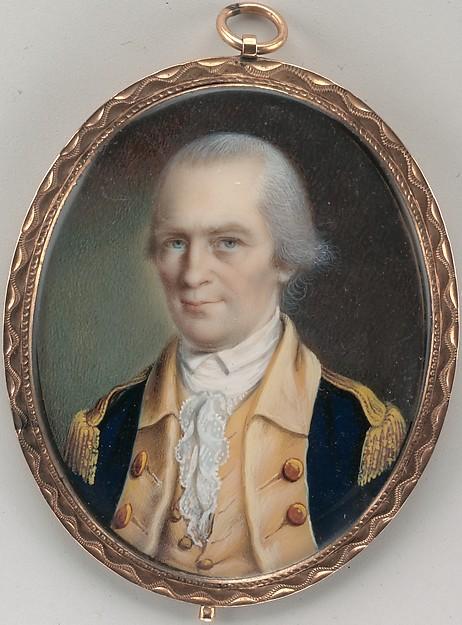
Portrait of a Gentleman (1780) av John Ramage

Portrait of a Gentleman

1780 · Watercolor · Metropolitan Museum of Art, New York

This work is a Portrait of a Gentleman by the artist John Ramage. Created about 1780, this miniature portrait offers a quiet glimpse into the social hierarchies of the late 18th century. The subject is presented in a formal manner, his posture and attire suggesting a man of significant status or importance during this period.

2
Major Greene, B.A (1777) av John Ramage

Major Greene, B.A

1777 · Graphite · Metropolitan Museum of Art, New York

In this 1777 portrait, we encounter Major Greene, B.A., presented in a quiet, bust-length view within the soft confines of an oval frame. The work is a monochrome study, relying entirely on a grayscale palette to define the man's presence. There is a stillness here, a sense of composure that suggests a life of formal responsibility. The lighting is diffused, casting gentle shadows that trace the contours of his face…

3
Gilbert Van Cortlandt (1785) av John Ramage

Gilbert Van Cortlandt

1785 · Ivory · Metropolitan Museum of Art, New York

In this intimate miniature, Gilbert Van Cortlandt gazes out from a quiet moment in history. Painted by John Ramage about 1785, the portrait captures the subject in a subtle, enigmatic pose. He faces slightly to his left, his expression carrying a hint of a smile that suggests a calm, quiet confidence. The small scale of the work invites a close, personal encounter with the man, pulling the viewer into his…

4
Governor George Clinton (1785) av John Ramage

Governor George Clinton

1785 · Oil · Metropolitan Museum of Art, New York

This oval-shaped miniature portrait, dated 1785, presents a head-and-shoulders view of Governor George Clinton. The subject is positioned against a neutral, light background that emphasizes the contours of his face and the structure of his attire. He wears a yellow coat characterized by blue epaulettes and matching buttons, paired with a white ruffled shirt and a dark blue cravat. His hair is graying and styled in a manner consistent with…

5
Mrs. James Bleecker (Sarah Bache) (1795) av John Ramage

Mrs. James Bleecker (Sarah Bache)

1795 · Watercolor · Nationalmuseum, Stockholm

This miniature portrait, executed in 1795, presents a woman facing forward within an oval composition. The subject, identified as Mrs. James Bleecker (Sarah Bache), is depicted from the upper torso upward. Her hair is styled in intricate, circular curls that frame a pale complexion. The color palette relies on muted tones, specifically creams, blues, and soft pinks, with subtle yellow accents appearing in her attire. Light is distributed evenly across…

6
Portrait of a Gentleman (1790) av John Ramage

Portrait of a Gentleman

1790 · Watercolor · Metropolitan Museum of Art, New York

In this intimate miniature, we encounter a gentleman from the late 18th century, captured in a moment of composed formality. The portrait, likely executed around 1790, presents the subject within an oval frame, a shape that lends a sense of containment and focus to his presence. He gazes directly at us, his eyes meeting the viewer with a steady, quiet confidence. There is a certain stillness here, a sense of…

7
Mrs. William Few (Catherine Nicholson) (1787) av John Ramage

Mrs. William Few (Catherine Nicholson)

1787 · Watercolor · Metropolitan Museum of Art, New York

This miniature portrait, dated 1787, depicts Mrs. William Few (Catherine Nicholson) in a bust-length view. The subject is presented within an oval frame that is adorned with pearls and gold accents. Her gaze is directed toward the viewer, creating a sense of direct connection and composure. The composition is centered on her face and upper torso, with the oval frame tightly containing the figure to emphasize her presence.

8
Mrs. Gulian Ludlow (Maria Ludlow) (1790) av John Ramage

Mrs. Gulian Ludlow (Maria Ludlow)

1790 · Intaglio · Metropolitan Museum of Art, New York

The portrait of Mrs. Gulian Ludlow (Maria Ludlow) by John Ramage captures a woman of the late 18th century. Created about 1790, this work presents a bust-length view of the subject. She is framed within an oval, a shape that isolates her presence and focuses the eye upon her steady gaze. Her expression holds a quiet dignity, meeting the viewer with a directness that suggests a composed social standing.

9
Thomas Witter (1786) av John Ramage

Thomas Witter

1786 · Watercolor · Metropolitan Museum of Art, New York

The gaze of Thomas Witter meets the viewer through this intimate watercolor portrait, a work that captures a quiet moment of reflection. Painted by John Ramage in 1786, the piece presents a man caught in a state of contemplation. He appears as a gentleman of his era, his presence rendered with a delicate touch that suggests a life of dignity and perhaps a touch of melancholy. The portrait focuses closely…

10
Theophylact Bache (1790) av John Ramage

Theophylact Bache

1790 · Oil On Panel · Metropolitan Museum of Art, New York

This black and white portrait presents a man positioned within an oval frame. The subject is centered, with his face occupying the primary visual space against a plain white background. He is depicted from a frontal perspective, wearing formal attire that suggests a specific social standing. The lighting is directional, casting shadows that define the contours of his face, hair, and the folds of his clothing. Sharp edges and meticulous…

John Ramages målningar, rankade 11 till 22

Motiven som fångade John Ramages blick

De fyra motiv som återkommer oftast i dessa originalverk, var och ett med sitt främsta exempel.

Museerna som förvarar John Ramages originalverk

De 5 museer som innehar flest av målningarna på denna sida.

Museum Stad Verk av John Ramage Målningar från denna lista
Metropolitan Museum of Art, New YorkMetropolitan Museum of Art New York 17 Portrait of a Gentleman, Major Greene, B.A, Gilbert Van Cortlandt
Nationalmuseum, StockholmNationalmuseum Stockholm 1 Mrs. James Bleecker (Sarah Bache)
Ermitaget, Sankt PetersburgErmitaget Sankt Petersburg 1 George Washington
Smithsonian American Art Museum, Washington, D.C.Smithsonian American Art Museum Washington, D.C. 1 Col. Josiah Parker
Art Institute of Chicago, ChicagoArt Institute of Chicago Chicago 1 Portrait of Augustine Taylor

John Ramage, ett signaturverk per decennium

Verk per decennium

Välj ett decennium för att se originalverket som definierar det.

John Ramages målningar: galleriets svar

Vilken av John Ramages målningar är den mest kända av alla?Visa svaret

Portrait of a Gentleman (1780), Metropolitan Museum of Art, New York. Major Greene, B.A (1777) och Gilbert Van Cortlandt (1785) följer efter.

Hur gammal var John Ramage när Portrait of a Gentleman färdigställdes?Visa svaret

32 år gammal: Portrait of a Gentleman är från 1780, och John Ramage föddes 1748.

Vilka är John Ramages 10 främsta målningar?Visa svaret

Portrait of a Gentleman, Major Greene, B.A, Gilbert Van Cortlandt, Governor George Clinton, Mrs. James Bleecker (Sarah Bache), Portrait of a Gentleman, Mrs. William Few (Catherine Nicholson), Mrs. Gulian Ludlow (Maria Ludlow), Thomas Witter och Theophylact Bache. Rankingen ovan visar varje verks årtal och museum.

Hur många verk skapade John Ramage?Visa svaret

Vår katalog innehåller 23 verk av John Ramage, daterade från 1777 till 1795.

Var hänger John Ramages mest kända original?Visa svaret

Främst i Metropolitan Museum of Art (New York), Nationalmuseum (Stockholm) och Ermitaget (Sankt Petersburg). Museitabellen ovan listar alla.

När skapade John Ramage sina mest kända målningar?Visa svaret

Under 1780s: 12 av de 22 verk som finns på denna sida skapades då, varav Portrait of a Gentleman.

Vilka är John Ramages tidigaste och senaste kända verk?Visa svaret

På den här sidan är det tidigaste Major Greene, B.A (1777) och det senaste Mrs. James Bleecker (Sarah Bache) (1795).

Vilka motiv återkom John Ramage till mest?Visa svaret

Portrait (11), Man (6) och Oval frame (5), fördelat på 22 verk på denna sida.

Vilket medium arbetade John Ramage främst med?Visa svaret

Watercolor, för 6 av de 22 verk som finns på denna sida.

Vilken konstinriktning förknippas John Ramage med?Visa svaret

Neoclassicism, om man dömer efter originalen på denna sida.

Vilka original av John Ramage finns i Metropolitan Museum of Arts samlingar?Visa svaret

Portrait of a Gentleman, Major Greene, B.A och Gilbert Van Cortlandt: Metropolitan Museum of Art, New York har 17 av verken på denna sida.

John Ramage: konstnären

A Life Bridging Worlds: The Story of John Ramage

Born in Dublin, Ireland, in 1748, John Ramage’s life was one of remarkable transition and artistic dedication, a journey that carried him from the refined world of Irish goldsmithing to the burgeoning art scene of colonial America. Details surrounding his early family life remain elusive, yet it is known he received formal training at the Dublin Society of Artists in 1763, laying a foundation in drawing and painting techniques that would serve as the bedrock for his future endeavors. Ramage’s initial career path was notably versatile; he skillfully combined the precision of a goldsmith with the delicate artistry of a miniaturist—a testament to his inherent talent for detail and decorative arts. This early period instilled within him not only technical proficiency but also an appreciation for craftsmanship that would distinguish his work throughout his life. In 1772, driven by ambition or perhaps circumstance, Ramage embarked on a new chapter, emigrating to Halifax, Nova Scotia, marking the beginning of his artistic journey in North America and setting the stage for a life intertwined with both art and political upheaval.

Loyalty, Love, and Revolution: Navigating Turbulent Times

Ramage’s arrival in North America coincided with a period of immense political tension—the American Revolution. A staunch Loyalist, his allegiance lay firmly with the British Crown, leading him to join “the Loyal Irish Volunteers” in Boston, a military unit dedicated to defending the city. This commitment to the crown deeply impacted his personal life as well. In 1776, he married Victoria Ball, but this union was soon complicated by another marriage to a woman known only as “Mrs. Taylor” while stationed in Halifax. The ensuing legal battles and eventual divorce granted to Ball underscore the complexities of Ramage’s life during wartime—a period marked not only by political strife but also by personal turmoil. Forced to evacuate Boston with British forces in 1776, he relocated back to Halifax before eventually settling in New York City in 1777, seeking refuge and continuing his artistic practice amidst the ongoing conflict. His dedication extended beyond the canvas; Ramage served as a second lieutenant in the City Militia of New York, demonstrating a willingness to actively participate in the defense of the city he had come to call home.

The Miniature Master: A Portraitist of an Emerging Nation

Despite the turbulent backdrop of revolution and political division, Ramage flourished as an artist, quickly gaining renown for his exquisite portrait miniatures on ivory. This was a particularly popular art form at the time, prized for its intimacy and portability. His skill lay in the masterful application of delicately shaded cross-hatching and fine linear strokes to model faces with remarkable realism and sensitivity. He didn’t merely replicate likenesses; he captured character, social standing, and a sense of individual presence within each miniature. Ramage's clientele quickly grew to include prominent figures from New York society—the Pintards, Gerrys, Ludlows, Van Rensselaers, and Van Cortlands all sought his services. Beyond his painting prowess, Ramage’s goldsmithing skills were also highly valued; he crafted elegant cases for his miniatures, showcasing a holistic artistic vision that combined artistry with meticulous craftsmanship. He was son to Rob Ramage, who had previously worked as an instrument maker.

Notable Works

  • Portrait of George Washington (1789): The most celebrated achievement—Ramage’s depiction of President George Washington solidified his place in history as the first artist to officially portray the president in office. This miniature exemplifies Ramage's mastery of technique and captures Washington's dignified countenance with exceptional detail.
  • John Maunsell (1785): A rare and elegant portrait showcasing John Maunsell, a wealthy New York merchant known for his philanthropy. Ramage’s meticulous rendering of Maunsell’s features demonstrates his ability to convey personality through subtle shading and textural variations.
  • Miniature Portraits of Prominent New York Families: Ramage undertook commissions from influential families—the Pintards, Gerrys, Ludlows, Van Rensselaers, and Van Cortlands—producing a series of miniatures that offer invaluable insights into the social customs and artistic tastes of colonial America.
##A Final Chapter Marked by Hardship and Legacy The latter years of John Ramage's life were unfortunately marred by financial difficulties and personal hardship. Facing mounting debts in 1794, he fled to Montreal in an attempt to escape his creditors, only to encounter further misfortune upon arrival—imprisonment and a struggle to revive his artistic career. Despite these challenges, he continued to paint, claiming to have produced “extraordinary pictures,” though success proved elusive. On October 24, 1802, John Ramage died in Montreal, receiving a burial that was, sadly, reflective of his isolation and diminished circumstances. Yet, despite the hardships he faced, Ramage’s legacy endures—primarily through his distinction as the first artist to paint George Washington as President, an achievement that holds significant historical and artistic weight. Contemporary artist William R. Dunlap aptly considered him “the best artist in his branch in America,” a testament to Ramage’s enduring talent and contribution to the art world.