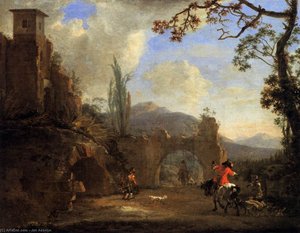
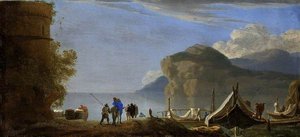
Porträtt av Jan Asselijn

Jan Asselijns målningar: De 76 mest kända, ur ett galleris perspektiv

Uppdaterad november 2026 · rangordnad efter vår popularitetspoäng (sökningar, besök och beställningar för varje verk) · 84 verk av Jan Asselijn i vår katalog

Kortfattat

Ur galleriets perspektiv är Jan Asselijns mest kända målning Den hotade svanen (1652), vars original hänger på Rijksmuseum i Amsterdam. King Gustav Adolf II of Sweden in the Battle of Lutzen, 1632 (1634) och Landscape with a Bridge in the Italian Countryside (1652) fullbordar trion som alla känner igen. Av de 84 verk av Jan Asselijn i vår katalog presenterar galleriet nedan de 76 mest kända, var och en som ett original med sitt år, sitt museum och vad som gör det unikt.

1610 – 1652, Dieppe Den holländska stormaktstiden Flest verk: Rijksmuseum

Galleriets 10 främsta målningar av Jan Asselijn

1
Den hotade svanen (1652) av Jan Asselijn

Den hotade svanen

1652 · Olja på duk · Rijksmuseum, Amsterdam

är en oljemålning på duk av konstnären Jan Asselijn. Verket, som färdigställdes omkring 1650, fångar en knölsvan i ett ögonblick av intensivt försvar. Fågeln breder ut sina vingar och fräser medan den vaktar sitt bo mot en närmande hund. Denna kamp mellan det vita fjäderdräkten och det framryckande hotet utgör den centrala spänningen i bilden.

2
King Gustav Adolf II of Sweden in the Battle of Lutzen, 1632 (1634) av Jan Asselijn

King Gustav Adolf II of Sweden in the Battle of Lutzen, 1632

1634 · Oil On Canvas · Statens Museum for Kunst, Köpenhamn

Jan Asselijn's “King Gustav Adolf II of Sweden in the Battle of Lutzen, 1632” isn’t merely a painting; it’s a visceral plunge into the heart of a pivotal moment in European history. Completed in 1634, this monumental work captures the chaotic fury and strategic brilliance of the Battle of Lutzen, fought on August 17th of that year, a clash that cemented Gustav Adolf II's reputation as a military genius and…

3
Landscape with a Bridge in the Italian Countryside (1652) av Jan Asselijn

Landscape with a Bridge in the Italian Countryside

1652 · Oil On Canvas · Cannon Hall Museum, Barnsley

A stone bridge with arched spans anchors this serene landscape, crossing a calm body of water that reflects the soft, overcast sky. To the left, a solitary figure sits upon a barrel, watching the quiet movement of the scene. On the right, the composition gathers around a horse and carriage; a person guides the animal toward the water's edge while another observer stands nearby. A dog occupies the foreground, grounding…

4
King Gustav Adolf II in the Battle of Lutzen on November 6,1632 (1632) av Jan Asselijn

King Gustav Adolf II in the Battle of Lutzen on November 6,1632

The air is thick with the scent of wet earth and sulfur. In the center of the chaos, King Gustav Adolf II of Sweden rides a horse through the fray, his sword a flash of cold light against the darkening sky. The Battle of Lutzen is not a quiet affair; it is a collision of muscle and metal. Soldiers on foot and mounted on horseback press against one another in…

5
Four Figures (1615) av Jan Asselijn

Four Figures

1615 · Oil · Groeningemuseum, Bruges

In Four Figures, Jan Asselijn organizes a group of men in period attire within a dimly lit, atmospheric setting. The composition centers on this cluster of figures, who are arranged in a loose, triangular formation. This structural choice draws the viewer's eye toward the middle of the group, where the subjects interact in a moment of quietude. One man is captured drinking from a vessel, while another stands holding a…

6
King Gustav Adolf II of Sweden, Battle near Lutzen 1632 (1635) av Jan Asselijn

King Gustav Adolf II of Sweden, Battle near Lutzen 1632

1635 · Oil On Panel · Gemäldegalerie, Berlin

The artwork titled King Gustav Adolf II of Sweden, Battle near Lutzen 1632 is a work by the artist Jan Asselijn. Dated about 1635, this oil on panel painting belongs to the genre of military history. The subject matter focuses on the Battle of Lützen, a significant conflict from the Thirty Years' War. The scene captures the king amidst the movement of a large-scale military engagement.

7
The Tiber River with the Ponte Molle at Sunset (1650) av Jan Asselijn

The Tiber River with the Ponte Molle at Sunset

1650 · Oil · National Gallery of Art, Washington

The sun hangs low over the horizon, casting a sharp, golden light through the four massive stone arches of the Ponte Molle. This light slices through the atmosphere, painting the sky in a gradient that shifts from a warm, glowing amber on the right to a pale, tranquil aquamarine as the eye moves toward the left. The river below remains placid, reflecting the changing colors of the sky, while the…

8
Ruined Building with Shepherd and Sheep (1646) av Jan Asselijn

Ruined Building with Shepherd and Sheep

1646 · Oil On Panel

Ruined Building with Shepherd and Sheep is an artwork by Jan Asselijn. This piece belongs to the Dutch Golden Age and the Italianate landscape style of the Early Modern period. The subject matter focuses on a pastoral landscape that incorporates ruins and sheep. The composition integrates elements of nature, shepherds, and weathered stone structures within a single scene.

9
Italian Landscape (1638) av Jan Asselijn

Italian Landscape

1638 · Oil On Canvas · Statens Museum for Kunst, Köpenhamn

The artwork titled Italian Landscape is a painting by the Dutch Golden Age painter Jan Asselijn. Created in 1638, this work represents a specific period in the artist's career. Asselijn was born in Dieppe, France, around 1610, before his family relocated to Amsterdam. His development as a painter was shaped by the artistic environment of the Dutch Golden Age, a time when landscape painting was evolving toward more atmospheric depictions.

10
Fight against Robbers (1638) av Jan Asselijn

Fight against Robbers

1638 · Oil On Panel · Statens Museum for Kunst, Köpenhamn

A violent skirmish unfolds across a rugged, rocky landscape, captured in a dramatic monochrome palette. The composition relies on a sharp diagonal arrangement, pulling the eye from the foreground into a chaotic center-right where figures engage in combat. Mounted riders and infantrymen clash amidst dense foliage and spindly, skeletal trees. The atmosphere is heavy with mist and swirling smoke, creating a sense of tension and movement. Light filters through an…

Jan Asselijns målningar, rankade 11 till 76

11Lion Hunting (1640) av Jan AsselijnLion Hunting1640 · Musée Fabre 12Italianate landscape with travellers by a stream with cattle (1652) av Jan AsselijnItalianate landscape with travellers by a stream with cattle1652 13Italian Landscape with a view from a Grotto (1639) av Jan AsselijnItalian Landscape with a view from a Grotto1639 · Nationalmuseum 14Landscape with Ruins and Hunting Party (1645) av Jan AsselijnLandscape with Ruins and Hunting Party1645 · Academy of Fine Arts Vienna 15PAYSAGE AVEC UN TROUPEAU TRAVERSANT UNE RIVIERE av Jan AsselijnPAYSAGE AVEC UN TROUPEAU TRAVERSANT UNE RIVIERELouvre 16River Bank with Herdsmen (1650) av Jan AsselijnRiver Bank with Herdsmen1650 · Academy of Fine Arts Vienna 17Coastal Scene with Resting Riders (detail) (1652) av Jan AsselijnCoastal Scene with Resting Riders (detail)1652 · Academy of Fine Arts Vienna 18Imaginary Italian Landscape (1652) av Jan AsselijnImaginary Italian Landscape1652 · Mauritshuis Royal Picture Gallery 19Landscape with a Cowherd (1594) av Jan AsselijnLandscape with a Cowherd1594 20Italianate Landscape (1631) av Jan AsselijnItalianate Landscape1631 · Bavarian State Painting Collections 21Cavalry Engagement (1635) av Jan AsselijnCavalry Engagement1635 22Peasants by a River Bank (1639) av Jan AsselijnPeasants by a River Bank1639 · Yale University Art Gallery 23Mountain - landscape (1639) av Jan AsselijnMountain - landscape1639 24Riders Gallopping towards the Gates of the Fortress (1645) av Jan AsselijnRiders Gallopping towards the Gates of the Fortress1645 · Ermitaget 25Winter Landscape (1645) av Jan AsselijnWinter Landscape1645 · Ermitaget 26Nocturnal Crayfishing (1638) av Jan AsselijnNocturnal Crayfishing1638 · Statens Museum for Kunst 27Vesuvius Erupting at Nightfall (1638) av Jan AsselijnVesuvius Erupting at Nightfall1638 · Statens Museum for Kunst 28Head of an Ox (1647) av Jan AsselijnHead of an Ox1647 · Musée des Beaux-Arts 29Catching Crayfish (1645) av Jan AsselijnCatching Crayfish1645 · Muzeum Palacu Króla Jana Iii w Wilanowie 30Ford between High Cliffs (1644) av Jan AsselijnFord between High Cliffs1644 · National Gallery Prague 31Peasants and Cattle beside a Tower (1646) av Jan AsselijnPeasants and Cattle beside a Tower1646 32Winter landscape with huntsmen on a bridge (1647) av Jan AsselijnWinter landscape with huntsmen on a bridge1647 · Fondation Custodia 33A rocky mountain valley with shepherds and cattle (1645) av Jan AsselijnA rocky mountain valley with shepherds and cattle1645 · Staatliche Kunsthalle Karlsruhe 34Italian Landscape (1640) av Jan AsselijnItalian Landscape1640 · Pushkin State Museum 35Frozen Moat outside City Walls (1647) av Jan AsselijnFrozen Moat outside City Walls1647 · Worcester Art Museum 36Italianate Landscape with Drovers, Cattle and Sheep beside Ruins (1647) av Jan AsselijnItalianate Landscape with Drovers, Cattle and Sheep beside Ruins1647 · Fogg Museum of Art 37Italianate Landscape with a River and an Arched Bridge (1648) av Jan AsselijnItalianate Landscape with a River and an Arched Bridge1648 · Staatsgalerie Schleissheim 38Southern Landscape with Cattle near Ruins (1650) av Jan AsselijnSouthern Landscape with Cattle near Ruins1650 · National Museum in Wrocław 39View of the Solario Bridge on the Teverone (1650) av Jan AsselijnView of the Solario Bridge on the Teverone1650 40Head of a lowing Ox (1650) av Jan AsselijnHead of a lowing Ox1650 · Staatliches Museum Schwerin 41Italianate landscape with bridge near Tivoli (1649) av Jan AsselijnItalianate landscape with bridge near Tivoli1649 42River Landscape with the Fort Saint-Jean and the Chateau Pierre-Scize in Lyon (1650) av Jan AsselijnRiver Landscape with the Fort Saint-Jean and the Chateau Pierre-Scize in Lyon1650 · Yale University Art Gallery 43The restoration of the Diemerdijk or Muiderdijk near Amsterdam in 1651 (1651) av Jan AsselijnThe restoration of the Diemerdijk or Muiderdijk near Amsterdam in 16511651 · Gemäldegalerie 44Breach of a Dyke by Storm Surge on March 5 1651 (1651) av Jan AsselijnBreach of a Dyke by Storm Surge on March 5 16511651 · Gemäldegalerie 45The Breach of the Sint Anthonisdijk in 1651 (1652) av Jan AsselijnThe Breach of the Sint Anthonisdijk in 16511652 · Amsterdam Museum 46The Breach of the Saint Anthony’s Dike near Amsterdam, Jan Asselijn, 1651 (1651) av Jan AsselijnThe Breach of the Saint Anthony’s Dike near Amsterdam, Jan Asselijn, 16511651 47Drovers with Cattle under an Arch of the Colosseum in Rome, Jan Asselijn, 1640 - 1652 (1652) av Jan AsselijnDrovers with Cattle under an Arch of the Colosseum in Rome, Jan Asselijn, 1640 - 16521652 · Rijksmuseum 48A Mediterranean Coastal View with Shipping and Mariners by a Fort (1650) av Jan AsselijnA Mediterranean Coastal View with Shipping and Mariners by a Fort1650 49A Mediterranean Coastal View with Shipping and Mariners by a Fort (1650) av Jan AsselijnA Mediterranean Coastal View with Shipping and Mariners by a Fort1650 50River Landscape with the Church of Santi Giovanni e Paolo (1650) av Jan AsselijnRiver Landscape with the Church of Santi Giovanni e Paolo1650 51Landscape with a Drover (1649) av Jan AsselijnLandscape with a Drover1649 · Holburne Museum 52Landscape with a Bridge in the Italian Countryside (1652) av Jan AsselijnLandscape with a Bridge in the Italian Countryside1652 · Cannon Hall Museum 53Coastal Scene with Resting Riders (1652) av Jan AsselijnCoastal Scene with Resting Riders1652 · Academy of Fine Arts Vienna 54PAYSAGE AVEC UNE TOUR av Jan AsselijnPAYSAGE AVEC UNE TOURLouvre 55RUINE ET CABANE DE BERGERS av Jan AsselijnRUINE ET CABANE DE BERGERSLouvre 56LANDSCAPE WITH A DEPARTURE FOR A HUNT av Jan AsselijnLANDSCAPE WITH A DEPARTURE FOR A HUNT 57Muleteers beside an Italian Ruin (1650) av Jan AsselijnMuleteers beside an Italian Ruin1650 · Rijksmuseum 58Hangout in Italy (1620) av Jan AsselijnHangout in Italy1620 · Rijksmuseum 59Herders with Their Animals under an Arch of the Colosseum in Rome (1652) av Jan AsselijnHerders with Their Animals under an Arch of the Colosseum in Rome1652 · Rijksmuseum 60Hunting Company out of Rome (1652) av Jan AsselijnHunting Company out of Rome1652 · Rijksmuseum 61Beggars inför en romersk kalkstenbrygga (1638) av Jan AsselijnBeggars inför en romersk kalkstenbrygga1638 · Academy of Fine Arts Vienna 62Asselijn - (50Riverbank) av Jan AsselijnAsselijn - (50Riverbank) 63Asselijn ruin av Jan AsselijnAsselijn ruinRijksmuseum 64Italian Coast Scene av Jan AsselijnItalian Coast Scene 65Italian Landscape with Two Horsemen and Figures on a Road av Jan AsselijnItalian Landscape with Two Horsemen and Figures on a Road 66Italian Landscape with the Church of Sts. Giovanni e Paolo in Rome av Jan AsselijnItalian Landscape with the Church of Sts. Giovanni e Paolo in RomeSzépművészeti Múzeum 67Mountainous Landscape av Jan AsselijnMountainous Landscape 68A rocky river landscape with travellers in the foreground and ships beyond av Jan AsselijnA rocky river landscape with travellers in the foreground and ships beyond 69A Landscape with Peasants (also known as Landscape with Herdsmen Fording a River) av Jan AsselijnA Landscape with Peasants (also known as Landscape with Herdsmen Fording a River)Ascott House 70A Cavalier on Horseback Before a Landscape av Jan AsselijnA Cavalier on Horseback Before a Landscape 71Landscape with shepherds and their flock crossing the Ponte Acquoria near Tivoli av Jan AsselijnLandscape with shepherds and their flock crossing the Ponte Acquoria near Tivoli 72an italianate river landscape with herders on a path with their flock and donkeys, classical ruins on a hilltop beyond av Jan Asselijnan italianate river landscape with herders on a path with their flock and donkeys, classical ruins on a hilltop beyondMinneapolis Institute of Art 73Italian Coast Scene av Jan AsselijnItalian Coast SceneFitzwilliam College 74Italian Landscape av Jan AsselijnItalian LandscapeFitzwilliam College 75Italian Landscape with the Ruins of a Roman Bridge and Aqueduct av Jan AsselijnItalian Landscape with the Ruins of a Roman Bridge and AqueductRijksmuseum 76Cavalry Attack at Sunset, Jan Asselijn, 1646 (1646) av Jan AsselijnCavalry Attack at Sunset, Jan Asselijn, 16461646 · Rijksmuseum

Jan Asselijns berömda målningar, period för period

Motiven som fångade Jan Asselijns blick

De fyra motiv som återkommer oftast i dessa originalverk, var och ett med sitt främsta exempel.

Museerna som förvarar Jan Asselijns originalverk

De 8 museer som innehar flest av målningarna på denna sida.

Museum Stad Verk av Jan Asselijn Målningar från denna lista
Rijksmuseum, AmsterdamRijksmuseum Amsterdam 9 Den hotade svanen, Drovers with Cattle under an Arch of the Colosseum in Rome, Jan Asselijn, 1640 - 1652, Muleteers beside an Italian Ruin
Statens Museum for Kunst, KöpenhamnStatens Museum for Kunst Köpenhamn 5 King Gustav Adolf II of Sweden in the Battle of Lutzen, 1632, Italian Landscape, Fight against Robbers
Academy of Fine Arts Vienna, WienAcademy of Fine Arts Vienna Wien 5 Landscape with Ruins and Hunting Party, River Bank with Herdsmen, Coastal Scene with Resting Riders (detail)
Gemäldegalerie, BerlinGemäldegalerie Berlin 3 King Gustav Adolf II of Sweden, Battle near Lutzen 1632, The restoration of the Diemerdijk or Muiderdijk near Amsterdam in 1651, Breach of a Dyke by Storm Surge on March 5 1651
Louvre, ParisLouvre Paris 3 PAYSAGE AVEC UN TROUPEAU TRAVERSANT UNE RIVIERE, PAYSAGE AVEC UNE TOUR, RUINE ET CABANE DE BERGERS
Cannon Hall Museum, BarnsleyCannon Hall Museum Barnsley 2 Landscape with a Bridge in the Italian Countryside, Landscape with a Bridge in the Italian Countryside
Yale University Art Gallery, New HavenYale University Art Gallery New Haven 2 Peasants by a River Bank, River Landscape with the Fort Saint-Jean and the Chateau Pierre-Scize in Lyon
Ermitaget, Sankt PetersburgErmitaget Sankt Petersburg 2 Riders Gallopping towards the Gates of the Fortress, Winter Landscape

Jan Asselijn, ett signaturverk per decennium

Verk per decennium

Välj ett decennium för att se originalverket som definierar det.

Jan Asselijns målningar: galleriets svar

Vilken av Jan Asselijns målningar är den mest kända av alla?Visa svaret

Den hotade svanen (1652), Rijksmuseum, Amsterdam. King Gustav Adolf II of Sweden in the Battle of Lutzen, 1632 (1634) och Landscape with a Bridge in the Italian Countryside (1652) följer efter.

Hur gammal var Jan Asselijn när Den hotade svanen färdigställdes?Visa svaret

42 år gammal: Den hotade svanen är från 1652, och Jan Asselijn föddes 1610.

Vilka är Jan Asselijns 10 främsta målningar?Visa svaret

Den hotade svanen, King Gustav Adolf II of Sweden in the Battle of Lutzen, 1632, Landscape with a Bridge in the Italian Countryside, King Gustav Adolf II in the Battle of Lutzen on November 6,1632, Four Figures, King Gustav Adolf II of Sweden, Battle near Lutzen 1632, The Tiber River with the Ponte Molle at Sunset, Ruined Building with Shepherd and Sheep, Italian Landscape och Fight against Robbers. Rankingen ovan visar varje verks årtal och museum.

Hur många verk skapade Jan Asselijn?Visa svaret

Vår katalog innehåller 84 verk av Jan Asselijn, daterade från 1620 till 1652.

Var hänger Jan Asselijns mest kända original?Visa svaret

Främst i Rijksmuseum (Amsterdam), Statens Museum for Kunst (Köpenhamn) och Academy of Fine Arts Vienna (Wien). Museitabellen ovan listar alla.

När skapade Jan Asselijn sina mest kända målningar?Visa svaret

Under 1650s: 24 av de 76 verk som finns på denna sida skapades då, varav Den hotade svanen.

Vilka är Jan Asselijns tidigaste och senaste kända verk?Visa svaret

På den här sidan är det tidigaste Hangout in Italy (1620) och det senaste Den hotade svanen (1652).

Vilka motiv återkom Jan Asselijn till mest?Visa svaret

Landscape (36), Sky (27) och River (16), fördelat på 76 verk på denna sida.

Vilket medium arbetade Jan Asselijn främst med?Visa svaret

Oil On Canvas, för 32 av de 76 verk som finns på denna sida.

Vilken konstinriktning förknippas Jan Asselijn med?Visa svaret

Den holländska stormaktstiden och Baroque, om man dömer efter originalen på denna sida.

Vilka original av Jan Asselijn finns i Rijksmuseums samlingar?Visa svaret

Den hotade svanen, Drovers with Cattle under an Arch of the Colosseum in Rome, Jan Asselijn, 1640 - 1652 och Muleteers beside an Italian Ruin: Rijksmuseum, Amsterdam har 9 av verken på denna sida.

Jan Asselijn: konstnären

A Life Forged in Landscape: The World of Jan Asselijn

Jan Asselijn (1610-1652) was a Dutch Golden Age painter whose artistic vision blossomed amidst the turbulent backdrop of religious reformation and burgeoning artistic innovation. Born Jean Asselin around 1610 in Dieppe, France – a port city steeped in maritime tradition – his family’s Huguenot faith propelled them to relocate to Amsterdam in 1621, a vibrant epicenter of commerce and artistic dynamism during the era's apex. This pivotal move irrevocably shaped Asselijn’s formative years, immersing him within an environment where landscape painting was undergoing a transformative shift away from static representations toward scenes brimming with atmospheric depth and profound emotional resonance. Initially apprenticed to Jan Martszen the Younger, he honed his skills in battle paintings before discovering his true passion: capturing the splendor and drama of both natural vistas and animal life – pursuits that would define his artistic trajectory.

The Italianate Embrace & The Bentvueghels

Amsterdam’s intellectual fervor fueled Asselijn's ambition to refine his craft, prompting him to embark on a journey to Italy sometime after 1635. This pilgrimage proved instrumental in solidifying his artistic sensibilities and embracing the *Italianate* style – a genre championed by artists like Claude Lorrain and Pieter van Laer (Bamboccio) that prioritized sun-drenched landscapes, classical ruins, and pastoral depictions imbued with romantic ideals. He joined the ranks of the *Bentvueghels*, a distinctive society of Dutch and Flemish painters operating in Rome who challenged conventional artistic norms. These “Birds of a Feather” – known for their audacious nicknames, satirical commentary, and unwavering commitment to painting directly from observation—rejected studio conventions and embraced spontaneity. Within this spirited milieu, Asselijn earned the moniker "Krabbetje" (little crab) due to a congenital deformity affecting his hand, yet he persevered creatively, absorbing influences from luminaries like Rembrandt and mastering techniques that conveyed light and emotion with unparalleled sensitivity.

Mastering Light & Symbolism: Key Works

Asselijn’s artistic prowess manifested in a remarkable repertoire of paintings reflecting both historical narratives and intimate depictions of the natural world. His canvases pulsated with an immediacy born from direct observation—a hallmark of the Bentvueghels ethos—and he skillfully employed chiaroscuro, Rembrandt's signature technique, to sculpt dramatic contrasts between light and shadow. Among his most celebrated achievements is The Threatened Swan (circa 1640), a monumental composition that transcends mere visual representation. More than just portraying waterfowl defending their nest against predators, this painting became a potent emblem of Dutch national resilience during the Eighty Years’ War—a period marked by relentless siege and existential peril. The swan's defiant posture resonated deeply with contemporary anxieties and was interpreted as an allegory for Johan de Witt, Amsterdam’s influential statesman – reflecting the artist’s astute engagement with political symbolism. Further cementing his reputation were works like Cavalry Charge at Sunset—a testament to his formative training in battle painting—and evocative landscapes such as Drovers with Cattle under an Arch of the Colosseum which skillfully blended Italianate aesthetics with meticulous animal studies. Notably, Asselijn’s dedication to capturing fleeting moments and conveying nuanced emotional states distinguishes him from many of his contemporaries.

Influence & Legacy: A Lasting Impression

Jan Asselijn's artistic legacy extended beyond his own prolific output; he served as a mentor to Frederik de Moucheron—another prominent Dutch landscape painter who championed the Italianate style—and fostered an environment conducive to innovation and experimentation. His meticulous attention to detail, coupled with his masterful manipulation of light and color, profoundly impacted subsequent generations of artists. Asselijn’s works are now housed in prestigious institutions worldwide, including the Rijksmuseum in Amsterdam, ensuring that his artistic vision continues to inspire admiration and scholarly inquiry—a testament to his enduring contribution to Dutch art history. He died prematurely in 1652, leaving behind a body of work that embodies the spirit of the Golden Age: luminous landscapes imbued with symbolic depth and conveying an unforgettable impression on viewers.