Porträtt av Ernst Barlach

De 12 mest kända Ernst Barlach-målningarna, varje ett unikt konstverk

Uppdaterad november 2026 · rangordnad efter vår popularitetspoäng (sökningar, besök och beställningar för varje verk) · 12 verk av Ernst Barlach i vår katalog

Kortfattat

Frenzy (Der Berserker) (1910) är den målning av Ernst Barlach som drar till sig flest blickar; originalet finns på Nelson-Atkins Museum of Art, Kansas City. Därefter dras blicken till Man in Ecstasy (1912) och The Flutist (1936). Bland de 12 verk av Ernst Barlach i vår katalog är dessa 12 de mest kända, var och en ett unikt original presenterat med sitt år, sitt museum och anledningen till dess tidlösa betydelse.

1870 – 1938 Expressionism Flest verk: Nelson-Atkins Museum of Art

Topp 10 målningar av Ernst Barlach, ur galleriets perspektiv

1
Frenzy (Der Berserker) (1910) av Ernst Barlach

Frenzy (Der Berserker)

1910 · Bronze · Nelson-Atkins Museum of Art, Kansas City

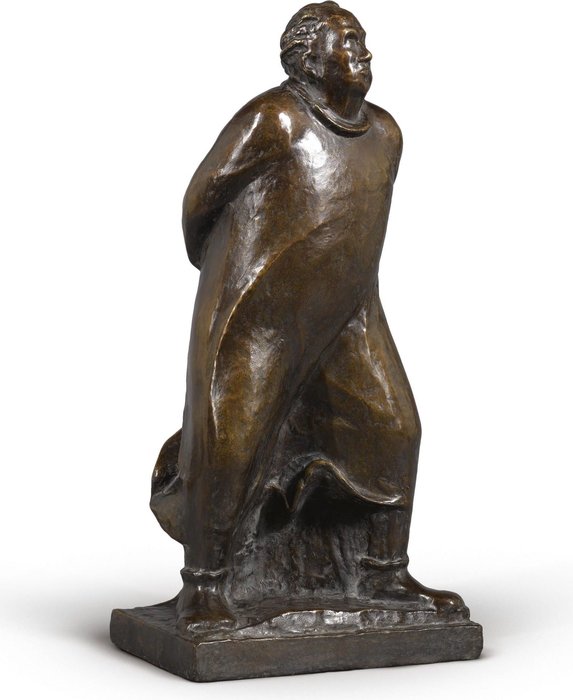
In the heavy, bronze contours of Ernst Barlach’s Frenzy (Der Berserker), one does not merely observe a sculpture; one encounters a visceral eruption of human emotion. Created in 1910, this masterpiece stands as a profound testament to the power of German Expressionism, capturing a moment where physical form and psychological turmoil become indistinguishable. The figure, cast in enduring bronze, presents a powerful, solid silhouette that seems to vibrate with an…

2
Man in Ecstasy (1912) av Ernst Barlach

Man in Ecstasy

1912 · Bronze · Aichi Prefectural Museum of Art, Nagoya

Man in Ecstasy is a bronze sculpture created by Ernst Barlach in 1912. The work captures a human figure in a state of intense spiritual rapture or ecstasy, utilizing the expressive qualities of the medium to convey deep subjective emotion.

3
The Flutist (1936) av Ernst Barlach

The Flutist

1936 · Bronze · Lehmbruck Museum, Düsseldorf

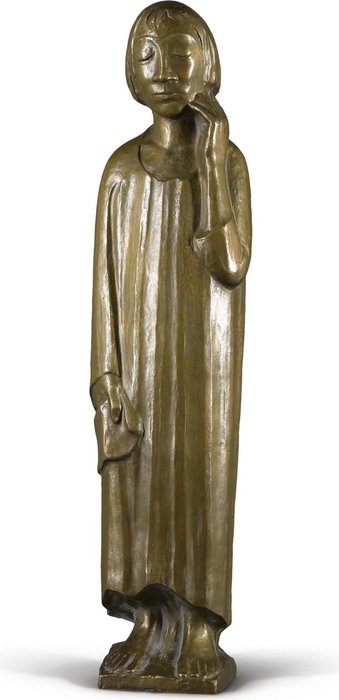
In this bronze sculpture, titled The Flutist, Ernst Barlach presents a solitary figure captured in a moment of quietude. Created in 1936, the work depicts a musician seated in a chair, legs crossed, with the head tilted slightly downward toward the instrument. There is a palpable sense of introspection in the posture, as if the act of playing is a private communion between the man and his music. The figure's…

4
Panic Terror (1912) av Ernst Barlach

Panic Terror

1912 · Wood · Staatliche Kunsthalle Karlsruhe, Karlsruhe

In 1912, the sculptor Ernst Barlach carved a moment of raw friction into Baltic birch. The work, titled Panic Terror, captures a sudden, violent collision between two human forms. It is a physical knot of resistance and weight. The wood bears the marks of a struggle that feels both immediate and ancient.

5
The Singing Man (1928) av Ernst Barlach

The Singing Man

1928 · Bronze

Ernst Barlach’s 1928 bronze sculpture, The Singing Man, captures a singular moment of release. The figure is seated, leaning back with a posture of profound relaxation, head tilted upward as if lost in a private melody. This gesture suggests a transition between the physical and the spiritual, a fleeting instance of joy that seems to touch a realm beyond the immediate. The form is characterized by simplified, elongated lines and…

7
Shepherd in a Storm (1908) av Ernst Barlach

Shepherd in a Storm

1908 · Wood · Kunsthalle Bremen, Bremen

In the evocative sculpture Shepherd in a Storm, created in 1908 by the German Expressionist master Ernst Barlach, we encounter a profound meditation on human resilience. The piece captures a moment of intense struggle, where a shepherd, with his head bowed and hat pulled low against the elements, battles an unseen, relentless wind. This atmospheric tension serves as a powerful metaphor for the adversities and tempests that define the human…

Ernst Barlachs berömda målningar, nummer 11 till 12

Motiven som fångade Ernst Barlachs blick

De fyra motiv som återkommer oftast i dessa originalverk, var och ett med sitt främsta exempel.

Museerna som förvarar Ernst Barlachs originalverk

De 5 museer som innehar flest av målningarna på denna sida.

Museum Stad Verk av Ernst Barlach Målningar från denna lista
Nelson-Atkins Museum of Art, Kansas CityNelson-Atkins Museum of Art Kansas City 1 Frenzy (Der Berserker)
Aichi Prefectural Museum of Art, NagoyaAichi Prefectural Museum of Art Nagoya 1 Man in Ecstasy
Lehmbruck Museum, DüsseldorfLehmbruck Museum Düsseldorf 1 The Flutist
Staatliche Kunsthalle Karlsruhe, KarlsruheStaatliche Kunsthalle Karlsruhe Karlsruhe 1 Panic Terror
Kunsthalle Bremen, BremenKunsthalle Bremen Bremen 1 Shepherd in a Storm

Ernst Barlach genom decennierna: ett unikt original för varje era

Verk per decennium

Välj ett decennium för att se originalverket som definierar det.

Ernst Barlachs målningar: frågor till galleriet

Vilket är Ernst Barlachs mest kända verk?Visa svaret

Frenzy (Der Berserker) (1910), Nelson-Atkins Museum of Art, Kansas City. Man in Ecstasy (1912) och The Flutist (1936) följer efter.

Vid vilken ålder skapade Ernst Barlach Frenzy (Der Berserker)?Visa svaret

40 år gammal: Frenzy (Der Berserker) är från 1910, och Ernst Barlach föddes 1870.

Vilka tio målningar av Ernst Barlach är de mest kända?Visa svaret

Frenzy (Der Berserker), Man in Ecstasy, The Flutist, Panic Terror, The Singing Man, Untitled (727), Shepherd in a Storm, Untitled (305), Untitled (207) och Untitled (902). Rankingen ovan visar varje verks årtal och museum.

Hur många verk av Ernst Barlach är kända?Visa svaret

Vår katalog innehåller 12 verk av Ernst Barlach, daterade från 1908 till 1936.

Var kan de mest kända originalen av Ernst Barlach ses?Visa svaret

Främst i Nelson-Atkins Museum of Art (Kansas City), Aichi Prefectural Museum of Art (Nagoya) och Lehmbruck Museum (Düsseldorf). Museitabellen ovan listar alla.

Under vilken period skapade Ernst Barlach sina mest kända målningar?Visa svaret

Under 1910s: 3 av de 12 verk som finns på denna sida skapades då, varav Frenzy (Der Berserker).

Vilket av de kända verken av Ernst Barlach är det tidigaste respektive det senaste?Visa svaret

På den här sidan är det tidigaste Shepherd in a Storm (1908) och det senaste The Flutist (1936).

Vilka motiv föredrog Ernst Barlach?Visa svaret

Sculpture (4), Man (3) och Bronze (2), fördelat på 12 verk på denna sida.

Vilka material använde Ernst Barlach mest av när hen målade?Visa svaret

Bronze, för 4 av de 12 verk som finns på denna sida.

Vilken konstinriktning tillhör Ernst Barlachs verk?Visa svaret

Expressionism, om man dömer efter originalen på denna sida.

Ernst Barlach: ett porträtt av konstnären

Ernst Barlach: Life and Legacy

Early Life and Education

  • Born in Wedel, Holstein (Germany) on January 2nd, 1870, Ernst Heinrich Barlach was the eldest of four sons.
  • His father, Dr. Georg Barlach, was a physician who died when Ernst was fourteen, leading to a move with his family.
  • He received his early education in Ratzeburg and Schönberg, growing up in a devout Lutheran household.
  • Barlach began his artistic training at the Gewerbeschule Hamburg (Hamburg School of Applied Arts) from 1888 to 1891.
  • He continued his studies at the Königliche Akademie der bildenden Künste zu Dresden (Royal Academy of Fine Arts in Dresden) between 1891 and 1895, creating his first major sculpture, Die Krautpflückerin (The Herb Plucker).
  • He briefly studied at the Académie Julian in Paris from 1895 to 1897 but remained critical of simply copying French styles.

Artistic Development and Influences

  • Initially, Barlach worked in an Art Nouveau style, creating illustrations for the magazine Jugend and ceramic sculptures.
  • A pivotal trip to Russia in 1906 profoundly influenced his artistic direction, exposing him to new perspectives and a more expressive aesthetic.
  • Financial support from art dealer Paul Cassirer allowed Barlach to develop his unique style, focusing on the emotional intensity of human figures.
  • He drew inspiration from early Gothic art, particularly its dramatic drapery and spiritual yearning.
  • Barlach’s work also reflects influences from Russian folk art and a growing interest in portraying the lives of ordinary people.

Key Themes and Artistic Style

  • Barlach's sculptures, prints, and writings often explored themes of human suffering, spiritual longing, and social injustice.
  • His figures are characterized by their elongated forms, expressive gestures, and a sense of inner turmoil.
  • He frequently used wood carving and bronze as his primary mediums, emphasizing the tactile qualities of these materials.
  • The Singing Man, Frenzy (Der Berserker), and Shepherd in a Storm are examples of his emotionally charged and symbolic works.

World War I and its Aftermath

  • Initially, Barlach was a patriotic supporter of World War I, anticipating artistic renewal through conflict.
  • His experience as an infantry soldier from 1915 to 1916 profoundly changed his views, transforming him into a staunch pacifist.
  • The horrors of war became a central theme in his subsequent work, leading to powerful anti-war sculptures like Der Rächer (The Avenger).

Recognition and Controversy

  • Barlach gained significant recognition after the war, becoming a member of prestigious art academies in Prussia and Munich.
  • However, his anti-war stance and expressive style drew criticism during the rise of Nazism.
  • His works were labeled as “degenerate art” by the Nazi regime and confiscated from museums.
  • The Magdeburg Cenotaph, a WWI memorial depicting the pain and futility of war, sparked intense controversy and was temporarily removed.

Legacy and Historical Significance

  • Ernst Barlach died in Güstrow, Mecklenburg, on October 24th, 1938, but his artistic legacy endures.
  • He is considered one of the most important German Expressionist sculptors of the 20th century.
  • His work continues to resonate with audiences today, offering a powerful commentary on the human condition and the devastating consequences of war.
  • Barlach’s commitment to artistic integrity in the face of political oppression makes him an important figure in art history.