Porträtt av Bartholomeus Spranger

De 73 mest kända Bartholomeus Spranger-målningarna, varje ett unikt konstverk

Uppdaterad november 2026 · rangordnad efter vår popularitetspoäng (sökningar, besök och beställningar för varje verk) · 76 verk av Bartholomeus Spranger i vår katalog

Kortfattat

Adoration of the Magi (1606) är den målning av Bartholomeus Spranger som drar till sig flest blickar. Därefter dras blicken till Ulysses and Circe (1586) och Allegory of Emperor Rudolf II (1592). Bland de 76 verk av Bartholomeus Spranger i vår katalog är dessa 73 de mest kända, var och en ett unikt original presenterat med sitt år, sitt museum och anledningen till dess tidlösa betydelse.

1546 – 1611, Antwerpen Northern mannerism Flest verk: Kunsthistorisches Museum

Topp 10 målningar av Bartholomeus Spranger, ur galleriets perspektiv

1
Adoration of the Magi (1606) av Bartholomeus Spranger

Adoration of the Magi

1606 · Engraving

The work titled Adoration of the Magi, also recognized as The Adoration of the Kings, is a creation of the artist Bartholomeus Spranger. Born in Antwerp, Belgium, in 1546, Spranger brought a specific Northern sensibility to the religious scene. He remained active in his craft until his death in 1611. This specific piece emerged from his hand during a period of intense creative output, dated around 1590 or around 1595-6.

2
Ulysses and Circe (1586) av Bartholomeus Spranger

Ulysses and Circe

1586 · Oil On Canvas · Kunsthistorisches Museum, Wien

The air in the room feels heavy, thick with the scent of old stone and spilled wine. In this Mannerist encounter, the bodies do not merely exist; they twist. Circe, seen from behind, turns her torso in a serpentine arc, her pale skin catching a sharp, luminous light that cuts through the gloom. Her form is a curve of white against the deep, dark shadows of the background. Opposite her,…

3
Allegory of Emperor Rudolf II (1592) av Bartholomeus Spranger

Allegory of Emperor Rudolf II

1592 · Oil · Kunsthistorisches Museum, Wien

The Allegory of Emperor Rudolf II emerges from the brush of Bartholomeus Spranger, a painter who captures a moment of intense, swirling movement. Created in 1592, this work presents a complex arrangement of figures that seem to dance through a bright, open sky. The composition draws the eye upward toward a winged figure, while below, a pyramidal structure of deities and warriors creates a sense of layered depth. Every line…

4
Hercules, Deianira, and Nessus (1580) av Bartholomeus Spranger

Hercules, Deianira, and Nessus

1580 · Oil · Kunsthistorisches Museum, Wien

The air in this scene feels heavy, thick with the sudden, violent shift of fate. In a swirling composition of interlocking limbs and muscular torsos, the figures of Hercules, Deianira, and Nessus collide in a moment of profound struggle. The movement is restless, a serpentine energy that pulls the eye through a tangle of bodies. Hercules dominates the center, his form rendered with a powerful anatomical precision that catches the…

5
Minerva Victorious over Ignorance (1591) av Bartholomeus Spranger

Minerva Victorious over Ignorance

1591 · Oil On Canvas · Kunsthistorisches Museum, Wien

In this dynamic Mannerist oil painting, the goddess Minerva Victorious over Ignorance emerges as a central force of triumph. Created by Bartholomeus Spranger around 1591, the scene captures a moment of intense movement and theatrical energy. Minerva dominates the vertical space, her body held in an elegant, elongated contrapposto pose that suggests both grace and power. She wears a gleaming silver breastplate with a golden relief, paired with a light…

6
Self-portrait (1585) av Bartholomeus Spranger

Self-portrait

1585 · Oil On Canvas · Kunsthistorisches Museum, Wien

This oil portrait, titled Self-portrait, was executed by the artist Bartholomeus Spranger in 1585. It offers a direct encounter with the painter himself, captured during a period of significant professional development. The work measures 45 x 63 cm, providing an intimate scale for such a personal study of identity and presence.

7
Fall of Man (1595) av Bartholomeus Spranger

Fall of Man

1595 · Oil On Panel · Kunsthistorisches Museum, Wien

The religious art piece "Fall of Man" by Bartholomeus Spranger presents a scene centered on the biblical narrative of the expulsion from Paradise. The composition focuses on the figures of Adam and Eve in the immediate aftermath of their transgression. These two figures occupy the central space of the work, positioned within a landscape that reflects the consequences of their actions. The subject matter specifically addresses the moment of humanity's…

8
God the Father with the Holy Ghost and angels (1582) av Bartholomeus Spranger

God the Father with the Holy Ghost and angels

1582 · Oil On Panel · Kunsthistorisches Museum, Wien

A celestial hierarchy unfolds within an oval composition, capturing a moment of profound spiritual descent. At the apex, God the Father gazes downward with a solemn expression, one hand raised in blessing while the other rests upon a luminous orb that represents the universe. Beneath him, the Holy Ghost descends as a white dove, enveloped in radiant golden light. The scene is populated by cherubic angel faces emerging from soft,…

9
Apollo and the Muses (1590) av Bartholomeus Spranger

Apollo and the Muses

1590 · Oil · Kunsthistorisches Museum, Wien

In this Mannerist oil painting, we find ourselves drawn into a crowded, dynamic scene where mythology meets a lush, hilly landscape. Apollo sits at the center of this movement, a radiant figure distinguished by a halo, his fingers engaged with a stringed instrument. He is not alone; he is surrounded by several female Muses, each caught in a moment of music or quiet conversation. The composition feels intentional yet restless,…

10
Mercury and Venus (1578) av Bartholomeus Spranger

Mercury and Venus

1578 · Oil On Canvas · Bavarian State Painting Collections, München

The oil on canvas work titled Mercury and Venus was executed by the artist Bartholomeus Spranger. This painting is dated to about 1585. It captures a moment of mythic intimacy through the presence of two central nude figures. These figures, likely Mercury and Venus, are caught in the middle of an embrace.

Bartholomeus Sprangers berömda målningar, nummer 11 till 73

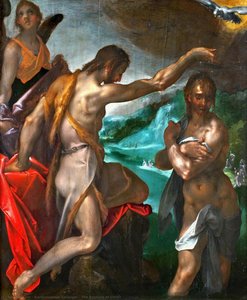
11The Fragrance (1578) av Bartholomeus SprangerThe Fragrance1578 · Bavarian State Painting Collections 12Saint Mary Magdalene (1578) av Bartholomeus SprangerSaint Mary Magdalene1578 · Bavarian State Painting Collections 13Holy Family (1578) av Bartholomeus SprangerHoly Family1578 · Bavarian State Painting Collections 14Lamentation of Christ (1576) av Bartholomeus SprangerLamentation of Christ1576 · Bavarian State Painting Collections 15Sine Cerere et Baccho friget Venus (1590) av Bartholomeus SprangerSine Cerere et Baccho friget Venus1590 · Kunsthistorisches Museum 16Mountain landscape with a scene of the early history of man (1569) av Bartholomeus SprangerMountain landscape with a scene of the early history of man1569 · Staatliche Kunsthalle Karlsruhe 17The contest between Apollo and Pan (1587) av Bartholomeus SprangerThe contest between Apollo and Pan1587 · Bavarian State Painting Collections 18Saint Luke painting the Virgin (1582) av Bartholomeus SprangerSaint Luke painting the Virgin1582 · Bavarian State Painting Collections 19The Flagellation of Christ (1586) av Bartholomeus SprangerThe Flagellation of Christ1586 · Statens Museum for Kunst 20Jael Kills Sisera (1586) av Bartholomeus SprangerJael Kills Sisera1586 · Statens Museum for Kunst 21Ecce Homo (1580) av Bartholomeus SprangerEcce Homo1580 22God the father with the holy spirit and angels (1582) av Bartholomeus SprangerGod the father with the holy spirit and angels1582 23Diana Resting after Hunt (1597) av Bartholomeus SprangerDiana Resting after Hunt1597 · Szépművészeti Múzeum 24Diana - Luna (1600) av Bartholomeus SprangerDiana - Luna1600 · Szépművészeti Múzeum 25Venus and Mercury put a blindfold over Cupid's eyes (1597) av Bartholomeus SprangerVenus and Mercury put a blindfold over Cupid's eyes1597 · Germanisches Nationalmuseum 26Portrait of Zdenko Adalbert Popel, 1st Prince Lobkowicz (1568-1628) (1600) av Bartholomeus SprangerPortrait of Zdenko Adalbert Popel, 1st Prince Lobkowicz (1568-1628)1600 · National Gallery Prague 27The Suicide of Sophonisba (1605) av Bartholomeus SprangerThe Suicide of Sophonisba1605 · National Gallery Prague 28Amor fleeing Psyche (1599) av Bartholomeus SprangerAmor fleeing Psyche1599 29Standing Nude Man (Bacchus) (1600) av Bartholomeus SprangerStanding Nude Man (Bacchus)1600 30Diana and Actaeon (1600) av Bartholomeus SprangerDiana and Actaeon1600 31Saint Barbara (1611) av Bartholomeus SprangerSaint Barbara1611 · Szépművészeti Múzeum 32Venus and Mercury (1585) av Bartholomeus SprangerVenus and Mercury1585 · Kunsthistorisches Museum 33Jupiter and Antiope (1596) av Bartholomeus SprangerJupiter and Antiope1596 · Kunsthistorisches Museum 34Allegory of Justice and Prudence (1599) av Bartholomeus SprangerAllegory of Justice and Prudence1599 · Louvre 35Venus and Adonis (1587) av Bartholomeus SprangerVenus and Adonis1587 · Rijksmuseum 36Venus and Mars warned by Mercury (1587) av Bartholomeus SprangerVenus and Mars warned by Mercury1587 · Kunsthistorisches Museum 37Hermes and Athena (1585) av Bartholomeus SprangerHermes and Athena1585 · Pragska slottet 38Venus and Vulcan (1610) av Bartholomeus SprangerVenus and Vulcan1610 · Kunsthistorisches Museum 39Mountain landscape with a hermit (1567) av Bartholomeus SprangerMountain landscape with a hermit1567 · Staatliche Kunsthalle Karlsruhe 40Figure Studies (1575) av Bartholomeus SprangerFigure Studies1575 41Glaucus and Scylla (1582) av Bartholomeus SprangerGlaucus and Scylla1582 · Kunsthistorisches Museum 42Diana and Actaeon (1585) av Bartholomeus SprangerDiana and Actaeon1585 43Saint Margaret (1583) av Bartholomeus SprangerSaint Margaret1583 44Engelen dragen het lichaam van Christus (Engelenpietà), Bartholomeus Spranger, c. 1587 (1587) av Bartholomeus SprangerEngelen dragen het lichaam van Christus (Engelenpietà), Bartholomeus Spranger, c. 15871587 · Rijksmuseum 45The Baptism of Christ (1603) av Bartholomeus SprangerThe Baptism of Christ1603 · National Museum in Wrocław 46The Triumph of Venus (1600) av Bartholomeus SprangerThe Triumph of Venus1600 47Study of a Female Nude (Venus in a Drapery) (1605) av Bartholomeus SprangerStudy of a Female Nude (Venus in a Drapery)1605 · Nationalmuseet i Warszawa 48Achelous and Deianeira (1600) av Bartholomeus SprangerAchelous and Deianeira1600 49The Adoration of the Kings (1595) av Bartholomeus SprangerThe Adoration of the Kings1595 · National Gallery 50Adoration of the Kings (1595) av Bartholomeus SprangerAdoration of the Kings1595 · National Gallery 51Mercury Carrying Psyche to Mount Olympus (1611) av Bartholomeus SprangerMercury Carrying Psyche to Mount Olympus1611 52Odysseus and Circe (1585) av Bartholomeus SprangerOdysseus and Circe1585 · Kunsthistorisches Museum 53St Wenceslas and St Vitus av Bartholomeus SprangerSt Wenceslas and St VitusNational Gallery Prague 54St Sigismund and St Adalbert av Bartholomeus SprangerSt Sigismund and St AdalbertNational Gallery Prague 55Vulcan and Maia (1575) av Bartholomeus SprangerVulcan and Maia1575 · Kunsthistorisches Museum 56Ceres and Bacchus av Bartholomeus SprangerCeres and Bacchus 57Allegory av Bartholomeus SprangerAllegoryMusée des Beaux-Arts 58Apotheosis of the Arts (Fame leading the Arts to Olympus) av Bartholomeus SprangerApotheosis of the Arts (Fame leading the Arts to Olympus)National Gallery Prague 59Faun with Wounded Foot av Bartholomeus SprangerFaun with Wounded Foot 60La Peinture, la Sculpture et l'Architecture av Bartholomeus SprangerLa Peinture, la Sculpture et l'Architecture 61Le Christ sauveur du monde av Bartholomeus SprangerLe Christ sauveur du monde 62ALLEGORIE DE LA JUSTICE av Bartholomeus SprangerALLEGORIE DE LA JUSTICELouvre 63Peter and John Heal a Cripple at the Gate of the Temple av Bartholomeus SprangerPeter and John Heal a Cripple at the Gate of the Temple 64Salvator Mundi av Bartholomeus SprangerSalvator Mundi 65Faith, Hope and Charity av Bartholomeus SprangerFaith, Hope and Charity 66Sarah Presenting Hagar to Abraham av Bartholomeus SprangerSarah Presenting Hagar to Abraham 67Christ blessing little children av Bartholomeus SprangerChrist blessing little children 68Female Warrior Crushing a Satyr av Bartholomeus SprangerFemale Warrior Crushing a Satyr 69Venus and Adonis (1597) av Bartholomeus SprangerVenus and Adonis1597 · Kunsthistorisches Museum 70Epitaph of Goldsmith Nicolas Müller of Prague (1592) av Bartholomeus SprangerEpitaph of Goldsmith Nicolas Müller of Prague1592 · National Gallery Prague 71Angelica and Medoro (1600) av Bartholomeus SprangerAngelica and Medoro1600 · Alte Pinakothek 72Hermaphrodite and the nymph Salmacis (1582) av Bartholomeus SprangerHermaphrodite and the nymph Salmacis1582 · Kunsthistorisches Museum 73Herakles and Omphale (1585) av Bartholomeus SprangerHerakles and Omphale1585 · Kunsthistorisches Museum

Bartholomeus Sprangers berömda målningar, period för period

Motiven som fångade Bartholomeus Sprangers blick

De fyra motiv som återkommer oftast i dessa originalverk, var och ett med sitt främsta exempel.

Museerna som förvarar Bartholomeus Sprangers originalverk

De 8 museer som innehar flest av målningarna på denna sida.

Museum Stad Verk av Bartholomeus Spranger Målningar från denna lista
Kunsthistorisches Museum, WienKunsthistorisches Museum Wien 19 Ulysses and Circe, Allegory of Emperor Rudolf II, Hercules, Deianira, and Nessus
Bavarian State Painting Collections, MünchenBavarian State Painting Collections München 7 Mercury and Venus, The Fragrance, Saint Mary Magdalene
National Gallery Prague, PragNational Gallery Prague Prag 6 Portrait of Zdenko Adalbert Popel, 1st Prince Lobkowicz (1568-1628), The Suicide of Sophonisba, St Wenceslas and St Vitus
Szépművészeti Múzeum, BudapestSzépművészeti Múzeum Budapest 3 Diana Resting after Hunt, Diana - Luna, Saint Barbara
Staatliche Kunsthalle Karlsruhe, KarlsruheStaatliche Kunsthalle Karlsruhe Karlsruhe 2 Mountain landscape with a scene of the early history of man, Mountain landscape with a hermit
Statens Museum for Kunst, KöpenhamnStatens Museum for Kunst Köpenhamn 2 The Flagellation of Christ, Jael Kills Sisera
Louvre, ParisLouvre Paris 2 Allegory of Justice and Prudence, ALLEGORIE DE LA JUSTICE
Rijksmuseum, AmsterdamRijksmuseum Amsterdam 2 Venus and Adonis, Engelen dragen het lichaam van Christus (Engelenpietà), Bartholomeus Spranger, c. 1587

Bartholomeus Spranger genom decennierna: ett unikt original för varje era

Verk per decennium

Välj ett decennium för att se originalverket som definierar det.

Bartholomeus Sprangers målningar: frågor till galleriet

Vilket är Bartholomeus Sprangers mest kända verk?Visa svaret

Adoration of the Magi (1606). Därefter följer Ulysses and Circe (1586) och Allegory of Emperor Rudolf II (1592).

Vid vilken ålder skapade Bartholomeus Spranger Adoration of the Magi?Visa svaret

60 år gammal: Adoration of the Magi är från 1606, och Bartholomeus Spranger föddes 1546.

Vilka tio målningar av Bartholomeus Spranger är de mest kända?Visa svaret

Adoration of the Magi, Ulysses and Circe, Allegory of Emperor Rudolf II, Hercules, Deianira, and Nessus, Minerva Victorious over Ignorance, Self-portrait, Fall of Man, God the Father with the Holy Ghost and angels, Apollo and the Muses och Mercury and Venus. Rankingen ovan visar varje verks årtal och museum.

Hur många verk av Bartholomeus Spranger är kända?Visa svaret

Vår katalog innehåller 76 verk av Bartholomeus Spranger, daterade från 1567 till 1611.

Var kan de mest kända originalen av Bartholomeus Spranger ses?Visa svaret

Främst i Kunsthistorisches Museum (Wien), Bavarian State Painting Collections (München) och National Gallery Prague (Prag). Museitabellen ovan listar alla.

Under vilken period skapade Bartholomeus Spranger sina mest kända målningar?Visa svaret

Under 1580s: 21 av de 73 verk som finns på denna sida skapades då, varav Ulysses and Circe.

Vilket av de kända verken av Bartholomeus Spranger är det tidigaste respektive det senaste?Visa svaret

På den här sidan är det tidigaste Mountain landscape with a hermit (1567) och det senaste Saint Barbara (1611).

Vilka motiv föredrog Bartholomeus Spranger?Visa svaret

Woman (35), Man (33) och Skin (13), fördelat på 73 verk på denna sida.

Vilka material använde Bartholomeus Spranger mest av när hen målade?Visa svaret

Oil, för 26 av de 73 verk som finns på denna sida.

Vilken konstinriktning tillhör Bartholomeus Sprangers verk?Visa svaret

Northern mannerism, om man dömer efter originalen på denna sida.

Vilka original av Bartholomeus Spranger kan jag se på Kunsthistorisches Museum?Visa svaret

Ulysses and Circe, Allegory of Emperor Rudolf II och Hercules, Deianira, and Nessus: Kunsthistorisches Museum, Wien har 19 av verken på denna sida.

Bartholomeus Spranger: ett porträtt av konstnären

Bartholomeus Spranger: Erotikens och majestätens hovmålare

Bartholomeus Spranger (1546–1611), ett namn som ekar genom den nordiska manierismens salar, var mer än bara en målare; han var en central gestalt som formade sin tids konstnärliga estetik. Spranger föddes i Antwerpen som son till en handelsman med vidsträckta resor, och hans tidiga liv bar på löften om en framtid djupt rotad i konst och utländska influenser. Hans första skolning under Jan Mandijn, Frans Mostaert och Cornelis van Dalem gav honom en solid grund inom landskapsmåleriet – en oväntad utgångspunkt för en konstnär som senare skulle bli världsberömd för sina intensivt sensuella skildringar av den nakna kroppen. Det var dock hans vistelse i Paris 1565, där han arbetade i Marc Duvals ateljé, som verkligen satte fart på hans konstnärliga bana och öppnade dörrarna till helt nya tekniker och perspektiv.

Tidiga influenser och italienska resor

Sprangers konstnärliga utveckling var inte begränsad till Nederländerna. Han kopierade flitigt kopparstick av Frans Floris och Parmigianino, och genom detta sög han åt sig deras eleganta linjer och sofistikerade kompositioner. Avgörande för hans resa var de resor som förde honom till Italien, där han tillbringade åtta månader i Milano och tre månader i Parma. Under denna tid arbetade han som assistent åt Bernardino Gatti med det ambitiösa freskprojektet i kupolen på Santa Maria della Steccata. Denna erfarenhet gav honom en ovärderlig inblick i tekniker för storskaligt måleri och exponerade honom för den livfulla konstscenen i renässansens Italien. Hans tid i Rom visade sig vara särskilt formande; där knöt han kontakter med Giulio Clovio, en berömd manieristisk målare och designer som blev hans lärjunge. Det var också här han mötte Karel van Mander, vars Schilder-boeck senare skulle ge en detaljerad redogörelse för Sprangers liv och verk – ett bevis på konstnärens betydelse inom den konstnärliga gemenskapen.

Det kejserliga hovet i Prag

Sprangers karriär nådde verkligen sin höjdpunkt när han år 1570 utnämndes till hovmålare åt påve Pius V. Hans mest bestående arv ligger dock i hans tjänstgöring hos den tysk-romerske kejsaren Rudolf II, en passionerad samlare av både konst och esoterisk kunskap. När kejsaren flyttade hovet till Prag år 1581 markerade detta en avgörande vändpunkt för Spranger. Kejsarens fascination för antiken, mytologin och alkemin kom att prägla konstnärens verk på ett djupt genomgripande sätt. Spranger svarade direkt på dessa intressen genom att skapa en samling målningar som dominerades av utsökta nakna figurer – ofta avbildade bakifrån, vilket förmedlade en aura av mystik och sensualitet. Dessa var inte enbart dekorativa studier; de var noggrant konstruerade allegorier som speglade Rudolf II:s filosofiska strävanden och hans önskan att projicera en bild av makt och sofistikering.

Stil och teknik: Nordisk manierism på sin höjdpunkt

Bartholomeus Sprangers stil utgör ett typexempel på den nordiska manierismen, en epok som kännetecknas av förlängda figurer, komplexa poser och en medveten betoning på elegans och förfining. Hans målningar utmärker sig genom sin mjuka modellering, sina minutiösa detaljer och en subtil färgbehandling som ger liv åt varje penseldrag. Med stor skicklighet vävde han samman det nederländska realismen med italienska manieristiska influenser, i synnerhet den romerska traditionen att skildra klassisk mytologi. Hans teckningar besitter i synnerhet en anmärkningsvärd energi och frihet, vilket står som ett levande vittnesbörd om hans mästerliga teckningskonst. Sprangers verk är även djupt präglade av en inneboende dynamik, uppnådd genom noggrant orkestrerade diagonaler och en känsla av rörelse som genomsyrar varje komposition. Arvet från hans tidiga utbildning inom landskapsmåleri kan även skönjas i de atmosfäriska bakgrunder han ofta använde, vilka tillför både djup och ett meningsbärande sammanhang till hans figurer.

Arv och inflytande

Bartholomeus Sprangers inverkan på den europeiska konsten är betydande. Hans målningar, särskilt de som finns bevarade i Wiens konsthistoriska museum, representerar en höjdpunkt inom den nordeuropeiska manierismen. Hans verk fungerade som en inspirationskälla för efterföljande generationer av konstnärer, inklusive i den nederländska republiken, där hans stil spreds vidsträckt genom kopparstick och av konstnärer som hade arbetat sida vid sida med honom. Den noggranna detaljrikedomen och den sensuella dragningskraften i hans nakna figurer fortsätter att fängsla betraktare än idag, vilket befäster Sprangers plats som en mästare av sitt hantverk och en central gestalt i den västerländska konsthistorien. Hans livsberättelse är en skildring av konstnärlig evolution, formad av mångsidiga influenser och slutligen definierad av hans unika vision – en vision som sömlöst sammanflätade erotik, allegori och kejserlig storslagenhet.