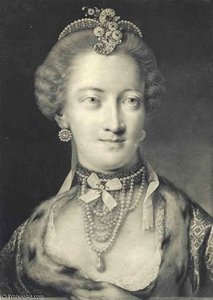
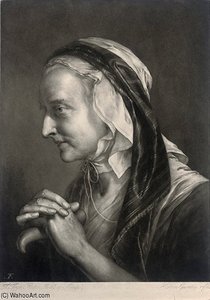
Porträtt av Thomas Frye

De 40 mest kända Thomas Frye-målningarna, varje ett unikt konstverk

Uppdaterad november 2026 · rangordnad efter vår popularitetspoäng (sökningar, besök och beställningar för varje verk) · 40 verk av Thomas Frye i vår katalog

Kortfattat

Thomas Frye (1759) är den målning av Thomas Frye som drar till sig flest blickar; originalet finns på National Portrait Gallery, London. Därefter dras blicken till Portrait of Sir Charles Kemeys-Tynte, Baronet (1710-1785) (1739) och Portrait of John Allen of Bridgewater (1739). Bland de 40 verk av Thomas Frye i vår katalog är dessa 40 de mest kända, var och en ett unikt original presenterat med sitt år, sitt museum och anledningen till dess tidlösa betydelse.

1710 – 1762, Dublin Flest verk: National Gallery of Ireland

Topp 10 målningar av Thomas Frye, ur galleriets perspektiv

1
Thomas Frye (1759) av Thomas Frye

Thomas Frye

1759 · Oil On Canvas · National Portrait Gallery, London

Created in 1759, this oil on canvas work presents the artist, Thomas Frye, as his own subject. The portrait captures the man in a three-quarter view, presenting a formal and somber appearance. He is depicted with light-colored, powdered hair that contrasts against the darker tones of his attire. A dark jacket and a white neckcloth define his clothing, grounding the figure within a restrained, eighteenth-century aesthetic.

Thomas Fryes berömda målningar, nummer 11 till 40

Motiven som fångade Thomas Fryes blick

De fyra motiv som återkommer oftast i dessa originalverk, var och ett med sitt främsta exempel.

Museerna som förvarar Thomas Fryes originalverk

De 7 museer som innehar flest av målningarna på denna sida.

Museum Stad Verk av Thomas Frye Målningar från denna lista
National Gallery of Ireland, DublinNational Gallery of Ireland Dublin 3 Portrait of Sir Charles Kemeys-Tynte, Baronet (1710-1785), Portrait of John Allen of Bridgewater, Portrait of Susannah Walker
National Portrait Gallery, LondonNational Portrait Gallery London 1 Thomas Frye
Royal Collection, LondonRoyal Collection London 1 Frederick, Prince of Wales (1707-1751)
Yale Center for British Art, New HavenYale Center for British Art New Haven 1 A Woman, Traditionally Identified as Mrs.Wardle
Metropolitan Museum of Art, New YorkMetropolitan Museum of Art New York 1 Untitled (D2WVNF)
Nationalmuseum, StockholmNationalmuseum Stockholm 1 Unknown man
Scottish National Portrait Gallery, EdinburghScottish National Portrait Gallery Edinburgh 1 Richard Leveridge

Thomas Frye genom decennierna: ett unikt original för varje era

Verk per decennium

Välj ett decennium för att se originalverket som definierar det.

Thomas Fryes målningar: frågor till galleriet

Vilket är Thomas Fryes mest kända verk?Visa svaret

Thomas Frye (1759), National Portrait Gallery, London. Portrait of Sir Charles Kemeys-Tynte, Baronet (1710-1785) (1739) och Portrait of John Allen of Bridgewater (1739) följer efter.

Vid vilken ålder skapade Thomas Frye Thomas Frye?Visa svaret

49 år gammal: Thomas Frye är från 1759, och Thomas Frye föddes 1710.

Vilka tio målningar av Thomas Frye är de mest kända?Visa svaret

Thomas Frye, Portrait of Sir Charles Kemeys-Tynte, Baronet (1710-1785), Portrait of John Allen of Bridgewater, Frederick, Prince of Wales (1707-1751), A Woman, Traditionally Identified as Mrs.Wardle, Portrait of Susannah Walker, Untitled (D2WVNF), Unknown man, The Observer och Untitled. Rankingen ovan visar varje verks årtal och museum.

Hur många verk av Thomas Frye är kända?Visa svaret

Vår katalog innehåller 40 verk av Thomas Frye, daterade från 1739 till 1760.

Var kan de mest kända originalen av Thomas Frye ses?Visa svaret

Främst i National Gallery of Ireland (Dublin), National Portrait Gallery (London) och Royal Collection (London). Museitabellen ovan listar alla.

Under vilken period skapade Thomas Frye sina mest kända målningar?Visa svaret

Under 1730s: 2 av de 40 verk som finns på denna sida skapades då, varav Portrait of Sir Charles Kemeys-Tynte, Baronet (1710-1785).

Vilket av de kända verken av Thomas Frye är det tidigaste respektive det senaste?Visa svaret

På den här sidan är det tidigaste Portrait of Sir Charles Kemeys-Tynte, Baronet (1710-1785) (1739) och det senaste Portrait of Susannah Walker (1760).

Vilka motiv föredrog Thomas Frye?Visa svaret

Portraits (8), Portrait (5) och Men (4), fördelat på 40 verk på denna sida.

Vilka original av Thomas Frye kan jag se på National Gallery of Ireland?Visa svaret

Portrait of Sir Charles Kemeys-Tynte, Baronet (1710-1785), Portrait of John Allen of Bridgewater och Portrait of Susannah Walker: National Gallery of Ireland, Dublin har 3 av verken på denna sida.

Thomas Frye: ett porträtt av konstnären

The Versatile Legacy of Thomas Frye

Thomas Frye stands as a remarkable figure of the eighteenth century, an Anglo-Irish polymath whose creative reach extended far beyond the traditional boundaries of portraiture. Born in Edenderry, Ireland, Frye’s journey from his Irish roots to the vibrant artistic circles of London allowed him to cultivate a diverse mastery over various media. He was not merely a painter but a skilled engraver and a pioneer in the delicate art of porcelain manufacturing. His ability to navigate between the intimate scale of miniatures and the grand presence of oil portraits marks him as one of the most significant Irish artists of his era, blending technical precision with an innate understanding of character.

His artistic development was characterized by a profound command over both color and line. In his portraiture, Frye utilized oil and pastel to capture the aristocratic grace and psychological depth of his subjects. Whether rendering the soft textures of skin in a pastel miniature or the stately presence of figures like Lieutenant Colonel George Walsh, his work resonates with an enduring elegance. His early explorations in mezzotint engraving further demonstrated his technical prowess, allowing him to disseminate his visual narratives through print, reaching a much wider audience than the single canvas could ever permit.

A Pioneer of Porcelain and Print

Beyond the easel, Frye’s historical significance is deeply intertwined with the industrial and decorative arts of England. He was a man of immense entrepreneurial spirit, most notably serving as the patentee of the Bow porcelain factory in London. In an era of intense competition among ceramic innovators, Frye claimed a central role in the history of English pottery, even asserting in his epitaph that he was the inventor and first manufacturer of porcelain in England. While historical debate continues regarding his precedence over rivals at the Chelsea factory, his management of the Bow works remains a cornerstone of his multifaceted career.

The breadth of his contributions can be summarized through his various artistic roles:

  • Portrait Painter: Renowned for his ability to capture likenesses in oil, pastel, and chalk, ranging from delicate miniatures to full-length compositions.
  • Printmaker: A skilled engraver who utilized the mezzotint technique to publish series of life-size fancy portraits.
  • Ceramic Innovator: A key figure in the development of English porcelain through his leadership at the Bow porcelain factory.

Frye’s life was a testament to the intersection of fine art and industrial innovation. Even as he faced personal hardships, such as the respiratory struggles that eventually led him to retire to Wales, his dedication to his craft never wavered. His legacy survives not only in the galleries of prestigious institutions like The Metropolitan Museum of Art but also in the very fabric of English decorative history, leaving an indelible mark on the visual culture of the eighteenth century.