


1


Uppdaterad november 2026 · rangordnad efter vår popularitetspoäng (sökningar, besök och beställningar för varje verk) · 6 verk av Simon Maris i vår katalog
Kortfattat
Av alla originalverk som Simon Maris lämnade efter sig är det mest kända Girl Warming Herself by Fireplace (1920), i samlingen hos Museum De Waag, Deventer. Tätt efter följer Portrait H. van Dam Azn. (1919) och Portrait of Mrs H.L. Merens Houtman (1922). Vår katalog innehåller 6 verk av Simon Maris; galleriet har bevarat de 6 som världen beundrar mest, var och en presenterad med sitt datum, sitt museum och sin historia.


De 3 museer som innehar flest av målningarna på denna sida.
| Museum | Stad | Verk av Simon Maris | Målningar från denna lista |
|---|---|---|---|
 Museum De Waag |
Deventer | 1 | Girl Warming Herself by Fireplace |
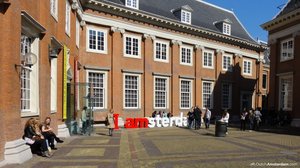 Amsterdam Museum |
Amsterdam | 1 | Portrait H. van Dam Azn. |
 Rijksmuseum |
Amsterdam | 1 | Isabella |
Välj ett decennium för att se originalverket som definierar det.
Girl Warming Herself by Fireplace (1920), Museum De Waag, Deventer. Portrait H. van Dam Azn. (1919) och Portrait of Mrs H.L. Merens Houtman (1922) följer efter.
47 år gammal: Girl Warming Herself by Fireplace är från 1920, och Simon Maris föddes 1873.
Vår katalog innehåller 6 verk av Simon Maris, daterade från 1895 till 1930.
Främst i Museum De Waag (Deventer), Amsterdam Museum (Amsterdam) och Rijksmuseum (Amsterdam). Museitabellen ovan listar alla.
Under 1920s: 3 av de 6 verk som finns på denna sida skapades då, varav Girl Warming Herself by Fireplace.
På den här sidan är det tidigaste Isabella (1895) och det senaste Arabische vrouw (Rioto Kahdila) (1930).
The Hague, 1873. Simon Willem Maris enters the world as the son of Willem Maris, a man already established within the landscape traditions of the Hague School. The early years are defined by the shadow of his father’s brush. He begins his training under that very same hand, learning the mechanics of paint and light through direct lineage. However, the heavy, realistic landscapes of his father do not hold him. A different pull exists elsewhere.
The path leads away from the familiar soil of The Hague toward the Royal Academy of Fine Arts in Antwerp. In 1895, he enrolls there, following a family pattern established by his uncles, Matthijs and Jacob. This period in Belgium introduces a shift in his visual language. He moves through Brussels, Paris, and Italy, absorbing the light of the Mediterranean and the atmosphere of the French capital. By 1900, the transition is complete. He settles in Amsterdam.
Amsterdam becomes the center of his orbit. His studio on the Spui and his home on Keizersgracht transform into meeting points for a new generation of creators. In 1903, he travels to Spain alongside his friend Piet Mondrian. They are part of a circle that finds solace in painting along the Gein River. It is a time of shared sketches and shared meals at the De Vink restaurant.
The work changes. The heavy textures of the Hague School give way to a light, colorful palette. He moves toward portraiture, finding success with the fashionable women of Amsterdam society. These are not mere likenesses; they are studies in character and sunlight. He captures the texture of a silk gown or the way light hits a fan. His style settles into a refined impressionistic mode, focusing on the interplay of sun and shadow.
Personal life and professional subject matter merge. After marrying Cornelia den Breejen in 1908, his family becomes his primary muses. He paints her, along with their children Mies and Thijs, in intimate scenes of reading or motherhood. These works possess a warmth that contrasts with the formal commissions he receives from theater and university circles. Even when painting cityscapes, beach scenes, or still lifes, the focus remains on the atmosphere.
Notable works emerge from this period:
Beyond the easel, Maris operates as a bon vivant and an art dealer. He runs an antiques business, trading works by his contemporaries and collecting pieces that reflect his own aesthetic. His studio is a place of commerce and culture, where a client might receive a Japanese kimono or a Delft plate alongside a portrait commission. He holds leadership roles within the Amsterdam art scene, serving as president of Sint Lucas and as vice-chairman of Arti et Amicitiae.
The end comes in Amsterdam, 1935. He leaves behind a body of work that bridges the gap between the traditional Dutch realism of his father and a more modern, light-filled impressionism. His paintings reside now in the permanent collections of the Rijksmuseum Amsterdam, the Dordrechts Museum, and the Groninger Museum, marking his place in the evolution of Dutch art.