Porträtt av Robert Noble

De 19 mest kända målningarna av Robert Noble, ett galleriselektion

Uppdaterad november 2026 · rangordnad efter vår popularitetspoäng (sökningar, besök och beställningar för varje verk) · 19 verk av Robert Noble i vår katalog

Kortfattat

Av alla originalverk som Robert Noble lämnade efter sig är det mest kända East Linton at Dusk (1896), i samlingen hos East Linton Library, Linton, East. Tätt efter följer Under the Sea Wall (1892) och Leading, East Linton, East Lothian (1905). Vår katalog innehåller 19 verk av Robert Noble; galleriet har bevarat de 19 som världen beundrar mest, var och en presenterad med sitt datum, sitt museum och sin historia.

1857 – 1917, Edinburgh Flest verk: East Linton Library

Robert Nobles 10 främsta målningar: galleriets utvalda verk

1
East Linton at Dusk (1896) av Robert Noble

East Linton at Dusk

1896 · Oil On Canvas · East Linton Library, Linton, East

In East Linton at Dusk, Robert Noble presents a quiet, picturesque scene of a small village nestled within the landscape. The composition is anchored by a church steeple that towers over the surrounding town, providing a vertical counterpoint to the horizontal expanse of the hills and fields. This central structure offers a sense of scale to the cluster of houses and buildings that make up the settlement. The village appears…

2
Under the Sea Wall (1892) av Robert Noble

Under the Sea Wall

1892 · Oil On Canvas · The Dick Institute, Kilmarnock

Under the Sea Wall is a work by Robert Noble, painted in 1892. This piece emerged during a period when the artist was establishing his presence within the Scottish landscape tradition. Noble, who was born in Edinburgh, United Kingdom, in 1857, brought a specific sensibility to his depictions of the coast, often focusing on the relationship between the land and the sea.

3
Leading, East Linton, East Lothian (1905) av Robert Noble

Leading, East Linton, East Lothian

1905 · Oil On Canvas

The scene unfolds in 1905 through the eyes of Robert Noble, who captures the quiet rhythm of life in the Scottish countryside. In this work, titled Leading, East Linton, East Lothian, the artist turns his attention to the pastoral movements of the Tyne Valley. The painting finds its soul in the specific light and topography of the East Lothian landscape, a region that held a deep significance for the painter…

4
Summertime (1903) av Robert Noble

Summertime

1903 · Oil On Canvas · Royal Scottish Academy of Art - Architecture, Edinburgh

The painting before us is titled Summertime, a work created by the Scottish landscape painter Robert Noble. This piece dates to about 1903, a period during which Noble had established himself as a significant presence within the Scottish landscape tradition. His approach to the natural world was deeply rooted in the Romantic ideals of his era, focusing on the quiet observation of the terrain and the atmosphere of the countryside.

5
Rouen av Robert Noble

Rouen

Oil

This work, titled Rouen, was painted by the Scottish artist Robert Noble. Born in Edinburgh, United Kingdom, in 1857, Noble developed a practice that would eventually become deeply connected to the landscapes of his homeland. He remained a significant presence in the Scottish art tradition until his death in 1917.

6
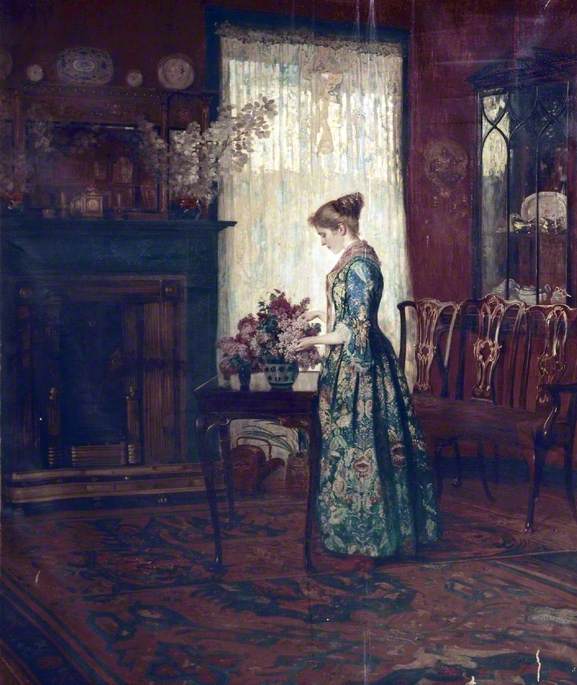
Sweet Lilac av Robert Noble

Sweet Lilac

Oil On Canvas

Sweet Lilac by Robert Noble presents a domestic scene centered on a woman within a quiet interior. Positioned near a table laden with flowers, the figure is surrounded by furniture and a fireplace, creating a sense of domesticity and personal reflection. The composition focuses on the immediate foreground, utilizing a shallow perspective to emphasize the subject's activity of arranging flowers. The presence of the fireplace and drapery provides a structured…

7
Near East Linton av Robert Noble

Near East Linton

Oil On Canvas

In Near East Linton, the artist Robert Noble captures a quiet moment within the Tyne Valley. The scene is a pastoral landscape where a small stream winds through the meadow. Several cows graze in the grass, their rounded forms settled into the earth. This is a study of rural tranquility. The weight of the land feels heavy and still.

8
An East Lothian River (1910) av Robert Noble

An East Lothian River

1910 · Oil On Canvas

An East Lothian River is an oil painting by Robert Noble. Created about 1910, the work captures a quiet moment within the Scottish landscape. The scene focuses on a river, its surface calm and still. Trees line the banks, their forms casting shadows into the water. A cloudy sky hangs above the greenery, adding a sense of weight to the atmosphere.

9
View of East Linton (1907) av Robert Noble

View of East Linton

1907 · Oil On Canvas · East Linton Library, Linton, East

View of East Linton is an oil painting by the artist Robert Noble. Created in 1907, this work depicts a landscape centered on a town situated near a body of water. The scene includes a variety of structures, most notably a church that rises above the surrounding buildings. The topography features a field containing grass and hay, while a boat is positioned on the water.

10
Springtime, Prestonkirk (1909) av Robert Noble

Springtime, Prestonkirk

1909 · Oil On Canvas · Scottish National Gallery, Edinburgh

In this 1909 work, titled Springtime, Prestonkirk, Robert Noble offers a quiet representation of nature. The painting captures a specific moment in the seasonal cycle, focusing on the landscape surrounding the village of Prestonkirk. It is a work that reflects the artist's long-standing connection to the rural topography of the region.

Urvalet av Robert Noble fortsätter, 11 till 19

Motiven som fångade Robert Nobles blick

De fyra motiv som återkommer oftast i dessa originalverk, var och ett med sitt främsta exempel.

Museerna som förvarar Robert Nobles originalverk

De 6 museer som innehar flest av målningarna på denna sida.

Museum Stad Verk av Robert Noble Målningar från denna lista
East Linton Library, Linton, EastEast Linton Library Linton, East 3 East Linton at Dusk, View of East Linton, At the Sluice Gate
The Dick Institute, KilmarnockThe Dick Institute Kilmarnock 2 Under the Sea Wall, Pasture
Royal Scottish Academy of Art - Architecture, EdinburghRoyal Scottish Academy of Art - Architecture Edinburgh 1 Summertime
Scottish National Gallery, EdinburghScottish National Gallery Edinburgh 1 Springtime, Prestonkirk
John Muir House, HaddingtonJohn Muir House Haddington 1 An Old Castle Orchard, Longniddry
Usher Gallery, LincolnUsher Gallery Lincoln 1 On the Dean, East Linton

Robert Noble decennium för decennium: originalen som definierar varje era

Verk per decennium

Välj ett decennium för att se originalverket som definierar det.

Samlarfrågor om Robert Nobles målningar

Vilket verk är Robert Noble mest känd för?Visa svaret

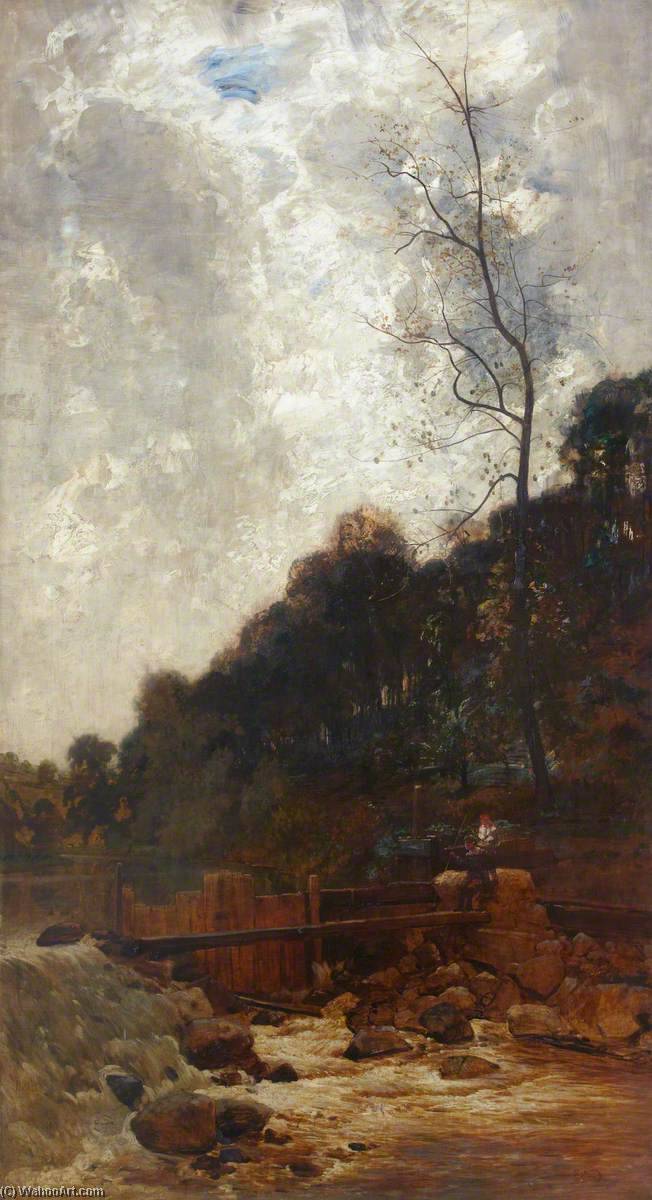
East Linton at Dusk (1896), East Linton Library, Linton, East. Under the Sea Wall (1892) och Leading, East Linton, East Lothian (1905) följer efter.

Hur gammal var Robert Noble när East Linton at Dusk skapades?Visa svaret

39 år gammal: East Linton at Dusk är från 1896, och Robert Noble föddes 1857.

Vilka är de tio mest kända målningarna av Robert Noble?Visa svaret

East Linton at Dusk, Under the Sea Wall, Leading, East Linton, East Lothian, Summertime, Rouen, Sweet Lilac, Near East Linton, An East Lothian River, View of East Linton och Springtime, Prestonkirk. Rankingen ovan visar varje verks årtal och museum.

Hur många målningar lämnade Robert Noble efter sig?Visa svaret

Vår katalog innehåller 19 verk av Robert Noble, daterade från 1892 till 1915.

I vilka museer hänger Robert Nobles mästerverk?Visa svaret

Främst i East Linton Library (Linton, East), The Dick Institute (Kilmarnock) och Royal Scottish Academy of Art - Architecture (Edinburgh). Museitabellen ovan listar alla.

Under vilka år målade Robert Noble sina mest kända verk?Visa svaret

Under 1910s: 6 av de 19 verk som finns på denna sida skapades då, varav An East Lothian River.

Vilka är de första och sista kända originalverken av Robert Noble?Visa svaret

På den här sidan är det tidigaste Under the Sea Wall (1892) och det senaste The Knowes, East Linton (1915).

Vilka motiv valde Robert Noble oftast?Visa svaret

Clouds (5), Sky (5) och Grass (4), fördelat på 19 verk på denna sida.

Vilken teknik använde Robert Noble mest?Visa svaret

Oil On Canvas, för 9 av de 19 verk som finns på denna sida.

Vilka verk av Robert Noble finns utställda på East Linton Library?Visa svaret

East Linton at Dusk, View of East Linton och At the Sluice Gate: East Linton Library, Linton, East har 3 av verken på denna sida.

Robert Noble: liv och verk

Robert Noble (1857 – 1917): Echoes of Lothian’s Shores

Robert Noble, born in Edinburgh in 1857, emerged as a significant figure within the Scottish landscape painting tradition—a movement deeply rooted in Romantic ideals and characterized by an unwavering fascination with capturing the sublime beauty of the natural world. His artistic journey unfolded against the backdrop of Victorian Britain, where scientific inquiry wrestled with spiritual contemplation, shaping both the aesthetic sensibilities and intellectual pursuits of his era. While biographical details remain somewhat sparse – Noble’s personal life was largely private – his contribution to Scottish art history is undeniable, primarily through his masterful portrayals of East Lothian's coastline and surrounding rural landscapes.
  • Early Influences: Noble’s formative years were marked by exposure to the artistic currents circulating in Edinburgh’s intellectual circles. He studied at the Royal Scottish Academy, absorbing the stylistic principles championed by artists like Albert Brumby and David Octavius Hill—artists who prioritized atmospheric perspective and tonal modulation to convey emotion and grandeur. These influences instilled in Noble a profound respect for observation and meticulous technique.
  • The Landscape Tradition: Like many of his contemporaries, Noble embraced the Romantic landscape tradition, which sought to elevate nature beyond mere decoration, presenting it as an embodiment of divine majesty and moral instruction. He meticulously documented the dramatic cliffs of Berwickshire and the serene meadows of Musselburgh Abbey, employing a distinctive palette dominated by muted greens, blues, and browns—colors carefully chosen to evoke mood and atmosphere.
  • Technique & Style: Noble’s artistic style can be described as characterized by a deliberate blending of realism and Impressionistic tendencies. While he adhered to accurate topographical representation – capturing the contours of hillsides and the textures of rocks with remarkable precision – he simultaneously utilized loose brushstrokes and subtle color variations to imbue his canvases with an ethereal quality. This approach allowed him to convey not only what he saw but also how he felt about the subject matter.

Notable Works & Recurring Themes

Noble’s oeuvre comprises approximately eighty paintings, predominantly landscapes depicting East Lothian and Northumberland. Among his most celebrated pieces are “The Cliffs of Berwickshire” (1893), a monumental depiction of the dramatic coastline featuring towering cliffs battered by turbulent seas; “Musselburgh Abbey Meadows” (1896), capturing the tranquil beauty of the abbey grounds bathed in golden sunlight; and “Dunbar Castle Ruins” (1902), presenting a poignant portrayal of crumbling fortifications against a brooding sky. Recurring themes throughout his work include solitude, contemplation, and an appreciation for the sublime—concepts central to Romantic thought.
  • Symbolism & Emotion: Noble’s paintings transcend mere visual representation; they are infused with symbolic meaning reflecting the anxieties and aspirations of Victorian society. The brooding skies and desolate landscapes serve as metaphors for existential uncertainty, while the depiction of figures—often solitary shepherds or fishermen—suggests a yearning for communion with nature and transcendence.
  • Legacy & Influence: Robert Noble’s artistic legacy extends beyond his individual paintings. He established himself as a respected teacher at Edinburgh College of Art, nurturing the talents of younger artists and fostering a commitment to traditional landscape painting techniques. His work continues to inspire admiration for its expressive power and unwavering devotion to capturing the essence of Scottish scenery.

Historical Context & Artistic Significance

Noble’s artistic output coincided with a period of significant social and intellectual transformation in Britain—the rise of Darwinian evolution challenged religious dogma, prompting artists to grapple with questions of morality and purpose. Simultaneously, the burgeoning field of psychology explored the complexities of human consciousness, influencing aesthetic sensibilities and encouraging artists to delve into the inner lives of their subjects. Noble’s landscapes stand as testament to this era's preoccupation with both scientific discovery and spiritual reflection—a harmonious blend that cemented his place within the broader artistic landscape of Victorian Scotland.