


1


Uppdaterad november 2026 · rangordnad efter vår popularitetspoäng (sökningar, besök och beställningar för varje verk) · 4 verk av Louis Bausil i vår katalog
Kortfattat
Ur galleriets perspektiv är Louis Bausils mest kända målning Blés en Cerdagne (1903), vars original hänger på Musée Hyacinthe Rigaud i Perpignan. Oliviers de Majorque (1911) och Plage d'Argelès (1930) fullbordar trion som alla känner igen. Av de 4 verk av Louis Bausil i vår katalog presenterar galleriet nedan de 4 mest kända, var och en som ett original med sitt år, sitt museum och vad som gör det unikt.
Museet som innehar flest av målningarna på denna sida.
| Museum | Stad | Verk av Louis Bausil | Målningar från denna lista |
|---|---|---|---|
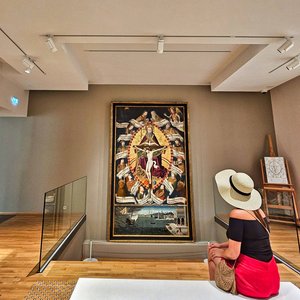 Musée Hyacinthe Rigaud |
Perpignan | 4 | Blés en Cerdagne, Oliviers de Majorque, Plage d'Argelès |
Välj ett decennium för att se originalverket som definierar det.


Blés en Cerdagne (1903), Musée Hyacinthe Rigaud, Perpignan. Oliviers de Majorque (1911) och Plage d'Argelès (1930) följer efter.
27 år gammal: Blés en Cerdagne är från 1903, och Louis Bausil föddes 1876.
Vår katalog innehåller 4 verk av Louis Bausil, daterade från 1903 till 1930.
Främst i Musée Hyacinthe Rigaud (Perpignan). Museitabellen ovan listar alla.
På den här sidan är det tidigaste Blés en Cerdagne (1903) och det senaste Plage d'Argelès (1930).
Blés en Cerdagne, Oliviers de Majorque och Plage d'Argelès: Musée Hyacinthe Rigaud, Perpignan har 4 av verken på denna sida.
In the delicate interplay of light and shadow that defines the French landscape, the name Louis Bausil resonates with a quiet, Neo-Impressionist grace. Born in 1876, Bausil emerged as a painter deeply attuned to the ephemeral rhythms of nature, particularly within the sun-drenched territories of French Catalonia. His work serves as a visual poem to the Mediterranean spirit, capturing not merely the topography of the land, but the very atmosphere that breathes life into it. To observe a Bausil canvas is to witness a masterclass in the depiction of sunlight, where the mist and the morning glow are rendered with a sensitivity that borders on the poetic.
Bausil’s artistic journey was marked by a profound connection to his surroundings. He devoted much of his creative energy to the rural and coastal vistas of the Roussillon region, finding infinite inspiration in the rugged beauty of the Albères landscape. His early forays into the professional art world were met with significant recognition; in 1901, he exhibited alongside luminaries such as Aristide Maillol and Georges de Monfreid in Perpignan. This period of his life was characterized by an exploration of color and light that sought to transcend mere representation, aiming instead to capture the "sensibility of a face" within the landscape itself—a sentiment echoed by contemporary critics who noted how his work breathed with the vitality of the countryside.
The technical evolution of Bausil is inextricably linked to the broader movements of late 19th and early 20th-century modernism. As a practitioner influenced by Neo-Impressionism, his brushwork often sought to capture the vibrating quality of light through careful color application. His palettes were famously evocative of the French countryside, utilizing the vibrant hues of poppy fields and the soft, delicate pinks of peach trees in blossom. There is a rhythmic quality to his compositions, where the damp, golden light of dawn or the heavy, warm sun of an afternoon over cork oak groves creates a sense of temporal depth.
His participation in the prestigious Société des Artistes Indépendants between 1906 and 1914 placed him at the heart of the avant-garde. By exhibiting in a venue that championed independence from the rigid academicism of the official Salon, Bausil aligned himself with a revolutionary spirit shared by masters like Georges Seurat and Paul Signac. This freedom allowed him to refine a style that was both structurally sound and atmospherically fluid, moving away from strict outlines toward a more immersive, sensory experience for the viewer.
Though his life came to an end in 1945, the artistic legacy of Louis Bausil continues to offer profound insights into the evolution of French landscape painting. His ability to marry the structural elements of the land with the fleeting impressions of light ensures his place in the lineage of artists who sought to find the eternal within the momentary. His work remains a testament to a specific era of French art, where the boundaries between the observer and the observed were blurred by the warmth of the Mediterranean sun.
The enduring value of his contributions can be seen through several key aspects of his career:
