Kazimir Malevich: En pionjär inom abstrakt konst
Tidigt liv och influenser
- Född 1878 i Kyiv oblast, Ukraina, i en polsk familj, formades Kazimir Severinovich Malevich tidiga år av det ukrainska landsbygdslanskapet och dess rika folkkultur.
- Hans uppväxt gav honom en uppskattning för traditionella konstnärliga uttryck som senare skulle påverka hans verk på ett subtilt sätt.
- Den formella utbildningen började i Kyiv, men Malevich sökte snabbt bredare konstnärliga horisonter genom att röra sig mot Moskva, för att slutligen engagera sig i Europas framväxande avantgarderörelser.
- Viktiga influenser: Tidig exponering för folkkonst, kombinerat med en längtan efter modernt uttryck, lade grunden till hans unika stil.
Konstnärlig utveckling och centrala rörelser
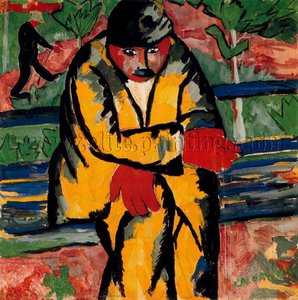
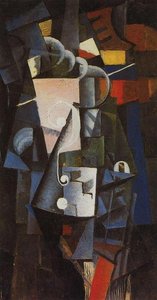
- Inledningsvis utforskade Malevich olika stilar, inklusive impressionism, symbolism, fauvism och
kubism. En avgörande resa till Paris 1912 exponerade honom för de senaste utvecklingarna inom den europeiska konsten. - Han rörde sig gradvis bort från föreställande former i sökandet efter ett rent konstnärligt språk baserat på geometriska former och färg.
- Detta ledde till utvecklingen av suprematismen kring 1915 – en abstrakt rörelse fokuserad på ”det rena känslans överhöghet” inom konsten.
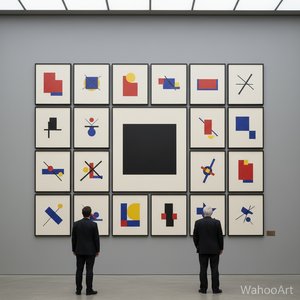
- Suprematismen förkastade alla försök att avbilda objekt från den synliga världen och prioriterade istället grundläggande geometriska former som kvadrater, cirklar och rektanglar.
Stora prestationer och betydelsefulla verk
- Svart kvadrat (1915): Möjligen hans mest kända verk, vilket representerar ett radikalt avsteg från traditionell konst och betraktas som ett fundamentalt stycke inom det abstrakta måleriet.
- Vit på vit (191rag): En serie som utforskar formens och färgens renhet, med vita geometriska former mot en vit bakgrund – vilket pressar abstraktionen till dess yttersta gränser.
- Stroyuschiysya dom [Hus under konstruktion] (1916): Ett tidigt exempel på suprematism som visar hans unika perspektiv på ukrainsk kultur genom abstrakta former.
- Han skrev även omfattande om konstteori, där han artikulerade de filosofiska principerna bakom suprematismen och förespråkade ett nytt konstnärligt medvetande.
Historisk betydelse och arv
- Malevichs arbete fick en djupgående inverkan på utvecklingen av 1900-talets abstrakta konst och influerade rörelser som minimalism och konstruktivism.
- Han utmanade konventionella föreställningar om representation och banade väg för den icke-objektiva konsten.
- Hans idéer om ren känsla och geometrisk abstraktion fortsätter att resonera hos konstnärer än idag.
- Trots politisk förföljelse under Stalin – först stöttad, sedan förtryckt – höll Malevich fast vid sitt skapande och sitt lärande.
- Inflytande på senare konstnärer: Han påverkade direkt konstnärer som El Lissitzky och formade indirekt otaliga andra genom suprematismens bestående arv.
Sena år och död
- Under sina senare år återvände Malevich till figurativt måleri i ett försök att syntetisera sina abstrakta principer med föreställande former.
- Han fortsatte att undervisa och skriva om konst fram till sin död i Leningrad (nuvarande Sankt Petersburg) 1935.
- Hans arbete förblev relativt okänt i decennier efter hans död, men upplevde en renässans under den senare hälften av 20:e århundradet, vilket befäste hans plats som en av de viktigaste gestalterna i den moderna konsthistorien.




![Black Circle [1913] State Russian Museum, — Kazimir Malevich](/media/artworks/images-thumb/62/67/6267e452b0c8476772a6511e19ce1616.jpg)