


1


Uppdaterad oktober 2026 · rangordnad efter vår popularitetspoäng (sökningar, besök och beställningar för varje verk) · 17 verk av Joseph Aved i vår katalog
Kortfattat
Presumed Portrait of Abbé Nicolas-Sylvestre Berger (1718-1790), theologian formerly called Portrait of Abbé Prévost (1733) är den målning av Joseph Aved som drar till sig flest blickar; originalet finns på Opera House, Versailles. Därefter dras blicken till Portrait of a Man in Gray Suit and Red Waistcoat (1740) och The Marquise de Castellane with her Embroidery (1743). Bland de 17 verk av Joseph Aved i vår katalog är dessa 17 de mest kända, var och en ett unikt original presenterat med sitt år, sitt museum och anledningen till dess tidlösa betydelse.


 Willem IV (1711-1751), Prince of Orange1751
12
 Portrait of Jean-Philippe Rameau1750 · Musée des Beaux-Arts de Dijon
13
 Posthumous Portrait of William IV (1711-1751)1751 · Mauritshuis
14
 Willem IV (1711-1751), Prince of Orange-Nassau, Jacques-André-Joseph Aved, 1750 - 17511751 · Rijksmuseum
15
 Presumed Portrait of Françoise-Marie Pouget, Second Wife of Chardin1760 · Musée Carnavalet
16
 Madame Crozat1741 · Musée Fabre
17
 Willem IV (1711-1751), prince of Orange-Nassau, Jacques-André-Joseph Aved, 17511751 · Rijksmuseum
De 8 museer som innehar flest av målningarna på denna sida.
| Museum | Stad | Verk av Joseph Aved | Målningar från denna lista |
|---|---|---|---|
 Opera House |
Versailles | 3 | Presumed Portrait of Abbé Nicolas-Sylvestre Berger (1718-1790), theologian formerly called Portrait of Abbé Prévost, Portrait of Jean-François de Troy (1679-1752), Portrait of the painter Pierre Jacqus Cazes (1676-1754) |
 Musée Condé |
Chantilly | 2 | Portrait of a Man in Gray Suit and Red Waistcoat, Portrait of a Man in Gray Costume |
 Rijksmuseum |
Amsterdam | 2 | Willem IV (1711-1751), Prince of Orange-Nassau, Jacques-André-Joseph Aved, 1750 - 1751, Willem IV (1711-1751), prince of Orange-Nassau, Jacques-André-Joseph Aved, 1751 |
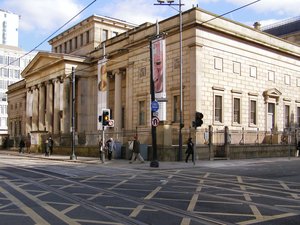 Manchester Art Gallery |
Manchester | 1 | The Marquise de Castellane with her Embroidery |
 Toledo Museum of Art |
Toledo | 1 | Abbé Capperonnier |
 Cleveland Museum of Art |
Cleveland | 1 | Portrait of Jean-Gabriel du Theil at the Signing of the Treaty of Vienna |
 Nationalmuseum |
Stockholm | 1 | Count Carl Gustaf Tessin |
 Musée des Beaux-Arts de Dijon |
Dijon | 1 | Portrait of Jean-Philippe Rameau |
Välj ett decennium för att se originalverket som definierar det.

Presumed Portrait of Abbé Nicolas-Sylvestre Berger (1718-1790), theologian formerly called Portrait of Abbé Prévost (1733), Opera House, Versailles. Portrait of a Man in Gray Suit and Red Waistcoat (1740) och The Marquise de Castellane with her Embroidery (1743) följer efter.
31 år gammal: Presumed Portrait of Abbé Nicolas-Sylvestre Berger (1718-1790), theologian formerly called Portrait of Abbé Prévost är från 1733, och Joseph Aved föddes 1702.
Presumed Portrait of Abbé Nicolas-Sylvestre Berger (1718-1790), theologian formerly called Portrait of Abbé Prévost, Portrait of a Man in Gray Suit and Red Waistcoat, The Marquise de Castellane with her Embroidery, Abbé Capperonnier, Portrait of Jean-Gabriel du Theil at the Signing of the Treaty of Vienna, Victor Riquetti, marquis de Mirabeau (1715-1789), Count Carl Gustaf Tessin, Portrait of Jean-François de Troy (1679-1752), Portrait of the painter Pierre Jacqus Cazes (1676-1754) och Portrait of a Man in Gray Costume. Rankingen ovan visar varje verks årtal och museum.
Vår katalog innehåller 17 verk av Joseph Aved, daterade från 1733 till 1760.
Främst i Opera House (Versailles), Musée Condé (Chantilly) och Rijksmuseum (Amsterdam). Museitabellen ovan listar alla.
Under 1740s: 6 av de 17 verk som finns på denna sida skapades då, varav Portrait of a Man in Gray Suit and Red Waistcoat.
På den här sidan är det tidigaste Presumed Portrait of Abbé Nicolas-Sylvestre Berger (1718-1790), theologian formerly called Portrait of Abbé Prévost (1733) och det senaste Presumed Portrait of Françoise-Marie Pouget, Second Wife of Chardin (1760).
Presumed Portrait of Abbé Nicolas-Sylvestre Berger (1718-1790), theologian formerly called Portrait of Abbé Prévost, Portrait of Jean-François de Troy (1679-1752) och Portrait of the painter Pierre Jacqus Cazes (1676-1754): Opera House, Versailles har 3 av verken på denna sida.
Jacques-André-Joseph Aved, a name that resonates with the elegance of the eighteenth century, stands as a pivotal figure within the vibrant tapestry of French art. Often affectionately or descriptively known as Avet le Batave—the Dutch Avet—his life was a profound bridge between the meticulous traditions of the Netherlands and the luminous grace of the French Rococo. Born in Douai, France, in 1702, Aved’s early years were shadowed by the tragedy of losing his father at a young age. This loss led him to Amsterdam, where he was raised by an uncle who served as a captain in the Dutch army. It was within this northern landscape that his artistic soul was nurtured, far from the courtly splendor of Paris, yet deeply influenced by the sober and detailed sensibilities of the Dutch masters.
His formative training in Amsterdam under the guidance of François Boitard and Bernard Picart provided him with a foundation in precision and an eye for exoticism. These mentors were renowned for their ability to capture oriental subjects with meticulous care, a skill that would later allow Aved to navigate the complex cultural landscapes of his future commissions. When he arrived in Paris in 1721, he did not merely enter a new city; he entered a burgeoning artistic revolution. Initially working alongside the established painter Belle, Aved quickly began to weave his unique Dutch-influenced perspective into the fabric of the Parisian scene, blending northern realism with the airy, decorative lightness that defined the reign of King Louis XV.
As Aved’s reputation ascended, he became one of the most sought-after portraitists in Paris, a role that required not only technical mastery but also an innate ability to capture the psychological nuance of his subjects. His work was characterized by a remarkable ability to balance formal dignity with a soft, Rococo charm. This talent earned him prestigious recognition within the Académie royale de peinture et de sculpture, where he entered in 1731 and eventually achieved the esteemed rank of councillor. His presence in the Salon was a testament to his standing among the elite artistic voices of his era, and by 1759, he was still actively participating in the grand exhibitions that defined French cultural life.
The breadth of Aved’s patronage is perhaps the greatest indicator of his historical significance. He possessed a rare versatility, capable of painting the highest echelons of European royalty and the enigmatic diplomats of the East. Notable among his subjects was Willem IV, Prince of Orange-Nassau, whose portrait showcases Aved's ability to render armor and military attributes with a sense of heroic grandeur. Simultaneously, his 1742 portrait of the Ottoman Empire ambassador, Yirmisekizzade Mehmed Said Efendi, demonstrates his skill in capturing the intricate textures and cultural splendor of foreign dignitaries. Through these works, Aved acted as a visual chronicler of an era defined by international diplomacy and the meeting of diverse worlds.
Beyond the canvas, Aved’s contribution to art history extends into the realm of connoisseurship. He was not merely a creator of images but a passionate collector and dealer, possessing one of the most significant private collections of his time. His eye for quality led him to amass works by Italian, French, and particularly Dutch artists, reflecting the very multicultural influences that had shaped his own life. This deep engagement with the history of painting allowed him to remain a vital part of the art market and the intellectual discourse surrounding aesthetics in the mid-eighteenth century.
The enduring legacy of Jacques-André-Joseph Aved lies in his unique ability to synthesize disparate traditions into a singular, cohesive style. He took the structural integrity and light-play of the Dutch Baroque and infused it with the movement and elegance of the French Rococo. In doing so, he created a body of work that remains a window into the sophisticated, cosmopolitan spirit of the 1700s—a period where the boundaries between nations were bridged by the shared language of beauty and prestige.