Porträtt av Jin Chushi

De 5 mest kända målningarna av Jin Chushi, ett galleriselektion

Uppdaterad november 2026 · rangordnad efter vår popularitetspoäng (sökningar, besök och beställningar för varje verk) · 5 verk av Jin Chushi i vår katalog

Kortfattat

Av alla originalverk som Jin Chushi lämnade efter sig är det mest kända Ten Kings of Hell (1195), i samlingen hos Metropolitan Museum of Art, New York. Tätt efter följer Ten Kings of Hell (1195) och Ten Kings of Hell (1195). Vår katalog innehåller 5 verk av Jin Chushi; galleriet har bevarat de 5 som världen beundrar mest, var och en presenterad med sitt datum, sitt museum och sin historia.

Flest verk: Metropolitan Museum of Art

Jin Chushis 10 främsta målningar: galleriets utvalda verk

1
Ten Kings of Hell (1195) av Jin Chushi

Ten Kings of Hell

1195 · Ink · Metropolitan Museum of Art, New York

In the twilight of the 12th century, amidst the flourishing cultural landscape of China's Song Dynasty, the name Jin Chushi emerged as a beacon of spiritual and artistic profoundness. His masterpiece, Ten Kings of Hell, transcends mere visual representation; it embodies a profound philosophical meditation on mortality and karmic retribution. This magnificent silk artwork, dating back to 1195, is not simply a painting but a window into a complex Buddhist…

2
Ten Kings of Hell (1195) av Jin Chushi

Ten Kings of Hell

1195 · Metropolitan Museum of Art, New York

This is one from a set of scrolls (30.76.290–.294) illustrating the theme of the Ten Kings of Hell, which developed during the second half of the Tang dynasty (618–907). The theme transforms the Indian Buddhist view of judgment after death into a typically Chinese bureaucratic process. Before being permitted to transmigrate into the next life, a soul is tried by a different king each week for seven weeks; it is…

3
Ten Kings of Hell (1195) av Jin Chushi

Ten Kings of Hell

1195 · Metropolitan Museum of Art, New York

This is one from a set of scrolls (30.76.290–.294) illustrating the theme of the Ten Kings of Hell, which developed during the second half of the Tang dynasty (618–907). The theme transforms the Indian Buddhist view of judgment after death into a typically Chinese bureaucratic process. Before being permitted to transmigrate into the next life, a soul is tried by a different king each week for seven weeks; it is…

4
Ten Kings of Hell (1195) av Jin Chushi

Ten Kings of Hell

1195

This is one from a set of scrolls (30.76.290–.294) illustrating the theme of the Ten Kings of Hell, which developed during the second half of the Tang dynasty (618–907). The theme transforms the Indian Buddhist view of judgment after death into a typically Chinese bureaucratic process. Before being permitted to transmigrate into the next life, a soul is tried by a different king each week for seven weeks; it is…

5
Ten Kings of Hell (1195) av Jin Chushi

Ten Kings of Hell

1195 · Metropolitan Museum of Art, New York

This is one from a set of scrolls (30.76.290–.294) illustrating the theme of the Ten Kings of Hell, which developed during the second half of the Tang dynasty (618–907). The theme transforms the Indian Buddhist view of judgment after death into a typically Chinese bureaucratic process. Before being permitted to transmigrate into the next life, a soul is tried by a different king each week for seven weeks; it is…

Museerna som förvarar Jin Chushis originalverk

Museet som innehar flest av målningarna på denna sida.

Museum Stad Verk av Jin Chushi Målningar från denna lista
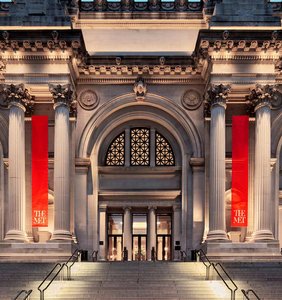
Metropolitan Museum of Art, New YorkMetropolitan Museum of Art New York 4 Ten Kings of Hell, Ten Kings of Hell, Ten Kings of Hell

Jin Chushi år för år: originalen som definierar varje år

1195 är årtalet för varje daterat verk av Jin Chushi i detta urval: här är de, rangordnade efter kändisskap.

Verk per år

Välj ett år för att se originalen.

Samlarfrågor om Jin Chushis målningar

Vilket verk är Jin Chushi mest känd för?Visa svaret

Ten Kings of Hell (1195), Metropolitan Museum of Art, New York. Ten Kings of Hell (1195) och Ten Kings of Hell (1195) följer efter.

Hur många målningar lämnade Jin Chushi efter sig?Visa svaret

Vår katalog innehåller 5 verk av Jin Chushi.

I vilka museer hänger Jin Chushis mästerverk?Visa svaret

Främst i Metropolitan Museum of Art (New York). Museitabellen ovan listar alla.

Under vilka år målade Jin Chushi sina mest kända verk?Visa svaret

Under 1195: 5 av de 5 verk som finns på denna sida skapades då, varav Ten Kings of Hell.

Vilka verk av Jin Chushi finns utställda på Metropolitan Museum of Art?Visa svaret

Ten Kings of Hell, Ten Kings of Hell och Ten Kings of Hell: Metropolitan Museum of Art, New York har 4 av verken på denna sida.

Jin Chushi: liv och verk

The Ethereal Legacy of Jin Chushi

In the twilight of the 12th century, amidst the flourishing cultural landscape of China's Song Dynasty, the name Jin Chushi (金處士) emerged as a beacon of spiritual and artistic profoundness. Though much of his early life remains shrouded in the mists of history, we know him as a master whose brush breathed life into the complex tapestries of Buddhist cosmology. Operating from the vibrant port city of Mingzhou—known today as Ningbo—Jin Chushi was more than a mere painter; he was a storyteller of the soul, a creator who utilized the delicate medium of ink and color on silk to bridge the gap between the mortal realm and the divine.

The very name Chushi suggests a life lived in quiet contemplation, often associated with the identity of a recluse scholar. This sense of spiritual detachment likely informed his approach to the canvas, where every stroke was an act of devotion. His work flourished during a period when Ningbo served as a vital gateway for Japanese merchants and pilgrims, a fact that explains why much of his most breathtaking legacy survived through preservation in Japan. Through these scrolls, Jin Chulated a visual language that would resonate across borders and centuries.

A Vision of the Afterlife

The pinnacle of Jin Chushi’s artistic achievement lies in the monumental series known as Ten Kings of Hell. This set of hanging scrolls is not merely a collection of paintings but a vivid, terrifying, and beautiful exploration of the Chinese Buddhist conception of judgment. In these works, the artist masterfully transforms the abstract concept of death into a structured, bureaucratic process. Each scroll depicts a different king presiding over the souls of the deceased, surrounded by scribes, officials, and the haunting presence of demons tasked with punishing the wicked.

Technically, these masterpieces are a triumph of the Song Dynasty style. Jin Chushi employed a sophisticated palette of intense colors and fine, detailed linework that captured the intricate textures of silk and the heavy atmosphere of the underworld. While some of his works lean toward a monochromatic elegance, focusing on the subtle interplay of black ink and shadow, the Ten Kings of Hell showcases a more vibrant, narrative intensity. The compositions are dense with symbolism, where every figure and gesture serves to illustrate the moral weight of one's earthly actions, creating an immersive experience that is as much a theological lesson as it is a visual feast.

Artistic Influence and Enduring Significance

The ripples of Jin Chushi’s artistry extended far beyond the borders of the Song Dynasty. His ability to blend meticulous detail with profound allegorical meaning laid the groundwork for subsequent movements in East Asian art. The stylistic hallmarks found in his work—particularly the use of vivid drawing and intense color—can be seen as precursors to the development of Suiboku Ga (ink wash painting) in Japan, where many of his original scrolls were cherished and studied.

Today, the legacy of Jin Chushi is preserved in some of the world's most prestigious institutions, including the Metropolitan Museum of Art. His work remains a vital touchstone for scholars studying the intersection of art, religion, and history. To look upon a painting by Jin Chushi is to witness a moment where the hand of man meets the infinite, reminding us that even in the depiction of the darkest realms, there is an enduring pursuit of order, justice, and artistic transcendence.