Porträtt av Jean Bourdichon

De 4 mest kända Jean Bourdichon-målningarna, varje ett unikt konstverk

Uppdaterad november 2026 · rangordnad efter vår popularitetspoäng (sökningar, besök och beställningar för varje verk) · 4 verk av Jean Bourdichon i vår katalog

Kortfattat

The Wealthy Man (1500) är den målning av Jean Bourdichon som drar till sig flest blickar; originalet finns på École Nationale Supérieure des Beaux-Arts, Paris. Därefter dras blicken till Adoration of the Magi och Manuscript Leaf with the Annunciation from a Book of Hours (1485). Bland de 4 verk av Jean Bourdichon i vår katalog är dessa 4 de mest kända, var och en ett unikt original presenterat med sitt år, sitt museum och anledningen till dess tidlösa betydelse.

1457 – 1521, Tours Flest verk: École Nationale Supérieure des Beaux-Arts

Topp 10 målningar av Jean Bourdichon, ur galleriets perspektiv

2
Adoration of the Magi av Jean Bourdichon

Adoration of the Magi

Manuscript · Louvre, Paris

The scene unfolds within the quiet intimacy of a stable, where the light seems to emanate from the infant itself. Mary sits as a pillar of calm, her blue cloak a deep, celestial weight against the wooden structure. In her lap, the child is swathed in white, a small spark of divinity amidst the earthly textures of the barn. Three figures approach, their presence marked by the heavy weight of…

3
Manuscript Leaf with the Annunciation from a Book of Hours (1485) av Jean Bourdichon

Manuscript Leaf with the Annunciation from a Book of Hours

1485

As part of a daily cycle of prayers in honor of the Virgin, Matins is habitually illustrated by an Annunciation, with the angel Gabriel announcing to Mary that she will bear the infant Jesus. Inhabitual, however, are details of this composition by Jean Bourdichon of Tours, the foremost illuminator to the court of France during the reigns of Louis XI, Charles VIII, Louis XII, and Francis I (1461-1547). Despite his…

Museerna som förvarar Jean Bourdichons originalverk

De 3 museer som innehar flest av målningarna på denna sida.

Museum Stad Verk av Jean Bourdichon Målningar från denna lista
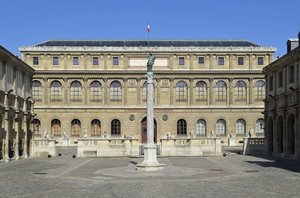
École Nationale Supérieure des Beaux-Arts, ParisÉcole Nationale Supérieure des Beaux-Arts Paris 1 The Wealthy Man
Louvre, ParisLouvre Paris 1 Adoration of the Magi
Certosa di San Martino, NeapelCertosa di San Martino Neapel 1 Madonna with Child and saints

Jean Bourdichon genom åren: de unika originalen från varje verk

En lång karriär på 16 år, från 1485 till 1500: Jean Bourdichons mest kända original, visade år för år.

Verk per år

Välj ett år för att se originalen.

Jean Bourdichons målningar: frågor till galleriet

Vilket är Jean Bourdichons mest kända verk?Visa svaret

The Wealthy Man (1500), École Nationale Supérieure des Beaux-Arts, Paris. Adoration of the Magi och Manuscript Leaf with the Annunciation from a Book of Hours (1485) följer efter.

Vid vilken ålder skapade Jean Bourdichon The Wealthy Man?Visa svaret

43 år gammal: The Wealthy Man är från 1500, och Jean Bourdichon föddes 1457.

Hur många verk av Jean Bourdichon är kända?Visa svaret

Vår katalog innehåller 4 verk av Jean Bourdichon, daterade från 1485 till 1500.

Var kan de mest kända originalen av Jean Bourdichon ses?Visa svaret

Främst i École Nationale Supérieure des Beaux-Arts (Paris), Louvre (Paris) och Certosa di San Martino (Neapel). Museitabellen ovan listar alla.

Under vilken period skapade Jean Bourdichon sina mest kända målningar?Visa svaret

Under 1500: 2 av de 4 verk som finns på denna sida skapades då, varav The Wealthy Man.

Vilket av de kända verken av Jean Bourdichon är det tidigaste respektive det senaste?Visa svaret

På den här sidan är det tidigaste Manuscript Leaf with the Annunciation from a Book of Hours (1485) och det senaste The Wealthy Man (1500).

Jean Bourdichon: ett porträtt av konstnären

Jean Bourdichon (c.1457-1521): A Pioneer of Humanist Gothic

Jean Bourdichon stands as a singular figure in the artistic landscape of late Gothic France, bridging the gap between the austere formality of medieval tradition and the burgeoning humanist spirit of the Renaissance. Born around 1457 in Tours, he emerged from a milieu steeped in ecclesiastical patronage—a circumstance that profoundly shaped his artistic trajectory and ensured his legacy would endure for centuries. While biographical details remain scarce, scholarly consensus points to Bourdichon’s formative years spent absorbing the stylistic conventions of Reims Cathedral and other monumental churches, establishing him firmly within the Gothic canon.
  • Early Influences: Bourdichon's artistic education likely commenced under the tutelage of Jean Félibert, a prominent Reims painter known for his meticulous depictions of religious iconography. This mentorship instilled in Bourdichon a dedication to precision and detail—characteristics that would become hallmarks of his oeuvre.
  • The Book of Hours Tradition: Bourdichon’s fame rests primarily upon his contribution to the Book of Hours tradition, a devotional manuscript illuminated with exquisitely rendered scenes from the Gospels and saints' lives. These works exemplify Bourdichon’s mastery of sfumato—a technique pioneered by Leonardo da Vinci—allowing him to achieve unparalleled atmospheric depth and luminosity.
  • Notable Commissions: Bourdichon secured prestigious commissions from aristocratic patrons, notably François Ier, demonstrating his ability to adapt stylistic innovations to the demands of royal clientele. His portraits of François Ier and his family are considered masterpieces of humanist portraiture, capturing not merely physical likeness but also psychological nuance.

A Synthesis of Gothic Style and Renaissance Humanism

Bourdichon’s artistic vision transcended mere stylistic imitation; he skillfully blended the grandeur of Gothic formalism with the intellectual currents of humanist thought. Unlike many of his contemporaries who clung rigidly to medieval conventions, Bourdichon embraced perspectival illusion—a technique championed by Filippo Brunelleschi—to create images that conveyed a sense of spatial realism previously unattainable in religious painting. This daring experimentation reflects Bourdichon’s engagement with Renaissance ideals of observation and anatomical accuracy.
  • Technique: Bourdichon's meticulous brushwork, combined with his masterful use of sfumato, resulted in paintings characterized by velvety gradations of tone—a technique that imbues his compositions with an ethereal quality.
  • Subject Matter: Bourdichon’s subjects consistently revolved around religious themes—the Annunciation, the Nativity, and depictions of saints—yet he approached these narratives with a humanist sensibility, portraying figures with dignity and compassion.

Major Achievements & Legacy

Jean Bourdichon's contribution to French art history is undeniable. His Book of Hours, particularly the Très Sainte Anne manuscript housed in the Musée National Jean-Jacques Henner, stands as a testament to his artistic genius and represents one of the finest examples of sfumato achieved during the fifteenth century. Furthermore, his portraits of François Ier solidified Bourdichon’s reputation as a humanist artist—a figure who skillfully navigated the transition between medieval and Renaissance aesthetics. His influence extended beyond his immediate contemporaries, inspiring subsequent generations of painters to explore innovative techniques and embrace humanistic ideals. Today, Bourdichon's works continue to captivate audiences worldwide, securing his place among the most celebrated artists of his era.

Further Exploration

For deeper insights into Jean Bourdichon’s life and art, consult resources such as Wikipedia () and The Getty Museum (), where you can admire reproductions of his masterpieces—including “Adoration of the Magi” and “The Wealthy Man”—and delve into scholarly analyses of his stylistic innovations.