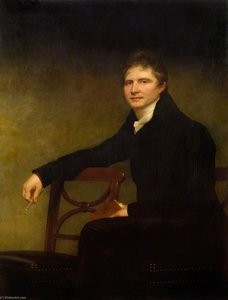
Porträtt av George Watson

De 33 mest kända målningarna av George Watson, ett galleriselektion

Uppdaterad november 2026 · rangordnad efter vår popularitetspoäng (sökningar, besök och beställningar för varje verk) · 33 verk av George Watson i vår katalog

Kortfattat

Av alla originalverk som George Watson lämnade efter sig är det mest kända Gregor MacGregor (1786–1845), Adventurer (1804), i samlingen hos Scottish National Portrait Gallery, Edinburgh. Tätt efter följer General John Reid (1721–1807) (1806) och Archibald Maclean (1733–1812), Baptist Minister (1810). Vår katalog innehåller 33 verk av George Watson; galleriet har bevarat de 33 som världen beundrar mest, var och en presenterad med sitt datum, sitt museum och sin historia.

1767 – 1837, Berwickshire Neoclassicism Flest verk: Scottish National Portrait Gallery

George Watsons 10 främsta målningar: galleriets utvalda verk

1
Gregor MacGregor (1786–1845), Adventurer (1804) av George Watson

Gregor MacGregor (1786–1845), Adventurer

1804 · Oil On Canvas · Scottish National Portrait Gallery, Edinburgh

In this portrait from 1804, we encounter Gregor MacGregor at a moment of profound stillness, long before his name became synonymous with the audacious deception of the Poyais scheme. He is presented as a young man, his presence defined by a certain quiet intensity that seems to anticipate the complexities of his later life. He wears the uniform of the 57th Regiment of Foot, a red coat accented with gold…

2
General John Reid (1721–1807) (1806) av George Watson

General John Reid (1721–1807)

1806 · Oil

An elderly man, identified as General John Reid, is presented in a traditional oil portrait from 1806. He is positioned in a centered composition, viewed from a slightly elevated perspective that looks down upon his upper body. His attire reflects the military precision of the late 18th century, with the heavy fabric of his uniform rendered through meticulous layering of oil paint. A soft, diffused light defines the contours of…

3
Archibald Maclean (1733–1812), Baptist Minister (1810) av George Watson

Archibald Maclean (1733–1812), Baptist Minister

1810 · Oil On Canvas · Scottish National Portrait Gallery, Edinburgh

In this portrait, we encounter Archibald Maclean, a man whose presence is defined by a profound sense of gravity. Painted in 1810, the work captures the elderly Baptist minister in a moment of stillness, his features etched with the lines of a life spent in contemplation. The lighting is deliberate, casting a strong glow across his face and upper body while allowing the rest of the composition to recede into…

4
Zoe de Bellecourt (1825) av George Watson

Zoe de Bellecourt

1825 · Oil On Canvas · Scottish National Gallery, Edinburgh

In this portrait from 1825, we find ourselves seated in a pastoral setting, observing a young woman named Zoe de Bellecourt. She is positioned centrally, framed by the soft architecture of trees and a delicate birdcage. There is a certain stillness to the composition, a sense of a life paused in a moment of serene contemplation. She wears a bright yellow dress that catches the diffused light, contrasted by white…

Urvalet av George Watson fortsätter, 11 till 33

11The Sisters (Georgina and Elizabeth Reay) (1810) av George WatsonThe Sisters (Georgina and Elizabeth Reay)1810 · John and Mable Ringling Museum of Art 12Thomas Wood (1754 –1817 ), FRCSEd (1775), PRCSEd (1792–1794) (1810) av George WatsonThomas Wood (1754 –1817 ), FRCSEd (1775), PRCSEd (1792–1794)1810 · The Royal College of Surgeons of Edinburgh 13Archibald Skirving (1749–1819), Artist (1810) av George WatsonArchibald Skirving (1749–1819), Artist1810 · Scottish National Portrait Gallery 14Bishop George Hay (1729–1811) (1808) av George WatsonBishop George Hay (1729–1811)1808 15William Metcalfe (1821) av George WatsonWilliam Metcalfe1821 · The Hunterian Museum and Art Gallery 16Sir Benjamin West (1738–1820) (1815) av George WatsonSir Benjamin West (1738–1820)1815 · Scottish National Gallery 17George Watson (1767–1837), Artist and First President of the Scottish Academy (Self Portrait) (1816) av George WatsonGeorge Watson (1767–1837), Artist and First President of the Scottish Academy (Self Portrait)1816 · Scottish National Portrait Gallery 18George Wood av George WatsonGeorge WoodIndianapolis konstmuseum 19General Don (1756–1832) av George WatsonGeneral Don (1756–1832) 20Robert Stocks av George WatsonRobert Stocks 21Sergeant Major Patrick Gould, Royal Regiment, Edinburgh Volunteers, 1794 av George WatsonSergeant Major Patrick Gould, Royal Regiment, Edinburgh Volunteers, 1794 22Archibald Skirving (1749–1819) av George WatsonArchibald Skirving (1749–1819)John Muir House 23Sir John Pringle Dalrymple, Bt av George WatsonSir John Pringle Dalrymple, BtThe National Trust For Scotland 24Thomas Brown (1778–1820) (after Henry Raeburn) av George WatsonThomas Brown (1778–1820) (after Henry Raeburn) 25Captain William Clark (1755–1801), RN, of HMS 'Victorious' av George WatsonCaptain William Clark (1755–1801), RN, of HMS 'Victorious'Royal Scottish Academy of Art - Architecture 26James Durham of Largo av George WatsonJames Durham of Largo 27Self Portrait av George WatsonSelf PortraitScottish National Gallery 28The Singing Children av George WatsonThe Singing ChildrenRoyal Scottish Academy of Art - Architecture 29Andrew Bell (1726–1809), Engraver and Publisher av George WatsonAndrew Bell (1726–1809), Engraver and PublisherScottish National Portrait Gallery 30Mary Augusta Riddell, Later Mrs Cunliffe (1823–1879) av George WatsonMary Augusta Riddell, Later Mrs Cunliffe (1823–1879)Scottish National Gallery 31Anne Rutherford (c.1739–1819), Mrs Walter Scott, Mother of Sir Walter Scott av George WatsonAnne Rutherford (c.1739–1819), Mrs Walter Scott, Mother of Sir Walter ScottScottish National Portrait Gallery 32The Artist's Wife, Rebecca Smellie av George WatsonThe Artist's Wife, Rebecca SmellieScottish National Gallery 33Portrait of a Man (possibly Robert Burns, 1759–1796, poet) av George WatsonPortrait of a Man (possibly Robert Burns, 1759–1796, poet)Government Art Collection

Motiven som fångade George Watsons blick

De fyra motiv som återkommer oftast i dessa originalverk, var och ett med sitt främsta exempel.

Museerna som förvarar George Watsons originalverk

De 8 museer som innehar flest av målningarna på denna sida.

Museum Stad Verk av George Watson Målningar från denna lista
Scottish National Portrait Gallery, EdinburghScottish National Portrait Gallery Edinburgh 8 Gregor MacGregor (1786–1845), Adventurer, Archibald Maclean (1733–1812), Baptist Minister, William Smellie (1740–1795), Printer, Naturalist and Antiquary
Scottish National Gallery, EdinburghScottish National Gallery Edinburgh 5 Zoe de Bellecourt, Sir Benjamin West (1738–1820), Self Portrait
The Royal College of Surgeons of Edinburgh, EdinburghThe Royal College of Surgeons of Edinburgh Edinburgh 2 Alexander Wood (1725–1807), FRCSEd (1756), PRCSEd (1762–1764), Thomas Wood (1754 –1817 ), FRCSEd (1775), PRCSEd (1792–1794)
Royal Scottish Academy of Art - Architecture, EdinburghRoyal Scottish Academy of Art - Architecture Edinburgh 2 Captain William Clark (1755–1801), RN, of HMS 'Victorious', The Singing Children
Dumfries Museum And Camera Obscura, DumfriesDumfries Museum And Camera Obscura Dumfries 1 Andrew Copland (d.1807)
John and Mable Ringling Museum of Art, SarasotaJohn and Mable Ringling Museum of Art Sarasota 1 The Sisters (Georgina and Elizabeth Reay)
The Hunterian Museum and Art Gallery, GlasgowThe Hunterian Museum and Art Gallery Glasgow 1 William Metcalfe
Indianapolis konstmuseum, IndianapolisIndianapolis konstmuseum Indianapolis 1 George Wood

George Watson decennium för decennium: originalen som definierar varje era

Verk per decennium

Välj ett decennium för att se originalverket som definierar det.

Samlarfrågor om George Watsons målningar

Vilket verk är George Watson mest känd för?Visa svaret

Gregor MacGregor (1786–1845), Adventurer (1804), Scottish National Portrait Gallery, Edinburgh. General John Reid (1721–1807) (1806) och Archibald Maclean (1733–1812), Baptist Minister (1810) följer efter.

Hur gammal var George Watson när Gregor MacGregor (1786–1845), Adventurer skapades?Visa svaret

37 år gammal: Gregor MacGregor (1786–1845), Adventurer är från 1804, och George Watson föddes 1767.

Vilka är de tio mest kända målningarna av George Watson?Visa svaret

Gregor MacGregor (1786–1845), Adventurer, General John Reid (1721–1807), Archibald Maclean (1733–1812), Baptist Minister, Zoe de Bellecourt, William Smellie (1740–1795), Printer, Naturalist and Antiquary, John James Ruskin (1785–1864), Alexander Wood (1725–1807), FRCSEd (1756), PRCSEd (1762–1764), Robert Jameson (1774–1854), Mineralogist, Mrs Peat (b.1748), and Her Daughters (Janet, b.1788, and Anne, c.1790–1885) och Andrew Copland (d.1807). Rankingen ovan visar varje verks årtal och museum.

Hur många målningar lämnade George Watson efter sig?Visa svaret

Vår katalog innehåller 33 verk av George Watson, daterade från 1793 till 1825.

I vilka museer hänger George Watsons mästerverk?Visa svaret

Främst i Scottish National Portrait Gallery (Edinburgh), Scottish National Gallery (Edinburgh) och The Royal College of Surgeons of Edinburgh (Edinburgh). Museitabellen ovan listar alla.

Under vilka år målade George Watson sina mest kända verk?Visa svaret

Under 1800s: 7 av de 33 verk som finns på denna sida skapades då, varav Gregor MacGregor (1786–1845), Adventurer.

Vilka är de första och sista kända originalverken av George Watson?Visa svaret

På den här sidan är det tidigaste William Smellie (1740–1795), Printer, Naturalist and Antiquary (1793) och det senaste Zoe de Bellecourt (1825).

Vilka motiv valde George Watson oftast?Visa svaret

Portraiture (3), Historical figure (3) och Landscape (2), fördelat på 33 verk på denna sida.

Vilken teknik använde George Watson mest?Visa svaret

Oil On Canvas, för 3 av de 33 verk som finns på denna sida.

Vilken konstinriktning tillhör George Watson?Visa svaret

Neoclassicism, om man dömer efter originalen på denna sida.

Vilka verk av George Watson finns utställda på Scottish National Portrait Gallery?Visa svaret

Gregor MacGregor (1786–1845), Adventurer, Archibald Maclean (1733–1812), Baptist Minister och William Smellie (1740–1795), Printer, Naturalist and Antiquary: Scottish National Portrait Gallery, Edinburgh har 8 av verken på denna sida.

George Watson: liv och verk

A Pioneer of Scottish Portraiture: The Life and Legacy of George Watson

In the vibrant artistic landscape of late Georgian and early Victorian Scotland, few names commanded as much respect for their precision and psychological depth as George Watson. Born in Edinburgh around 1767, Watson emerged as a pivotal figure whose career spanned over seven decades, bridging the gap between the refined traditions of the eighteenth century and the burgeoning realism of the nineteenth. He possessed an innate, almost intuitive talent for capturing the human likeness with a remarkable degree of accuracy and subtlety, a gift that allowed him to ascend quickly within the competitive Scottish art scene. His work was not merely about the surface of a face; it was about the quiet dignity and the internal character of his subjects, rendered through a lens of profound technical mastery.

Watson’s artistic journey began under the mentorship of John Ramsay, a celebrated landscape painter whose influence left an indelible mark on Watson’s approach to the canvas. From Ramsay, Watson inherited a deep appreciation for tonal harmony and the delicate use of atmospheric perspective. While Watson would eventually focus his energies on portraiture, this early training in landscape allowed him to bring a unique sense of depth and environmental nuance to his human subjects. To further refine his craft, he sought the broader horizons offered by the Royal Academy in London, where he was exposed to the sweeping stylistic innovations flowing from across Europe. This blend of Scottish sensibility and international academic rigor formed the foundation of a style that was both classically grounded and strikingly modern for its era.

Mastery of Tone and the Art of Subtlety

What truly distinguished Watson from his contemporaries was his sophisticated commitment to tonal gradation. In an age where many artists sought impact through vibrant, often jarring palettes, Watson embraced a more restrained and elegant aesthetic. He favored a palette of muted hues—rich browns, soft greys, and warm ochres—which allowed him to create illusions of immense volume and three-dimensional presence within his portraits. Through the meticulous application of glazing techniques, he layered thin, translucent washes of color to build a luminous skin tone that seemed to glow from within, capturing the very essence of life.

His technical prowess extended beyond mere color to the painstaking rendering of texture. A viewer might find themselves lost in the heavy weave of a military uniform or the delicate sheen of silk, as Watson applied his brush with a precision that bordered on the scientific. This dedication to detail served a higher purpose: it anchored his subjects in a tangible reality, making their presence feel immediate and enduring. His ability to balance this meticulous realism with an understated elegance ensured that his portraits never felt cluttered, but rather possessed a solemn, dignified grace that perfectly complemented the social standing of his patrons.

Historical Significance and Lasting Influence

The historical importance of George Watson extends far beyond his individual canvases. As a prominent member of the artistic community in Edinburgh, he played a vital role in the institutional development of Scottish art. His career was marked by significant professional milestones that solidified his status as a leader of his generation:

  • Foundational Role: He served as a cornerstone of the burgeoning Scottish art scene, helping to establish Edinburgh as a center for high-quality portraiture.
  • Institutional Leadership: His influence was felt deeply within the Royal Scottish Academy, where his standards of excellence helped shape the direction of local artistic practice.
  • Mentorship and Legacy: Through his work and his position in society, he influenced subsequent generations of painters, including figures like William Smellie Watson, who carried forward the tradition of meticulous Scottish portraiture.

Today, the works of George Watson stand as windows into a bygone era of British history. Whether depicting the stern resolve of military leaders like General John Reid or the quiet intensity of his own self-portraits, his paintings capture the social and psychological complexities of the late Georgian period. He remains a master of the understated, an artist who understood that true greatness in portraiture lies not in the loudness of color, but in the profound truth of the human spirit captured through light, shadow, and an unwavering devotion to detail.