Meny
KOSTNADSFRI KONSTRÅDGIVNING

franklin theodore bingaman

1922 - 2007

Kortfattad information

  • Art period: Modernism
  • Died: 2007
  • Museums on APS:
    • Frick Collection
    • Frick Collection
    • Frick Collection
    • Frick Collection
    • Frick Collection
  • Top 3 works:
    • Carnegie Institute with view of Stone Arch Bridge
    • Honus Wagner
  • Copyright status: Under copyright

Konstquiz

Det finns endast ett korrekt svar på varje fråga.

Fråga 1:
Q1
Fråga 2:
Q2
Fråga 3:
Q3

Franklin Theodore Bingaman: A Pittsburgh Pioneer of Early Photography

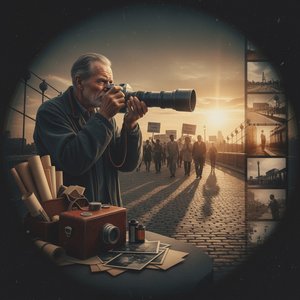
Franklin Theodore Bingaman (1922 – 2007) occupies a unique position in the history of American photography, particularly within the vibrant artistic milieu of Pittsburgh during the formative years of the twentieth century. Born in Greencastle, Indiana, his upbringing instilled a profound appreciation for meticulous observation and technical precision—principles that would permeate every facet of his lifelong pursuit of capturing time’s essence with unparalleled fidelity. Bingaman's professional journey commenced with service as a photographer for the Pittsburgh Sun-Telegraph and the Pittsburgh Photographic Library. These roles granted him invaluable access to documenting the dynamic energy of urban life and safeguarding visual records of pivotal historical moments—a task he undertook not merely as an observer, but as a storyteller adept at shaping narratives through carefully considered imagery. His mastery lay in harnessing composition and tonal manipulation to convey emotion beyond simple representation, elevating photography into a powerful medium for artistic expression. His artistic vision found its most enduring resonance in portraiture. Notably, Bingaman’s depiction of Anna Howard Shaw alongside Mrs. J.O. Miller stands as an emblem of the era—a testament to both the fervent advocacy for women's rights and the desire for dignified visual portrayal. Similarly compelling is his photograph of Honus Wagner, baseball legend, taken in 1910. The image captures Wagner’s gaze and posture with remarkable accuracy, conveying a duality of strength and vulnerability – themes that resonate deeply within broader explorations of identity and perseverance characteristic of the period. Furthermore, Bingaman played an instrumental role in preserving Pittsburgh's architectural heritage through extensive photographic documentation of landmarks such as Carnegie Institute with view of Stone Arch Bridge. His unwavering dedication to meticulous recording ensured these structures would endure as tangible reminders of Pittsburgh’s rich cultural past. This commitment to detail exemplifies Bingaman’s artistic ethos—a belief that capturing the visual world requires both technical skill and a deep understanding of its significance. Bingaman's contribution extends beyond individual artworks; he embodies the spirit of his time – a period marked by burgeoning artistic experimentation and a fervent desire to document history with sensitivity and precision. He remains an exemplar of photographic craftmanship, securing his place as a pivotal figure in American visual culture.