Porträtt av Félicien Rops

De 46 mest kända målningarna av Félicien Rops, ett galleriselektion

Uppdaterad november 2026 · rangordnad efter vår popularitetspoäng (sökningar, besök och beställningar för varje verk) · 46 verk av Félicien Rops i vår katalog

Kortfattat

Av alla originalverk som Félicien Rops lämnade efter sig är det mest kända The Entrance to the Ball (1858), i samlingen hos musée provincial Félicien Rops, Namur. Tätt efter följer Satanic Self-Portrait (1860) och Head of an Old Antwerp Woman (1873). Vår katalog innehåller 46 verk av Félicien Rops; galleriet har bevarat de 46 som världen beundrar mest, var och en presenterad med sitt datum, sitt museum och sin historia.

1833 – 1898, Namur Symbolism Flest verk: musée provincial Félicien Rops

Félicien Ropss 10 främsta målningar: galleriets utvalda verk

1
The Entrance to the Ball (1858) av Félicien Rops

The Entrance to the Ball

1858 · Oil · musée provincial Félicien Rops, Namur

In "The Entrance to the Ball" by Félicien Rops, the composition is vertically oriented, drawing the eye upward through a narrow, compressed space. The perspective is set at eye level, adopting a side view that places us directly alongside the central figure. This man, perhaps a guest or a servant, is positioned in the foreground near a doorway. The entrance itself is marked by text, providing a specific point of…

2
Satanic Self-Portrait (1860) av Félicien Rops

Satanic Self-Portrait

1860 · Charcoal

Created about 1860, Satanic Self-Portrait by Félicien Rops presents a monochromatic study of the artist himself. The work captures a somber and introspective image of Félicien Rops, rendered in a limited palette of grayscale tones and subtle browns. He is depicted from the waist up, his head slightly bowed in a gesture of melancholy or deep thought. A large, draped garment covers his shoulders, adding a sense of weight to…

3
Head of an Old Antwerp Woman (1873) av Félicien Rops

Head of an Old Antwerp Woman

1873 · Oil On Canvas · musée provincial Félicien Rops, Namur

In the work Head of an Old Antwerp Woman by Félicien Rops, the composition is a medium close-up that focuses on the subject's head and upper torso. The subject is an aged woman positioned slightly off-center within the frame. She is depicted from a direct, eye-level view, creating an intimate proximity between the viewer and the subject. The background remains dark and indistinct, providing no specific details of a domestic…

4
The Lady with the Puppet and the Fan (1873) av Félicien Rops

The Lady with the Puppet and the Fan

1873 · Pastel · musée provincial Félicien Rops, Namur

In "The Lady with the Puppet and the Fan" by Félicien Rops, a vertical portrait captures a woman in profile. She occupies the left and center of the frame, her gaze fixed upon a small, colorful jester-like puppet held in her hand. The scene is set against a background of ochre, gold, and yellow. This warm backdrop provides a sharp contrast to the cool blues and teals of her attire.…

5
In the Wings (1878) av Félicien Rops

In the Wings

1878 · Oil

In the Wings by Félicien Rops presents a vertical, figurative scene executed in a Symbolist style. Created about 1878, the work captures a backstage or theatrical setting defined by a palpable sense of tension and voyeurism. The composition centers on two primary figures positioned within a dark, draped environment.

6
The incantation (1878) av Félicien Rops

The incantation

1878 · Print · musée provincial Félicien Rops, Namur

The incantation is a painting by Félicien Rops. Created about 1878, this work emerges from the artist's period of intense exploration into the shadows of the human psyche. It exists as a singular vision within his body of work, capturing a specific, heavy atmosphere through its deliberate composition.

7
The Lady with the Puppet (1884) av Félicien Rops

The Lady with the Puppet

1884 · Mixed Media

The Lady with the Puppet emerges from the creative mind of Félicien Rops, a Belgian artist who navigates the shadowy realms of Symbolism and Decadence. This specific piece exists as part of a small series of variations on a theme, where the artist explores recurring motifs through a lens of psychological depth. Within this collection, the work captures a singular, suspended moment of interaction between a woman and a miniature…

8
Eggnog (1879) av Félicien Rops

Eggnog

1879 · Pastel · musée provincial Félicien Rops, Namur

Eggnog by Félicien Rops is a small-scale, intimate figurative work created in 1879. The scene captures a private, domestic moment between two figures within an interior setting. A woman stands as a central vertical axis, dressed in light, possibly intimate, undergarments. She holds a small dish or cup, positioned as if in the act of serving. Opposite her, a man is seated in the foreground, providing a diagonal counterweight to…

9
The Farewells of Madness - Better to Bear Laughter Than Tears (1879) av Félicien Rops

The Farewells of Madness - Better to Bear Laughter Than Tears

1879 · Lithograph · musée provincial Félicien Rops, Namur

We are looking at The Farewells of Madness - Better to Bear Laughter Than Tears, a work produced by Félicien Rops around 1879. This piece emerged from the creative period of an artist who was born in 1833 in Namur, Belgium. Rops spent much of his life navigating the shifting intellectual currents of the late nineteenth century until his death in 1898.

10
Cherubim's Song (1879) av Félicien Rops

Cherubim's Song

1879 · Watercolor · musée provincial Félicien Rops, Namur

Cherubim's Song is a work by the Belgian artist Félicien Rops. Created about 1879, this piece belongs to a period in the artist's career where his output was closely associated with the Symbolism and Decadence movements. Rops was born in 1833 in Namur, Belgium, a location that remains central to his biographical history.

Urvalet av Félicien Rops fortsätter, 11 till 46

11The Sphinx (1882) av Félicien RopsThe Sphinx1882 12The Slag (1882) av Félicien RopsThe Slag1882 · musée provincial Félicien Rops 13The Temptation of Saint Anthony av Félicien RopsThe Temptation of Saint Anthony 14A Gentleman and a Lady (Aurelien Scholl and Marie Colombier) (1891) av Félicien RopsA Gentleman and a Lady (Aurelien Scholl and Marie Colombier)1891 15Tranformism av Félicien RopsTranformism 16Death at the Ball av Félicien RopsDeath at the BallKröller-Müller Museum 17Untitled (868) av Félicien RopsUntitled (868) 18The Werewolf (1868) av Félicien RopsThe Werewolf1868 19The Hanged Man (1868) av Félicien RopsThe Hanged Man1868 20Landscape in Sweden (1871) av Félicien RopsLandscape in Sweden1871 · Museum of Fine Arts Ghent (MSK) 21Cupid with a Tambourine av Félicien RopsCupid with a TambourineHammer Museum 22Landscape in the Ardennes (1882) av Félicien RopsLandscape in the Ardennes1882 · Koninklijk Museum voor Schone Kunsten Antwerpen 23Pears and Apple on a Plate (1882) av Félicien RopsPears and Apple on a Plate1882 · musée provincial Félicien Rops 24Heyst, 1881 (1881) av Félicien RopsHeyst, 18811881 25The Satanic. Removal (1882) av Félicien RopsThe Satanic. Removal1882 26The Sacrifice, from The Satanic Ones (1882) av Félicien RopsThe Sacrifice, from The Satanic Ones1882 27'The Hidden Side of a Whist Party', illustration from 'Les Diaboliques' by Jules Amedee Barbey d'Aurevilly (1808-89) 1886 (engraving) (b/w photo) (1886) av Félicien Rops'The Hidden Side of a Whist Party', illustration from 'Les Diaboliques' by Jules Amedee Barbey d'Aurevilly (1808-89) 1886 (engraving) (b/w photo)1886 28Snow at Thozée (1898) av Félicien RopsSnow at Thozée1898 29The Physician of Fevers av Félicien RopsThe Physician of Fevers 30The Man with the Wild Woman av Félicien RopsThe Man with the Wild Woman 31A Nude av Félicien RopsA Nude 32Louis Namêche av Félicien RopsLouis Namêche 33Coquette in front of a mirror av Félicien RopsCoquette in front of a mirror 34Study For The Temptation Of St. Anthony av Félicien RopsStudy For The Temptation Of St. Anthony 35The Dance of Death av Félicien RopsThe Dance of Death 36The Social Revolution av Félicien RopsThe Social Revolutionmusée provincial Félicien Rops 37Beach av Félicien RopsBeachKoninklijk Museum voor Schone Kunsten Antwerpen 38Bridge over the River Lesse av Félicien RopsBridge over the River LesseKoninklijk Museum voor Schone Kunsten Antwerpen 39Barges in Dinant av Félicien RopsBarges in DinantKoninklijk Museum voor Schone Kunsten Antwerpen 40The Fishing Port of Blankenberge av Félicien RopsThe Fishing Port of BlankenbergeKoninklijk Museum voor Schone Kunsten Antwerpen 41After Midnight (The Return to Love the Lack of It) av Félicien RopsAfter Midnight (The Return to Love the Lack of It) 42Woman With A Trapeze av Félicien RopsWoman With A Trapeze 43The Row av Félicien RopsThe Row 44Poster For An Exhibition av Félicien RopsPoster For An Exhibition 45Woman With A Mask av Félicien RopsWoman With A Mask 46The lady with the puppet (1885) av Félicien RopsThe lady with the puppet1885 · musée provincial Félicien Rops

Motiven som fångade Félicien Ropss blick

De fyra motiv som återkommer oftast i dessa originalverk, var och ett med sitt främsta exempel.

Museerna som förvarar Félicien Ropss originalverk

De 5 museer som innehar flest av målningarna på denna sida.

Museum Stad Verk av Félicien Rops Målningar från denna lista
musée provincial Félicien Rops, Namurmusée provincial Félicien Rops Namur 11 The Entrance to the Ball, Head of an Old Antwerp Woman, The Lady with the Puppet and the Fan
Koninklijk Museum voor Schone Kunsten Antwerpen, AntwerpenKoninklijk Museum voor Schone Kunsten Antwerpen Antwerpen 5 Landscape in the Ardennes, Beach, Bridge over the River Lesse
Kröller-Müller Museum, OtterloKröller-Müller Museum Otterlo 1 Death at the Ball
Museum of Fine Arts Ghent (MSK), GentMuseum of Fine Arts Ghent (MSK) Gent 1 Landscape in Sweden
Hammer Museum, Los AngelesHammer Museum Los Angeles 1 Cupid with a Tambourine

Félicien Rops decennium för decennium: originalen som definierar varje era

Verk per decennium

Välj ett decennium för att se originalverket som definierar det.

Samlarfrågor om Félicien Ropss målningar

Vilket verk är Félicien Rops mest känd för?Visa svaret

The Entrance to the Ball (1858), musée provincial Félicien Rops, Namur. Satanic Self-Portrait (1860) och Head of an Old Antwerp Woman (1873) följer efter.

Hur gammal var Félicien Rops när The Entrance to the Ball skapades?Visa svaret

25 år gammal: The Entrance to the Ball är från 1858, och Félicien Rops föddes 1833.

Vilka är de tio mest kända målningarna av Félicien Rops?Visa svaret

The Entrance to the Ball, Satanic Self-Portrait, Head of an Old Antwerp Woman, The Lady with the Puppet and the Fan, In the Wings, The incantation, The Lady with the Puppet, Eggnog, The Farewells of Madness - Better to Bear Laughter Than Tears och Cherubim's Song. Rankingen ovan visar varje verks årtal och museum.

Hur många målningar lämnade Félicien Rops efter sig?Visa svaret

Vår katalog innehåller 46 verk av Félicien Rops, daterade från 1858 till 1898.

I vilka museer hänger Félicien Ropss mästerverk?Visa svaret

Främst i musée provincial Félicien Rops (Namur), Koninklijk Museum voor Schone Kunsten Antwerpen (Antwerpen) och Kröller-Müller Museum (Otterlo). Museitabellen ovan listar alla.

Under vilka år målade Félicien Rops sina mest kända verk?Visa svaret

Under 1880s: 10 av de 46 verk som finns på denna sida skapades då, varav The Lady with the Puppet.

Vilka är de första och sista kända originalverken av Félicien Rops?Visa svaret

På den här sidan är det tidigaste The Entrance to the Ball (1858) och det senaste Snow at Thozée (1898).

Vilka motiv valde Félicien Rops oftast?Visa svaret

Woman (10), Man (7) och Portrait (3), fördelat på 46 verk på denna sida.

Vilken teknik använde Félicien Rops mest?Visa svaret

Pastel, för 3 av de 46 verk som finns på denna sida.

Vilken konstinriktning tillhör Félicien Rops?Visa svaret

Symbolism, om man dömer efter originalen på denna sida.

Vilka verk av Félicien Rops finns utställda på musée provincial Félicien Rops?Visa svaret

The Entrance to the Ball, Head of an Old Antwerp Woman och The Lady with the Puppet and the Fan: musée provincial Félicien Rops, Namur har 11 av verken på denna sida.

Félicien Rops: liv och verk

A Shadowy Visionary: The Life and Art of Félicien Rops

Félicien Victor Joseph Rops, born in 1833 in Namur, Belgium, emerged as a pivotal figure bridging the gap between Realism, Symbolism, and the burgeoning world of modern graphic storytelling. His life, steeped in both bourgeois comfort – his father was a prosperous textile manufacturer – and a restless artistic spirit, unfolded against a backdrop of rapid social and intellectual change. Early training at local academies provided a foundation, but it was his move to Brussels at twenty that truly ignited his creative trajectory. Though briefly enrolled at the University of Brussels, Rops found himself drawn inexorably towards the Académie de Saint-Luc, where he honed his skills not just in painting and drawing, but also in the art of satire through lithography. His early work quickly gained recognition in student magazines like *Le Crocodile* and *L'Uylenspiegel*, establishing him as a gifted caricaturist with a keen eye for societal foibles. These formative years weren’t merely about developing technical proficiency; they were about finding his voice, a voice that would soon become synonymous with challenging conventions and exploring the darker recesses of the human psyche.

Early Influences and Artistic Training

Rops's artistic education began in Namur, where he received instruction from private tutors focusing on drawing and painting—skills honed further during his time at Notre Dame de la Paix de Namur and the Athénée Royal de Namur. These formative years instilled a meticulous attention to detail and an understanding of classical aesthetics that would inform his later stylistic choices. Recognizing his talent, Rops pursued advanced studies at the Académie de Saint-Luc in Brussels, immersing himself in the burgeoning Symbolist movement and encountering influential artists who championed expressive abstraction alongside traditional techniques. This exposure solidified his conviction that art should transcend mere representation, aiming instead to evoke emotion and convey psychological truths—a principle that would permeate his entire oeuvre. The Académie’s emphasis on etching and printmaking proved particularly crucial, equipping him with the technical mastery necessary for his groundbreaking explorations of intaglio methods.

Parisian Encounters and Artistic Transformation

The year 1862 marked a decisive turning point when Rops relocated to Paris—a city pulsating with artistic innovation and intellectual ferment—seeking inspiration from the epicenter of Symbolist thought. Immediately, he connected with Félix Bracquemond and Jules Ferdinand Jacquemart, renowned etchers who recognized his exceptional talent and encouraged him to embrace innovative printmaking techniques. Abandoning lithography around 1865, Rops dedicated himself wholeheartedly to mastering intaglio methods—etching and aquatint—transforming his artistic vision and establishing himself as a pioneer of the medium. This commitment culminated in an unforgettable encounter with Charles Baudelaire in 1864—a meeting that profoundly shaped his aesthetic sensibilities and fueled his fascination with decadent themes. Baudelaire’s poetic exploration of beauty within decay, mirroring Rops's own artistic inclinations, inspired him to delve into unsettling subjects—the grotesque, the perverse—challenging societal norms and confronting taboo desires. This collaboration resulted in the iconic frontispiece for *Les Épaves*, cementing Baudelaire’s influence on Rops’s artistic trajectory.

A Master of Printmaking: Technique and Style

Rops's artistic style is instantly recognizable for its meticulous detail, dramatic chiaroscuro—the interplay of light and shadow—and an atmosphere imbued with haunting melancholy. He wasn’t merely depicting scenes; he was conveying psychological states, emotional intensities often veiled in ambiguity. His mastery of intaglio techniques—particularly soft-ground etching—allowed him to achieve unparalleled textural richness and expressive nuance. Unlike many of his contemporaries who favored Impressionistic brushstrokes, Rops meticulously rendered surfaces with painstaking precision, capturing subtle nuances of color and form that conveyed profound psychological depth. This distinctive approach is evident in masterpieces such as “Pornokratès,” a chilling depiction of female power and transgression—a work celebrated for its unsettling beauty and masterful execution. Similarly, his illustrations for Jules Barbey d’Aurevilly's *Les Diaboliques* exemplify his fascination with decadent themes and his ability to evoke visceral emotion through visual imagery. He skillfully combined etching and aquatint, sometimes adding hand-coloring to heighten the mood and texture of his prints—a technique that underscored his commitment to artistic innovation.
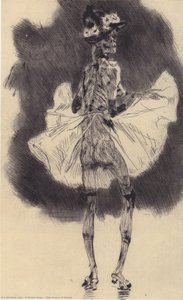
Legacy and Influence Beyond Printmaking

Beyond his celebrated printmaking achievements, Rops’s impact extended into other artistic realms—most notably comic strips. His early contributions to publications like *Le Crocodile* and *L'Uylenspiegel*, featuring sequential drawings with recurring characters and narratives, predated many milestones in the history of comics. These “comics” weren’t merely humorous; they were often biting social commentary, utilizing satire to critique political figures, societal norms, and religious institutions—a characteristic that mirrored Rops’s broader artistic ethos. He joined Les XX ("the twenty"), formed in Brussels in 1884—a group of avant-garde artists who championed experimental aesthetics and challenged conventional artistic conventions. His work continues to resonate today, recognized for its artistic merit, historical significance, and willingness to confront taboo subjects—inspiring subsequent generations of artists to push creative boundaries and explore the complexities of human psychology. Félicien Rops remains a cornerstone of Belgian art history and an enduring symbol of Symbolist artistry—a visionary who dared to gaze into the darkness and illuminate it with breathtaking beauty.