Kortfattat
Av alla originalverk som Fairlie Harmar lämnade efter sig är det mest kända After A Game Of Tennis (1923), i samlingen hos Birmingham Museum and Art Gallery, Birmingham. Tätt efter följer St Giles, Oxford och The Bridge at Monxton (1916). Vår katalog innehåller 18 verk av Fairlie Harmar; galleriet har bevarat de 18 som världen beundrar mest, var och en presenterad med sitt datum, sitt museum och sin historia.
Fairlie Harmars 10 främsta målningar: galleriets utvalda verk
Urvalet av Fairlie Harmar fortsätter, 11 till 18
Motiven som fångade Fairlie Harmars blick
De fyra motiv som återkommer oftast i dessa originalverk, var och ett med sitt främsta exempel.
British painting 2 verk
Museerna som förvarar Fairlie Harmars originalverk
De 5 museer som innehar flest av målningarna på denna sida.
| Museum | Stad | Verk av Fairlie Harmar | Målningar från denna lista |
|---|---|---|---|
| Wolverhampton | 2 | Ships on the Thames, Flowers | |
| Birmingham | 1 | After A Game Of Tennis | |
| Liverpool | 1 | The Bridge at Monxton | |
| Oxford | 1 | The Laurel Walk | |
| Darlington | 1 | Chibbet, Exmoor, Somerset |
Fairlie Harmar decennium för decennium: originalen som definierar varje era
Verk per decennium
Välj ett decennium för att se originalverket som definierar det.
Samlarfrågor om Fairlie Harmars målningar
Vilket verk är Fairlie Harmar mest känd för?Visa svaret
After A Game Of Tennis (1923), Birmingham Museum and Art Gallery, Birmingham. St Giles, Oxford och The Bridge at Monxton (1916) följer efter.
Hur gammal var Fairlie Harmar när After A Game Of Tennis skapades?Visa svaret
47 år gammal: After A Game Of Tennis är från 1923, och Fairlie Harmar föddes 1876.
Vilka är de tio mest kända målningarna av Fairlie Harmar?Visa svaret
After A Game Of Tennis, St Giles, Oxford, The Bridge at Monxton, The Laurel Walk, Women's Royal Air Force Workers Drilling at Andover Aerodrome, Birthday Celebration, Garden Gate, L'Aveyron, Cheyne Walk Gardens och Sarson Farm, Early Spring. Rankingen ovan visar varje verks årtal och museum.
Hur många målningar lämnade Fairlie Harmar efter sig?Visa svaret
Vår katalog innehåller 18 verk av Fairlie Harmar, daterade från 1912 till 1938.
I vilka museer hänger Fairlie Harmars mästerverk?Visa svaret
Främst i Wolverhampton Art Gallery (Wolverhampton), Birmingham Museum and Art Gallery (Birmingham) och Walker Art Gallery (Liverpool). Museitabellen ovan listar alla.
Under vilka år målade Fairlie Harmar sina mest kända verk?Visa svaret
Under 1920s: 4 av de 18 verk som finns på denna sida skapades då, varav After A Game Of Tennis.
Vilka är de första och sista kända originalverken av Fairlie Harmar?Visa svaret
På den här sidan är det tidigaste The Laurel Walk (1912) och det senaste Cheyne Walk Gardens (1938).
Vilka verk av Fairlie Harmar finns utställda på Wolverhampton Art Gallery?Visa svaret
Ships on the Thames och Flowers: Wolverhampton Art Gallery, Wolverhampton har 2 av verken på denna sida.
Fairlie Harmar: liv och verk
Fairlie Harmar (1876–1945): A Painter of Quiet Landscapes and Intimate Portraits
Fairlie Harmar (1876-1945) was an English painter who quietly established herself as a significant figure in early 20th-century British art. Born in Weymouth, Dorset, she pursued her artistic ambitions at the Slade School of Fine Art under the tutelage of Henry Tonks and Fred Brown—a formative experience that instilled in her a meticulous approach to observation and representation. Her oeuvre is characterized by evocative landscapes imbued with subtle tonal harmonies alongside delicately rendered portraits capturing fleeting moments of human emotion. Harmar’s work offers a poignant glimpse into the domestic life and artistic sensibilities of her era, reflecting both Impressionistic influences and a deep connection to the natural world.- Early Life & Education: Fairlie Harmar's formative years were spent in Weymouth, Dorset, where she absorbed the beauty of the coastal landscape—a visual element that would permeate much of her subsequent artistic output. Her studies at the Slade School of Fine Art provided her with invaluable technical skills and intellectual grounding, fostering a disciplined eye for detail and composition.
- Style & Technique: Harmar’s distinctive style leaned heavily towards Impressionism, prioritizing capturing atmospheric conditions and conveying subjective experience rather than striving for photographic accuracy. She skillfully employed muted palettes—often dominated by greens, blues, and browns—to evoke mood and atmosphere, layering brushstrokes to create textured surfaces that subtly shimmered with light.
- Notable Works: Among Harmar’s most celebrated paintings are “A la Chaumière” (1928), a luminous depiction of a Parisian apartment interior bathed in diffused sunlight, and “St Giles, Oxford” (1920), which captures the serene grandeur of Oxford University Chapel. These pieces exemplify her ability to distill complex emotions into simple visual forms—a hallmark of her artistic vision.
- Influences & Connections: Harmar’s artistic sensibilities were undoubtedly shaped by the broader intellectual currents of her time, including discussions surrounding Symbolism and Modernism. Her association with Ezra Pound and fellow artists fostered a stimulating environment for experimentation and critical engagement.
- Legacy & Recognition: Fairlie Harmar's contribution to British art history is recognized through inclusion in prominent collections such as the Ashmolean Museum and the Royal Collection, where her paintings continue to inspire admiration for their understated beauty and psychological depth. Her work stands as a testament to the power of quiet observation and skillful execution—qualities that resonate powerfully with viewers today.
Exploring Landscapes & Domestic Interiors
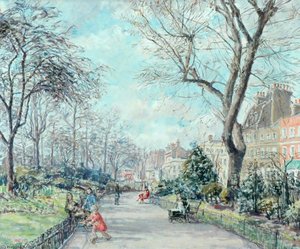
Harmar’s landscapes frequently depict tranquil scenes of Dorset countryside, capturing the subtle shifts in light and color throughout the seasons. She meticulously rendered details—such as foliage textures and reflections on water surfaces—to convey a profound sense of place. Simultaneously, her portraits delve into the inner lives of her subjects, portraying them with sensitivity and empathy. These intimate depictions reveal nuanced expressions of emotion and capture fleeting moments of human connection. Her ability to translate psychological states onto canvas solidified her reputation as one of Britain’s foremost portrait artists.- “Cheyne Walk Gardens” (1938): This Impressionistic landscape showcases Harmar's masterful use of color and brushwork, capturing the autumnal splendor of Cheyne Walk Gardens in Chelsea.