Porträtt av Camille Roqueplan

Camille Roqueplans målningar: De 23 mest kända, ur ett galleris perspektiv

Uppdaterad november 2026 · rangordnad efter vår popularitetspoäng (sökningar, besök och beställningar för varje verk) · 26 verk av Camille Roqueplan i vår katalog

Kortfattat

Ur galleriets perspektiv är Camille Roqueplans mest kända målning Italian Landscape Evening (1832), vars original hänger på Wallace Collection i London. Storm Scene (1830) och Marine, Beach with Figures (1830) fullbordar trion som alla känner igen. Av de 26 verk av Camille Roqueplan i vår katalog presenterar galleriet nedan de 23 mest kända, var och en som ett original med sitt år, sitt museum och vad som gör det unikt.

1803 – 1855, Mallemort Romanticism Flest verk: Wallace Collection

Galleriets 10 främsta målningar av Camille Roqueplan

1
Italian Landscape Evening (1832) av Camille Roqueplan

Italian Landscape Evening

1832 · Oil · Wallace Collection, London

In this 1832 work, we find ourselves observing a valley as the sun begins its descent. The light of the golden hour washes over the landscape, casting a warm, soft glow that settles upon the trees in the foreground and the distant mountains. There is a sense of stillness here, the kind that occurs when the day begins to fold into evening. Scattered throughout the scene, small figures move through…

2
Storm Scene (1830) av Camille Roqueplan

Storm Scene

1830 · Oil On Canvas · Musée des Beaux-Arts, Reims

The sky churns with a heavy, restless energy, casting the world into a state of sudden, urgent movement. Dark, turbulent greys and deep blues collide in the heavens, signaling the arrival of a violent storm. Below this celestial upheaval, a group of figures huddles at the threshold of a stone structure, seeking refuge from the elements. The air feels thick with the scent of rain and the weight of an…

3
Marine, Beach with Figures (1830) av Camille Roqueplan

Marine, Beach with Figures

1830 · Oil On Canvas · Musée Fabre, Montpellier

The golden light of a setting sun washes over the scene in Marine, Beach with Figures. Created in 1830, this work by the French Romantic painter Camille Roqueplan captures a quiet moment where the land meets the sea. The atmosphere feels heavy with the warmth of the evening, casting long shadows across the rocky shoreline where figures gather. It is a scene that breathes with the soft, rhythmic pulse of…

4
The Lion in Love (1836) av Camille Roqueplan

The Lion in Love

1836 · Oil On Canvas · Petit Palais, Paris

The oil on canvas depicts a central female figure in an intimate encounter with a large lion. The woman sits in the foreground, her torso and face illuminated by a strong light source that contrasts against a dark, shadowy background. Her skin tones appear luminous against the deep, earthy tones of the surrounding environment. The lion is positioned close to her, its golden-brown fur catching the light. The composition is…

5
Woman and Child with Dogs (1848) av Camille Roqueplan

Woman and Child with Dogs

1848 · Oil On Panel

Woman and Child with Dogs is an oil on panel painting by the French artist Camille Roqueplan. This work dates to about 1848. The piece depicts a woman, a child, and two dogs within a landscape setting. The composition focuses on the interaction between the human figures and the animals in a pastoral environment.

6
The Shepherd Girl (1855) av Camille Roqueplan

The Shepherd Girl

1855 · Oil On Canvas

A young woman rests within a sprawling landscape, her figure positioned in the lower right quadrant of the composition. She leans against a rocky embankment, her presence anchored by the weight of the earth. Beside her, a goat rests, its coarse texture rendered through visible, tactile brushwork. The scene is defined by an asymmetrical balance, where the subject’s stillness is countered by the vast, open expanse of a hazy valley…

7
Rousseau and Mlle. Galley Gathering Cherries (1851) av Camille Roqueplan

Rousseau and Mlle. Galley Gathering Cherries

1851 · Oil On Canvas · Wallace Collection, London

In this oil on canvas, titled Rousseau and Mlle. Galley Gathering Cherries, we encounter a quiet moment of pastoral leisure. The work is attributed to Camille Roqueplan, a painter who found his true voice through the light and atmosphere of the French countryside. This particular piece, dating to about 1851, captures a romantic encounter within an orchard, focusing on the connection between the figures and their natural surroundings.

8
Marine. View taken on the coasts of Normandie (Harfleur?) (1831) av Camille Roqueplan

Marine. View taken on the coasts of Normandie (Harfleur?)

1831 · Oil On Canvas

The sky occupies two-thirds of the canvas, a heavy expanse of grey and cream that presses down upon the sea. Clouds swell with the weight of an impending storm, their voluminous shapes catching a pale, diffused light that breaks through the gloom. Below this celestial drama, the water is a restless expanse of deep blue and dark brown. Choppy, white-capped waves surge against the hulls of small rowing boats. Figures…

9
Summer Pleasures (1830) av Camille Roqueplan

Summer Pleasures

1830 · Oil · Wallace Collection, London

We are looking at Summer Pleasures, a work by the French painter Camille Roqueplan. This particular piece dates to 1830, a period when the artist was refining his ability to translate the atmosphere of the French countryside onto linen. It is a quiet, intimate composition that captures a specific moment of repose.

10
View of Val-Fleury and the Aqueduct (1836) av Camille Roqueplan

View of Val-Fleury and the Aqueduct

1836 · Oil · Musée Condé, Chantilly

The scene known as View of Val-Fleury and the Aqueduct emerges from the brush of Camille Roqueplan, a painter who captures the quiet essence of the French landscape. Created in 1836, this work reflects the vision of an artist born in Mallemort, France. Roqueplan, who lived from 1803 to 1855, brings a specific sense of place to the canvas, translating the atmosphere of the countryside into a tangible moment of…

Camille Roqueplans målningar, rankade 11 till 23

Motiven som fångade Camille Roqueplans blick

De fyra motiv som återkommer oftast i dessa originalverk, var och ett med sitt främsta exempel.

Museerna som förvarar Camille Roqueplans originalverk

De 8 museer som innehar flest av målningarna på denna sida.

Museum Stad Verk av Camille Roqueplan Målningar från denna lista
Wallace Collection, LondonWallace Collection London 7 Italian Landscape Evening, Rousseau and Mlle. Galley Gathering Cherries, Summer Pleasures
Musée des Beaux-Arts, ReimsMusée des Beaux-Arts Reims 2 Storm Scene, Landscape
Petit Palais, ParisPetit Palais Paris 2 The Lion in Love, Van Dyck in London
Musée Fabre, MontpellierMusée Fabre Montpellier 1 Marine, Beach with Figures
Musée Condé, ChantillyMusée Condé Chantilly 1 View of Val-Fleury and the Aqueduct
Royal Collection, LondonRoyal Collection London 1 The Coronation of Queen Victoria, 28 June 1838: The Queen leaving Westminster Abbey
Ermitaget, Sankt PetersburgErmitaget Sankt Petersburg 1 Girl with Flowers
Musée des Beaux-Arts d'Angers, AngersMusée des Beaux-Arts d'Angers Angers 1 La promenade dans le parc (A Walk in the Park)

Camille Roqueplan, ett signaturverk per decennium

Verk per decennium

Välj ett decennium för att se originalverket som definierar det.

Camille Roqueplans målningar: galleriets svar

Vilken av Camille Roqueplans målningar är den mest kända av alla?Visa svaret

Italian Landscape Evening (1832), Wallace Collection, London. Storm Scene (1830) och Marine, Beach with Figures (1830) följer efter.

Hur gammal var Camille Roqueplan när Italian Landscape Evening färdigställdes?Visa svaret

29 år gammal: Italian Landscape Evening är från 1832, och Camille Roqueplan föddes 1803.

Vilka är Camille Roqueplans 10 främsta målningar?Visa svaret

Italian Landscape Evening, Storm Scene, Marine, Beach with Figures, The Lion in Love, Woman and Child with Dogs, The Shepherd Girl, Rousseau and Mlle. Galley Gathering Cherries, Marine. View taken on the coasts of Normandie (Harfleur?), Summer Pleasures och View of Val-Fleury and the Aqueduct. Rankingen ovan visar varje verks årtal och museum.

Hur många verk skapade Camille Roqueplan?Visa svaret

Vår katalog innehåller 26 verk av Camille Roqueplan, daterade från 1830 till 1855.
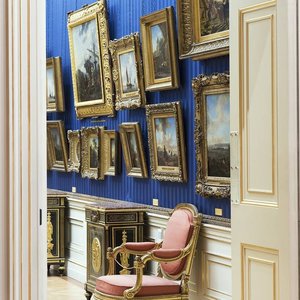
Var hänger Camille Roqueplans mest kända original?Visa svaret

Främst i Wallace Collection (London), Musée des Beaux-Arts (Reims) och Petit Palais (Paris). Museitabellen ovan listar alla.
När skapade Camille Roqueplan sina mest kända målningar?Visa svaret

Under 1830s: 11 av de 23 verk som finns på denna sida skapades då, varav Italian Landscape Evening.

Vilka är Camille Roqueplans tidigaste och senaste kända verk?Visa svaret

På den här sidan är det tidigaste Storm Scene (1830) och det senaste The Shepherd Girl (1855).

Vilka motiv återkom Camille Roqueplan till mest?Visa svaret

People (9), Trees (7) och Clouds (6), fördelat på 23 verk på denna sida.

Vilket medium arbetade Camille Roqueplan främst med?Visa svaret

Oil On Canvas, för 13 av de 23 verk som finns på denna sida.

Vilken konstinriktning förknippas Camille Roqueplan med?Visa svaret

Romanticism, om man dömer efter originalen på denna sida.

Vilka original av Camille Roqueplan finns i Wallace Collections samlingar?Visa svaret

Italian Landscape Evening, Rousseau and Mlle. Galley Gathering Cherries och Summer Pleasures: Wallace Collection, London har 7 av verken på denna sida.

Camille Roqueplan: konstnären

Dauphinés romantiska själ: Camille Roqueplans liv

I hjärtat av 1800-talet, en era definierad av romantikens turbulenta skönhet, framträdde Camille Roqueplans verk som en fridfull tillflykt för det vandrande ögat. Född i Mallemort omkring 1802 eller 1803, besatt Camille Roqueplan en medfödd, nästan förtidig talang för teckning som ofta fick honom att korrigera sina medstudenters skisser. Ändå var hans väg mot konstnärlig mästerskap långt ifrån en rak linje. Driven av en ungdomlig önskan att hålla konsten som enbart en behaglig sysselsättning snarare än en professionell börda, vandrade han en kort tid in i medicinens rigorösa och ointressanta värld. Efter att ha misslyckats med sina anatomiprover – ett ämne som inte gav honom någon glädje – och efter att ha upplevt det vardagliga livet som tjänsteman vid finansministeriet, visade dukens magnetiska dragningskraft sig vara oemotståndlig. Han återvände till sin sanna kallelse, inte som en motvillig elev, utan som en man ämnad att översätta Frankrikes ljus och atmosfär till linne.

Roqueplans konstnärliga utveckling formades av en serie möten med mästare som var lika utmanande som de var formativa. Hans tid i Abel de Pujols ateljé vid École des Beaux-Arts präglades av stunder av djup motlöshet, särskilt när han konfronterades med de etablerade verkens överväldigande briljans. Det var dock genom hans efterföljande studier med Antoine Gros som han fann en stadigare grund. Även om Gros gav lite i form av uttalad beröm, tillät de tre år som tillbringades under hans handledning Camille Roqueplan att förfina sin teknik, långt borta från den akademiska perfektionismens intensiva tryck. Denna period av tyst odling förberedde honom för hans sanna inspiration: de karga, stämningsfulla landskapen i Dauphiné-regionen. Det var här som hans pensel fann sin röst och fångade samspelet mellan ljus, skugga och de pastorala rytmerna i landsbygdens liv.

En väv av landskap, genremåleri och ljus

Roqueplans oeuvre är en mästerlig blandning av landskap, genremåleri och historiska scener, där varje del förenas av en romantisk känsla som söker emotion inom naturen. Hans målningar är sällan bara topografiska dokument; istället är de atmosfäriska utforskningar av känslor. Oavsett om han skildrar den idylliska charmen i Rousseau och Mlle. Galley som plockar körsbär eller det storslagna, förgängliga skådespelet i Fyrverkeri i Fontainebleau, använde Camille Roqueplan färg och komposition för att framkalla en känsla av nostalgi och förundran. Hans landskap kännetecknas ofta av de rullande kullarna och de fridfulla vyerna i hans älskade Dauphiné, där han kunde utforska teman som familjär tillgivenhet och landsbygdens tysta värdighet. Genom sitt användande av ljus var han kapabel att besjäla även den enklaste landsbygdsscen med en känsla av poetisk betydelse.

Utöver sina individuella kompositioner cementeras Camille Roqueplans arv av hans djupa inflytande på nästa generation av franska målare. Trots de tidiga svårigheterna som student återvände han slutligen till École des Beaux-Arts, inte som en kämpande elev, utan som en respekterad lärare. Hans pedagogiska avtryck kan spåras genom flera framstående konstnärer som förde hans känslighet för landskap och ljus vidare, däribland:

Slutligen förblir Camille Roqueplan en livsviktig figur inom den franska romantiska rörelsen. Hans förmåga att navigera spänningen mellan akademisk disciplin och personlig kreativ frihet gjorde det möjligt för honom att skapa ett konstnärskap som är både tekniskt fulländat och djupt emotionellt. Han förvandlade landskapet från en enkel bakgrund till en levande, andas protagonist, vilket säkerställde att hans vision av den franska landsbygden skulle leva vidare långt efter hans bortgång år 1855.