Porträtt av Bernardo Bellotto

De 100 mest kända målningarna av Bernardo Bellotto, ett galleriselektion

Uppdaterad november 2026 · rangordnad efter vår popularitetspoäng (sökningar, besök och beställningar för varje verk) · 230 verk av Bernardo Bellotto i vår katalog

Kortfattat

Av alla originalverk som Bernardo Bellotto lämnade efter sig är det mest kända Ruinerna av den gamla Kreuzkirche i Dresden (1765), i samlingen hos Gemäldegalerie, Dresden. Tätt efter följer Dresden, the Frauenkirche and the Rampische Gasse (1749) och The Moat of the Zwinger in Dresden (1749). Vår katalog innehåller 230 verk av Bernardo Bellotto; galleriet har bevarat de 100 som världen beundrar mest, var och en presenterad med sitt datum, sitt museum och sin historia.

1722 – 1780, Venedig Rococo Flest verk: Staatliche Kunstsammlungen Dresden

Bernardo Bellottos 10 främsta målningar: galleriets utvalda verk

1
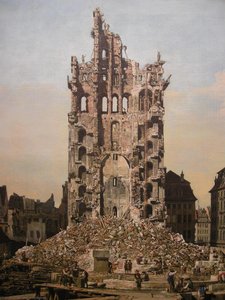
Ruinerna av den gamla Kreuzkirche i Dresden (1765) av Bernardo Bellotto

Ruinerna av den gamla Kreuzkirche i Dresden

1765 · Olja på duk · Gemäldegalerie, Dresden

Bernardo Bellottos fängslande stadsvy, skapad omkring 1765, är en gripande inblick i post-katastrofala Dresden. Mer än bara en representation av förstörelse, är detta verk en kraftfull meditation över förlust, återhämtning och den mänskliga andens uthållighet. En minutiöst detaljerad scen vecklar ut sig framför oss, med de skelettlika ruinerna av den gamla Kreuzkirche sida vid sida med fortfarande stående strukturer – ett ögonblick i stadens historia fångat för evigt. Bellotto, son…

2
Dresden, the Frauenkirche and the Rampische Gasse (1749) av Bernardo Bellotto

Dresden, the Frauenkirche and the Rampische Gasse

1749 · Oil On Canvas · Gemäldegalerie, Dresden

In the quiet, luminous depths of Bernardo Bellotto’s 1749 masterpiece, Dresden, the Frauenkirche and the Rampische Gasse, we are invited to step through a portal into the eighteenth century. This breathtaking oil on canvas is far more than a mere topographical record; it is a soulful meditation on a city at its zenith. As the eye wanders across the panoramic vista, one is immediately struck by the imposing presence of…

3
The Moat of the Zwinger in Dresden (1749) av Bernardo Bellotto

The Moat of the Zwinger in Dresden

1749 · Oil On Canvas · Gemäldegalerie, Dresden

To look upon The Moat of the Zwinger in Dresden is to witness a moment of profound stillness from 1749. This canvas captures the Zwinger complex not as a mere fortification, but as a serene reflection of royal life during the reign of Augustus III. The water in the moat acts as a liquid mirror, its surface broken only by the gentle movement of small boats and the soft ripples…

4
The Moat of the Zwinger in Dresden (detail) (1749) av Bernardo Bellotto

The Moat of the Zwinger in Dresden (detail)

1749 · Oil On Canvas · Gemäldegalerie, Dresden

In the heart of 18th-century Saxony, amidst the burgeoning prosperity of the Enlightenment, Bernardo Bellotto captured a moment of profound serenity and architectural splendor. His masterpiece, The Moat of the Zwinger in Dresden, is far more than a mere topographical record; it is a luminous window into a vanished world. Painted in 1749, this work invites the viewer to step onto the banks of the Zwinger Palace’s moat, where the…

5
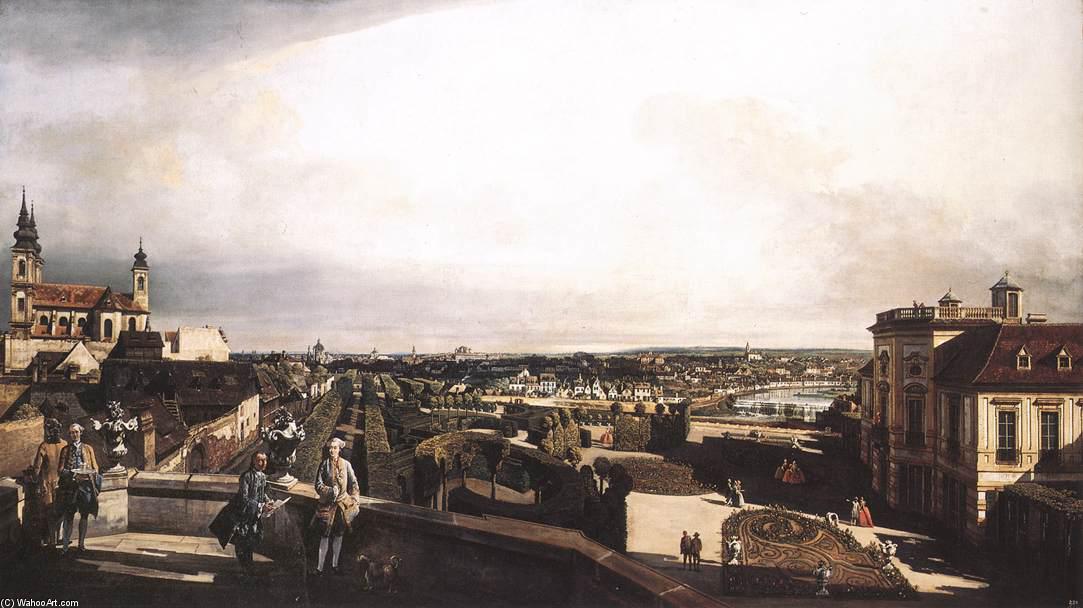
Wiens Panorama från Palais Kaunitz (1759) av Bernardo Bellotto

Wiens Panorama från Palais Kaunitz

1759 · Olja på duk · Szépművészeti Múzeum, Budapest

Bernardo Bellotto och Viennas Panorama från Palais Kaunitz – En Stadens Själ i Färg Vienna, Panorama from Palais Kaunitz är ett mäktigt konstverk av den italienska målaren Bernardo Bellotto, färdigt år 1759. Detta panorama erbjuder en unik och detaljerad skildring av Wien vid tiden då det målades, vilket gör det till ett särskilt värdefullt dokument för historikern och konsthistorikern samt ett inspirerande förebild för interiördesigners och samlare. Bellotto var inte…

6
Grand canal, view from north (1738) av Bernardo Bellotto

Grand canal, view from north

1738 · Oil On Canvas · National Gallery of Victoria, Melbourne

In this work, titled Grand canal, view from north, the artist Bernardo Bellotto captures a specific moment within the Venetian cityscape. Painted about 1738, the scene focuses on the activity along the water, where several boats float upon the river. Some vessels occupy the foreground, while others drift toward the distance, creating a sense of depth across the waterway.

7
The Fortress of Konigstein (1758) av Bernardo Bellotto

The Fortress of Konigstein

1758 · Oil On Canvas · National Gallery of Art, Washington

The painting titled The Fortress of Konigstein was executed by the Italian artist Bernardo Bellotto in 1758. Bellotto was an urban landscape painter and printmaker who specialized in the veduta style. He was the nephew and pupil of Giovanni Antonio Canal. This specific work was part of a series of views commissioned by the Elector of Saxony, Augustus III.

8
Allegory Inclinata Resurgit (1762) av Bernardo Bellotto

Allegory Inclinata Resurgit

1762 · Oil On Canvas · Staatliche Kunstsammlungen Dresden, Dresden

The scene unfolds within the allegorical realm of Allegory Inclinata Resurgit, a painting that captures a moment of profound symbolic weight. Created by the hand of Bernardo Bellotto, this work invites the viewer into a staged, theatrical space where figures and architecture converge. The piece emerges from about 1762, a time when the artist was deeply engaged with the visual language of his era. Every element within the frame works…

9
Venetian Capriccio, View of Santa Maria dei Miracoli (1740) av Bernardo Bellotto

Venetian Capriccio, View of Santa Maria dei Miracoli

1740 · Oil On Canvas · Niedersächsisches Landesmuseum, Hannover

In this work, titled Venetian Capriccio, View of Santa Maria dei Miracoli, the artist Bernardo Bellotto presents a detailed cityscape of Venice. Painted about 1740, the scene focuses on the architecture of the Santa Maria dei Miracoli church. It is a capriccio, a composition that uses a fanciful or imagined arrangement of real-world elements to create a specific atmosphere.

10
Pirna Seen from the Right Bank of the Elbe (1750) av Bernardo Bellotto

Pirna Seen from the Right Bank of the Elbe

1750 · Oil On Canvas

The river flows with a quiet, steady purpose, its surface catching the soft, diffused light of a hazy sky. Along the sandy banks, life unfolds in small, unhurried movements. Children play near the water's edge, their laughter seemingly carried away by the gentle breeze, while adults find repose on boats that bob softly upon the current. In the distance, the skyline of Pirna rises against the horizon, a silhouette of…

Urvalet av Bernardo Bellotto fortsätter, 11 till 100

11A Capriccio River Landscape with a Church to the Left (1765) av Bernardo BellottoA Capriccio River Landscape with a Church to the Left1765 12Allegory Ex Arduis Immortalitas (1762) av Bernardo BellottoAllegory Ex Arduis Immortalitas1762 · Staatliche Kunstsammlungen Dresden 13Fantastic architecture with portrait of Franciszek Salezy Potocki and his son Stanisław Szczęsny (1763) av Bernardo BellottoFantastic architecture with portrait of Franciszek Salezy Potocki and his son Stanisław Szczęsny1763 · El Paso Museum of Art 14The Fortress of Königstein: Courtyard with the Magdalenenburg (1758) av Bernardo BellottoThe Fortress of Königstein: Courtyard with the Magdalenenburg1758 · National Gallery of Art 15The Fortress of Königstein (1756) av Bernardo BellottoThe Fortress of Königstein1756 16The Election of the King Stanislaus Augustus (1764) av Bernardo BellottoThe Election of the King Stanislaus Augustus1764 17View of Wilanów meadows (1775) av Bernardo BellottoView of Wilanów meadows1775 · Kungliga slottet i Warszawa 18Groom leading a horse (1773) av Bernardo BellottoGroom leading a horse1773 · Nationalmuseet i Warszawa 19The Elbe between Pirna and Pillnitz (1766) av Bernardo BellottoThe Elbe between Pirna and Pillnitz1766 · Staatliche Kunstsammlungen Dresden 20Dresden, the Ruins of the Pirnaische Vorstadt (1766) av Bernardo BellottoDresden, the Ruins of the Pirnaische Vorstadt1766 21View of Ujazdów from the Royal Baths (1776) av Bernardo BellottoView of Ujazdów from the Royal Baths1776 · Nationalmuseet i Warszawa 22Stable boy leading a horse (1773) av Bernardo BellottoStable boy leading a horse1773 · Nationalmuseet i Warszawa 23Rio dei Mendicanti with the Scuola di San Marco (detail) (1738) av Bernardo BellottoRio dei Mendicanti with the Scuola di San Marco (detail)1738 · Gallerie dell'Accademia di Venezia 24The Imperial Palace Schönbrunn, Garden Side (1758) av Bernardo BellottoThe Imperial Palace Schönbrunn, Garden Side1758 · Kunsthistorisches Museum 25View of Pirna from the Sonnenstein Castle (1750) av Bernardo BellottoView of Pirna from the Sonnenstein Castle1750 · Ermitaget 26View of Pirna from the Right Bank of the Elba above the Town (1753) av Bernardo BellottoView of Pirna from the Right Bank of the Elba above the Town1753 · Ermitaget 27The Kreuzkirche in Dresden (1747) av Bernardo BellottoThe Kreuzkirche in Dresden1747 · Gemäldegalerie 28Stairs Leading to the Colonnade of a Palace (1762) av Bernardo BellottoStairs Leading to the Colonnade of a Palace1762 · Staatliche Kunstsammlungen Dresden 29Lagoon landscape (1741) av Bernardo BellottoLagoon landscape1741 30Venice (Marriage of the Doge with the Sea) (1727) av Bernardo BellottoVenice (Marriage of the Doge with the Sea)1727 31The Grand Canal from the Campo San Vio, Venice (1727) av Bernardo BellottoThe Grand Canal from the Campo San Vio, Venice1727 · Scottish National Gallery 32The Pantheon (1742) av Bernardo BellottoThe Pantheon1742 · Dayton Art Institute 33View of the Tiber in Rome with the Castel Sant'Angelo (1743) av Bernardo BellottoView of the Tiber in Rome with the Castel Sant'Angelo1743 · Detroit Institute of Arts 34Piazza San Marco, Venice (1740) av Bernardo BellottoPiazza San Marco, Venice1740 · Cleveland Museum of Art 35Piazza del Campidoglio with Santa Maria d'Aracoeli, Rome (1742) av Bernardo BellottoPiazza del Campidoglio with Santa Maria d'Aracoeli, Rome1742 · Petworth House 36A View at the Entrance of the Grand Canal, Venice (1741) av Bernardo BellottoA View at the Entrance of the Grand Canal, Venice1741 · Fitzwilliam Museum 37The Piazza San Martino, Lucca (1742) av Bernardo BellottoThe Piazza San Martino, Lucca1742 · York Art Gallery 38Painting of the Church of Santa Maria Formosa, Venice (1742) av Bernardo BellottoPainting of the Church of Santa Maria Formosa, Venice1742 39The Campo di SS. Giovanni e Paolo, Venice (1743) av Bernardo BellottoThe Campo di SS. Giovanni e Paolo, Venice1743 · National Gallery of Art 40View of Via di Ripetta in Rome (1742) av Bernardo BellottoView of Via di Ripetta in Rome1742 · Museum Kunstpalast 41View of the Grand Canal: Santa Maria della Salute and the Dogana from Campo Santa Maria Zobenigo (1743) av Bernardo BellottoView of the Grand Canal: Santa Maria della Salute and the Dogana from Campo Santa Maria Zobenigo1743 · J. Paul Getty Museum 42View of Grand Canal with the Palazzi Foscari and Moro Lin (1734) av Bernardo BellottoView of Grand Canal with the Palazzi Foscari and Moro Lin1734 · Nationalmuseum 43The harbor basin of San Marco on Ascension Day, Venice (1739) av Bernardo BellottoThe harbor basin of San Marco on Ascension Day, Venice1739 44Colosseum and Arch of Constantine (Rome) (1742) av Bernardo BellottoColosseum and Arch of Constantine (Rome)1742 45The Arch of Constantine (1742) av Bernardo BellottoThe Arch of Constantine1742 · Royal Collection 46Signoria Square in Florence (1741) av Bernardo BellottoSignoria Square in Florence1741 47View of the Grand Canal at San Stae (1738) av Bernardo BellottoView of the Grand Canal at San Stae1738 48Arno in Florence (1742) av Bernardo BellottoArno in Florence1742 49Capriccio Padovano (1740) av Bernardo BellottoCapriccio Padovano1740 · Thyssen-Bornemisza-museet 50Pirna with the Dohna Gate (1754) av Bernardo BellottoPirna with the Dohna Gate1754 · Staatliche Kunstsammlungen Dresden 51The Arno in Florence with the Ponte Vecchio (1745) av Bernardo BellottoThe Arno in Florence with the Ponte Vecchio1745 · Fitzwilliam Museum 52The Arno in Florence with the Ponte Alla Carraia (1745) av Bernardo BellottoThe Arno in Florence with the Ponte Alla Carraia1745 · Fitzwilliam Museum 53Capriccio with the Dolo lock (1748) av Bernardo BellottoCapriccio with the Dolo lock1748 · Staatliche Kunstsammlungen Dresden 54The Lock at Dolo (1745) av Bernardo BellottoThe Lock at Dolo1745 · Yale University Art Gallery 55The Grand Canal: Santa Lucia and the Church of the Scalzi, Venice (1750) av Bernardo BellottoThe Grand Canal: Santa Lucia and the Church of the Scalzi, Venice1750 · Scottish National Gallery 56View of Pirna from the West, from the Corner of Wide Street (1755) av Bernardo BellottoView of Pirna from the West, from the Corner of Wide Street1755 · Ermitaget 57View of Pirna, from Sonnestein Castle (1753) av Bernardo BellottoView of Pirna, from Sonnestein Castle1753 · Pushkin State Museum 58View of Verona with the Castelvecchio and Ponte Scaligero (1745) av Bernardo BellottoView of Verona with the Castelvecchio and Ponte Scaligero1745 · Philadelphia Museum of Art 59Dresden from the Right Bank of the Elbe, below the Augustus Bridge (1750) av Bernardo BellottoDresden from the Right Bank of the Elbe, below the Augustus Bridge1750 · National Gallery of Ireland 60Dresden from the Right Bank of the Elbe above the Augustus Bridge (1750) av Bernardo BellottoDresden from the Right Bank of the Elbe above the Augustus Bridge1750 · National Gallery of Ireland 61View of Pirna from the Right Bank of the Elba (1753) av Bernardo BellottoView of Pirna from the Right Bank of the Elba1753 · Ermitaget 62The Moat of Zwinger in Dresden (1750) av Bernardo BellottoThe Moat of Zwinger in Dresden1750 · Ermitaget 63Old Fortifications of Dresden (1749) av Bernardo BellottoOld Fortifications of Dresden1749 · Ermitaget 64Market-Place of the Neustadt in Dresden (1751) av Bernardo BellottoMarket-Place of the Neustadt in Dresden1751 · Ermitaget 65View of Pirna, from Sonnenstein Castle (1755) av Bernardo BellottoView of Pirna, from Sonnenstein Castle1755 · Staatliche Kunstsammlungen Dresden 66Pirna from Kopitz (1753) av Bernardo BellottoPirna from Kopitz1753 · Staatliche Kunstsammlungen Dresden 67The Zwinger in Dresden (1751) av Bernardo BellottoThe Zwinger in Dresden1751 · Staatliche Kunstsammlungen Dresden 68The Old Ponte delle Navi in Verona (1746) av Bernardo BellottoThe Old Ponte delle Navi in Verona1746 · Staatliche Kunstsammlungen Dresden 69The Old Market in Dresden from Schlossgasse (1750) av Bernardo BellottoThe Old Market in Dresden from Schlossgasse1750 · Staatliche Kunstsammlungen Dresden 70The Old Fortifications in Dresden (1750) av Bernardo BellottoThe Old Fortifications in Dresden1750 · Staatliche Kunstsammlungen Dresden 71Pirna from Posta (1753) av Bernardo BellottoPirna from Posta1753 · Staatliche Kunstsammlungen Dresden 72Dresden from the left Bank of the Elbe above the Bridgehead of the Old Town (1748) av Bernardo BellottoDresden from the left Bank of the Elbe above the Bridgehead of the Old Town1748 · Staatliche Kunstsammlungen Dresden 73View from the Bridge of Dresden on the Elbe (1749) av Bernardo BellottoView from the Bridge of Dresden on the Elbe1749 · Fine Arts Museums of San Francisco 74Abbruch der Kreuzkirche, Dresden (1746) av Bernardo BellottoAbbruch der Kreuzkirche, Dresden1746 75Piazza S. Marco, Venice (1746) av Bernardo BellottoPiazza S. Marco, Venice1746 76The Old Market Square in Dresden (1750) av Bernardo BellottoThe Old Market Square in Dresden1750 · Staatliche Kunstsammlungen Dresden 77The New Market Square in Dresden (1750) av Bernardo BellottoThe New Market Square in Dresden1750 78Verona Veduta (1746) av Bernardo BellottoVerona Veduta1746 · Powys Castle Museum 79View of Turin near the Royal Palace (1745) av Bernardo BellottoView of Turin near the Royal Palace1745 · Galleria Sabauda 80New Market Square in Dresden (1750) av Bernardo BellottoNew Market Square in Dresden1750 · Gemäldegalerie 81Dresden from the Left Bank of the Elbe, below the Fortifications (1748) av Bernardo BellottoDresden from the Left Bank of the Elbe, below the Fortifications1748 · Gemäldegalerie 82Pirna Seen from the Harbour Town (1753) av Bernardo BellottoPirna Seen from the Harbour Town1753 · Gemäldegalerie 83View of an Old Bridge Over the River Po, Turin (1745) av Bernardo BellottoView of an Old Bridge Over the River Po, Turin1745 · Galleria Sabauda 84The Neuer Marktplatz in Dresden (1747) av Bernardo BellottoThe Neuer Marktplatz in Dresden1747 · Ermitaget 85Venice (Rio di S. Fosca and S. Maria dei Servil) (1758) av Bernardo BellottoVenice (Rio di S. Fosca and S. Maria dei Servil)1758 86View of München (1758) av Bernardo BellottoView of München1758 87Saint Mark's Square, Venice (1756) av Bernardo BellottoSaint Mark's Square, Venice1756 · National Gallery of Ireland 88Campo San Stin, Venice (1760) av Bernardo BellottoCampo San Stin, Venice1760 89Old town of Dresden (1765) av Bernardo BellottoOld town of Dresden1765 · Staatliche Kunsthalle Karlsruhe 90Pirna seen from the right bank of the Elbe (1756) av Bernardo BellottoPirna seen from the right bank of the Elbe1756 · San Diego Museum of Art 91Architectural Capriccio (1765) av Bernardo BellottoArchitectural Capriccio1765 · San Diego Museum of Art 92Nymphenburg Castle (1761) av Bernardo BellottoNymphenburg Castle1761 93Architectural Caprice with a Palace (1765) av Bernardo BellottoArchitectural Caprice with a Palace1765 · Bilbao Fine Arts Museum 94Venice: Canale Grande (1758) av Bernardo BellottoVenice: Canale Grande1758 95View of Vienna with St. Charles's Church (1758) av Bernardo BellottoView of Vienna with St. Charles's Church1758 · Museum Kunstpalast 96Schloss Schonbrunn (1760) av Bernardo BellottoSchloss Schonbrunn1760 97Freyung in Vienna, View from the southeast (1758) av Bernardo BellottoFreyung in Vienna, View from the southeast1758 98The ruins of Thebes on the River March (1758) av Bernardo BellottoThe ruins of Thebes on the River March1758 · Kunsthistorisches Museum 99A view of the Lobkowicz Palace in Vienna (1761) av Bernardo BellottoA view of the Lobkowicz Palace in Vienna1761 100Ruins of Dresden's Kreuzkirche (1765) av Bernardo BellottoRuins of Dresden's Kreuzkirche1765

Bernardo Bellottos berömda målningar, period för period

Motiven som fångade Bernardo Bellottos blick

De fyra motiv som återkommer oftast i dessa originalverk, var och ett med sitt främsta exempel.

Museerna som förvarar Bernardo Bellottos originalverk

De 8 museer som innehar flest av målningarna på denna sida.

Museum Stad Verk av Bernardo Bellotto Målningar från denna lista
Staatliche Kunstsammlungen Dresden, DresdenStaatliche Kunstsammlungen Dresden Dresden 19 Allegory Inclinata Resurgit, Allegory Ex Arduis Immortalitas, The Elbe between Pirna and Pillnitz
Gemäldegalerie, DresdenGemäldegalerie Dresden 12 Ruinerna av den gamla Kreuzkirche i Dresden, Dresden, the Frauenkirche and the Rampische Gasse, The Moat of the Zwinger in Dresden
Ermitaget, Sankt PetersburgErmitaget Sankt Petersburg 11 View of Pirna from the Sonnenstein Castle, View of Pirna from the Right Bank of the Elba above the Town, View of Pirna from the West, from the Corner of Wide Street
Nationalmuseet i Warszawa, WarszawaNationalmuseet i Warszawa Warszawa 8 Groom leading a horse, View of Ujazdów from the Royal Baths, Stable boy leading a horse
National Gallery of Art, WashingtonNational Gallery of Art Washington 5 The Fortress of Konigstein, The Fortress of Königstein: Courtyard with the Magdalenenburg, The Campo di SS. Giovanni e Paolo, Venice
Fitzwilliam MuseumFitzwilliam Museum 3 A View at the Entrance of the Grand Canal, Venice, The Arno in Florence with the Ponte Vecchio, The Arno in Florence with the Ponte Alla Carraia
National Gallery of Ireland, DublinNational Gallery of Ireland Dublin 3 Dresden from the Right Bank of the Elbe, below the Augustus Bridge, Dresden from the Right Bank of the Elbe above the Augustus Bridge, Saint Mark's Square, Venice
Kunsthistorisches Museum, WienKunsthistorisches Museum Wien 12 The Imperial Palace Schönbrunn, Garden Side, The ruins of Thebes on the River March

Bernardo Bellotto decennium för decennium: originalen som definierar varje era

Verk per decennium

Välj ett decennium för att se originalverket som definierar det.

Samlarfrågor om Bernardo Bellottos målningar

Vilket verk är Bernardo Bellotto mest känd för?Visa svaret

Ruinerna av den gamla Kreuzkirche i Dresden (1765), Gemäldegalerie, Dresden. Dresden, the Frauenkirche and the Rampische Gasse (1749) och The Moat of the Zwinger in Dresden (1749) följer efter.

Hur gammal var Bernardo Bellotto när Ruinerna av den gamla Kreuzkirche i Dresden skapades?Visa svaret

43 år gammal: Ruinerna av den gamla Kreuzkirche i Dresden är från 1765, och Bernardo Bellotto föddes 1722.

Vilka är de tio mest kända målningarna av Bernardo Bellotto?Visa svaret

Ruinerna av den gamla Kreuzkirche i Dresden, Dresden, the Frauenkirche and the Rampische Gasse, The Moat of the Zwinger in Dresden, The Moat of the Zwinger in Dresden (detail), Wiens Panorama från Palais Kaunitz, Grand canal, view from north, The Fortress of Konigstein, Allegory Inclinata Resurgit, Venetian Capriccio, View of Santa Maria dei Miracoli och Pirna Seen from the Right Bank of the Elbe. Rankingen ovan visar varje verks årtal och museum.

Hur många målningar lämnade Bernardo Bellotto efter sig?Visa svaret

Vår katalog innehåller 230 verk av Bernardo Bellotto, daterade från 1734 till 1776.

I vilka museer hänger Bernardo Bellottos mästerverk?Visa svaret

Främst i Staatliche Kunstsammlungen Dresden (Dresden), Gemäldegalerie (Dresden) och Ermitaget (Sankt Petersburg). Museitabellen ovan listar alla.

Under vilka år målade Bernardo Bellotto sina mest kända verk?Visa svaret

Under 1740s: 37 av de 100 verk som finns på denna sida skapades då, varav Dresden, the Frauenkirche and the Rampische Gasse.

Vilka är de första och sista kända originalverken av Bernardo Bellotto?Visa svaret

På den här sidan är det tidigaste View of Grand Canal with the Palazzi Foscari and Moro Lin (1734) och det senaste View of Ujazdów from the Royal Baths (1776).

Vilka motiv valde Bernardo Bellotto oftast?Visa svaret

Sky (69), Architecture (66) och Water (42), fördelat på 100 verk på denna sida.

Vilken teknik använde Bernardo Bellotto mest?Visa svaret

Oil On Canvas, för 79 av de 100 verk som finns på denna sida.

Vilken konstinriktning tillhör Bernardo Bellotto?Visa svaret

Rococo, om man dömer efter originalen på denna sida.

Vilka verk av Bernardo Bellotto finns utställda på Staatliche Kunstsammlungen Dresden?Visa svaret

Allegory Inclinata Resurgit, Allegory Ex Arduis Immortalitas och The Elbe between Pirna and Pillnitz: Staatliche Kunstsammlungen Dresden, Dresden har 15 av verken på denna sida.

Bernardo Bellotto: liv och verk

Tidigt liv, familj och utbildning

Bernardo Bellotto trädde in i världen i Venedig, Italien, omkring år 1721 eller 1722. Vissa källor pekar på ett mer specifikt datum, den 30 januari 1721. Han föddes in i en familj där konsten var ständigt närvarande, som son till Lorenzo Antonio Bellotto och Fiorenza Canal. Genom sin mor var han knuten till en betydelsefull konstnärlig släktlinje, då hon var syster till den berömde Canaletto. Denna koppling innebar att atmosfären i hans hem, redan från hans tidigaste år, var djupt präglad av den venetianska målarkonstens traditioner.

Hans formella utbildning ägde rum i sin farbrors verkstad, Giovanni Antonio Canal. Som lärling hos mannen som var känd som Canaletto, lärde sig Bernardo Bellotto perspektivets komplexitet och de noggranna detaljer som krävdes för att fånga en stads själ. Denna lärlingsperiod var mer än bara en enkel utbildning; det var en fullständig fördjupning i ett specifikt sätt att betrakta världen. Han studerade inte bara under sin farbror, utan blev en del av ett familjearv som så småningom skulle bära hans namn över hela Europa. I vissa regioner, såsom Tyskland och Polen, blev han ofta kallad Bernardo Canaletto, ett namn som speglade hans djupa band till både sin mentor och sin släkt.

Hans tidiga år i Venedig lade grunden för en karriär som ägnades åt att dokumentera arkitekturen och ljuset i många olika städer. Även om hans tidiga verk visar hur han följde den stig som hans farbror hade stakat ut, började han utveckla en egen identitet genom sitt unika sätt att hantera ljus och skugga. Hans uppväxt inom den venetianska skolan säkerställde att hans tekniska färdigheter var rotade i en djup förståelse för urbana landskap och det magiska samspel som uppstår när ljuset möter sten och vatten.

Konstnärlig stil och teknik

Bellotto besatt ett sätt att betrakta staden som kändes både precist och djupt stämningsfullt. Även om han lade grunden för sin förståelse för perspektiv och komposition i sin farbrors verkstad, rörde sig hans egen hand mot ett mer dämpat seende. Han distanserade sig från de ljusa, högkontrasterande paletter som ofta återfinns i venetianska scener, och valde istället att arbeta med ett mer återhållsamt färgschema. Hans dukar vilade ofta på jordnära toner av brunt, grått, ockra och blekt rött för att bygga upp sina vyer. Detta val gjorde det möjligt för honom att fokusera på den specifika ljuskvalitet som definierar en viss plats, och fånga hur sol och skugga vilar mot sten och tegel.

Det finns en påtaglig tyngd i hans himlar. Hans behandling av moln och skuggor uppvisar ett tydligt inflytande från det nederländska måleriet, där han rör sig bort från enkel dekoration mot något mer jordnära och naturligt. Han besatt en talang för den detaljrika framställningen av arkitektoniska och naturliga vyer, vilket säkerställde att varje byggnad och vattenväg kändes solid och verklig. För att uppnå denna nivå av detaljrikedom använde han sannolikt verktyg som camera obscura eller camera lucida, vilket hjälpte honom att bibehålla en hög grad av noggrannhet i sina stadslandskap.

Resor och europeiska uppdrag

Bellottos karriär förde honom långt bortom de välbekanta kanalerna i hans födelsestad. År 1742 flyttade han till Rom, där han började skapa sina karakteristiska vedute av staden. Hans vandringar fortsatte genom norra Italien under åren 1744 och 1745, en period då han arbetade för Karl Emmanuelle III av Savojen. Dessa år av ständig rörelse gav honom möjligheten att studera det unika ljuset och den varierande arkitekturen i olika regioner, vilket stadigt befäste hans rykte som en mästare på att skildra urbana rum.

Hans professionella liv blev djupt sammanflätat med Europas hov. På uppdrag av kung August III av Polen levde Bellotto i Dresden mellan 1747 och 1758, en tid präglad av ett stadigt och betydelsefullt arbete vid det sachsiska hovet. Efter detta mottog han en inbjudan från kejsarinnan Maria Theresa att verka i Wien år 1758. Hans sällsynta förmåga att fånga en stads sanna väsen och karaktär gjorde honom till en eftertraktad gestalt för monarker som strävade efter att dokumentera sina huvudstäder i all deras prakt.

År 1764 inleddes ett nytt kapitel i hans liv när kung Stanisław August Poniatowski bjöd in honom att bli sin hovmålare i Warszawa. Han stannade i den polska huvudstaden under många år, där han med stor hängivenhet dokumenterade staden och dess omgivningar. Detta sista stora uppdrag gav honom möjligheten att finna en plats i en roll som skulle komma att definiera merparten av hans återstående liv.

Framstående verk och stadslandskap

Bernardo Bellottos pensel fångade det unika ljuset i de städer han befolkade, och förvandlade sten och vatten till bestående historiska dokument. År 1738 målade han Rio dei Mendicanti med Scuola di San Marco (detalj), ett verk som redan då uppvisade hans tidiga förmåga att bemästra den venetianska arkitekturens intrikata detaljer. Allt eftersom han rörde sig genom Italien skiftade hans fokus mot det urbana livets storslagenhet. År 1747 skapade han View of Verona and the River Adige from the Ponte Nuovo, där han med stor skicklighet fångade hur floden slingrar sig genom staden. Hans förmåga att dokumentera en plats med sådan precision kom att bli ett kännetecken för hans karriär, oavsett om han målade en huvudstads livliga gator eller de tysta hörnen i en mindre provinsstad.

Hans tid i Dresden och Wien gav honom möjligheten att dokumentera det arkitektoniska hjärtat av Europa. År 1748 skapade han View of Dresden from the Right Bank of the Elbe with the Augustus Bridge, en scen som registrerade stadens layout med en anmärkningsvärd klarhet. Senare inkluderade hans arbete i Wien den dominikanska kyrkan år 1758 och Vienna, Panorama from Palais Kaunitz år 1759. Dessa målningar var mer än bara enkla vyer; de var precisa observationer av de monument och palats som definierade den kejserliga atmosfären under denna era.

Under sina senare år fann Bellotto ett hem i Polen, där hans konstverk fick en helt ny nivå av historisk betydelse. År 1773 färdigställde han View of Warsaw from the Royal Palace (detail), vilket gav en detaljerad inblick i den polska huvudstaden. Dessa vyer av Warszawa skulle slutligen komma att bli oumbärliga referenspunkter för dem som fick i uppdrag att återuppbygga stadens historiska centrum, långt efter att själva byggnaderna gått förlorade.

Arv och urban rekonstruktion

Bellottos målningar har ofta fungerat som ett tyst, visuellt minne för städer som drabbats av total förödelse. I Dresden bevarade hans detaljerade vyer stadens skönhet från tiden före kriget, och fångade arkitektoniska detaljer som senare skulle gå förlorade i konfliktens spår. Hans förmåga att dokumentera gators och monumentens exakta utformning innebar att hans dukar blev mer än bara konst; de förvandlades till oumbärliga ritningar för dem som fick i uppdrag att återuppbygga det förflutna.

Denna praktiska betydelse blev som tydligast i Warszawa. Efter att staden lidit svåra skador under andra världskriget, gav Bellottos trettio vyer av den polska huvudstaden den nödvändiga vägledningen för återuppbyggnaden. Arkitekter använde hans verk för att återställa stadens utseende, vilket hjälpte till att återkalla själen i det urbana landskapet. Detta noggranna restaureringsarbete var så framgångsrikt att Warszawas historiska stadskärna år 1980 erkändes som ett världsarv av UNESCO.

Var man kan se hans verk idag

För att finna spåren av Bernardo Bellottos hand måste man resa genom de städer som han en gång dokumenterade med en sådan oöverträffad precision. I Dresden rymmer Gemäldegalerie en betydande del av hans produktion, inklusive de vyer av staden som fångade dess arkitektoniska liv långt före krigets härjningar. Hans närvaro i den tyska staden känns genom dessa detaljerade skildringar av det urbana livet och det stillsamma, dämpade ljus som han så föredrog.

Hans koppling till sina rötter förblir synlig i Venedig, där Gallerie dell'Accademia di Venezia bevarar hans tidiga perspektiv. Dessa verk reflekterar ofta de skimrande vattenvägarna och den unika atmosfär som präglar de venetianska lagunerna. Utöver Italien sträcker sig hans inflytande in i de stora samlingarna i Öst- och Centraleuropa. Både Hermitagemuseet i Sankt Petersburg och Szépművészeti Múzeum i Budapest hyser hans målningar, vilket erbjuder glimtar av de landskap och stadsbilder han skapade under sina resor över kontinenten.

I Wien bevarar Liechtenstein Museum verk som vittnar om hans förmåga att fånga den kejserliga arkitekturens storslagenhet. Hans förmåga att återge stenens tyngd och molnens föränderliga rörelse gör hans närvaro i dessa museer till en livsviktig länk till 1700-talet. Samlare och historiker kan finna specifika exempel på hans mästerliga skicklighet på följande platser:

  • View of Verona and the River Adige from the Ponte Nuovo (1747)
  • The Ruins of the Old Kreuzkirche in Dresden (1765)
  • Vienna, Panorama from Palais Kaunitz (1759)
  • Rio dei Mendicanti with the Scuola di San Marco (detail) (1738)