The Genesis of Fragmentation: Understanding the Cubist Revolution
To understand the profound impact of Cubism, one must first envision the world as it stood at the dawn of the twentieth century—a period of rapid industrialization, shifting temporal perceptions, and a burgeoning scientific understanding of relativity. Before the arrival of this avant-garde movement, the Western tradition had long been anchored by the Renaissance ideal of a single, fixed viewpoint. The canvas served as a window, offering a static, illusionistic glimpse into a three-dimensional reality. However, a group of visionaries, most notably led by the intellectual rigor of figures like Jean Metzinger, sought to shatter this singular perspective. They recognized that human perception is not a frozen moment in time but a fluid accumulation of glances, movements, and memories.
The revolution was not merely stylistic; it was ontological. By rejecting the traditional concept of mimesis, Cubism introduced a language of fragmentation. This era saw the birth of proto-Cubism, where artists began to experiment with the flattening of space and the reduction of organic forms into essential geometric components. It was an era of profound transition, moving away from the emotional turbulence of Fauvism toward a more structured, cerebral exploration of reality. As collectors often note, this movement did not seek to represent what we see, but rather what we know to be true about the objects inhabiting our space.
Analytical Precision: Deconstructing Form and Geometric Structure
At the heart of the Cubist endeavor lies the discipline of Analytical Cubism, a phase characterized by an almost scientific deconstruction of the subject. In this stage, the artist meticulously dissects the object, breaking it down into its constituent facets and planes. One might look to the works of Oscar Dominguez or the early experiments of Auguste Herbin to witness how a once-solid form is transformed into a complex arrangement of interlocking shapes. The goal was to reveal the internal architecture of the subject, stripping away the superficiality of light and shadow to expose the structural essence beneath.
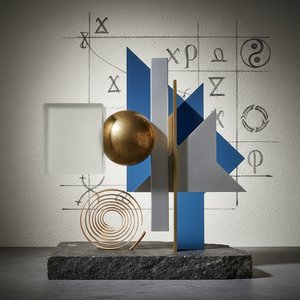
This process requires an immense degree of technical mastery. The artist must navigate the delicate balance between chaos and order, ensuring that while the form is fragmented, a sense of underlying rhythm remains. The use of precise lines and geometric shapes—circles, triangles, and quadrilates—serves to anchor the viewer within the composition. This deconstruction creates a fascinating tension; the eye attempts to reconstruct the original subject, yet it is constantly redirected by the sharp edges and overlapping planes that define the new, modern reality. It is a cerebral dance of perception, where the intellect engages with the canvas as much as the emotion does.
Simultaneity and Perspective: The Multi-Dimensional Canvas
Perhaps the most intoxicating element of Cubist composition is the concept of simultaneity. This technique allows an artist to present multiple viewpoints of a single object within a solitary, unified frame. Imagine viewing a porcelain carafe not just from the side, but also from above and from its base, all at once. This rejection of the fixed horizon line creates a sense of movement and temporal depth that was previously unimaginable in fine art. It mimics the way our minds work—we do not perceive a person or an object as a static image, but as a collection of simultaneous impressions gathered over time.
This multi-dimensional approach challenges the very nature of space on a two-dimensional surface. By overlapping planes and utilizing translucent layers, artists like Salvador Dalí in his early Cubist Composition explored how form and perception could merge. The canvas becomes a site of intersection where different moments in time coexist. For the discerning collector, this provides an endlessly engaging experience; every viewing offers a new way to navigate the fragmented landscape, discovering hidden depths and subtle shifts in perspective that reveal themselves only through patient observation.
Color Theory in Cubism: From Monochromatic Depth to Vibrant Planes
While much of the early Analytical period is celebrated for its restrained, almost monochromatic palette—relying on earthy ochres, muted greos, and deep browns—this was a deliberate choice designed to prioritize structure over sentiment. By limiting color, the artists ensured that the viewer’s attention remained fixed on the complex interplay of light and geometry. The absence of vibrant hues allowed for a more profound exploration of chiaroscuro within the fragmented planes, creating a sense of volume and weight even as the forms were being deconstructed.
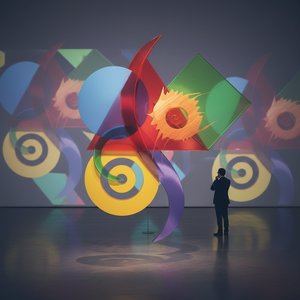
However, as the movement evolved into Synthetic Cubism, we see a resurgence of color used to define and differentiate the various facets of the composition. Color began to function as an independent structural element, capable of creating its own sense of depth and rhythm. The interplay between light-drenched planes and darker, more recessed shapes adds a layer of visual complexity that prevents the geometric rigor from becoming sterile. This evolution demonstrates that Cubism was never a static doctrine but a living, breathing exploration of how color and form can collaborate to redefine our visual reality.
Curating the Avant-Garde: Integrating Cubist Masterpieces into Modern Interiors
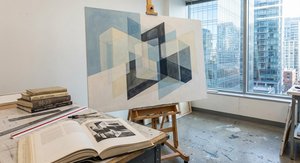
Integrating Cubist works into a contemporary collection requires a sophisticated understanding of balance and architectural dialogue. Because Cubism is inherently high-energy and visually complex, it serves as a powerful focal point within a room. A large-scale Cubist reproduction, with its tactile brushstrokes and deep textures, can anchor a minimalist space, providing a necessary layer of intellectual and visual intrigue. The geometric language of the artwork often finds a beautiful resonance with modern architectural lines, creating a cohesive aesthetic that feels both timeless and forward-looking.
When selecting pieces for a curated environment, consider the interplay of light and shadow. A work featuring heavy impasto or layered textures will interact dynamically with the ambient lighting of a room, changing character as the day progresses. Whether you are looking to introduce a single striking panel or a multi-panel group set that spans a wide wall, the key is to allow the artwork's fragmented energy to breathe. By treating these pieces not just as decor, but as profound philosophical inquiries into the nature of sight, you elevate your entire living space into a gallery of modern thought.
At OriginalUniqueArt.com, we specialize in preserving this legacy of human creativity. From meticulously handcrafted oil reproductions that capture every tactile nuance of the masters to bespoke commissions that allow you to reimagine your own memories through a Cubist lens, our mission is to make the extraordinary accessible. Whether you are an established collector or a newcomer to the avant-garde, our expert consultants are here to guide you in finding pieces that resonate with your unique aesthetic vision.