
Introduction
To step into a gallery dedicated to the theme of royalty is to enter a world of profound psychological depth, where the weight of a crown meets the vulnerability of the human spirit. Throughout history, the depiction of monarchs, emperors, and queens has served as much more than mere documentation of power; it has been an intricate language of symbolism, designed to communicate divine right, absolute authority, and the heavy burden of lineage. From the gilded opulence of the Baroque era to the calculated poise of Neoclassic portraiture, artists have used every tool at their disposal—the shimmer of silk, the deep shadows of chiaroscuro, and the commanding gaze of a sitter—to construct an image of untouchable majesty.
These masterpieces do not merely celebrate wealth; they explore the tension between the public persona and the private individual. We see the meticulous use of regalia —scepters, ermine furs, and heavy jewels—not just as ornaments, but as anchors of legitimacy in an era of shifting political tides. Culturally, these works acted as the propaganda of their day, shaping how entire nations perceived their leaders. Yet, beneath the layers of oil paint and gold leaf, there lies a timeless human narrative: the struggle for legacy, the isolation of command, and the fleeting nature of earthly glory.
Today, these paintings remain deeply resonant. In an age where power is often decentralized and digital, the visceral, tactile presence of a royal portrait reminds us of the enduring human fascination with hierarchy and the aesthetics of influence. As we wander through this curated selection, we will encounter ten canonical works that define the era of greatness. Each piece offers a window into a different epoch, inviting you to observe how the masters captured not just the splendor of the throne, but the very soul of those who sat upon it.
The Coronation of the Emperor and Empress - Jacques-Louis David
 The Coronation of the Emperor and Empress - Jacques-Louis David
To stand before a canvas of such immense scale is to feel the very weight of history pressing against the soul. In The Coronation of the Emperor and Empress by Jacques-Louis David, we are not merely observing a ceremony; we are transported into the hallowed, incense-filled air of Notre-Dame Cathedral in 1804. This monumental work earns its place among the top artworks exploring royalty through its unparalleled depiction of imperial legitimacy and theatrical grandeur.
David employs a Neoclassical precision that makes the heavy crimson velvets and shimmering gold embroideries feel almost tactile. The eye is drawn through a sea of dignified senators and clergy toward the central figures, where the light catches the intricate textures of Napoleon and Josephine’s regalia. Every brushstroke serves to orchestrate a visual symphony of power, using a palette of deep Venetian reds and radiant golds to solidify the birth of an empire. This masterpiece remains a profound study of how art can immortalize the transition from chaos to absolute sovereignty, offering a timeless sense of majesty that continues to transform any space it inhabits.
Bathory at Pskov - Jan Matejko
 Bathory at Pskov - Jan Matejko
To stand before a canvas of such immense scale is to be transported into the very heart of diplomatic tension and sovereign power. In Bathory at Pskov by Jan Matejko , the viewer does not merely observe history; they are submerged in it. This 1872 masterpiece captures the gravity of the Livonian campaign, depicting the moment Russian envoys kneel before King Stephen Báthory during peace negotiations. As a pinnacle of Romantic Nationalism, this work earns its place among the top artworks exploring royalty through its depiction of absolute authority and the heavy burden of statecraft.
Matejko employs a breathtakingly vibrant palette, where deep reds, regal golds, and midnight blues collide under a dramatic sunset that bathes the encampment in hues of violet and orange. The texture is profoundly tactile; thick, impasto brushstrokes bring the intricate patterns of medieval silks and the cold glint of armor to life. Every element, from the symbolic lion representing Poland to the meticulous rendering of diplomatic documents, vibrates with political intrigue. Such a monumental piece serves as a reminder that fine art can transform a modern space into a window onto the eternal grandeur of the past.
Portrait of Louis XIV - Hyacinthe Rigaud
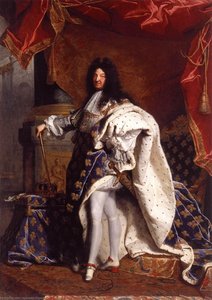 Portrait of Louis XIV - Hyacinthe Rigaud
To behold the Portrait of Louis XIV by Hyacinthe Rigaud is to witness the very embodiment of absolute sovereignty. As one of the most definitive entries in our exploration of artworks exploring royalty , this 1701 masterpiece functions less like a mere likeness and more like a theatrical unveiling of the Sun King’s divine right. Rigaud employs the dramatic chiaroscuro of the French Baroque to illuminate the heavy textures of ermine-lined robes and the shimmering gold of the royal regalia, creating a sensory experience of pure opulence.
The painting transcends its historical moment through its masterful command of light and shadow, projecting an aura of stability and eternal prestige. For the discerning collector or interior designer, this work offers more than historical context; it provides a profound sense of architectural grandeur. Whether displayed as a large-scale focal point or a meticulously crafted oil reproduction, the portrait brings a quiet, commanding elegance to modern luxury interiors, serving as a timeless symbol of authority and refined aesthetic taste.
St. Elizabeth of Portugal - Francisco de Zurbarán
 St. Elizabeth of Portugal - Francisco de Zurbarán
Imagine standing in the hushed shadows of a Spanish cathedral, where the air is thick with incense and the weight of centuries. Suddenly, a single beam of light pierces the gloom, illuminating a figure of profound, quiet majesty. This is the essence of St. Elizabeth of Portugal , attributed to the workshop of the Spanish Baroque master Francisco de Zurbarán.
This painting earns its place among the top artworks exploring royalty by redefining the concept of power. Here, nobility is not found in ostentatious gold, but in the dramatic chiaroscuro that sculpts a queen defined by her piety. The rich textures of velvet and silk, rendered with masterful precision, contrast beautifully with her serene, direct gaze. As she holds a delicate bouquet—a subtle nod to the legend of the roses—we witness the intersection of royal lineage and spiritual devotion.
To bring such a piece into a modern home is to invite a sense of historical prestige and contemplative calm. Whether through a hand-painted oil reproduction or a museum-quality print, capturing this interplay of light and shadow can transform a contemporary space into a sanctuary of timeless elegance.
Edward, Prince of Wales - Hans Holbein the Younger
 Edward, Prince of Wales - Hans Holbein the Younger
In Edward, Prince of Wales , Hans Holbein the Younger captures more than just the likeness of Henry VIII’s heir; he captures the very weight of a dynasty. There is a gaze in this masterpiece that follows you—not with judgment, but with an understanding of the heavy mantle of sovereignty. This isn’t merely a portrait; it is a mirror reflecting the meticulous precision of the Northern Renaissance. Through Holbein's masterful use of oil on wood, the striking crimson of the Prince's jacket and the crisp texture of his white collar command the room, while subtle birds in the background lend a touch of naturalistic grace to the Tudor court.
As you contemplate this icon of royalty , imagine that regal presence in your own home. Not watching you, but reminding you : you are part of a grander story of history and human achievement. For those looking to bring this era of prestige into their contemporary spaces, our museum-quality, hand-painted oil reproductions allow you to possess the tactile depth and visible brushstrokes of Holbein’s legendary technique.
Portrait of Giovanni Arnolfini and his Wife (detail - ) - Jan van Eyck
 Portrait of Giovanni Arnolfini and his Wife (detail - ) - Jan van Eyck
In the Portrait of Giovanni Arnolfini and his Wife , Jan van Eyck achieves a divine mastery over light that transcends mere depiction, elevating a merchant's domestic scene to the level of royal splendor. The illumination within this masterpiece does not simply strike the subjects; it breathes life into the very textures of their status. A soft, directional glow enters from the unseen window, dancing across the heavy crimson robes and catching the subtle sheen of fine fabrics, creating a profound chiaroscuro effect that defines the era's burgeoning realism.
This sophisticated interplay of light and shadow serves as a silent narrator of wealth and piety, where every glint on a brass chandelier or fruit on a windowsill whispers of aristocratic luxury. As one of the top 10 artworks exploring themes of royalty and prestige, its ability to capture depth through luminous oil glazes is unparalleled. When brought into a modern interior as a hand-painted oil reproduction, this meticulous command of light adds an incomparable layer of historical depth and architectural luxury, transforming a contemporary wall into a window onto the gilded grandeur of the 15th century.
Philipp II, as Prince - Titian Ramsay Peale II
 Philipp II, as Prince - Titian Ramsay Peale II
What story does the opulent, shadowed environment within Philipp II, as Prince by Titian Ramsay Peale II tell us about the weight of sovereign responsibility? In this masterful work, Peale transcends his American roots to evoke the grandeur of the Venetian Renaissance, presenting a figure of immense regal dignity. The subject is draped in heavy, gold-embroidered fabrics that catch a soft, sfumato light, while a commanding golden laurel wreath rests upon his brow, signaling an unbroken lineage of power. The deep crimson drapery in the background creates a sense of theatrical intimacy, pulling the viewer into a world of ancient Macedonian authority and political gravity.
As one of our top selections exploring the theme of royalty, this piece serves as more than a historical record; it is a window into an era of absolute command. For the modern collector, such a painting offers a profound sense of escape, allowing a home to be anchored by the textures of history and the luminous glow of classical tradition. Whether through a large-scale oil reproduction or a curated print, bringing this atmosphere of majesty into your space transforms a room into a private gallery of historical reverence.
St Columba Altarpiece (detail) - Rogier van der Weyden
 St Columba Altarpiece (detail) - Rogier van der Weyden
In the St Columba Altarpiece (detail) , Rogier van der Weyden captures the heavy, gilded weight of sovereignty intertwined with divine grace. This fragment serves as a profound meditation on the intersection of earthly power and celestial authority. Through the masterful use of deep crimson robes and shimmering gold trim, Van der Weyden utilizes a visual language of prestige to define royalty not merely as a social rank, but as a sacred responsibility. The meticulous Early Netherlandish technique brings a tactile reality to the scene; one can almost feel the heavy velvet and the cold, architectural stone.
In contemporary interior curation, this piece resonates deeply with the modern desire for "regal maximalism"—the use of rich, saturated tones and historical textures to create spaces of profound character. The interplay of light and shadow on the figures' contemplative faces evokes a sense of timelessness that transcends the 15th century. For those seeking to bring this level of historical grandeur into their own collections, our museum-quality hand-painted oil reproductions allow you to possess the very texture and soul of Van der Weyden’s mastery, preserving the dignity of this royal narrative for generations.
Boy with a Greyhound - Paolo Veronese
 Boy with a Greyhound - Paolo Veronese
To step before a Venetian masterpiece is to be transported into an era where status was whispered through silk and reflected in the luster of gold. In Boy with a Greyhound by Paolo Veronese, we encounter a profound meditation on the quiet dignity of the ruling class. Painted around 1570, this work earns its place among the top artworks exploring royalty not through a crown, but through the unmistakable language of prestige. The youth stands with an effortless, commanding grace, draped in a vibrant yellow garment—a hue that, in the Renaissance, served as a visual shorthand for immense wealth and solar nobility.
Veronese’s brushwork breathes life into the textures of the era; one can almost feel the weight of the fabric and the sleekness of the greyhound's coat. The dog, a symbol of aristocratic hunting traditions, gazes upward with a devotion that mirrors the structured hierarchy of the age. Through soft, atmospheric light and a rich, warm palette, Veronese captures a moment of timeless elegance. Owning a hand-painted reproduction of such a piece allows this historical splendor to transform a modern room into a sanctuary of classical sophistication.
The Grand Duke's Madonna - Raphael
 The Grand Duke's Madonna - Raphael
In the silent, luminous depths of The Grand Duke's Madonna by Raphael, time seems to suspend itself, capturing a moment where divine sovereignty meets human tenderness. This masterpiece earns its place among the top artworks exploring royalty not through the display of worldly power, but through the sacred dignity of the Queen of Heaven. Raphael utilizes a profound, dark background to thrust the figures forward, allowing the deep blues and subtle golds of Mary’s regalia to glow with an ethereal light.
The painting breathes with a sensory richness; one can almost feel the soft weight of the infant Christ against the velvet shadows. Through the masterful use of sfumato , Raphael softens the edges of reality, creating a celestial atmosphere where light emanates from the child himself. For the modern collector, this work offers more than historical significance—it brings a sense of profound calm and architectural sophistication to a room. Whether through a museum-quality oil reproduction or a delicate print, the harmonious balance of this Renaissance treasure provides a timeless anchor of grace for any curated interior.
Conclusion
As the light fades on our gallery tour, we are left to contemplate how these depictions of majesty transcend mere historical record. The crowns, the velvet robes, and the stoic gazes of these sovereigns are more than symbols of power; they are profound explorations of human dignity, duty, and the heavy mantle of legacy. These masterpieces do not belong solely to the silent halls of museums or the dusty archives of history; they remain living presences, capable of breathing life into our modern spaces and stirring a sense of wonder within the contemporary soul.
To bring such grandeur into your own home is to invite a dialogue between the past and the present. At OriginalUniqueArt.com , we believe that the essence of these iconic works should be felt, not just observed. Every hand-painted reproduction in our collection is a labor of devotion, meticulously crafted by skilled artists who honor the original's soul, texture, and emotional depth. Through visible brushstrokes and the rich layering of oils on cotton canvas, we strive to ensure that the majesty of these royal portraits remains a tangible, vibrant part of your daily life.
Whether you are drawn to the quiet intensity of a Renaissance monarch or the opulent splendor of a Baroque court, we invite you to explore our full collection and find the piece that speaks to your own story. Let these timeless echoes of greatness transform your surroundings into a sanctuary of art and inspiration.


