

 Visa i rummet
 Skicka
 Dela
Dela
 Detaljer
 Guide
Guide

 Ladda ner
 Liknande objekt
 Röntgen
 Bildspel
 Besökstatistik
Staubbach Falls, Near Lauterbrunnen, Switzerland
 Olja på duk
- Väggkonst
- Luminism
 1856
1856- talet
 96.0 x 153.0 cm
 Läs mer
Handgjord oljereproduktion
Handmålad olja på duk i din valda storlek och ram, tillverkad efter beställning av våra konstnärer. ( Byt till tryckta exemplar Byt till digital bildförsäljning)




P118B $10

P118H $10

P118W $10

P438Z $10

P508JH $12

P508YH $12

P805H $10

P805Z $10

P919BZ $10

P919G $10

P919XJ $10

P959ZH $10

P968JZ $12

W106C $8

W218G $10

W218JH $8

W218Y $10

W307PJ $10

W316G $10

W316PJ $8

W316Y $10

W398PJ $8

W4111J $10

W500HY $15

W500JH $15

W692G $12

W849H $8

W940BG $15

W953PJ $8




Välj bland våra förinställda storlekar som motsvarar konstverkets ursprungliga proportioner.

Du kan ange egna mått för att passa en specifik ram eller yta. Om den valda storleken inte matchar originalbildens proportioner kommer vi antingen att beskära konstverket eller utöka målningen med ytterligare handmålade element. En digital skiss skickas till dig för godkännande innan produktionen påbörjas.
Observera att förhandsvisningen på skärmen inte återspeglar den faktiska beskärningen eller utökningen. Endast skissen visar den slutgiltiga kompositionen korrekt.
Även om anpassade storlekar är möjliga, rekommenderar vi att du väljer en dimension från den fördefinierade listan för att bevara originalproportionerna.
Efter beställning kommer OriginalUniqueArt.com team att mejla kunden för instruktioner och tillhandahålla en skissförhandsvisning
Leverans över hela världen () på 3–4 veckor istället för standard 5 veckor. (20 september). Inga kompromisser med kvaliteten.

Fri expressfrakt över hela världen

Högkvalitativ linnecanvas

Fullständig fraktförsäkring

Garantier för återbetalning av tullavgifter

Garantier för exakt färgåtergivning

100 dagars returrätt vid fabrikationsfel

100% pengarna tillbaka-garanti

Mängdrabatt erbjuds
 Glasalternativet är endast tillgängligt i storlekar under 110 cm.

Staubbach Falls, Near Lauterbrunnen, Switzerland
Tryckteknik
Reproduktionsstorlek
-


Totalpris
$ 300
Albert Bierstadt och den Sublima Världen
Albert Bierstadt, en pionjär inom den amerikanska landskapskonsten, var inte bara en skicklig målare; han var en visionär. Hans verk, särskilt hans mäktiga representation av Staubbach Falls vid Lauterbrunnen i Schweiz, är ett bevis på hans förmåga att fånga naturens djupaste mystik och kraft. Bierstadt, född i Tyskland men utbildad i Düsseldorf, tillbringade åratal med att studera europeisk landskapsmålning – en tradition som han sedan integrerade med sin egen unika syn på den amerikanska vildmarken. Han var inte intresserad av att bara kopiera naturen; han strävade efter att förmedla dess ande, dess sublima skönhet och den känslomässiga respons den väckte hos betraktaren.
”Staubbach Falls” är ett exempel på Bierstadt’s mest kända verk. Det är en landskapsmålning som inte bara visar vattenfallet i sin fysiska form utan också fångar ljuset, atmosfären och den känslomässiga resonansen av platsen. Måleriet är fyllt av ett dramatiskt ljus, där solstrålar bryter igenom molnen och skapar en känsla av både helighet och kraft.
Luminismens Dans med Ljuset
Bierstadt var en ledare inom stilen som kallas Luminism. Denna stil, som blomstrade under 1850-talet, betonar ljusets roll i att skapa atmosfär och framkalla känslor. I ”Staubbach Falls” är ljuset inte bara en dekorativ detalj; det är själva kärnan i verket. Bierstadt använder mjuka, diffusa färger och brett penseldrag för att simulera solljus som filtreras genom molnen och reflekteras av vattnet. Detta skapar en känsla av djup, dimension och ett nästan andligt ljus.
Verket är också starkt influerat av den romantiska landskapsmålningen, en rörelse som uppstod i England under 1700-talet. Den romantiska traditionen betonade känslomässiga reaktioner på naturen och strävade efter att förmedla en känsla av vördnad och förundran. Bierstadt lyckas fånga dessa känslor genom sin dramatiska komposition, de imponerande bergsformationerna och den mäktiga vattenfallet.
Symbolikens Djup – Vattenfallets Budskap
Staubbach Falls i sig är en symbol för livets flöde, transformation och kraft. Vattenfallet representerar både den råa, obevekliga naturen och dess skönhet. De omgivande bergen, med sina höga toppar och djupa raviner, förstärker denna känsla av majestät och styrka. Måleriet förmedlar en känsla av att vara en liten del av något mycket större, något som är både vackert och skrämmande.
Misty mountain peaks evoke a sense of mystery and the sublime. Bierstadt’s depiction of nature's grandeur aims to inspire awe and reverence in the viewer, highlighting the interconnectedness between humanity and the natural world. The waterfall serves as a powerful symbol of life and renewal, while the misty mountains evoke a sense of mystery and the sublime.
Teknikens Konst – En Mästares Hantverk
Bierstadt var en tekniskt skicklig målare, och hans färdigheter syns tydligt i ”Staubbach Falls”. Han använde olja på duk med stor precision och noggrannhet. Penseldragen är breda och dramatiska, men samtidigt subtila och nyanserade. Färger blandas sömlöst, och ljuset hanteras med en imponerande skicklighet. Detta skapar en känsla av realism och djup som fångar betraktarens öga.
Verket är ett bevis på Bierstadt’s förmåga att kombinera teknisk skicklighet med konstnärlig vision. Det är inte bara en representation av ett landskap; det är en känsla, en upplevelse som transporterar betraktaren till den vackra och mäktiga platsen vid Lauterbrunnen.
Om konstnären
A Pioneer of the American West: The Life and Art of Albert Bierstadt
Albert Bierstadt’s story is deeply intertwined with the formation of America itself. His early life, beginning in Prussia in 1830, set the stage for a lifelong fascination with the landscapes that would become the cornerstone of his artistic legacy. Following his family's emigration to New Bedford, Massachusetts, when he was just one year old, the seeds of this passion were sown. Initially self-taught, sketching with crayons as a youth, Bierstadt quickly recognized the need for formal training and embarked on studies in Düsseldorf, Germany, in 1853. This European grounding proved crucial, providing him with technical mastery—a meticulous attention to detail and a sophisticated understanding of light and atmosphere—that he would later apply to his depictions of the American wilderness. It wasn’t merely replication that Bierstadt sought; he aimed to convey the sublime power and beauty of nature, creating immersive experiences for viewers.Capturing the Majesty: The Hudson River School and Beyond
Upon his return to the United States in 1857, Bierstadt swiftly became associated with the Hudson River School, a group of artists dedicated to portraying the American landscape with both accuracy and romantic idealism. While sharing their reverence for nature, Bierstadt distinguished himself through his ambitious scale and dramatic compositions. He wasn’t content with simply painting pretty pictures; he aimed to create immersive experiences that transported viewers directly into the heart of the wilderness. His breakthrough came in 1858 with a Swiss landscape exhibited at the National Academy of Design, earning him immediate acclaim and honorary membership. However, it was his subsequent expeditions westward—first with land surveyor Frederick W. Lander in 1859, then with author Fitz Hugh Ludlow in 1863 to Yosemite Valley—that truly ignited his artistic vision. These journeys weren’t merely observational; they were deeply immersive, allowing Bierstadt to absorb the grandeur of the Rocky Mountains, the vastness of the plains, and the awe-inspiring scale of canyons and waterfalls. He meticulously documented these scenes, translating them onto canvas with a remarkable ability to capture both the physical reality and the emotional impact of the wilderness.The Painter of Empires: Shaping Perceptions of the West
Bierstadt’s paintings weren't simply landscapes; they were statements about national identity and Manifest Destiny. His canvases—often enormous in size—depicted the American West not as a harsh, untamed frontier, but as a land of promise, abundance, and divine beauty. The Rocky Mountains, Lander’s Peak, completed in 1863 and purchased for an astonishing $25,000 (equivalent to nearly $400,000 today), exemplifies this approach. The painting isn't a precise topographical rendering; it’s a carefully constructed vision of idealized grandeur, bathed in golden light and imbued with a sense of spiritual significance. This ability to evoke emotion, to inspire awe, made Bierstadt immensely popular during his lifetime. He wasn’t just an artist; he was a cultural ambassador, shaping how Americans—and the world—perceived the West. His work fueled westward expansion by presenting it as a noble and divinely ordained undertaking. The dramatic lighting and monumental scale of his works contributed to a romanticized vision of the frontier, often divorced from the realities of hardship and conflict faced by settlers.Technique and Style: Luminism and Romantic Detail
Bierstadt’s artistic style was characterized by a unique blend of technical skill and emotional expression. He drew heavily on the principles of *luminism*, a technique emphasizing the use of light to create atmosphere and mood, often employing subtle gradations of color and soft focus. However, he also incorporated elements of Romanticism—a fascination with grand landscapes, dramatic lighting, and idealized figures—to heighten the emotional impact of his paintings. His meticulous attention to detail was legendary; he spent countless hours sketching and studying nature before committing a scene to canvas. He utilized layering techniques and carefully blended brushstrokes to create a sense of depth and realism, while simultaneously imbuing his landscapes with an ethereal quality. The use of warm colors—particularly gold and amber—further enhanced the feeling of light and warmth, contributing to the overall sense of wonder and majesty that defined his work.Legacy and Influence: A Lasting Impression
While Bierstadt’s popularity waned somewhat in the late 19th century as artistic tastes shifted towards Impressionism and photography, his influence on American landscape painting remains undeniable. He demonstrated the power of large-scale canvases to create immersive experiences, a technique later adopted by many artists. His meticulous attention to detail and masterful use of light continue to inspire painters today. Beyond his technical achievements, Bierstadt’s work serves as a valuable historical document, offering insights into the evolving perceptions of the American West during a period of rapid change and expansion. He captured a moment in time—a vision of pristine wilderness before it was irrevocably altered by human intervention. His paintings are not just beautiful images; they are windows into a pivotal era in American history, reminding us of both the promise and the cost of westward expansion. His legacy endures, ensuring that his breathtaking landscapes will continue to captivate and inspire generations to come.
Albert Bierstadt
1830 - 1902 , Tyskland
Snabbfakta
- Artistic Movement Or Style: Hudson River School
- Artists Or Movements Influenced By This Artist: ['Rocky Mountain School']
- Artists Who Influenced This Artist:
- Carl Friedrich Lessing
- Andreas Achenbach
- Date Of Birth: 7 januari 1830
- Date Of Death: 18 februari 1902
- Full Name: Albert Bierstadt
- Nationality: Tysk-amerikansk
- Notable Artworks:
- Rocky Mountains
- Yosemite
- Place Of Birth: Solingen, Tyskland
Relaterade artiklar
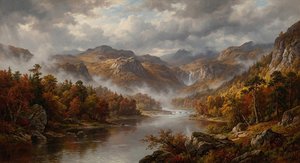
Hudson River School: Topp 10 mästerverk för ditt hem – Konst & Historia | OriginalUniqueArt.com
Upptäck de 10 mest ikoniska mästerverken från Hudson River School! Lär känna Thomas Cole, Frederic Church och andra amerikanska landskapsmålare. Köp högkvalitativa konsttryck & inred med storslagen naturkonst på OriginalUniqueArt.com.

Albert Bierstadt: Luminosity, Landscape & the American Ideal
Explore the breathtaking landscapes of Albert Bierstadt, master of the American West & a leading figure in the Hudson River School. Discover his luminous style and iconic paintings – a timeless investment for art lovers.
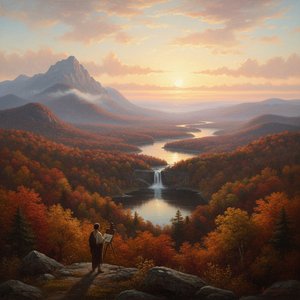
The Sublime Landscape: Exploring the Hudson River School Movement
Explore the captivating world of the Hudson River School! Discover the history, artists, and defining characteristics of this iconic American art movement. Learn about Romanticism's influence & find inspiration for your collection.
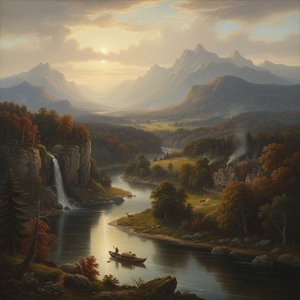
Capturing the American Spirit: A Journey Through Iconic Landscapes and the Legacy of the Hudson River School
Explore the profound beauty of American art history. From the Hudson River School to iconic landscapes, discover a curated journey through the masterpieces that defined a nation's spirit and the enduring legacy of American Romanticism.
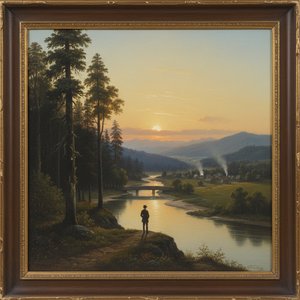
Robert Spencer: Luminism, Narrative & the American Landscape Tradition
Explore the captivating world of Luminism & the Hudson River School with our expert analysis. Discover the history, artists, and enduring beauty of 19th-century American landscape painting. Find museum-quality reproductions at OriginalUniqueArt.


