Gongbi Landscape · 1530
Handscroll (Qiu Ying, 1530)
Qiu Ying (1494–1552) skapade Handscroll. Den är från 1530. Det tillhör Gongbi Landscape-rörelsen. Den är utförd i Acrylic On Canvas. Verket finns bevarat på Metropolitan Museum of Art i New York, USA.
- 1530
- Acrylic On Canvas
- Metropolitan Museum of Art, New York

 Förhandsvisa

 Handmålad oljemålning
 Skicka
 Dela
 Faktablad för elever


 Ladda ner
 Liknande objekt
 Röntgen
 Bildspel
 Frågor och svar

 Statistik
Handscroll i korthet
- Titel
- Handscroll
- Konstnär
- Qiu Ying (1494–1552)
- Konstnär född i
- Taicang, Kina
- Datum
- 1530
- Material
- Acrylic On Canvas
- Utställningsplats
- Metropolitan Museum of Art, New York, USA
- Rörelse
- Gongbi Landscape
- Tidsperiod
- Late Medieval
- Motiv
- ming dynasty, landscape, scroll, qiu ying, luohans, chinese art
Vad föreställer Handscroll?
Qiu Ying’s “Up the River During Qingming”: A Masterpiece of Ming Dynasty Serenity
“Up the River During Qingming,” painted by Qiu Ying during the mid-16th century, is more than just a landscape; it's a carefully constructed meditation on harmony, leisure, and the enduring beauty of nature. Attributed to one of China’s Four Masters of the Ming Dynasty – alongside Shen Zhou, Tang Yin, and Wen Zhengming – this exquisite handscroll offers a rare glimpse into the refined aesthetic sensibilities of Suzhou during that era. The work, currently residing in the collection of the National Gallery of Canada, invites viewers into a tranquil scene brimming with subtle symbolism and masterful brushwork.
Qiu Ying’s artistic journey was remarkably unconventional for his time. Rather than pursuing formal training within established art circles, he began as a lacquer artisan, honing his skills in meticulous detail – a foundation that profoundly influenced the precision and control evident throughout “Up the River During Qingming.” This early experience instilled in him an unparalleled understanding of line and color, qualities he would later translate into his celebrated landscape paintings. His apprenticeship with Zhou Chen in Suzhou further solidified his technical abilities, exposing him to the techniques of the Wu School, known for its emphasis on ink washes and a more expressive approach to nature.
A Symphony of Detail: Technique and Style
The painting’s remarkable quality stems from Qiu Ying's mastery of the gongbi technique – a highly detailed, realistic style that was favored by court painters. Each element—from the meticulously rendered bamboo stalks to the delicate folds of the pavilions—is executed with painstaking precision, creating an illusion of incredible depth and texture. Notice the subtle gradations of color achieved through layering washes of ink and pigment; this creates a luminous quality that brings the scene to life. The composition is carefully balanced, drawing the eye across the landscape in a deliberate and engaging manner. The artist’s use of loose brushwork, particularly in depicting the distant mountains and flowing river, contrasts beautifully with the tightly controlled detail of the foreground elements, demonstrating Qiu Ying's versatility and his ability to seamlessly blend different artistic approaches.
Symbolism Woven into the Landscape
“Up the River During Qingming” is rich in symbolic meaning. The scene depicts a scholar leisurely enjoying a day by the river, surrounded by carefully arranged pavilions and gardens. This imagery reflects the Confucian ideals of scholarly pursuits, contemplation, and harmony with nature – values highly esteemed during the Ming Dynasty. The presence of the tavern and the farmer gathering water vegetables adds a touch of everyday life to the scene, reminding us that even amidst beauty and tranquility, human activity continues. The bamboo grove, a recurring motif in Chinese art, symbolizes resilience, integrity, and longevity—qualities admired in virtuous individuals. The distant mountains represent permanence and stability, while the flowing river embodies fluidity and change.
A Window into Ming Dynasty Culture
Beyond its aesthetic beauty, “Up the River During Qingming” offers a valuable insight into Ming Dynasty culture. It reflects the importance of gardens as spaces for contemplation, artistic expression, and social interaction. The lavish furnishings within the pavilions—including the exquisite celadon vase—demonstrate the wealth and sophistication of the era’s elite. The painting also reveals the influence of philosophical ideas, particularly those associated with Zhou Dunyi, whose “On the Love for the Lotus” inspired the scene's composition and symbolism. Qiu Ying’s ability to seamlessly integrate these diverse elements into a cohesive and harmonious whole is a testament to his artistic skill and cultural awareness.
Collecting a Legacy: Reproduction and Inspiration
Reproductions of “Up the River During Qingming” capture only a fraction of the painting's original impact. The subtle nuances of color, texture, and brushwork are difficult to replicate fully, but high-quality reproductions offer an accessible way to appreciate Qiu Ying’s artistry. This work serves as a powerful reminder of the enduring appeal of Chinese landscape painting—a genre that continues to inspire artists and captivate viewers with its beauty, symbolism, and profound sense of serenity.
Vilket museum har Handscroll?
Metropolitan Museum of Art
New York, USA
Ursprung och historia för Metropolitan Museum of Art Metropolitan Museum of Art föddes ur en vision som delades av en grupp affärsmän, finansmän samt ledande konstnärer och tänkare. Efter att institutionen bildades år 1870 sökte den efter ett permanent hem för att kunna hysa sina ständigt växande förvärv. Innan museet fann sin nuvarande plats hade det under en kort period vistats på Douglas Mansion-fastigheten på West 14th Street.


Högupplösta bilder av Handscroll

Allmän egendom: konstnären avled 1552.
Andra storlekar, beskärningar och källhänvisningar →Qiu Ying, Handscroll (1530), Metropolitan Museum of Art. Allmän egendom
Frågor om Handscroll besvarade
Var kan man se "Handscroll" av Qiu Ying utställd idag?
"Handscroll" av Qiu Ying visas på Metropolitan Museum of Art, New York, USA. Museilistan avser originalverket, inte reproduktioner.
När skapades "Handscroll"?
"Handscroll" av Qiu Ying skapades år 1530.
Vilket medium är "Handscroll" av Qiu Ying utförd i?
Qiu Ying använde tekniken Acrylic On Canvas för "Handscroll". Tekniken definierar det ursprungliga verkets materiella karaktär.
Vad föreställer "Handscroll" av Qiu Ying?
Teman som återfinns i "Handscroll" av Qiu Ying inkluderar ming dynasty, landscape, scroll, qiu ying, luohans, chinese art, gongbi. Tillsammans sammanfattar de verkets motiv.
Är "Handscroll" fri från upphovsrätt?
Upphovsrättslig status för "Handscroll" av Qiu Ying: verket är allmän egendom – upphovsrätten har löpt ut. Detta avgör om reproduktioner av bilden får framställas fritt.
Vem har skapat "Handscroll"?
"Handscroll" skapades av Qiu Ying. Informationen på denna sida beskriver Qiu Yings originalverk.
Vilken konststil tillhör "Handscroll" av Qiu Ying?
"Handscroll" av Qiu Ying tillhör Gongbi Landscape-rörelsen. Denna rörelse ger det stilistiska sammanhanget för verket.
Var i Qiu Yings karriär placerar sig "Handscroll"?
Inom Qiu Yings karriär tillhör "Handscroll" perioden Mid-16th Century. Denna fas underlättar jämförelser med konstnärens övriga verk.
Hur gammal var Qiu Ying när hen skapade "Handscroll"?
Qiu Ying var 36 år gammal när hen skapade "Handscroll" år 1530. Åldern är beräknad utifrån konstnärens födelseår, 1494.
Om konstnären, Qiu Ying
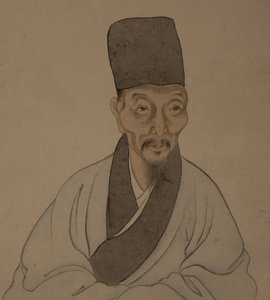
1494–1552, Kina
Qiu Ying
Ett liv format av penseldrag: Qiu Yings värld Född under ödmjuka omständigheter år 1494 i staden Taicang, nära dagens Jiangsu-provins, steg Qiu Ying fram för att bli en av Mingdynastins mest hyllade målare. Till skillnad från många av sin tids konstnärer, som gynnades av lärda uppväxtmiljöer och formell utbildning inom etablerade konstnärliga kretsar, var Qiu Yings väg anmärkningsvärt självgjord. Hans konstnärliga resa började inte genom traditionella kanaler, utan som lärling hos en lackkonstnär, där han förfinade sina färdigheter i detaljerat dekorativt arbete – en grund som skulle få ett djupt inflytande på den minutiösa precision som kännetecknar hans senare målningar. Denna tidiga erfarenhet gav honom en mästerlig kontroll över linje och färg, egenskaper som han senare skulle förfina under ledning av Zhou Chen i Suzhou, som under Mingperioden var ett sprudlande kulturellt nav.
Andra verk av Qiu Ying
 Up the River During Qingming1644
 Zhao Mengfu Writing the Heart (Hridaya) Sutra in Exchange for Tea1542
 Lady Su Hui and Her Verse Puzzle501
 The Seven sages of the bamboo grove1552

Essäer om Handscroll
 Understanding Chinese Painting: A Comparison of Gongbi and XieyiMaster the differences between Gongbi and Xieyi styles. Discover the history and techniques of Chinese ink painting now.
 25 Must-See Masterpieces at Berlin's Alte NationalgalerieExplore 25 iconic masterpieces from Berlin's Alte Nationalgalerie. From Romanticism to Impressionism, discover them all on OriginalUniqueAr…
 Understanding Chinese Art: Literati Painting and Song Academy PaintingMaster the distinction between Song Academy and Literati painting styles. Explore Chinese art history through expert analysis today.