

 Visa i rummet
 Skicka
 Dela
Dela
 Detaljer
 Studentguide för konstverk

 Ladda ner
 Liknande objekt
 Röntgen
 Bildspel
 Besökstatistik
Apollo Killing the Python
 Engraving
- Baroque Mannerism
 1589
1589 21.0 x 29.0 cm
 Los Angeles County Museum of Art
 Läs mer
Giclée / Konsttryck
Giclée- eller canvasprint av museumskvalitet med snabb produktion och flexibla ytbehandlingsalternativ. ( Köp handmålat konstverk Byt till digital bildförsäljning)




P118B Skr10

P118H Skr10

P118W Skr10

P438Z Skr10

P508JH Skr12

P508YH Skr12

P805H Skr10

P805Z Skr10

P919BZ Skr10

P919G Skr10

P919XJ Skr10

P959ZH Skr10

P968JZ Skr12

W106C Skr8

W218G Skr10

W218JH Skr8

W218Y Skr10

W307PJ Skr10

W316G Skr10

W316PJ Skr8

W316Y Skr10

W398PJ Skr8

W4111J Skr10

W500HY Skr15

W500JH Skr15

W692G Skr12

W849H Skr8

W940BG Skr15

W953PJ Skr8




Välj bland våra förinställda storlekar som motsvarar konstverkets ursprungliga proportioner.

Ange den bredd och höjd du behöver, för att passa din ram eller din vägg. Ett tryck kan endast beskäras, aldrig göras större än bilden, vilket innebär att ett format med en annan formform leder till att en del av bilden går förlorad. Vi skickar en digital mockup för godkännande innan vi trycker något. Bilden som visas på denna sida visar inte den faktiska beskärningen — det är endast mockuppen som gör det.
Leverans över hela världen () på 2 veckor istället för standard 4/5 veckor. (19 oktober)

Fri expressfrakt över hela världen

Högkvalitativ linnecanvas

Fullständig fraktförsäkring

Garantier för återbetalning av tullavgifter

Garantier för exakt färgåtergivning

100 dagars returrätt vid fabrikationsfel

100% pengarna tillbaka-garanti

Mängdrabatt erbjuds
 Glasalternativet är endast tillgängligt i storlekar under 110 cm.

Apollo Killing the Python
Giclée / Konsttryck
Reproduktionsstorlek
-


Totalpris
Skr 787
Hendrik Goltzius’s Apollo Killing the Python: A Masterpiece of Mannerist Drama
Apollo Killing the Python is more than just an image; it's a distillation of Renaissance mythology into a powerfully expressive engraving by Hendrik Goltzius, completed in 1589. This artwork stands as a testament to Goltzius’s innovative approach to printmaking and his ability to convey complex narratives with breathtaking visual clarity—a skill that cemented his place among the foremost artists of the Baroque era. The piece captures a pivotal moment from Ovid's Metamorphoses, depicting Apollo, god of music and poetry, engaged in a brutal confrontation with Python, representing primordial chaos and evil.- Composition & Style: Goltzius’s masterful use of perspective creates a dynamic scene that draws the viewer into the drama unfolding before them. The engraving adheres to the principles of Mannerism—a stylistic movement characterized by elongated figures, stylized poses, and dramatic contrasts of light and shadow—reflecting a desire to transcend realism and explore psychological states rather than simply depicting observable reality.
- Technique: Goltzius employed a technique known as ‘swelling line,’ which he developed himself, resulting in lines that appear thicker than they actually are. This method dramatically enhances the visual impact of the engraving, emphasizing contours and creating an illusion of depth—a hallmark of Baroque art. The meticulous detail achieved through hatching and shading contributes to the overall sense of realism despite the stylized figures.
- Symbolism: The confrontation between Apollo and Python carries profound symbolic weight. Apollo embodies reason, order, and divine authority, battling against the forces of darkness and irrationality. The serpent symbolizes primordial chaos, representing the struggle between good and evil that underlies all human experience. Goltzius’s depiction underscores the enduring themes of heroism, triumph over adversity, and the victory of intellect over instinct.
- Historical Context: Created during a period of artistic experimentation and intellectual ferment—the early Baroque—Apollo Killing the Python reflects the broader cultural anxieties surrounding religious reform and the burgeoning humanist spirit. Goltzius’s engraving aligns with the prevailing aesthetic sensibilities of the time, demonstrating an artist's engagement with contemporary philosophical ideas.
- Emotional Impact: The engraving evokes a palpable sense of tension and drama—a hallmark of Mannerist art. Goltzius skillfully captures the physicality of the struggle between gods and serpent, conveying both violence and nobility. The image resonates with viewers today due to its exploration of universal themes concerning conflict, resilience, and the pursuit of enlightenment.
Frågor och svar
Var kan jag köpa en digital bild av "Apollo Killing the Python" av Hendrik Goltzius?
"Apollo Killing the Python" finns tillgänglig som en högupplöst digital bildnedladdning, vilket kan köpas direkt på dess Digital bild-sida.
Vilket rum rekommenderas för "Apollo Killing the Python" av Hendrik Goltzius?
En reproduktion av "Apollo Killing the Python" passar bra i ett Living Room.
Är färgerna i "Apollo Killing the Python" av Hendrik Goltzius mättade eller dämpade?
Färgpaletten i "Apollo Killing the Python" har en mättnad på Muted.
Om konstnären
Early Life and Artistic Foundations
Hendrik Goltzius, en gestalt som präglade den tidiga barockens grafik i Nederländerna, föddes 1558 i Mühlbrecht, en by i Hertigdömet Jülich. Hans barndom var märkt av en fysisk utmaning – en missbildning i högerhanden som, paradoxalt nog, skulle bli hans största styrka och definiera hans unika stil. Familjen flyttade till Duisburg när han bara var tre år gammal, där han fick sin första utbildning inom måleri på glas under faderns ledning. Sedan, vid tonåren, sökte han sig till Dirck Volckertszoon Coornhert i Cleves, en respekterad gravör och konstnär, för att lära sig konsten av kopparstickning – ett hantverk som skulle bli hans livsverk. Denna tidiga utbildning lade grunden för hans framtida tekniska skicklighet och hans förmåga att kombinera precision med en djup känsla för komposition.Artistic Development and the Haarlem Period
År 1577 flyttade Goltzius tillsammans med Coornhert till Haarlem, en stad som var ett centrum för konst och handel under den tidiga holländska republiken. Här etablerade han sitt eget grafiska företag och började snabbt att göra sig ett namn. Hans tidiga verk präglades av en trogen efterbildning av mästare som Albrecht Dürer och Lucas van Leyden, vilket visade hans djupa respekt för traditionella tekniker. Men det var inte bara imitation; Goltzius utvecklade snart sin egen distinkta stil, karakteriserad av en dynamisk energi och ett överflöd av detaljer. Han blev också anlitad av Philip Galle för att skapa tryck av historien om Lucretia, vilket ytterligare stärkte hans rykte som en skicklig och eftertraktad konstnär.Technique and Innovation: The “Swelling Line”
Goltzius’s tekniska innovation låg i hans förmåga att manipulera burinen – verktyget för kopparstickning – på ett sätt som få andra hade lyckats med. Han utvecklade en teknik som kallas "swelling line", där linjerna blir tjockare eller tunnare beroende på trycket, vilket skapar en illusion av djup och volym. Detta, kombinerat med hans användning av “dot and lozenge” – små prickar placerade i lozenges för att ytterligare definiera tonen – gav hans verk en unik realism och ett dramatiskt uttryck. Hans tekniska skicklighet jämfördes ofta med den av Dürer, vilket vittnar om hans exceptionella förmåga att kontrollera burinen och skapa kraftfulla, dynamiska linjer.Influence and Legacy
Goltzius’s inflytande sträckte sig långt bortom Nederländerna. Hans verk inspirerade en hel generation av konstnärer, inklusive Jacques Bellange, och hans stil bidrog till att introducera stilen hos italienska mästare som Bartholomaeus Spranger och Annibale Carracci till den nordliga nederländska konsten. Han var också en pionjär inom porträttgravyr, där han utmärkte sig genom sin förmåga att fånga subjektets personlighet och karaktär med stor precision. Hans verk finns idag i museer över hela Europa, inklusive Nationalmuseum i Stockholm, Rijksmuseum i Amsterdam och Metropolitan Museum of Art i New York. Goltzius’s arv lever vidare i hans mästerliga tryck och målningar, som fortsätter att fascinera och inspirera konstintresserade världen över. Hans unika stil och tekniska skicklighet har lämnat ett bestående avtryck på konsten och hans verk är en viktig del av den europeiska konsthistorien.
Hendrik Goltzius
1558 - 1617 , Tyskland
Snabbfakta
- Artistic Movement Or Style: Nordlig Mannerism & Barocktryck
- Artists Or Movements Influenced By This Artist: ['Jacques Bellange']
- Artists Who Influenced This Artist: ['Dirck Coornhert']
- Date Of Birth: Jan/Feb 1558
- Date Of Death: 1 jan 1617
- Full Name: Hendrik Goltzius
- Nationality: Nederländsk
- Notable Artworks:
- Jupiter
- Minerva
- Profeten Baruch
- Place Of Birth: Braunschweig, Italien
Relaterade artiklar

Chiaroscuro and Character: A Definitive Guide to Light and Shadow in the Dutch Baroque Era
Explore the dramatic mastery of the Dutch Baroque era. Discover how masters like Rembrandt used chiaroscuro to transform everyday life into timeless art. An expert guide for collectors and enthusiasts seeking to understand the profound interplay of light and shadow.
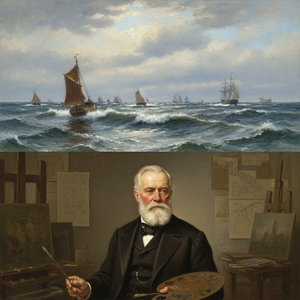
Hendrik Willem Mesdag: Pioneering Impressionism & the Dutch Maritime Tradition
Explore the life & work of Hendrik Willem Mesdag, a pioneer of Dutch Impressionism and leading figure of the Hague School. Discover his captivating seascapes and the immersive Panorama Mesdag – a true masterpiece.

Golden Light & Dutch Skies: The Timeless Magic of Dutch Golden Age Landscapes
Discover the breathtaking beauty of Dutch Golden Age landscapes. Explore the mastery of light, chiaroscuro, and 17th-century realism through an expert art history lens, celebrating the enduring legacy of the Dutch Masters for discerning collectors and art lovers.
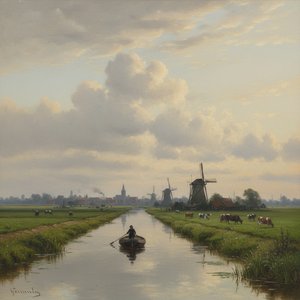
Johan Hendrik Weissenbruch: Capturing Dutch Light & Atmosphere – A Master of Realism
Discover Johan Hendrik Weissenbruch (1824-1903), a leading Dutch Hague School painter renowned for his atmospheric watercolours & oil landscapes. Explore his beautiful depictions of the Dutch countryside and skies – a master of light & detail.

Hendrick Goltzius: Master Engraver & the Flourishing of Dutch Mannerism
Explore the life & art of Hendrick Goltzius, a master engraver of Dutch Mannerism. Discover his innovative techniques, iconic engravings like 'Jahel', and lasting influence on Baroque art. Learn about collecting Goltzius today.

