Baroque · 1611
Still Life with Nuts, Candy and Flowers (Clara Peeters, 1611)
Clara Peeters (1587–1657) skapade Still Life with Nuts, Candy and Flowers. Den är från 1611. Det tillhör Baroque-rörelsen. Den är utförd i Oil On Panel. Verket finns bevarat på Museo del Prado i Madrid, Spanien. Måtten är 52 × 73 cm.
- 1611
- Oil On Panel
- 52 × 73 cm
- Museo del Prado, Madrid

 Förhandsvisa

 Handmålad oljemålning
 Skicka
 Dela
 Faktablad för elever


 Ladda ner
 Liknande objekt
 Röntgen
 Bildspel
 Frågor och svar

 Statistik
Still Life with Nuts, Candy and Flowers i korthet
- Titel
- Still Life with Nuts, Candy and Flowers
- Konstnär
- Clara Peeters (1587–1657)
- Konstnär född i
- Antwerpen, Belgien
- Datum
- 1611
- Material
- Oil On Panel
- Mått
- 52 × 73 cm
- Utställningsplats
- Museo del Prado, Madrid, Spanien
- Rörelse
- Baroque
- Tidsperiod
- Early Modern
- Motiv
- food, flowers, fruit, bowl, candlelight, luxury
Vad föreställer Still Life with Nuts, Candy and Flowers?
A Sensory Feast: The Opulence of Clara Peeters
In the quiet intimacy of a seventeenth-century tabletop, Clara Peeters invites us into a world where the mundane is elevated to the magnificent. Still Life with Nuts, Candy and Flowers is not merely a depiction of food; it is a masterclass in sensory storytelling. As one gazes upon this 1611 masterpiece, the eye is immediately drawn to the lush, tactile abundance of the arrangement. Polished bowls overflow with an assortment of nuts, while delicate candies and vibrant fruits—apples and oranges—rest alongside elegant glassware. There is a profound sense of weight and texture here; one can almost feel the rough shell of a walnut against the smooth, cool surface of a silver platter or the delicate, ephemeral softness of a flower petal. Peeters captures a moment of suspended animation, where the sweetness of life is presented in all its colorful, decadent glory.
The painting serves as a breathtaking window into the Baroque era, a period defined by its dramatic flair and intense realism. Moving away from the rigid, geometric constraints of earlier Mannerist traditions, Peeters embraces an asymmetrical composition that feels organic and alive. This deliberate lack of strict symmetry creates a dynamic energy, guiding the viewer’s gaze in a wandering, exploratory path across the table. The interplay of light and shadow—the hallmark of the Baroque style—is utilized with surgical precision. Light dances across the sheen of polished metal and the translucent skin of fruit, while deep, velvety shadows provide a sense of depth and mystery, grounding the vibrant colors in a space that feels both tangible and atmospheric.
Technique and the Art of Observation
To behold this work is to witness the extraordinary technical prowess of a true pioneer. Executed with oil on panel, Peeters employed sophisticated glazing techniques to build layers of luminous color, allowing light to penetrate the paint and reflect from within, much like the natural glow of ripe fruit. Her ability to render different materials—the glint of a wine glass, the matte surface of a nut, the organic texture of a potted plant—demonstrates an obsessive devotion to verisimilitude. Every brushstroke is subservient to the goal of absolute realism, making this piece a triumph of observational skill. For the collector or interior designer, such a work offers more than just decoration; it provides a focal point of profound complexity that rewards prolonged contemplation.
Beyond its physical beauty, the painting whispers of deeper, more contemplative themes. In the tradition of the Dutch ontbijtjes (breakfast pieces), such arrangements often functioned as subtle meditations on the fleeting nature of pleasure and the passage of time. The abundance of the feast stands in a delicate balance with the inherent fragility of the flowers and the perishable nature of the food. This tension between abundance and decay creates an emotional resonance that transcends the centuries, offering a poignant reminder to cherish the sensory richness of the present moment. It is this marriage of exquisite craftsmanship and soulful depth that makes Peeters’ vision an enduring inspiration for those seeking to bring a sense of history, elegance, and narrative weight into a contemporary space.
Vilket museum har Still Life with Nuts, Candy and Flowers?
Museo del Prado
Madrid, Spanien
Museo del Prados historia Ursprunget till Museo del Prado är djupt sammanflätat med den spanska kungliga samlingen och sträcker sig tillbaka till 1700-talet. Det som en gång tog sin början som en vision för ett naturhistoriskt kabinett under Ferdinand VII, kom så småningom att transformeras till ett heligt fristad för måleri och skulptur. Denna förvandling omvandlade ett vetenskapligt projekt till ett arkiv för den spanska kronans mest betydelsefulla skatter.


Högupplösta bilder av Still Life with Nuts, Candy and Flowers

Allmän egendom: konstnären avled 1657.
Andra storlekar, beskärningar och källhänvisningar →Clara Peeters, Still Life with Nuts, Candy and Flowers (1611).
Clara Peeters (1587–1657), Still Life with Nuts, Candy and Flowers, 1611, oil on panel, Museo del Prado, Madrid, Spanien. Allmän egendom Bild: OriginalUniqueArt.com.
Frågor om Still Life with Nuts, Candy and Flowers besvarade
Vilket museum har originalet till "Still Life with Nuts, Candy and Flowers"?
"Still Life with Nuts, Candy and Flowers" av Clara Peeters visas på Museo del Prado, Madrid, Spanien. Museilistan avser originalverket, inte reproduktioner.
När skapades "Still Life with Nuts, Candy and Flowers"?
"Still Life with Nuts, Candy and Flowers" av Clara Peeters skapades år 1611.
Vilket medium är "Still Life with Nuts, Candy and Flowers" av Clara Peeters utförd i?
"Still Life with Nuts, Candy and Flowers" av Clara Peeters är utförd i Oil On Panel. Reproduktionerna strävar efter att återge teknikens särpräglade utseende.
Vilka är de faktiska måtten på "Still Life with Nuts, Candy and Flowers" av Clara Peeters?
"Still Life with Nuts, Candy and Flowers" mäter 52 x 73 cm i sin originalform. Originalmåtten är en bra referens när du väljer storlek på en reproduktion.
Vad föreställer "Still Life with Nuts, Candy and Flowers" av Clara Peeters?
Teman som återfinns i "Still Life with Nuts, Candy and Flowers" av Clara Peeters inkluderar food, flowers, fruit, bowl, candlelight, luxury, texture, composition. Tillsammans sammanfattar de verkets motiv.
Är "Still Life with Nuts, Candy and Flowers" fri från upphovsrätt?
Upphovsrättslig status för "Still Life with Nuts, Candy and Flowers" av Clara Peeters: verket är allmän egendom – upphovsrätten har löpt ut. Detta avgör om reproduktioner av bilden får framställas fritt.
Vilken konstnär tillskrivs "Still Life with Nuts, Candy and Flowers"?
Konstnären bakom "Still Life with Nuts, Candy and Flowers" är Clara Peeters. Verket är katalogiserat under Clara Peeterss namn.
Vilken stil tillhör "Still Life with Nuts, Candy and Flowers"?
Konststilen som förknippas med "Still Life with Nuts, Candy and Flowers" av Clara Peeters är Baroque. Denna klassificering placerar verket bland relaterade konstnärer och konstverk.
Var i Clara Peeterss karriär placerar sig "Still Life with Nuts, Candy and Flowers"?
"Still Life with Nuts, Candy and Flowers" representerar Clara Peeterss Mature Period.
Om konstnären, Clara Peeters

1587–1657, Belgien
Clara Peeters
Clara Peeters: En pionjär inom nederländskt stilleben Clara Peeters (1594–efter 1657) framstår som en unik gestalt inom det sjuttonde århundradets flamländska konst – en av de tidigaste erkända kvinnliga målarna som verkade under den blomstrande nederländska guldåldern. Trots de samhälleliga begränsningar som allvarligt hindrade kvinnors tillgång till konstnärlig utbildning och medlemskap i skråväsendet, lyckades Peeters skapa en anmärkningsvärd karriär. Hon lämnade efter sig ett oeuvre präglat av minutiös detaljrikedom, innovativa kompositionsstrategier och en fascination för att fånga vardagslivets texturer och nyanser – i synnerhet matens rika estetik. Hennes arv fortsätter att inspirera både forskare och konstnärer när de brottas med frågor kring hennes identitet, utbildning och den gåtfulla naturen hos hennes konstnärliga produktion.
Andra verk av Clara Peeters
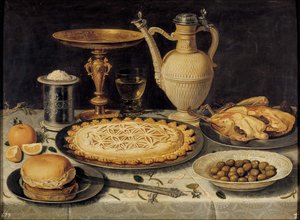 Table with Orange, Olives and Pie1611
 Still Life with Cheeses, Artichoke, and Cherries1625
 Madonna And Child Within A Floral Wreath1621
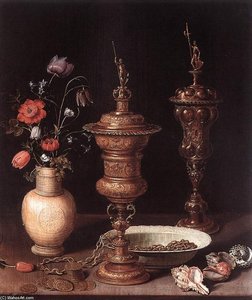 Still-Life with Flowers and Goblets1612

Essäer om Still Life with Nuts, Candy and Flowers
 Luminous Vessels: The Transcendent Art of the Bottle in Impressionist Still LifeExplore how Impressionist masters captured light through glass and bottles. Discover the magic of light and texture today.
 18th century Dutch paintersJan van Huysum completed Flowers and Fruit in 1723. Compare his botanical precision with the maritime works of Willem van de Velde the Youn…
 Master of Abundance: The Top 25 Essential Artworks by Frans SnydersBorn in 1579, Snyders trained under Pieter Brueghel the Younger. Count the twenty-five works that define his Baroque mastery of texture and…