Meny
KOSTNADSFRI KONSTRÅDGIVNING
PreviewPreview Köp tryck Köp tryckKöp högupplöst digital bild Köp högupplöst digital bild SkickaSkicka
Visa detaljerVisa detaljer Lägg till i favoriter Lägg till i favoriter Ladda nerLadda ner Liknande objektLiknande objekt RöntgenRöntgen BildspelBildspel

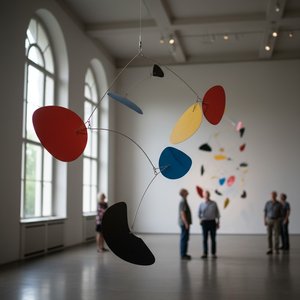
Red Mobile

Experience 'Red Mobile' by Alexander Calder – a dynamic 1930s kinetic sculpture! Explore its vibrant red triangles & biomorphic design. A unique, captivating art piece.

"sv_meta_description": "Alexander Calder, en banbrytande skulptör känd för sina dynamiska mobiler och monumental arkitektur som Philadelphia City Hall. Hans son och barnbarn är också framstående konstnärer."

Handgjord oljereproduktion

Handmålad olja på duk i din valda storlek och ram, tillverkad efter beställning av våra konstnärer.

P118B $10
P118H $10
P118W $10
P438Z $10
P508JH $12
P508YH $12
P805H $10
P805Z $10
P919BZ $10
P919G $10
P919XJ $10
P959ZH $10
P968JZ $12
W106C $8
W218G $10
W218JH $8
W218Y $10
W307PJ $10
W316G $10
W316PJ $8
W316Y $10
W398PJ $8
W4111J $10
W500HY $15
W500JH $15
W692G $12
W849H $8
W940BG $15
W953PJ $8

Standard
custom
CM
INCH

Välj bland våra förinställda storlekar som motsvarar konstverkets ursprungliga proportioner.

bredd
höjd

Du kan ange egna mått för att passa en specifik ram eller yta. Om den valda storleken inte matchar originalbildens proportioner kommer vi antingen att beskära konstverket eller utöka målningen med ytterligare handmålade element. En digital skiss skickas till dig för godkännande innan produktionen påbörjas.

Observera att förhandsvisningen på skärmen inte återspeglar den faktiska beskärningen eller utökningen. Endast skissen visar den slutgiltiga kompositionen korrekt.
Även om anpassade storlekar är möjliga, rekommenderar vi att du väljer en dimension från den fördefinierade listan för att bevara originalproportionerna.

Exempel på vad som kan ändras: Byt ut ansiktet mot ett foto av kunden; Lägg till ett husdjur (t.ex. byt ut en katt mot en hund); Inkludera ett dolt meddelande i bakgrunden; Ändra bakgrundens landskap eller element.
Efter beställning kommer OriginalUniqueArt.com team att mejla kunden för instruktioner och tillhandahålla en skissförhandsvisning

Leverans över hela världen () på 3–4 veckor istället för standard 5 veckor. (24 juli). Inga kompromisser med kvaliteten.

why_choose_icon
Fri expressfrakt över hela världen
why_choose_icon
Högkvalitativ linnecanvas
why_choose_icon
Fullständig fraktförsäkring
why_choose_icon
Garantier för återbetalning av tullavgifter
why_choose_icon
Garantier för exakt färgåtergivning
why_choose_icon
60 dagars returrätt (endast vid fabrikationsfel)
why_choose_icon
100% pengarna tillbaka-garanti
why_choose_icon
Mängdrabatt erbjuds

Totalpris

-

reproduction

Red Mobile

Teknik för reproduktion

Storlek på reproduktion

-

Slutgiltigt pris

-

Beskrivning av konstverket

Between the 1920s and ‘30s, Calder regularly made long study and work trips to Paris, where he began to participate in the Abstraction-Création group. Finally, in 1932, at the Galleria Vignon – owned by Marie Cuttolì, an avant-garde collector – he exhibited for the first time, presenting thirty mobile works that were to pave the way for other mobiles to come. Fifteen of these were operated artificially by motors and others were composed of naturally oscillating parts. Later constructions often had supports or were suspended in the air, and were normally composed of painted metal sheets joined by a metal skeleton of slender veins and stems. Apparently it was Marcel Duchamp, on a visit to the exhibition by his American friend, who gave their name to these graceful, floating structures, which could catch the slightest change in the breeze, in stark contrast to the basic characteristics of traditional sculpture - gravity and stability. The Parisian context and close interest of the avant-guard led to the mechanical and biomorphic nature of these works being associated with the organic motifs of the surrealist painting and sculpture of Jean Mirò and Jean Arp. The Dadaist legacy of interest in movement, better still if unpredictable and casual in its effects and forms, which Calder combined with a preference for abstract and heavily stylised language, was stimulated by attention towards primitive cultures, which for the artist essentially meant the ethnic heritage of Native Americans, encountered while wandering around the United States in his youth. These influences spawned abstract anatomies, like this large Red Mobile, always in movement with a calculated balance, aimed at creating a visual equivalent of the harmonious yet unpredictable activity of nature.

Konstnärsbiografi

Introduction to Alexander Milne Calder

Alexander Milne Calder (MILL-nee) was a Scottish American sculptor born in Aberdeen, Scotland on August 23, 1846. He is best known for his architectural sculpture of Philadelphia City Hall and both his son, Alexander Stirling Calder, and grandson, Alexander ‘sandy’ Calder, became significant sculptors in the 20th century.

Early Life and Education

Calder was born into a family steeped in artistic tradition. His father, Alexander Stirling Calder, was also a sculptor, and his grandfather, Alexander Milne Calder, had immigrated to Philadelphia in 1868 and is renowned for the colossal statue of William Penn atop Philadelphia City Hall’s tower. Calder attended the Royal Academy in Edinburgh and studied with John Rhind, honing his skills in stone carving from a young age. He traveled extensively, immersing himself in Parisian artistic circles and gaining inspiration from Impressionism and Symbolism. His formal education included studies at South Kensington School and the Pennsylvania Academy of Fine Arts where he learned alongside Thomas Eakins, absorbing techniques and perspectives that would inform his later work.

Career Highlights

Calder’s breakthrough came with his commission for Philadelphia City Hall in 1872. Recognizing the immense challenge posed by creating over 250 pieces of marble and bronze—a project spanning two decades—he assembled a dedicated team to realize his vision. This monumental undertaking cemented his reputation as an architectural sculptor, demonstrating unparalleled precision and artistic ambition. He continued to sculpt for many years after City Hall, producing works that celebrated both grandeur and subtlety. Calder’s son, Alexander Stirling Calder, followed in his father's footsteps, becoming a prominent sculptor himself, and his grandson, Alexander ‘sandy’ Calder, further expanded the family legacy within the realm of modern art.

Legacy and Influence

Calder’s sculptures stand as testaments to his unwavering commitment to artistic innovation. His mobiles—kinetic sculptures incorporating suspended metal discs—revolutionized sculpture in the mid-20th century, introducing a dynamic element previously absent from traditional forms. Calder's work profoundly impacted subsequent generations of artists, establishing him as a pivotal figure in the history of abstraction and influencing movements like Surrealism. Today, his creations reside in museums worldwide, ensuring that his artistic vision continues to inspire awe and contemplation.

Notable Works

Some of Alexander Milne Calder’s most celebrated pieces include:
  • Philadelphia City Hall: A commission that demanded meticulous planning and execution, resulting in a breathtaking architectural sculpture featuring 250 bronze and marble elements.
  • William Penn Statue: Standing atop Philadelphia City Hall's tower, this monumental statue embodies the spirit of American idealism and commemorates Pennsylvania’s founding father.
  • Indian Figure: Calder’s sculptural exploration of indigenous culture reflects his fascination with natural forms and geometric abstraction.
  • South Portal and West Portal: Illuminated with colored lights, these portals within City Hall showcase Calder's masterful attention to detail and his ability to transform architectural spaces into immersive artistic experiences.
Alexander Milne Calder

Alexander Milne Calder

1898 - 1976 , Storbritannien

Kortfattad information

  • Artistic Movement Or Style: Architectural sculpture
  • Artists Who Influenced This Artist: ['John Rhind']
  • Date Of Birth: August 23, 1846
  • Date Of Death: June 14, 1923
  • Full Name: Alexander Milne Calder
  • Nationality: Scottish-American
  • Notable Artworks:
    • Philadelphia City Hall
    • William Penn statue
  • Place Of Birth: Aberdeen, Scotland
Utforska konstverk organiserade efter teman, stilar och egenskaper.