Wifredo Lam: ett porträtt av konstnären
Wifredo Lam (1902-1982) – A Crossroads of Cultures
Wifredo Óscar de la Concepción Lam y Castilla, known simply as Wifredo Lam, was a painter who embodied the complexities of cultural identity in the 20th century. Born in Sagua La Grande, Cuba, in 1902, his very lineage spoke to the island’s layered history – a father descended from Chinese immigrants and a mother tracing her roots back to Spanish conquistadors and enslaved Africans. This multicultural heritage wasn't merely biographical detail; it became the wellspring of his artistic vision, fueling a unique style that fused European modernism with Afro-Cuban spirituality and symbolism. Lam’s early life was marked by an initial pursuit of law in Havana, but even amidst legal studies, he found himself drawn to the natural world, spending time at the botanical gardens – a foreshadowing of the organic forms that would later dominate his canvases. Formal artistic training followed at the Escuela de Bellas Artes in Havana and then in Madrid under Fernando Álvarez de Sotomayor y Zaragoza, where he absorbed traditional techniques while simultaneously beginning to question their limitations.
Early Life and Influences
Lam’s formative years were shaped by a profound awareness of his family’s heritage. His father, Enrique Lam-Yam, was a Chinese immigrant from Canton (Guangdong province) who arrived in Cuba as part of the late-19th-century wave of Chinese laborers and merchants. Enrique instilled in Wifredo a fascination with Eastern aesthetics and philosophy—a connection that would resonate throughout his artistic career. Simultaneously, Ana Serafina Catilla, Lam’s mother, descended from Spanish conquistadors and enslaved Africans, grounding him in the traditions and beliefs of Cuba’s Afro-Caribbean communities. This dual heritage instilled within him an acute sensitivity to cultural differences and a desire to explore themes of identity and displacement—themes that would become central to his artistic explorations. His childhood experiences at Sagua La Grande, surrounded by vibrant flora and fauna, profoundly influenced his visual vocabulary, establishing a connection with the natural world that would continue to inform his work throughout his life.
A pivotal encounter occurred when Lam enrolled in the Academy of Fine Arts in Madrid—a decision that propelled him into contact with the intellectual currents of European modernism. Under Fernando Álvarez de Sotomayor y Zaragoza’s tutelage, he honed his skills in traditional painting techniques while simultaneously grappling with the limitations of academic conventions. He was particularly captivated by the monumental canvases of Velázquez and Goya, artists who tackled complex social and political issues with unflinching honesty—influences that would shape Lam’s own artistic commitment to confronting uncomfortable truths. However, it wasn't solely his formal training that propelled him toward innovation; his visits to the Prado Museum ignited a passion for Surrealism and its exploration of the subconscious mind. The fantastical imagery of Hieronymus Bosch and Pieter Bruegel the Elder—artists who populated their paintings with grotesque creatures and unsettling visions—deepened Lam’s fascination with symbolism and allegory, shaping his artistic approach for decades to come.
European Encounters and Artistic Transformation
Lam’s time in Spain proved transformative, fostering a burgeoning friendship with Pablo Picasso—a connection that would fundamentally reshape his artistic trajectory. Picasso recognized Lam’s talent and introduced him to fellow artists and intellectuals who championed avant-garde experimentation—including André Breton, Joan Miró, Óscar Domínguez, and Benjamin Péret. This encounter exposed Lam to the radical ideas of Surrealism, encouraging him to embrace automatism and explore dreamlike imagery as a means of accessing deeper levels of consciousness. The influence of Matisse’s bold color palettes and simplified forms further broadened Lam’s artistic horizons—inspiring him to abandon traditional realism in favor of expressive abstraction. During this period, Lam actively participated in the Republican resistance against Franco’s dictatorship, designing anti-fascist posters and working in a munitions factory—experiences that fueled his conviction in social justice and informed his evolving artistic language.
The Jungle: A Synthesis of Influences
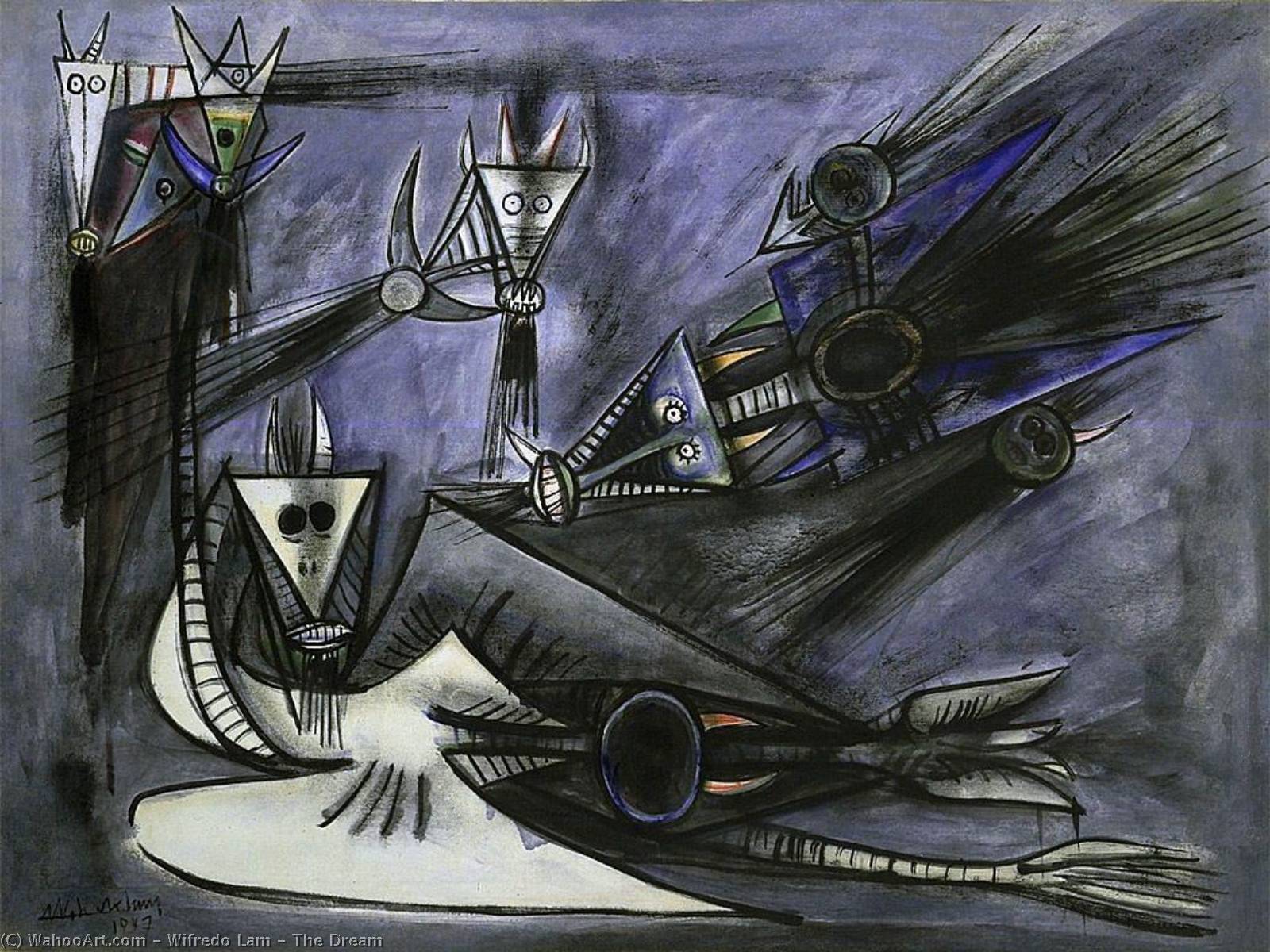
Lam’s magnum opus, *La Jungla* (1943), stands as the culmination of these influences—a monumental oil painting on kraft paper that embodies the artist's singular vision. Created during his exile in Martinique and Cuba amidst the turmoil of World War II, *La Jungla* is not merely a depiction of a tropical landscape; it’s a complex allegory of colonial oppression, cultural hybridity, and spiritual awakening—themes that resonated deeply with Lam’s worldview. The painting's densely populated canvas teems with fragmented figures—human, animal, and vegetal forms intertwined in a chaotic yet strangely harmonious composition. These are not merely representations of bodies but embodiments of forces, spirits, and memories—a visual language rooted in both Cubist fragmentation and Surrealist dreamlike imagery. Lam’s masterful use of color—bold greens, reds, and oranges that evoke the vibrancy of the Caribbean isles—further enhances the painting's expressive power. The monumental scale of *La Jungla* underscores Lam’s ambition to confront grand narratives of history and culture—a testament to his artistic conviction in challenging dominant perspectives and celebrating the richness of diverse traditions.
## Legacy and Recognition
Wifredo Lam died on September 11, 1982, in Paris, aged 79—leaving behind a legacy as one of the most important artists of the 20th century. His work continues to inspire generations of artists across disciplines—from painting to sculpture to printmaking—demonstrating his enduring influence on contemporary art history. Lam’s unwavering commitment to exploring themes of identity, spirituality, and resistance—coupled with his masterful synthesis of European modernism and Afro-Cuban heritage—solidifies his place as a pivotal figure in understanding the global artistic landscape. His paintings are not merely aesthetically pleasing objects; they are visual statements—acts of decolonization that confront uncomfortable truths and celebrate the complexities of cultural exchange. Lam’s contribution to art history is undeniable, securing his position as an artist who dared to reimagine the boundaries of representation and forge a pathbreaking aesthetic language that transcends temporal limitations.