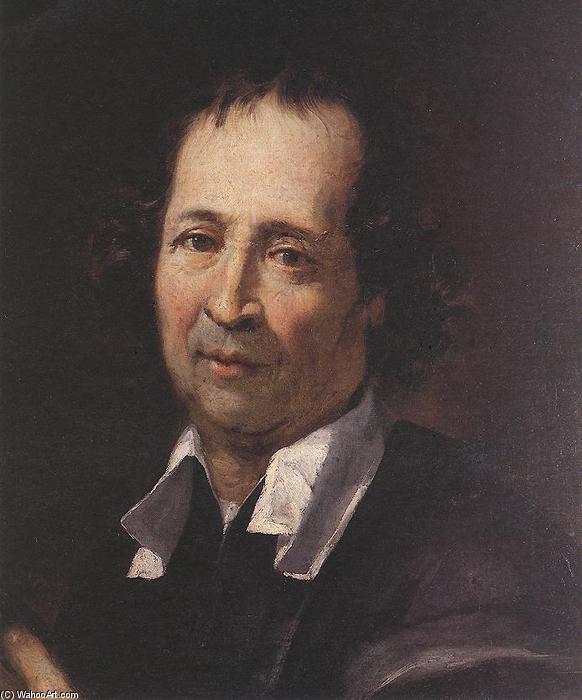
Porträtt av Pierre Puget

De 70 mest kända målningarna av Pierre Puget, ett galleriselektion

Uppdaterad november 2026 · rangordnad efter vår popularitetspoäng (sökningar, besök och beställningar för varje verk) · 77 verk av Pierre Puget i vår katalog

Kortfattat

Av alla originalverk som Pierre Puget lämnade efter sig är det mest kända The Meeting of Alexander the Great and Diogenes (1671), i samlingen hos Louvre, Paris. Tätt efter följer Milo of Croton (1671) och The Meeting of Alexander the Great and Diogenes (1671). Vår katalog innehåller 77 verk av Pierre Puget; galleriet har bevarat de 70 som världen beundrar mest, var och en presenterad med sitt datum, sitt museum och sin historia.

1620 – 1694, Marseille Baroque period Flest verk: Louvre

Pierre Pugets 10 främsta målningar: galleriets utvalda verk

1
The Meeting of Alexander the Great and Diogenes (1671) av Pierre Puget

The Meeting of Alexander the Great and Diogenes

1671 · Marble · Louvre, Paris

In the hallowed halls of art history, few encounters possess the dramatic tension found in Pierre Puget’s 1671 masterpiece, The Meeting of Alexander the Great and Diogenes. This monumental sculpture is far more than a mere historical reconstruction; it is a breathtaking theatrical performance frozen in marble. At its heart lies a profound confrontation between two opposing worlds: the boundless, imperial ambition of Alexander the Great and the radical, ascetic…

2
Milo of Croton (1671) av Pierre Puget

Milo of Croton

1671 · Marble · Louvre, Paris

In the hallowed halls of the Louvre Museum, one figure commands the space with a visceral, breathtaking intensity that transcends the cold stillness of marble. Pierre Puget’s Milo of Croton is not merely a sculpture; it is a profound psychological drama frozen in time. Completed between 1671 and 1682, this monumental work serves as a cornerstone of the Baroque era, capturing a moment where physical prowess meets unbearable suffering. The…

3
The Meeting of Alexander the Great and Diogenes (1671) av Pierre Puget

The Meeting of Alexander the Great and Diogenes

1671 · Sculpture · Louvre, Paris

In the hallowed halls of the Musée du Louvre, there exists a moment frozen in time, a theatrical confrontation that transcends the boundaries of mere sculpture to become a profound meditation on human existence. Pierre Puget’s 1671 masterpiece, The Meeting of Alexander the Great and Diogenes, is not simply a depiction of two historical figures; it is a breathtaking performance captured in alabaster. The work brings us face-to-face with the…

4
Selvporträtt (1668) av Pierre Puget

Selvporträtt

1668 · Olja på duk · Musée Granet, Aix-en-Provence

Pierre Puget och Självporträttet – Ett Möte mellan Emotion och Klassisk Teknik Bakgrund och Tidsepok Pierre Puget (1620–1694) var en mångsidig konstnär från Marseille, vars verk präglades av både målning och skulptur. Han föddes i arbetarklassen och fick tidigt kontakt med träsnidskonst – ett hantverk som skulle komma att vara grundläggande för hans senare konstnärliga utveckling. Puget arbetade främst under den svenska Baroktiden (ca 1640–1700), en period präglad av dramatik,…

5
View on the Sea (1670) av Pierre Puget

View on the Sea

1670 · Acrylic On Canvas · Louvre, Paris

Pierre Puget's "View on the Sea," created around 1670, isn’t merely a depiction of three ships navigating a hazy horizon; it’s a meticulously crafted tableau brimming with Baroque drama and an intimate understanding of human scale. Born in Marseille during a period of intense maritime activity, Puget’s life was inextricably linked to the sea – initially as a craftsman shaping the hulls of galleys, later as a celebrated sculptor, architect,…

6
Byst av Ung August av Pierre Puget

Byst av Ung August

Marmor · Museo di Sant'Agostino, Genua

The Bust of Young August emerges from the stone as a vivid presence, a portrait bust that captures the essence of a leader in his prime. Created by the sculptor Pierre Puget, this work presents the young emperor Augustus, who ruled from 63 BC to 14 AD. The figure gazes out with a sense of quiet authority, frozen in a moment of youthful nobility that defies the passing of centuries.

7
Hercules Standing (1660) av Pierre Puget

Hercules Standing

1660 · Terracotta · Staatliche Museen zu Berlin, Berlin

In Hercules Standing, Pierre Puget presents the legendary hero of Greek mythology through a lens of physical power and controlled movement. Created about 1660, the sculpture focuses on the attributes for which the figure is most recognized: immense strength and prowess. Rather than a static representation, the subject is captured in a dynamic contrapposto pose, where the weight shifts onto one leg while the other remains relaxed, creating a sense…

8
David Gazing at Goliath's Head (1671) av Pierre Puget

David Gazing at Goliath's Head

1671 · Oil · Musée de la civilisation, Quebec City

In this Baroque oil painting from 1671, a youthful, muscular man sits on the left side of the composition. He is draped in heavy blue fabric that falls in deep folds across his lap, where a layer of fur provides a textural contrast to his skin. His body is positioned in a way that emphasizes anatomical detail, particularly in the torso and limbs. To his right, resting upon a rough…

9
Great Vessel of War (1670) av Pierre Puget

Great Vessel of War

1670 · Ink On Paper · Musée Bonnat, Bayonne

The Great Vessel of War emerges from the shadows of history, a detailed illustration that captures a massive 17th-century warship amidst the churning sea. Created by Pierre Puget in 1670, this work presents a moment of maritime power and intricate naval architecture. The ship dominates the view, its complex rigging and heavy wooden hull rendered with a precision that brings the vessel to life. It exists as a silent witness…

10
Two Vessels under Sail (1674) av Pierre Puget

Two Vessels under Sail

1674 · Ink On Paper · Musée Bonnat, Bayonne

A monochrome study of maritime movement, this work captures two sailing vessels navigating a choppy sea. The composition is oriented horizontally, emphasizing the length of the hulls as they cut through the water. A primary ship dominates the central foreground, its rigging and sails rendered with meticulous detail, while a second vessel trails behind to the left. In the lower right corner, a smaller boat with figures provides a sense…

Urvalet av Pierre Puget fortsätter, 11 till 70

11Perseus and Andromeda (1678) av Pierre PugetPerseus and Andromeda1678 · Louvre 12Christ Dying on the Cross av Pierre PugetChrist Dying on the CrossLouvre 13La Ravissement d av Pierre PugetLa Ravissement dDetroit Institute of Arts 14Door of the Hôtel de Ville at Toulon (1656) av Pierre PugetDoor of the Hôtel de Ville at Toulon1656 · Musée Navale 15Ship at Marseille (1651) av Pierre PugetShip at Marseille1651 · Musée des Beaux-Arts de Marseille 16Portrait of the Artist's Mother (1651) av Pierre PugetPortrait of the Artist's Mother1651 · Private collection 17The Visitation (1659) av Pierre PugetThe Visitation1659 · Musée Granet 18The Holy Family at the Palm-tree (1662) av Pierre PugetThe Holy Family at the Palm-tree1662 · Private collection 19Navigation before a Promontory (1680) av Pierre PugetNavigation before a Promontory1680 · Musée des Beaux-Arts 20Perseus and Andromeda (1678) av Pierre PugetPerseus and Andromeda1678 · Louvre 21Stening av Sankt Peter (1654) av Pierre PugetStening av Sankt Peter1654 · Musée des Beaux-Arts de Marseille 22Achilles utbildning av Chiron (1690) av Pierre PugetAchilles utbildning av Chiron1690 · Musée des Beaux-Arts de Marseille 23St Sebastian av Pierre PugetSt Sebastian 24Homer av Pierre PugetHomer 25Blessed Alessandro Sauli av Pierre PugetBlessed Alessandro Sauli 26Self portrait Marble av Pierre PugetSelf portrait Marble 27Philosopher av Pierre PugetPhilosopherBavarian State Painting Collections 28Immaculate Conception av Pierre PugetImmaculate Conception 29Milon de Crotone detail av Pierre PugetMilon de Crotone detail 30The Rape of Helen of Troy av Pierre PugetThe Rape of Helen of Troy 31Atlas from the door of the Hôtel de Ville at Toulon av Pierre PugetAtlas from the door of the Hôtel de Ville at Toulon 32View of the harbor of Toulon av Pierre PugetView of the harbor of Toulon 33Virgin of the Immaculate Conception av Pierre PugetVirgin of the Immaculate Conception 34Milo of Croton (detail) av Pierre PugetMilo of Croton (detail) 35Assumption of the Virgin av Pierre PugetAssumption of the Virgin 36Design for the decoration of a Warship av Pierre PugetDesign for the decoration of a Warship 37Louis XIV av Pierre PugetLouis XIV 38Hercules at Rest (detail) av Pierre PugetHercules at Rest (detail) 39Le baptême de Clovis av Pierre PugetLe baptême de Clovis 40LE BAPTEME DE CONSTANTIN av Pierre PugetLE BAPTEME DE CONSTANTIN 41LE SOMMEIL DE L'ENFANT JESUS av Pierre PugetLE SOMMEIL DE L'ENFANT JESUS 42LA VIERGE APPRENANT A LIRE A L'ENFANT JESUS av Pierre PugetLA VIERGE APPRENANT A LIRE A L'ENFANT JESUS 43Milo of Croton av Pierre PugetMilo of Croton 44View of a port with a facade and a trophy of arms av Pierre PugetView of a port with a facade and a trophy of arms 45Galley and two ships sailing on av Pierre PugetGalley and two ships sailing on 46Cannon fire at the port of Antibes av Pierre PugetCannon fire at the port of Antibes 47A Frigate at Sea av Pierre PugetA Frigate at SeaHet Scheepvaartmuseum 48Design for a Tabernacle av Pierre PugetDesign for a Tabernacle 49Hercules at Rest (1661) av Pierre PugetHercules at Rest1661 · Louvre 50Mediterranean Port with Men o' War av Pierre PugetMediterranean Port with Men o' WarGovernment Art Collection 51Arm av Pierre PugetArm 52Virgin and Child av Pierre PugetVirgin and Child 53Vessel Firing a Salvo av Pierre PugetVessel Firing a Salvo 54Sea view av Pierre PugetSea view 55Alessandro Sauli av Pierre PugetAlessandro Sauli 56A big storm on the sea av Pierre PugetA big storm on the sea 57The Sacrifice of Noah av Pierre PugetThe Sacrifice of Noah 58St Peter Holding the Key of the Paradise av Pierre PugetSt Peter Holding the Key of the Paradise 59The faun terracotta av Pierre PugetThe faun terracotta 60Hercules at Rest av Pierre PugetHercules at Rest 61Three vessels with the brands of their dignity av Pierre PugetThree vessels with the brands of their dignity 62The Faun (detail) av Pierre PugetThe Faun (detail)Musée des Beaux-Arts de Marseille 63Door of the Hôtel de Ville at Toulon av Pierre PugetDoor of the Hôtel de Ville at Toulon 64Salvator Mundi av Pierre PugetSalvator Mundi 65The Visitation (detail) av Pierre PugetThe Visitation (detail) 66The Faun av Pierre PugetThe FaunMusée des Beaux-Arts de Marseille 67Self-portrait in Old Age av Pierre PugetSelf-portrait in Old Age 68Study of a Horse av Pierre PugetStudy of a HorseMusée des Beaux-Arts de Marseille 69Virgin Giving the Scapular to St Simon Stock av Pierre PugetVirgin Giving the Scapular to St Simon StockMusée des Beaux-Arts de Marseille 70Bust of Marcus Aurelius av Pierre PugetBust of Marcus AureliusMuseo di Sant'Agostino

Pierre Pugets berömda målningar, period för period

Motiven som fångade Pierre Pugets blick

De fyra motiv som återkommer oftast i dessa originalverk, var och ett med sitt främsta exempel.

Museerna som förvarar Pierre Pugets originalverk

De 8 museer som innehar flest av målningarna på denna sida.

Museum Stad Verk av Pierre Puget Målningar från denna lista
Louvre, ParisLouvre Paris 8 The Meeting of Alexander the Great and Diogenes, Milo of Croton, The Meeting of Alexander the Great and Diogenes
Musée des Beaux-Arts de Marseille, MarseilleMusée des Beaux-Arts de Marseille Marseille 7 Ship at Marseille, Stening av Sankt Peter, Achilles utbildning av Chiron
Musée Granet, Aix-en-ProvenceMusée Granet Aix-en-Provence 2 Selvporträtt, The Visitation
Museo di Sant'Agostino, GenuaMuseo di Sant'Agostino Genua 2 Byst av Ung August, Bust of Marcus Aurelius
Musée Bonnat, BayonneMusée Bonnat Bayonne 2 Great Vessel of War, Two Vessels under Sail
Staatliche Museen zu Berlin, BerlinStaatliche Museen zu Berlin Berlin 1 Hercules Standing
Musée de la civilisation, Quebec CityMusée de la civilisation Quebec City 1 David Gazing at Goliath's Head
Detroit Institute of Arts, DetroitDetroit Institute of Arts Detroit 1 La Ravissement d

Pierre Puget decennium för decennium: originalen som definierar varje era

Verk per decennium

Välj ett decennium för att se originalverket som definierar det.

Samlarfrågor om Pierre Pugets målningar

Vilket verk är Pierre Puget mest känd för?Visa svaret

The Meeting of Alexander the Great and Diogenes (1671), Louvre, Paris. Milo of Croton (1671) och The Meeting of Alexander the Great and Diogenes (1671) följer efter.

Hur gammal var Pierre Puget när The Meeting of Alexander the Great and Diogenes skapades?Visa svaret

51 år gammal: The Meeting of Alexander the Great and Diogenes är från 1671, och Pierre Puget föddes 1620.

Vilka är de tio mest kända målningarna av Pierre Puget?Visa svaret

The Meeting of Alexander the Great and Diogenes, Milo of Croton, The Meeting of Alexander the Great and Diogenes, Selvporträtt, View on the Sea, Byst av Ung August, Hercules Standing, David Gazing at Goliath's Head, Great Vessel of War och Two Vessels under Sail. Rankingen ovan visar varje verks årtal och museum.

Hur många målningar lämnade Pierre Puget efter sig?Visa svaret

Vår katalog innehåller 77 verk av Pierre Puget, daterade från 1651 till 1690.

I vilka museer hänger Pierre Pugets mästerverk?Visa svaret

Främst i Louvre (Paris), Musée des Beaux-Arts de Marseille (Marseille) och Musée Granet (Aix-en-Provence). Museitabellen ovan listar alla.

Under vilka år målade Pierre Puget sina mest kända verk?Visa svaret

Under 1670s: 9 av de 70 verk som finns på denna sida skapades då, varav The Meeting of Alexander the Great and Diogenes.

Vilka är de första och sista kända originalverken av Pierre Puget?Visa svaret

På den här sidan är det tidigaste Ship at Marseille (1651) och det senaste Achilles utbildning av Chiron (1690).

Vilka motiv valde Pierre Puget oftast?Visa svaret

Sculpture (7), Classical art (5) och Mythology (5), fördelat på 70 verk på denna sida.

Vilken teknik använde Pierre Puget mest?Visa svaret

Marble, för 5 av de 70 verk som finns på denna sida.

Vilken konstinriktning tillhör Pierre Puget?Visa svaret

Baroque period, om man dömer efter originalen på denna sida.

Vilka verk av Pierre Puget finns utställda på Louvre?Visa svaret

The Meeting of Alexander the Great and Diogenes, Milo of Croton och The Meeting of Alexander the Great and Diogenes: Louvre, Paris har 8 av verken på denna sida.

Pierre Puget: liv och verk

Pierre Puget: Ett liv i konst och ingenjörskonst

  • Född: Marseille, Frankrike (1620)
  • Död: 1694

Tidigt liv och italienska influenser

  • Lärlingskap: Puget påbörjade sin karriär vid fjorton års ålder, då han skar ut ornament för galärer som byggdes i Marseille. Denna tidiga exponering för hantverk lade grunden för hans senare konstnärliga strävanden.
  • Resan till Italien (1640): I sökandet efter nya möjligheter reste han till Italien, först till Livorno och sedan till Florens, där han förfinade sina färdigheter som träsnidare och målare.
  • Rom och Pietro da Cortona: Ett avgörande ögonblick infann sig när han fick arbeta under ledning av Pietro da Cortona i Rom. Puget medverkade i måleriet av de praktfulla taken i Palazzo Barberini och Palazzo Pitti, och sög åt sig dynamiken och storslagenheten i den romerska barockkonsten.
  • Återkomsten till Marseille (1643): Efter tre år i Italien återvände han till Marseille, bärande på en förfinad konstnärlig känsla formad av de italienska mästarna.

Huvudverk och konstnärlig utveckling

  • Tidiga uppdrag: Vid sin återkomst mottog Puget beställningar för målningar och altartavlor, vilket uppvisade en utvecklande stil influerad av Annibale Carracci och Rubens.
  • Skulpturala genombrott: Han fokuserade alltmer på skulptur och skapade verk som medaljongerna på aktern av franska krigsfartyg, vilket visade en växande behärskning av form och detaljrikedom.
  • Vaux-le-Vicomte (1660-talet): Nicolas Fouquet gav Puget i uppdrag att skulptera Herkules för sitt slott i Vaux-le-Vicomte, vilket markerade en betydelsefull punkt i hans karriär och demonstrerade de mäktiga personernas beskydd.
  • Genua-perioden: Efter Fouquets fall flyttade Puget till Genua, där han skapade anmärkningsvärda verk såsom ”Hercule Gaulois” (Louvren) och skulpturer för kyrkor som Santa Maria di Carignano.
  • Uppdrag i Versailles: Colbert förde tillbaka Puget till Frankrike, vilket ledde till uppdrag för Versailles, inklusive de berömda grupperna ”Milo av Kroton” och ”Perseus och Andromeda”. Dessa verk kännetecknas av sin dramatiska intensitet och expressiva realism.

Stil och influenser

  • Barockens drama: Pugets stil är djupt rotad i barocktraditionen, med ett fokus på rörelse, känsla och teatralitet.
  • Klassisk inspiration: Samtidigt som han omfamnade barockens dynamik, uppvisar hans arbete även en uppskattning för klassiska former och ideal.
  • Michelangelo och Bernini: Hans skulpturer visar spår av Michelangelos kraftfulla figurer och Berninis dynamiska kompositioner.
  • Unikt uttryck: Trots dessa influenser utvecklade Puget en särpräglad stil märkt av rå energi och expressiv intensitet, vilket skiljde honom från mer konventionella barockkonstnärer.

Arv och historisk betydelse

  • Brobyggare mellan konst och ingenjörskonst: Pugets förmåga att sömlöst förena konstnärlig talang med ingenjörsmässiga färdigheter var unik. Hans arbete inom skeppsarkitektur och befästningar uppvisar en praktisk uppfinningsrikedom sida vid sida med hans konstnärliga prestationer.
  • Ett plågat geni: Théophile Gautier beskrev honom berömt som ”fångarnas melankoliska kejsare”, vilket speglar den intensitet och de möjliga strider som fanns i hans kreativa process.
  • Bestående inflytande: Pugets skulpturer, särskilt ”Milo av Kroton” och ”Perseus och Andromeda”, förblir ikoniska exempel på fransk barockskulptur, beundrade för sin uttrycksfulla kraft och tekniska virtuositet.
  • Erkännande idag: Hans verk hyllas i museer över hela världen, inklusive Louvren och Musée des Beaux-Arts de Marseille, vilket befäster hans plats som en betydelsefull gestalt i konsthistorien.