Ukratko
Od svih originala koje je William Lamb Picknell ostavio, najpoznatiji je The Grand Canal With San Giorgio Maggiore (1875), koji se nalazi u kolekciji New Britain Museum of American Art, New Britain. Odmah za njima slede Spring in Pont Aven (1874) i A French Garden, Provence (1878). Naš katalog sadrži 22 dela umetnika William Lamb Picknell; galerija je čuvala 21 dela koja svet najviše admira, od kojih je svako prikazano sa svojim datumom, muzejom i pričom.
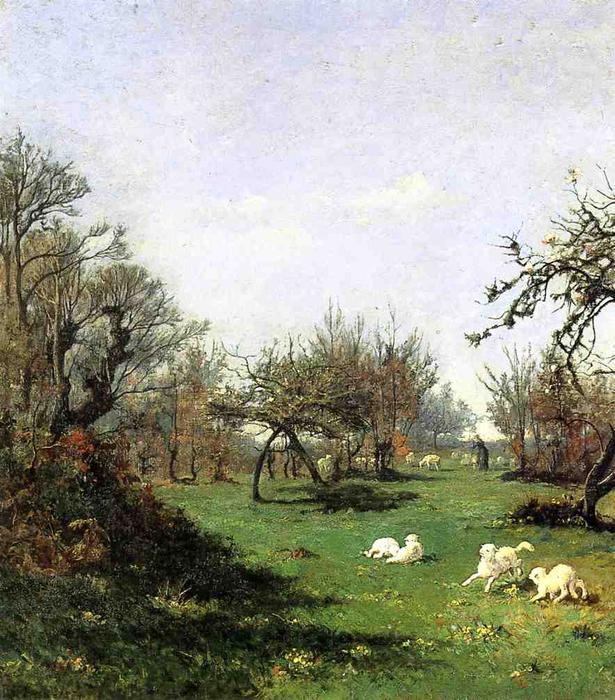
Top 10 slika umetnika William Lamb Picknell: izbor galerije
Izbor umetnika William Lamb Picknell se nastavlja, od 11 do 21
Motivi koji su privlačili pažnju William Lamb Picknell
Četiri teme koje se najčešće ponavljaju u ovim originalima, svaka sa svojim vrhunskim primerom.
Muzeji u kojima se čuvaju originalna dela umetnika William Lamb Picknell
7 muzeja u kojima se nalazi najviše slika sa ove stranice.
| Muzej | Grad | Radovi umetnika William Lamb Picknell | Slike iz ovog spiska |
|---|---|---|---|
| Boston | 2 | Sand Dunes of Essex, Massachusetts, Morning on the Loing at Moret | |
| Kembriđ | 2 | Springtide, Springtime, Antibes | |
| New Britain | 1 | The Grand Canal With San Giorgio Maggiore | |
| Klivlend | 1 | Pointe de Cabellou, Brittany | |
| Vašington, D.C. | 1 | Cottage by the Sea | |
| Phoenix | 1 | Annisquam, Massachusetts | |
| Њујорк | 1 | Banks of the Loing |
William Lamb Picknell deceniju po deceniju: original koji definiše svaku od njih
Radovi po decenijama
Izaberite deceniju da biste videli original koji je definiše.
Pitanja kolekcionara o slikama umetnika William Lamb Picknell
Po kojem delu je William Lamb Picknell najpoznatiji/a?Otkrij odgovor
The Grand Canal With San Giorgio Maggiore (1875), New Britain Museum of American Art, New Britain. Slede Spring in Pont Aven (1874) i A French Garden, Provence (1878).
Koliko je godina imao/la William Lamb Picknell kada je nastalo delo The Grand Canal With San Giorgio Maggiore?Otkrij odgovor
22 godina: The Grand Canal With San Giorgio Maggiore datira iz 1875, a William Lamb Picknell je rođen/a 1853.
Koja su deset najpoznatijih slika umetnika William Lamb Picknell?Otkrij odgovor
The Grand Canal With San Giorgio Maggiore, Spring in Pont Aven, A French Garden, Provence, Pointe de Cabellou, Brittany, Cottage by the Sea, Annisquam, Massachusetts, Sand Dunes of Essex, Massachusetts, On the Borders of the Marsh, Solitude i Wingaersheek Creek Beach, Gloucester, Massachusetts. Gornji rang pokazuje godinu i muzej za svako od njih.
Koliko je slika ostavio William Lamb Picknell?Otkrij odgovor
Naš katalog sadrži 22 dela umetnika William Lamb Picknell, datiranih od 1874 do 1895.
U kojim muzejima se nalaze remek-dela umetnika William Lamb Picknell?Otkrij odgovor
Većinom u Muzej finih umetnosti u Bostonu (Boston), Harvard Art Museums (Kembriđ) i New Britain Museum of American Art (New Britain). Tabela muzeja iznad sadrži njih sve.
U kojim godinama je William Lamb Picknell naslikao svoja najpoznatija dela?Otkrij odgovor
U 1880s: 7 od 21 dela na ovoj stranici nastalo je tada, od čega je Pointe de Cabellou, Brittany.
Koja su prva i poslednja čuvena originalna dela umetnika William Lamb Picknell?Otkrij odgovor
Na ovoj stranici, najstarije delo je iz Spring in Pont Aven (1874), a najnovije iz Morning on the Loing at Moret (1895).
Koje je motive William Lamb Picknell najčešće birao/la?Otkrij odgovor
Usa (3) i Landscape (3), kroz svih 21 dela na ovoj stranici.
Čija se dela umetnika William Lamb Picknell nalaze u Muzej finih umetnosti u Bostonu?Otkrij odgovor
Sand Dunes of Essex, Massachusetts i Morning on the Loing at Moret: Muzej finih umetnosti u Bostonu, Boston čuva 2 dela sa ove stranice.
William Lamb Picknell: život i delo
A Life Immersed in Light and Landscape
William Lamb Picknell, born in the quiet Vermont countryside of Hinesburg in 1853, emerged as a significant, though often understated, voice within the evolving landscape of late nineteenth-century American painting. His story is one of artistic pilgrimage, blending rigorous academic training with an increasingly Impressionistic sensibility—a synthesis that allowed him to capture not merely the *appearance* of nature, but its fleeting moods and atmospheric nuances. Picknell’s early life was steeped in New England values; his father, a Baptist minister, instilled a sense of moral grounding that would subtly inform his artistic vision. The family's relocation to Chelsea, Massachusetts following the Reverend Picknell’s death in 1868 proved pivotal, bringing young William into proximity with Boston’s burgeoning art scene and providing him with practical experience working in a frame shop—a formative period where he developed an appreciation for the presentation and detail inherent in artistic creation. This hands-on beginning laid the groundwork for his formal pursuit of painting.European Influences and Artistic Development
In 1872, Picknell embarked on a journey that would irrevocably shape his artistic trajectory: a voyage to Europe. Like many ambitious American artists of the era, he sought advanced training in the established art centers of the continent. His studies with Jean-Léon Gérôme in Rome from 1874 to 1875 provided him with a solid foundation in academic principles—a mastery of composition and technique that would remain evident throughout his career. However, it was an informal mentorship with Robert Wylie in Brittany, France, that truly ignited Picknell’s passion for *plein air* painting. Wylie encouraged direct observation of nature, urging his students to capture the immediacy of light and atmosphere—a radical departure from the studio-bound traditions of academic art. This exposure proved transformative, fostering a desire within Picknell to translate the ephemeral qualities of the natural world onto canvas with speed and sensitivity. His style began to evolve, moving away from strict realism towards a more expressive interpretation of landscape. He became known for his rapid brushwork, a direct response to the challenge of capturing fleeting moments of light and weather before they vanished.A Transatlantic Life: New England & France
The 1880s saw Picknell establish himself as a working artist, primarily residing in Waltham, Massachusetts while maintaining a constant connection to Europe through frequent travels. He journeyed extensively throughout the United States—from the rugged coastlines of Florida and California to the serene landscapes of New England—and spent extended periods in England, absorbing diverse influences and honing his skills. However, it was his discovery of Moret-sur-Loing in the 1890s that proved particularly significant. This picturesque village on the edge of the Forest of Fontainebleau, a haven for Impressionist masters like Sisley and Monet, provided Picknell with an environment perfectly suited to his artistic sensibilities. Immersed in the French landscape, he refined his Impressionistic approach, focusing on capturing the subtle nuances of light and color that defined the region. He continued to seek warmer climates during the winter months, venturing south into France, always returning to Moret-sur-Loing when spring arrived. This transatlantic existence—a life divided between the familiar landscapes of New England and the vibrant artistic community of France—became a defining characteristic of Picknell’s career. Sadly, he returned to Massachusetts in 1897 and passed away later that same year, cutting short a promising trajectory.Themes, Achievements & Legacy
Picknell's oeuvre is characterized by several recurring themes: the majestic beauty of New England landscapes, the dramatic allure of coastal scenes—particularly those along the Massachusetts shoreline—and an unwavering commitment to *plein air* painting. He excelled at depicting the interplay of light and shadow, conveying mood through a masterful use of color and brushwork. His major achievement lies in his ability to synthesize academic rigor with Impressionistic principles, creating paintings that are both technically proficient and emotionally evocative. While he may not be as widely recognized as some of his contemporaries, Picknell’s work offers a valuable glimpse into the artistic landscape of late nineteenth-century America—a period of transition and experimentation. He represents a crucial link between traditional painting styles and the burgeoning Impressionist movement, demonstrating how European trends were adopted and adapted by American artists during this transformative era. His dedication to capturing the immediacy of experience, his sensitivity to atmospheric effects, and his ability to imbue his landscapes with a sense of poetic beauty solidify his place as a notable artist of his time. Picknell’s legacy continues to resonate today, offering viewers a window into a world where light, color, and emotion converge in harmonious expression.Major Works
- Morning on the Loing at Moret (1895): A quintessential example of Picknell’s Impressionistic style, capturing the serene beauty of the French countryside.
- On the Borders of the Marsh: Demonstrates his skill in depicting atmospheric effects and subtle color variations.
- A French Garden, Provence: Showcases his ability to capture the vibrant light and colors of the Mediterranean landscape.
- The Road to Concarneau (1880): The painting that brought him recognition at the Paris Salon.


