


1

The Death of Cato of Utica
The Death of Cato of Utica is an oil on canvas by Jean-Paul Laurens. Created about 1863, the work measures 158 x 204 cms.

Ažurirano: новембар 2026 · rangirano prema našem koeficijentu popularnosti (pretrage, posete i porudžbine za svako delo) · 81 dela Žan-Pol Loren u našem katalogu
Ukratko
Iz perspektive galerije, najpoznatije delo umetnika Žan-Pol Loren je The Death of Cato of Utica. The Last Moments of Maximilian (1882) i The Judgment of Pope Formosus (1870) čine triju koju svako oko prepoznaje. Od 81 dela umetnika Žan-Pol Loren u našem katalogu, galerija u nastavku predstavlja 78 najpoznatijih dela, od kojih je svako originalno, sa navedenom godinom nastanka, muzejom i onim što ga čini jedinstvenim.
The Death of Cato of Utica is an oil on canvas by Jean-Paul Laurens. Created about 1863, the work measures 158 x 204 cms.

The air in the painting feels heavy, thick with the scent of dust and impending silence. A man kneels, his posture a quiet surrender to the inevitable. He is Maximilian, the Emperor of Mexico, caught in the fragile space between life and the end. His head is bowed low, a gesture of profound resignation that avoids the gaze of his executioners. Beside him, the presence of a priest offers a…

The Judgment of Pope Formosus is an oil on canvas painting by Jean-Paul Laurens. Created about 1870, the work captures a heavy ecclesiastical trial. The scene focuses on a moment of judgment, where the weight of religious law meets the stillness of a courtroom. A single, sharp accusation hangs in the air like dust in a shaft of light.

In this work, titled The Cardinal, Jean-Paul Laurens presents a somber and dignified academic portrait. Created about 1874, the painting focuses on an elderly man dressed in ecclesiastical attire. The subject is captured in a moment of quiet contemplation, absorbed in the act of reading a letter. This singular focus on the man's introspection provides a sense of historical weight to the composition.

The air feels heavy and still in this somber oil sketch. A Merovingian woman stands as the central pillar of the composition, her head tilted upward toward a light that remains unseen, as if she is searching for a sign or a divine presence. Her expression carries a weight of longing or perhaps a quiet apprehension that pulls at the viewer. Beside her, the scene unfolds with a delicate, melancholic…

To look upon this preparatory sketch is to witness the quiet, intense labor of a mind preparing for a monumental task. Created in 1876, this work functions as a structural blueprint for a larger mural, organized through a series of architectural panels. Four fluted Corinthian columns divide the composition, creating a rhythmic, frontal perspective that mimics the interior of a sacred space. The palette is restrained, relying on earthy tones,…

A Victim of the Borgia is an oil on canvas work by the French painter and sculptor Jean-Paul Laurens. Executed about 1875, the painting belongs to the French Academic style, a movement Laurens helped define during the final flowering of the tradition. The piece captures a somber moment of aftermath following a crime, suggesting themes of betrayal and political intrigue characteristic of the Borgia era.

A single arm reaches upward, a white-cuffed limb cutting through a heavy, dark atmosphere. The magistrate’s hand grips the hilt of a sword, a sudden vertical line against the shadows. Light strikes the powdered wig and the crisp folds of the cravat, turning the fabric into a bright, sharp memory amidst the gloom. The brushwork is hurried and thick, leaving the texture of the oil visible on the surface. It…

The gaze falls upon the Detail Sketch for the Hôtel de Ville de Paris: The Steel Vault, Silhouette of the Marquis de Lafayette, a work that captures a singular moment of historical presence. This portrait sketch, rendered by the hand of Jean-Paul Laurens, presents the Marquis de Lafayette in a quiet, profile view. The figure emerges from the shadows of history, caught in a stillness that feels heavy with the…

A single figure emerges from a heavy, charcoal darkness, caught in a moment of profound tension. The man stands in profile, his silhouette defined by the soft, directional light that sweeps across his form from the upper left. He wears the heavy, draped cloak of a man of importance, a garment that falls in thick, textured folds over his shoulder, while a flash of bright red hose provides a startling…
 The Last Moments of Maximilian, Emperor of Mexico
12
 The Death of Baudin1902 · Musée Victor Hugo
13
 L'attente1900 · Musée Des Beaux Arts
14
 La Musique (also known as Hommage à Beethoven)1902
15
 La Délivrance des emmurés de Carcassonne1879 · Musée d'Orsay
16
 The Security Committee of the City of Paris and the Department of the Seine, during the war of 1914-19181918 · Muzej Carnavalet
17
 The Parting of King Robert and Bertha1883 · Philadelphia Museum of Art
18
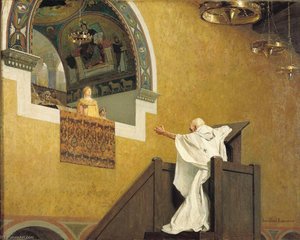 Saint John Chrysostom and the Empress Eudoxia
19
 Columbus before IsabellaYale University Art Gallery
20
 Excommunication of Robert the Pious in 9981875
21
 The Walls of the Holy Office1883 · Musée des Augustins
22
 Tales of Merovingian Times: A Slave1883 · Petit Palais
23
 The Late Empire Honorius1880 · Chrysler Museum of Art
24
 Proclamation of the Republic on February 24, 18481902 · Petit Palais
25
 FaustRio Grande do Sul Museum of Art
26
 Portrait présumé de Mme Daguerre
27
 Faust sitting
28
 The garden
29
 Margaret buried by the angelNational Museum of Art, Architecture and Design
30
 The archangel Raphael and Mephistopheles
31
 Medieval figures on a ballustrade
32
 Medieval figures on a balcony, with boats in the distance
33
 Head Study
34
 Project for the steel vault at the Hotel de Ville, Paris
35
 Study for the Excommunication of Robert the Pious
36
 The Judgement of Chilperic
37
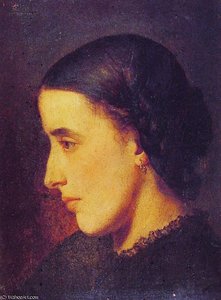 Portrait de Madeleine Villemsens
38
 Madame John Paul Laurens, born Madeleine Willemsens
39
 Death of Saint Genevieve
40
 The expectation of a Merovingian queen
41
 Project for the ceiling of the Odeon Theatre
42
 Unknown
43
 The Late Empire Honorius
44
 The Cardinal
45
 La solitude
46
 Portrait de Rodin
47
 Pope Formosa and Stephen VII
48
 The Excommunication of Robert the Pious in 998
49
 LE DUC D'ENGHIEN DANS LES FOSSES DE VINCENNESMusée Condé
50
 Le pape et l'InquisiteurMusée Bonnat-Helleu
51
 The Old Savant or The Alchemist
52
 Répudiation de la reine Berthe
53
 Portrait of a womanPetit Palais
54
 Un conseiller au parlement
55
 Le pape Formose et Etienne VIIMusée d'Arts de Nantes
56
 L'agitateur du Languedoc
57
 L'excommunication de Robert le Pieux
58
 Portrait of JeanPierre Laurens
59
 The Judgement of Chilperic1881 · Ashmolean Museum of Art and Archaeology
60
 Emperor Maximilian of Mexico before the ExecutionErmitaž
61
 Autoportrait
62
 The Death of the Duc d'Enghien
63
 The Late Empire: HonoriusChrysler Museum of Art
64
 Study of horse and rider
65
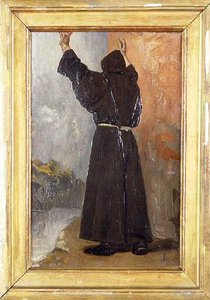 Moine prêchant
66
 The interdict
67
 Barques au pied d'une falaise en Normandie
68
 LExcommunication de Robert le Pieux
69
 Funerailles de Guillaume le ConquerantMusee des Beaux-Arts
70
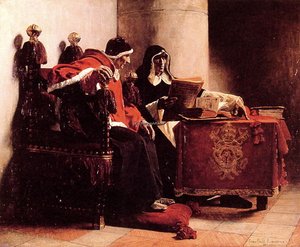 The Pope and the Inquisitor, known as Sixtus IV and Torquema
71
 Portrait of Rodin
72
 A Soldier
73
 LAgitateur du LanguedocMusée des Augustins
74
 The Excommunication of Robert the Pious1875 · Musée d'Orsay
75
 Les otagesMuzej lepih umetnosti u Lionu
76
 La Mort de Tibere
77
 Mort de Caton d'UtiqueMusée des Augustins
78
 Saint Jean Chrysostome et l'imperatrice EudoxieMusée des Augustins
Četiri teme koje se najčešće ponavljaju u ovim originalima, svaka sa svojim vrhunskim primerom.
8 muzeja u kojima se nalazi najviše slika sa ove stranice.
| Muzej | Grad | Radovi umetnika Žan-Pol Loren | Slike iz ovog spiska |
|---|---|---|---|
 Petit Palais |
Pariz | 11 | The Judgment of Pope Formosus, The Cardinal, Detail Sketch for the Panthéon: Merovingian Woman and Two Children |
 Musée des Augustins |
Tuluz | 4 | The Walls of the Holy Office, LAgitateur du Languedoc, Mort de Caton d'Utique |
 Musée d'Orsay |
Pariz | 2 | La Délivrance des emmurés de Carcassonne, The Excommunication of Robert the Pious |
 Chrysler Museum of Art |
Norfolk | 2 | The Late Empire Honorius, The Late Empire: Honorius |
 Musée Victor Hugo |
Pariz | 1 | The Death of Baudin |
 Musée Des Beaux Arts |
Mulhaus | 1 | L'attente |
 Muzej Carnavalet |
Pariz | 1 | The Security Committee of the City of Paris and the Department of the Seine, during the war of 1914-1918 |
 Philadelphia Museum of Art |
Filadelfija | 1 | The Parting of King Robert and Bertha |
Izaberite deceniju da biste videli original koji je definiše.
The Judgment of Pope Formosus is an oil on canvas painting by Jean-Paul Laurens. Created about 1870, the work captures a heavy ecclesiastical trial. The scene focuses on a moment of judgment, where the weight of religious law meets the stillness of a courtroom. A single, sharp accusation hangs in the air like dust in a shaft of light.
The air in the painting feels heavy, thick with the scent of dust and impending silence. A man kneels, his posture a quiet surrender to the inevitable. He is Maximilian, the Emperor of Mexico, caught in the fragile space between life and the end. His head is bowed low, a gesture of profound resignation that avoids the gaze of his executioners. Beside him, the presence of a priest offers a…

The composition centers on a man in a dark frock coat, his body contorted in a moment of acute distress. He stands atop a broken yellow carriage, a position that lends a sense of instability to the entire scene. A tricolor sash—red, white, and blue—cuts through the somber, dark tones of his attire, drawing the eye to the center of the upheaval. The low-angle perspective forces the viewer to look…

The scene captures a moment of intense deliberation within a formal committee session. Men are gathered around a large, green-clothed table, their forms arranged to suggest a structured, organized meeting. The atmosphere is somber, defined by the gravity of the wartime context. Shadows fall across the room, cast by a light source from the left, highlighting the focused expressions and gestures of the participants. This is a study of governance…
The Death of Cato of Utica. Slede The Last Moments of Maximilian (1882) i The Judgment of Pope Formosus (1870).
The Death of Cato of Utica, The Last Moments of Maximilian, The Judgment of Pope Formosus, The Cardinal, Detail Sketch for the Panthéon: Merovingian Woman and Two Children, Sketch for the Panthéon: The Death of Saint Genevieve, A Victim of the Borgia, Detail Sketch for the Hôtel de Ville de Paris: The Steel Vault, Figure of a Parisian Magistrate with Raised Arm, Holding a Sword, Detail Sketch for the Hôtel de Ville de Paris: The Steel Vault, Silhouette of the Marquis de Lafayette i Detail Sketch for the Hôtel de Ville de Paris: Etienne Marcel Protects the Dauphin. Gornji rang pokazuje godinu i muzej za svako od njih.
Naš katalog sadrži 81 dela umetnika Žan-Pol Loren, datiranih od 1870 do 1918.
Većinom u Petit Palais (Pariz), Musée des Augustins (Tuluz) i Musée d'Orsay (Pariz). Tabela muzeja iznad sadrži njih sve.
U 1880s: 9 od 78 dela na ovoj stranici nastalo je tada, od čega je The Last Moments of Maximilian.
Na ovoj stranici, najstarije delo je iz The Judgment of Pope Formosus (1870), a najnovije iz The Security Committee of the City of Paris and the Department of the Seine, during the war of 1914-1918 (1918).
Man (11), People (7) i Woman (7), kroz svih 78 dela na ovoj stranici.
Oil On Canvas, za 14 od 78 dela na ovoj stranici.
Academicism, sudeći po originalima na ovoj stranici.
The Judgment of Pope Formosus, The Cardinal i Detail Sketch for the Panthéon: Merovingian Woman and Two Children: Petit Palais, Pariz čuva 11 dela sa ove stranice.
Žan-Pol Loren (1838–1921) predstavlja monumentalnu figuru u poslednjem cvetanju francuskog akademskog slikarstva, otelotvorujući kako njegovu veličinu, tako i njene inherentne kontradikcije. Rođen u Fourquesu, u Francuskoj, on je izrastao pod prestižnim mentorstvom Leon Cognieta i Alexandre Bide, nasleđujući nepokolebljiv republikanski duh ublažen neustrašivom odanošću umetničkoj tradiciji. Laurensov pogled na svet duboko je oblikovan njegovim protivljenjem monarhijskoj vlasti i crkvenoj dogmi—temama koje su neprestano prožimale njegovo delo, služeći kao kanali za snažno verovanje u socijalnu pravdu i slobodu. Njegove formativne godine usadile su u njemu pedantnu pažnju posvećenu detaljima i duboko razumevanje anatomije i perspektive, veština izbrušenih kroz rigoroznu samodisciplinu i podstaknute intelektualnom radoznalošću koja je obuhvatala klasičnu književnost i filozofiju.
Laurensova umetničkost nikada nije bila samo puka vizuelna reprezentacija; to je bio intelektualni poduhvat osmišljen da istorijske trenutke uzdigne u moralne narative. Njegova stilska evolucija odražavala je šire struje romantizma, ali je on odlučno zastupao disciplinovan pristup tehnici, dajući prioritet realizmu uporedo sa teatralnim veličanstvom. Ova jedinstvena sinteza omogućila mu je da udahne život u prošlost, pretvarajući hladne istorijske zapise u visceralna, emocionalna iskustva za njegovu publiku. Bilo kroz sumorne senke tragičnog pogubljenja ili kroz svetlost svetosti religiozne ikone, Loren je koristio svetlo i kompoziciju kako bi vodio posmatrača ka dubljem promišljanju o ljudskoj sudbini i političkim posledicama.
Laurensov plodni rad obuhvata monumentalna platna koja su definisala estetiku Treće republike. Njegova sposobnost da balansira između svetog i svetovnog omogućila mu je da zauzme najprestižnije prostore u Francuskoj. Jedno od njegovih najslavnijih dostignuća uključuje religiozna dela, kao što je prikaz Svete Ženevijeve u apsidi Pantejona, gde je koristio veličanstvenu skalu kako bi izazvao strahopoštovanje. Istovremeno, bio je majstor istorijske tragedije, beležeći trenutke dubokih političkih previranja sa realizmom koji je delovao istovremeno blisko i vanvremenski.
Njegov repertoar značajnih dela pokazuje izuzetnu razinu emocionalne dubine:
Pored uljanih slika velikih formata, Loren je pokazao izvanrednu sposobnost pripovedanja kroz svoje ilustracije. Njegov rad za delo Augustin Thierryja Récrits des Temps Mérovingiens pokazao je rafiniranu sposobnost prevodenja istorijskog teksta u evokativne slike, dokazujući da je njegov talenat za detalje podjednako efikasan u intimnom mediju ilustracije kao i na masivnim platnima pariskih dvorana.
Značaj Žana-Pola Lorena proteže se daleko izvan granica umetničkih galerija. Kao umetnik po porudžbini Treće republike, njegova dela su ukrasila kultne pariske znamenitosti poput Gradske vijećnice i pozorišta Odéon, učvršćujući njegovu reputaciju nacionalnog umetnika posvećenog građanskoj dužnosti. On nije samo slikao istoriju; on je pomogao u izgradnji vizuelnog identiteta nacije koja je nastojala da sebe definiše kroz vrednosti slobode i republikanizma.
Njegovo nasleđe ostaje utisnuto u godišnjice istorije umetnosti kao most između krutih tradicija Akademije i bujajućeg realizma moderne ere. Unosivanjem klasičnih tehnika u savremenu političku svest, Loren je osigurao da njegove slike služe kao nešto više od same dekoracije; one su postale trajni spomenici ljudskoj borbi za pravdu. Danas njegova dela nastavljaju da očaravaju kolekcionare i istoričare, nudeći prozor u transformativni period francuske istorije kroz oči majstora koji je u svakom potezu četkice video duboku dramu.


