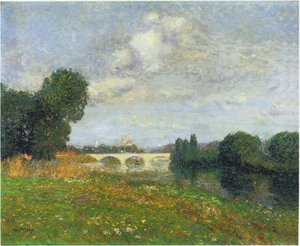
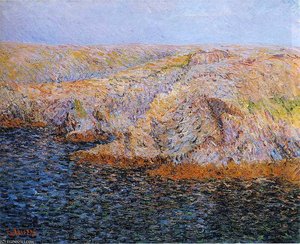
Portret Густав Лоизоу

100 najpoznatijih slika umetnika Густав Лоизоу, izbor iz galerije

Ažurirano: новембар 2026 · rangirano prema našem koeficijentu popularnosti (pretrage, posete i porudžbine za svako delo) · 454 dela Густав Лоизоу u našem katalogu

Ukratko

Od svih originala koje je Густав Лоизоу ostavio, najpoznatiji je Spring (1906). Odmah za njima slede Bastille's Place (1929) i Fog by the Seine (1900). Naš katalog sadrži 454 dela umetnika Густав Лоизоу; galerija je čuvala 100 dela koja svet najviše admira, od kojih je svako prikazano sa svojim datumom, muzejom i pričom.

1865 – 1935, 16. арондисман Париза Impressionism Najviše dela: Muzej finih umetnosti u Bostonu

Top 10 slika umetnika Густав Лоизоу: izbor galerije

1
Spring (1906) čiji je Густав Лоизоу

Spring

1906 · Oil

In this 1920 work, we find ourselves in a tranquil countryside setting, observing a field that seems to breathe with the arrival of a new season. The composition is anchored by two large trees standing side by side, their presence providing a sense of stability against the soft expanse of the meadow. Scattered throughout the field, smaller trees and a few cows grazing near the center and right edges lend…

2
Bastille's Place (1929) čiji je Густав Лоизоу

Bastille's Place

1929 · Oil

The air in the city feels thick with movement, a constant, rhythmic flow of life that refuses to stand still. In this 1929 view, the streets of Paris breathe with a restless energy. High above the urban rush, the Eiffel Tower pierces the sky, its iron silhouette acting as a silent anchor amidst the swirling activity below. People move through the scene in a continuous stream, their forms defined by…

3
Fog by the Seine (1900) čiji je Густав Лоизоу

Fog by the Seine

1900 · Oil On Canvas

Gustave Loiseau captures a hazy landscape along the Seine River in Fog by the Seine. Painted about 1900, the work portrays a specific moment of atmospheric stillness. The scene focuses on a foggy day by the river, where the elements of nature and human presence meet under a heavy, overcast sky.

4
the small bourgeois house (1905) čiji je Густав Лоизоу

the small bourgeois house

1905 · Oil On Canvas

A small bourgeois house sits centrally within a rural landscape, framed by a brick wall and dense greenery. A single figure moves along a gravel path toward the structure, providing a sense of scale to the domestic scene. The composition uses the diagonal of the pathway to draw the eye inward, while the sky occupies the upper half of the canvas, creating a sense of openness. Light appears diffused, casting…

5
port joie (1901) čiji je Густав Лоизоу

port joie

1901 · Oil On Canvas

The riverbank rests under a heavy, diffused light. A rustic building anchors the left side of the frame, its presence steady against the movement of the water. Trees rise with organic shapes, their forms defined by color rather than sharp lines. The river stretches toward the distance, a pale ribbon cutting through the landscape. Everything feels soft, as if seen through a thin veil of mist on a cloudy day.…

6
Poplars by the Eure River (1903) čiji je Густав Лоизоу

Poplars by the Eure River

1903 · Oil On Canvas

Poplars by the Eure River is a landscape painting by the French artist Gustave Loiseau. Created about 1903, the work presents a naturalistic depiction of trees and water. The scene focuses on a line of tall poplar trees situated along the banks of the Eure River.

7
Cottages by the River (1900) čiji je Густав Лоизоу

Cottages by the River

1900 · Oil On Canvas

Gustave Loiseau’s Cottages by the River presents a tranquil rural landscape, captured about 1900. The composition is broadly horizontal, emphasizing the wide expanse of the field and the sky. A grassy hill and a body of water dominate the scene, providing a natural framework for the landscape. On the left, a red building sits prominently in the foreground, anchoring the viewer's perspective within the environment.

8
Snow at Rouen (1910) čiji je Густав Лоизоу

Snow at Rouen

1910 · Oil On Canvas

A winding road cuts through a snow-covered landscape, drawing the eye toward the distant architecture of a French town. The scene captures a moment of stillness in Rouen, where the weight of winter settles over the buildings and bare trees. Light is diffused through an overcast sky, casting a soft, even glow across the terrain. There are no harsh shadows here, only the muted tones of a cold afternoon.

9
Petit Dalles at Normandy (1908) čiji je Густав Лоизоу

Petit Dalles at Normandy

1908 · Oil On Canvas

In this 1908 oil on canvas, we find ourselves standing before a rugged stretch of the Normandy coastline. The scene is composed of heavy, horizontal layers where the sea meets the cliffs and the beach, creating a sense of immense scale. There is a certain stillness here, a moment captured under a diffused, overcast sky that softens the edges of the world. The palette is restrained, relying on muted blues,…

10
Paysage de Seine et Oise (1906) čiji je Густав Лоизоу

Paysage de Seine et Oise

1906 · Oil On Canvas

A weathered stone cottage with a thatched roof anchors this rural scene, situated beneath a heavy, cloudy sky. The composition prioritizes the atmosphere of a damp, overcast day over sharp anatomical precision. A solitary figure moves through the landscape, suggesting a life of quiet, pastoral routine. The scene is rendered with a sense of nostalgia, capturing a fleeting moment of stillness in the French countryside. Light is diffused, softening the…

Izbor umetnika Густав Лоизоу se nastavlja, od 11 do 100

11Village in Spring (1916) čiji je Густав ЛоизоуVillage in Spring1916 12The Church of St Gervais (1920) čiji je Густав ЛоизоуThe Church of St Gervais1920 13Orne at Caen (1920) čiji je Густав ЛоизоуOrne at Caen1920 14Pont Neuf (1921) čiji je Густав ЛоизоуPont Neuf1921 15Pont-Aven, Grey Weather (1923) čiji je Густав ЛоизоуPont-Aven, Grey Weather1923 16Overcast Weather at Nesles-la-Vallee (1896) čiji je Густав ЛоизоуOvercast Weather at Nesles-la-Vallee1896 17Street in Paris at Ennery čiji je Густав ЛоизоуStreet in Paris at Ennery 18Veslez (1906) čiji je Густав ЛоизоуVeslez1906 19By the Oise River (1892) čiji je Густав ЛоизоуBy the Oise River1892 20Trees by the River (1891) čiji je Густав ЛоизоуTrees by the River1891 21Port Joie at the Seine (1889) čiji je Густав ЛоизоуPort Joie at the Seine1889 22Village in Spring, The Seine Valley near Les Damps (1898) čiji je Густав ЛоизоуVillage in Spring, The Seine Valley near Les Damps1898 · Wallraf-Richartz-Museum 23Near Saint Cyr (1895) čiji je Густав ЛоизоуNear Saint Cyr1895 24Landscape in a Valley (1898) čiji je Густав ЛоизоуLandscape in a Valley1898 25Valley before a Storm (1896) čiji je Густав ЛоизоуValley before a Storm1896 26Apple Trees in October (1898) čiji je Густав ЛоизоуApple Trees in October1898 27Landscape in Winter with Fog (1897) čiji je Густав ЛоизоуLandscape in Winter with Fog1897 28Landscape of Givre in the Mist (1897) čiji je Густав ЛоизоуLandscape of Givre in the Mist1897 29By the Oise at Parmain (1898) čiji je Густав ЛоизоуBy the Oise at Parmain1898 30Garden by the House (1898) čiji je Густав ЛоизоуGarden by the House1898 31White Frost in Huelgoat, Finistère (1903) čiji je Густав ЛоизоуWhite Frost in Huelgoat, Finistère1903 32Factory on the Banks of the Oise, Snow Effect (1905) čiji je Густав ЛоизоуFactory on the Banks of the Oise, Snow Effect1905 33On the Banks of Eure in Spring (1900) čiji je Густав ЛоизоуOn the Banks of Eure in Spring1900 34Banks of the Eure, Normandy (1901) čiji je Густав ЛоизоуBanks of the Eure, Normandy1901 · Buffalo AKG Art Museum 35Winter on the Banks of the Eure (1900) čiji je Густав ЛоизоуWinter on the Banks of the Eure1900 · Muzej finih umetnosti u Bostonu 36On the Banks of the Eure (1904) čiji je Густав ЛоизоуOn the Banks of the Eure1904 · Muzej finih umetnosti u Bostonu 37Landscape (1900) čiji je Густав ЛоизоуLandscape1900 · Art Institute of Chicago 38House in Pontoise in Snow (1902) čiji je Густав ЛоизоуHouse in Pontoise in Snow1902 39Etretat (1902) čiji je Густав ЛоизоуEtretat1902 40Cliffs of Puy (1901) čiji je Густав ЛоизоуCliffs of Puy1901 41Docks in Rouen (1899) čiji je Густав ЛоизоуDocks in Rouen1899 42Poplars by the Eure River (1900) čiji je Густав ЛоизоуPoplars by the Eure River1900 43Cliffs of Etretat (1902) čiji je Густав ЛоизоуCliffs of Etretat1902 44Pont du Jars a Cap Frehel (1905) čiji je Густав ЛоизоуPont du Jars a Cap Frehel1905 45October in Normandy (1905) čiji je Густав ЛоизоуOctober in Normandy1905 46By the Eure River. Mist Effect (1905) čiji je Густав ЛоизоуBy the Eure River. Mist Effect1905 47Cliffs by the Sea (1901) čiji je Густав ЛоизоуCliffs by the Sea1901 48The Seine in Winter Sunlight (1901) čiji je Густав ЛоизоуThe Seine in Winter Sunlight1901 49Oise at Pontoise (1900) čiji je Густав ЛоизоуOise at Pontoise1900 50Flood (1901) čiji je Густав ЛоизоуFlood1901 51Port Joie (1901) čiji je Густав ЛоизоуPort Joie1901 52Landscape in Snow (1900) čiji je Густав ЛоизоуLandscape in Snow1900 53Trees in Bloom (1900) čiji je Густав ЛоизоуTrees in Bloom1900 54Landscape in Snow (1899) čiji je Густав ЛоизоуLandscape in Snow1899 55Port Pinche at the Turn of the Seine (1900) čiji je Густав ЛоизоуPort Pinche at the Turn of the Seine1900 56By the Eure River in Summer (1902) čiji je Густав ЛоизоуBy the Eure River in Summer1902 57dieppe (1905) čiji je Густав Лоизоуdieppe1905 58cap frehel (1902) čiji je Густав Лоизоуcap frehel1902 59Haystacks (1901) čiji je Густав ЛоизоуHaystacks1901 60Etretat - La Point de Batterie (1902) čiji je Густав ЛоизоуEtretat - La Point de Batterie1902 61By the Eure River (1903) čiji je Густав ЛоизоуBy the Eure River1903 62Pont du Jars a Cap Frehel (1905) čiji je Густав ЛоизоуPont du Jars a Cap Frehel1905 63View at Pontoise (1905) čiji je Густав ЛоизоуView at Pontoise1905 64Paysage de Bretagne Pont Aven (1903) čiji je Густав ЛоизоуPaysage de Bretagne Pont Aven1903 65Street in the Village (1900) čiji je Густав ЛоизоуStreet in the Village1900 66Quay at Pontoise (1905) čiji je Густав ЛоизоуQuay at Pontoise1905 67Yellow Irises (1902) čiji je Густав ЛоизоуYellow Irises1902 68Poplars at Vaudreuil (1905) čiji je Густав ЛоизоуPoplars at Vaudreuil1905 69Cottage in Normandy (1902) čiji je Густав ЛоизоуCottage in Normandy1902 70Cap Frehel (1902) čiji je Густав ЛоизоуCap Frehel1902 71Coast at Chaponival (1901) čiji je Густав ЛоизоуCoast at Chaponival1901 72The Port of Pornic, High Tide (1900) čiji je Густав ЛоизоуThe Port of Pornic, High Tide1900 73Poplars by the Eure River (1903) čiji je Густав ЛоизоуPoplars by the Eure River1903 74Pont Tourant at Dieppe (1903) čiji je Густав ЛоизоуPont Tourant at Dieppe1903 75Village by the River (1900) čiji je Густав ЛоизоуVillage by the River1900 76The Rocks of Saint-Lunaire (1904) čiji je Густав ЛоизоуThe Rocks of Saint-Lunaire1904 77Banks of the Seine in Summer Tournedos sur Seine (1899) čiji je Густав ЛоизоуBanks of the Seine in Summer Tournedos sur Seine1899 78Thatched Cottage, Le Vaudreuil (1903) čiji je Густав ЛоизоуThatched Cottage, Le Vaudreuil1903 79Le Champ de Ble (1904) čiji je Густав ЛоизоуLe Champ de Ble1904 80Autumn near Saint Cyr du Vaudreuil (1899) čiji je Густав ЛоизоуAutumn near Saint Cyr du Vaudreuil1899 81belle ile la cote sauvage (1905) čiji je Густав Лоизоуbelle ile la cote sauvage1905 82L'Hermitage in Pontoise (1899) čiji je Густав ЛоизоуL'Hermitage in Pontoise1899 83Alley of Poplars (1900) čiji je Густав ЛоизоуAlley of Poplars1900 84Port of Dieppe (1903) čiji je Густав ЛоизоуPort of Dieppe1903 85Cliffs at Grainval (1902) čiji je Густав ЛоизоуCliffs at Grainval1902 86Quay at Dieppe (1902) čiji je Густав ЛоизоуQuay at Dieppe1902 87Cliffs at Cap Frehel (1905) čiji je Густав ЛоизоуCliffs at Cap Frehel1905 88Moret sur Loing (1902) čiji je Густав ЛоизоуMoret sur Loing1902 89Tournedos sur Seine Snow Frost Sun (1901) čiji je Густав ЛоизоуTournedos sur Seine Snow Frost Sun1901 90Cliffs at Cap Frehel (1905) čiji je Густав ЛоизоуCliffs at Cap Frehel1905 91Tress in Bloom (1900) čiji je Густав ЛоизоуTress in Bloom1900 92Poplars on the Banks of the Eure (1903) čiji je Густав ЛоизоуPoplars on the Banks of the Eure1903 93The Seine at Port Marly (1902) čiji je Густав ЛоизоуThe Seine at Port Marly1902 94Farm in the Country (1900) čiji je Густав ЛоизоуFarm in the Country1900 95The Oise at Pontoise (1904) čiji je Густав ЛоизоуThe Oise at Pontoise1904 96Porte d'Amont, Etretet (1902) čiji je Густав ЛоизоуPorte d'Amont, Etretet1902 97Saint Medard Church in Paris (1903) čiji je Густав ЛоизоуSaint Medard Church in Paris1903 98La Pointe du Jars, Cap Frehel (1905) čiji je Густав ЛоизоуLa Pointe du Jars, Cap Frehel1905 99Fish market at the Port of Dieppe (1903) čiji je Густав ЛоизоуFish market at the Port of Dieppe1903 100Fish Market at the Port of Dieppe (1903) čiji je Густав ЛоизоуFish Market at the Port of Dieppe1903

Čuvena dela Густав Лоизоу po periodima

Motivi koji su privlačili pažnju Густав Лоизоу

Četiri teme koje se najčešće ponavljaju u ovim originalima, svaka sa svojim vrhunskim primerom.

Muzeji u kojima se čuvaju originalna dela umetnika Густав Лоизоу

4 muzeja u kojima se nalazi najviše slika sa ove stranice.

Muzej Grad Radovi umetnika Густав Лоизоу Slike iz ovog spiska
Muzej finih umetnosti u Bostonu, BostonMuzej finih umetnosti u Bostonu Boston 2 Winter on the Banks of the Eure, On the Banks of the Eure
Wallraf-Richartz-Museum, KelnWallraf-Richartz-Museum Keln 1 Village in Spring, The Seine Valley near Les Damps
Buffalo AKG Art Museum, BuffaloBuffalo AKG Art Museum Buffalo 1 Banks of the Eure, Normandy
Art Institute of Chicago, ČikagoArt Institute of Chicago Čikago 1 Landscape

Густав Лоизоу deceniju po deceniju: original koji definiše svaku od njih

Radovi po decenijama

Izaberite deceniju da biste videli original koji je definiše.

Pitanja kolekcionara o slikama umetnika Густав Лоизоу

Po kojem delu je Густав Лоизоу najpoznatiji/a?Otkrij odgovor

Spring (1906). Slede Bastille's Place (1929) i Fog by the Seine (1900).

Koliko je godina imao/la Густав Лоизоу kada je nastalo delo Spring?Otkrij odgovor

41 godina: Spring datira iz 1906, a Густав Лоизоу je rođen/a 1865.

Koja su deset najpoznatijih slika umetnika Густав Лоизоу?Otkrij odgovor

Spring, Bastille's Place, Fog by the Seine, the small bourgeois house, port joie, Poplars by the Eure River, Cottages by the River, Snow at Rouen, Petit Dalles at Normandy i Paysage de Seine et Oise. Gornji rang pokazuje godinu i muzej za svako od njih.

Koliko je slika ostavio Густав Лоизоу?Otkrij odgovor

Naš katalog sadrži 454 dela umetnika Густав Лоизоу, datiranih od 1889 do 1929.

U kojim muzejima se nalaze remek-dela umetnika Густав Лоизоу?Otkrij odgovor

Većinom u Muzej finih umetnosti u Bostonu (Boston), Wallraf-Richartz-Museum (Keln) i Buffalo AKG Art Museum (Buffalo). Tabela muzeja iznad sadrži njih sve.

U kojim godinama je Густав Лоизоу naslikao svoja najpoznatija dela?Otkrij odgovor

U 1900s: 74 od 100 dela na ovoj stranici nastalo je tada, od čega je Spring.

Koja su prva i poslednja čuvena originalna dela umetnika Густав Лоизоу?Otkrij odgovor

Na ovoj stranici, najstarije delo je iz Port Joie at the Seine (1889), a najnovije iz Bastille's Place (1929).

Koje je motive Густав Лоизоу najčešće birao/la?Otkrij odgovor

Landscape (11), Rivers (8) i Beach (8), kroz svih 100 dela na ovoj stranici.

Koju je tehniku najčešće koristio/la Густав Лоизоу?Otkrij odgovor

Oil On Canvas, za 14 od 100 dela na ovoj stranici.

Kojem umetničkom pravcu pripada Густав Лоизоу?Otkrij odgovor

Impressionism i Post-impressionism, sudeći po originalima na ovoj stranici.

Čija se dela umetnika Густав Лоизоу nalaze u Muzej finih umetnosti u Bostonu?Otkrij odgovor

Winter on the Banks of the Eure i On the Banks of the Eure: Muzej finih umetnosti u Bostonu, Boston čuva 2 dela sa ove stranice.

Густав Лоизоу: život i delo

A Parisian Vision: The Life and Art of Gustave Loiseau

Gustave Loiseau, a name perhaps less immediately recognized than some of his Post-Impressionist contemporaries, nevertheless occupies a significant place in the story of French painting at the turn of the 20th century. Born in Paris on October 3rd, 1865, and passing away there on October 10th, 1935, Loiseau’s life was deeply intertwined with the evolving artistic landscape of his city and the broader currents of modernism. His journey began not within the hallowed halls of an art academy—though he briefly attended the École des arts décoratifs—but amidst the practical world of his parents' butcher shop. This early exposure to everyday Parisian life, coupled with a subsequent apprenticeship with a family friend who was a decorator, would profoundly shape his artistic sensibilities. It instilled in him a keen observation of the city’s rhythms and textures, a fascination that would become central to his oeuvre. A modest inheritance from his grandmother proved pivotal, allowing Loiseau to dedicate himself fully to painting in 1887, though his formal training was cut short by a disagreement with a teacher—a testament to his independent spirit.

From Brittany to ‘En Treillis’: The Development of a Unique Style

Loiseau’s artistic development wasn't immediate or straightforward. He initially experimented with Pointillism, the meticulous technique championed by Georges Seurat and Paul Signac, attempting to capture light and color through tiny dots of pigment—a method that seemed too restrictive for his burgeoning vision. However, he swiftly abandoned this approach, recognizing its inability to convey the emotional depth he sought. A transformative encounter occurred during his first visit to Pont-Aven in Brittany in 1890. This artist colony, already celebrated as a sanctuary for those rejecting academic conventions—particularly Paul Gauguin and Émile Bernard—presented Loiseau with fresh perspectives on color, form, and the expressive potential of landscape. He didn’t simply emulate their stylistic choices; instead, he embarked upon forging his own distinctive path. This pivotal decision led to the genesis of *en treillis*, or cross-hatching—a technique that would become synonymous with his artistic identity. Unlike the fractured brushstrokes characteristic of Impressionism or the systematic application of dots found in Pointillism, Loiseau utilized a network of delicate, interwoven lines to sculpt form and capture the subtleties of light and atmosphere. This resulted in a textural richness unparalleled in Impressionist painting—a shimmering effect that distinguished him from his peers. It wasn’t born from theoretical contemplation but from an intuitive grasp of how to translate sensory experience onto canvas.

Parisian Streets and Rural Landscapes: Recurring Themes

Loiseau's artistic focus consistently centered around two dominant motifs: the vibrant streets of Paris and the tranquil vistas of Brittany’s countryside. His Parisian scenes—such as *Rue de Clignancourt* and *Avenue de Fiedland*—were not grand panoramas but intimate portraits of urban life. He meticulously rendered the movement of carriages, the bustle of pedestrians, and the dappled illumination filtering through buildings—with remarkable sensitivity to detail. Simultaneously, he developed a series of landscapes that revisited familiar subjects—orchards, gardens, fields—at various seasons and under diverse meteorological conditions. These compositions echoed Monet’s exploration of atmospheric phenomena but Loiseau's *en treillis* technique imbued them with an unparalleled textural quality—a palpable sense of presence that transcended mere visual representation. He wasn’t merely documenting what he perceived; he was conveying his emotional response to the environment, capturing its inherent beauty and serenity. His paintings radiate a quiet lyricism—a celebration of the commonplace elevated through artistic vision.

Influences and Artistic Legacy

Loiseau's artistic trajectory was profoundly shaped by several influential figures and movements. Early exposure to Impressionism instilled in him an appreciation for capturing fleeting moments of light and color, mirroring Monet’s groundbreaking explorations of atmospheric effects. However, he swiftly distanced himself from Impressionistic fragmentation, recognizing its limitations in conveying emotional resonance. The Pont-Aven artist colony—populated by Gauguin, Bernard, and Quignon—provided Loiseau with invaluable inspiration regarding color palettes and compositional strategies. Crucially, his embrace of *en treillis* represented a decisive break from prevailing artistic conventions—a technique championed by Seurat and Signac that prioritized scientific precision over expressive spontaneity. Despite not achieving the widespread acclaim enjoyed by some contemporaries, Loiseau’s work gained recognition from discerning critics and collectors alike—secured through exhibitions at prestigious venues like the Salon des Indépendants and the Société Nationale. Today, Loiseau's paintings are increasingly appreciated for their distinctive style, their evocative atmosphere, and their astute portrayal of French life during a period of significant societal transformation. He stands as an emblem of artistic independence—an artist who remained steadfast to his own aesthetic convictions while engaging with the evolving currents of modernism.

Notable Works

Loiseau’s oeuvre comprises numerous captivating canvases that exemplify his signature technique and thematic preoccupations. Among his most celebrated paintings are *Rue de Clignancourt*, capturing the dynamism of Parisian commerce; *Avenue de Fiedland*, portraying a serene urban vista bathed in sunlight; *Overcast Weather...*, depicting Brittany's moody skies with masterful tonal gradation; *Etretat*, showcasing the dramatic cliffs and sea spray of Normandy; and *Field and Hills*, presenting tranquil rural landscapes imbued with subtle textural nuances. These artworks serve as enduring testament to Loiseau’s artistic genius—a profound engagement with both urban and pastoral environments, rendered with unparalleled sensitivity to light and atmosphere. His legacy resides not in overturning artistic dogma but in refining it—offering a uniquely personal and captivating perspective on the world around him.