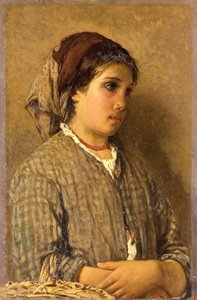
Portret Силвестро Лега

65 najpoznatijih slika umetnika Силвестро Лега, svaka potpuno jedinstvena

Ažurirano: новембар 2026 · rangirano prema našem koeficijentu popularnosti (pretrage, posete i porudžbine za svako delo) · 65 dela Силвестро Лега u našem katalogu

Ukratko

Portrait of Giuseppe Garibaldi (1861) je slika autora Силвестро Лега koja privlači najviše pogleda. Nakon toga, pogled se seli na Head of the Virgin Mary from Perugino (1845) i Portrait of his brother Ettore as a child (1855). Među 65 dela umetnika Силвестро Лега u našem katalogu, ovih 65 su najpoznatija, od kojih je svako jedinstveni original predstavljen sa godinom nastanka, muzejom i razlogom zbog kojeg je i danas neprocenjivo.

1826 – 1895, Modigliana Realism Najviše dela: Palazzo Pitti

Top 10 slika umetnika Силвестро Лега, iz ugla galerije

1
Portrait of Giuseppe Garibaldi (1861) čiji je Силвестро Лега

Portrait of Giuseppe Garibaldi

1861 · Oil

Created in 1861, the portrait emerges from a period of intense political movement in Italy. The subject's attire and the presence of the rifle suggest a connection to the military campaigns and the rugged lifestyle associated with the era's political shifts. The painting reflects the 19th-century movement toward realism, prioritizing direct observation and the accurate depiction of the human form within a natural setting.

2
Head of the Virgin Mary from Perugino (1845) čiji je Силвестро Лега

Head of the Virgin Mary from Perugino

1845 · Chalk

The artwork titled Head of the Virgin Mary from Perugino is a portrait created by the artist Silvestro Lega. This depiction focuses on the subject of the Virgin Mary, presented in a close-up view that emphasizes the head and shoulders. The work is dated to about 1845.

3
Portrait of his brother Ettore as a child (1855) čiji je Силвестро Лега

Portrait of his brother Ettore as a child

1855 · Oil On Canvas · Pinacoteca di Brera, Milan

A young boy sits in a moment of profound stillness, his gaze meeting the viewer with a calm, somewhat melancholic expression. He is positioned slightly off-center, a bust-length figure that feels immediate and intimate. The soft light, descending from the upper left, brushes against the contours of his face, casting gentle shadows that grant his features a palpable three-dimensional volume. There is a sense of weight to his presence, as…

4
Among the flowers in the garden (1862) čiji je Силвестро Лега

Among the flowers in the garden

1862 · Oil

The scene unfolds within the quiet confines of Among the flowers in the garden, an oil on canvas that captures a fleeting moment of stillness. Silvestro Lega, a significant figure in 19th-century Italian art, brings this garden to life through his careful observation of the natural world. The work dates to about 1862, a period when the artist's hand began to move toward a more profound engagement with the reality…

5
Camp of Zouaves (1861) čiji je Силвестро Лега

Camp of Zouaves

1861 · Charcoal

In "Camp of Zouaves" by Silvestro Lega, the composition follows a horizontal format that emphasizes the breadth of the military encampment. A central tent dominates the middle ground, acting as a focal point for the surrounding activity. To the left, a soldier blowing a horn provides a strong vertical element that draws the eye through the scene. The foreground is characterized by rough terrain and various scattered details, establishing a…

6
The water wheel [sketch] (1863) čiji je Силвестро Лега

The water wheel [sketch]

1863 · Charcoal

In The water wheel [sketch], Silvestro Lega organizes a horizontally oriented scene that emphasizes the structural length of the machinery. The water wheel dominates the central portion of the composition, acting as the primary anchor for the viewer's eye. A lone figure is positioned near the wheel, providing a sense of scale and human presence within the rural setting. This arrangement focuses the viewer's attention on the intersection of mechanical…

7
In the cellar (1870) čiji je Силвестро Лега

In the cellar

1870 · Oil On Canvas

The oil painting titled In the cellar was executed by the artist Silvestro Lega. This work, created in 1870, is rendered in oil on canvas. The piece measures 27 x 35 cm.

8
Reading (1864) čiji je Силвестро Лега

Reading

1864 · Oil

Two figures sit anchored in a moment of stillness. They are caught in the soft, diffused light of a private afternoon, their bodies turned toward one another in a shared, silent communion. One figure wears a dress of pale blue, a cool note against the warmth of the surrounding world. They are engaged in the simple act of reading, a gesture that pulls the viewer into their intimate circle. The…

9
The reading (1867) čiji je Силвестро Лега

The reading

The Reading by Silvestro Lega is an oil painting on canvas created about 1867. The work depicts a young woman seated upon a wooden bench. She is positioned in a state of quiet focus, her attention directed toward a book held in her hands. The scene is set against a backdrop of textured walls and a window with closed shutters, creating a contained, domestic environment.

10
The painter (1869) čiji je Силвестро Лега

The painter

1869 · Oil On Canvas

In The painter, Silvestro Lega presents a young woman positioned slightly off-center within the confines of her studio. The vertical composition emphasizes her presence, focusing the viewer's attention on her figure as she gazes downward toward a painter's palette held in her hands. This downward gaze suggests a moment of quiet contemplation or intense focus on her craft. At the base of the scene, a rug provides a grounding element…

Čuvena dela umetnika Силвестро Лега, od 11 do 65

11The Dying Mazzini (Mazzini morente) (1873) čiji je Силвестро ЛегаThe Dying Mazzini (Mazzini morente)1873 · Rhode Island School of Design Museum of Art 12Woman sitting by a window sewing (1872) čiji je Силвестро ЛегаWoman sitting by a window sewing1872 13In the garden (1883) čiji je Силвестро ЛегаIn the garden1883 14Pitcher painted with bust of a young woman and floral motifs (1885) čiji je Силвестро ЛегаPitcher painted with bust of a young woman and floral motifs1885 15Man writing (1885) čiji je Силвестро ЛегаMan writing1885 16Portrait of a peasant woman (1890) čiji je Силвестро ЛегаPortrait of a peasant woman1890 17Head of a boy (1890) čiji je Силвестро ЛегаHead of a boy1890 18Woman from Gabbro (1888) čiji je Силвестро ЛегаWoman from Gabbro1888 19Bust of a young girl (1887) čiji je Силвестро ЛегаBust of a young girl1887 20Peasant women from Gabbro (1889) čiji je Силвестро ЛегаPeasant women from Gabbro1889 21Peasant woman at rest (1890) čiji je Силвестро ЛегаPeasant woman at rest1890 22La visita (1868) čiji je Силвестро ЛегаLa visita1868 · Galleria Nazionale d'Arte Moderna 23Bust of a peasant woman (1873) čiji je Силвестро ЛегаBust of a peasant woman1873 · Palazzo Pitti 24Villa Batelli along the Affrico river (1863) čiji je Силвестро ЛегаVilla Batelli along the Affrico river1863 25Il primo dolore (1863) čiji je Силвестро ЛегаIl primo dolore1863 26Landscape (1860) čiji je Силвестро ЛегаLandscape1860 27Portrait of a Child (1861) čiji je Силвестро ЛегаPortrait of a Child1861 28Farmhouses (1864) čiji je Силвестро ЛегаFarmhouses1864 29Courtyard entrance (1864) čiji je Силвестро ЛегаCourtyard entrance1864 30Little country church (1874) čiji je Силвестро ЛегаLittle country church1874 31Woman from Gabbro (1885) čiji je Силвестро ЛегаWoman from Gabbro1885 32The house of Don Giovanni Verità (1885) čiji je Силвестро ЛегаThe house of Don Giovanni Verità1885 33The hut on the farm (1880) čiji je Силвестро ЛегаThe hut on the farm1880 34Garden in Bellariva (1884) čiji je Силвестро ЛегаGarden in Bellariva1884 35Farmhouse with haystack (1880) čiji je Силвестро ЛегаFarmhouse with haystack1880 36Country Girl Leaning against a Ladder (1885) čiji je Силвестро ЛегаCountry Girl Leaning against a Ladder1885 37Farmhouse and haystacks (1888) čiji je Силвестро ЛегаFarmhouse and haystacks1888 38Church of San Michele in Crespina (1886) čiji je Силвестро ЛегаChurch of San Michele in Crespina1886 39Pagliai al sole (1890) čiji je Силвестро ЛегаPagliai al sole1890 40Figure of a woman čiji je Силвестро ЛегаFigure of a woman 41Seated man čiji je Силвестро ЛегаSeated man 42Young peasant woman čiji je Силвестро ЛегаYoung peasant woman 43The maid of the Bandini house čiji je Силвестро ЛегаThe maid of the Bandini house 44Don Verità čiji je Силвестро ЛегаDon Verità 45The spinner čiji je Силвестро ЛегаThe spinner 46Young peasant woman čiji je Силвестро ЛегаYoung peasant woman 47Peasant woman from Gabbro čiji je Силвестро ЛегаPeasant woman from Gabbro 48The letter čiji je Силвестро ЛегаThe letter 49Don Giovanni čiji je Силвестро ЛегаDon Giovanni 50The stitcher of lace trimmings for women's dresses čiji je Силвестро ЛегаThe stitcher of lace trimmings for women's dresses 51The Bandini sisters (1890) čiji je Силвестро ЛегаThe Bandini sisters1890 · Museum of Modern and Contemporary Art of Trento and Rovereto 52The owner of the farm (1887) čiji je Силвестро ЛегаThe owner of the farm1887 · Palazzo Pitti 53Ritorno di bersaglieri italiani da una ricognizione (1861) čiji je Силвестро ЛегаRitorno di bersaglieri italiani da una ricognizione1861 · Palazzo Pitti 54Head of a woman (1885) čiji je Силвестро ЛегаHead of a woman1885 · Pinacoteca di Brera 55Self-portrait (1861) čiji je Силвестро ЛегаSelf-portrait1861 · Galerija Ufizi 56In the villa (1880) čiji je Силвестро ЛегаIn the villa1880 · Palazzo Pitti 57A Walk in the Garden (1870) čiji je Силвестро ЛегаA Walk in the Garden1870 58Woman with ivy (1887) čiji je Силвестро ЛегаWoman with ivy1887 59The pergola (1864) čiji je Силвестро ЛегаThe pergola1864 · Palazzo Pitti 60Signora al Pianoforte čiji je Силвестро ЛегаSignora al Pianoforte 61The courier's horse čiji je Силвестро ЛегаThe courier's horse 62Small village with battlements čiji je Силвестро ЛегаSmall village with battlements 63Il pergolato (also known as Il dopopranzo) (1868) čiji je Силвестро ЛегаIl pergolato (also known as Il dopopranzo)1868 · Civica Galleria d'Arte Moderna 64The painter Tommasi painting in the garden (1885) čiji je Силвестро ЛегаThe painter Tommasi painting in the garden1885 65Il canto di uno stornello (1867) čiji je Силвестро ЛегаIl canto di uno stornello1867 · Palazzo Pitti

Čuvena dela Силвестро Лега po periodima

Motivi koji su privlačili pažnju Силвестро Лега

Četiri teme koje se najčešće ponavljaju u ovim originalima, svaka sa svojim vrhunskim primerom.

Muzeji u kojima se čuvaju originalna dela umetnika Силвестро Лега

8 muzeja u kojima se nalazi najviše slika sa ove stranice.

Muzej Grad Radovi umetnika Силвестро Лега Slike iz ovog spiska
Palazzo Pitti, FirencaPalazzo Pitti Firenca 6 Bust of a peasant woman, The owner of the farm, Ritorno di bersaglieri italiani da una ricognizione
Pinacoteca di Brera, MilanPinacoteca di Brera Milan 2 Portrait of his brother Ettore as a child, Head of a woman
Pinacoteca metropolitana di Bari or Pinacoteca C. Giaquinto, BariPinacoteca metropolitana di Bari or Pinacoteca C. Giaquinto Bari 1 The reading
Rhode Island School of Design Museum of Art, ProvidensRhode Island School of Design Museum of Art Providens 1 The Dying Mazzini (Mazzini morente)
Galleria Nazionale d'Arte Moderna, RimGalleria Nazionale d'Arte Moderna Rim 1 La visita
Museum of Modern and Contemporary Art of Trento and RoveretoMuseum of Modern and Contemporary Art of Trento and Rovereto 1 The Bandini sisters
Galerija Ufizi, FirencaGalerija Ufizi Firenca 1 Self-portrait
Civica Galleria d'Arte Moderna, MilanoCivica Galleria d'Arte Moderna Milano 1 Il pergolato (also known as Il dopopranzo)

Силвестро Лега kroz decenije: jedan jedinstveni original za svaku

Radovi po decenijama

Izaberite deceniju da biste videli original koji je definiše.

Slike umetnika Силвестро Лега: pitanja za galeriju

Koje je najpoznatije delo umetnika Силвестро Лега?Otkrij odgovor

Portrait of Giuseppe Garibaldi (1861). Slede Head of the Virgin Mary from Perugino (1845) i Portrait of his brother Ettore as a child (1855).

U kojoj je godini Силвестро Лега stvorio/la Portrait of Giuseppe Garibaldi?Otkrij odgovor

35 godina: Portrait of Giuseppe Garibaldi datira iz 1861, a Силвестро Лега je rođen/a 1826.

Koji je deset najpoznatijih slika autora Силвестро Лега?Otkrij odgovor

Portrait of Giuseppe Garibaldi, Head of the Virgin Mary from Perugino, Portrait of his brother Ettore as a child, Among the flowers in the garden, Camp of Zouaves, The water wheel [sketch], In the cellar, Reading, The reading i The painter. Gornji rang pokazuje godinu i muzej za svako od njih.

Koliko je poznatih dela umetnika Силвестро Лега?Otkrij odgovor

Naš katalog sadrži 65 dela umetnika Силвестро Лега, datiranih od 1845 do 1890.

Gde se mogu videti najpoznatiji originali umetnika Силвестро Лега?Otkrij odgovor

Većinom u Palazzo Pitti (Firenca), Pinacoteca di Brera (Milan) i Pinacoteca metropolitana di Bari or Pinacoteca C. Giaquinto (Bari). Tabela muzeja iznad sadrži njih sve.

U kom periodu je Силвестро Лега stvorio/la svoje najpoznatije slike?Otkrij odgovor

U 1860s: 19 od 65 dela na ovoj stranici nastalo je tada, od čega je Portrait of Giuseppe Garibaldi.

Ko je najraniji, a koje je najkasnije čuveno delo umetnika Силвестро Лега?Otkrij odgovor

Na ovoj stranici, najstarije delo je iz Head of the Virgin Mary from Perugino (1845), a najnovije iz Portrait of a peasant woman (1890).

Koje su teme Силвестро Лега preferirao/la?Otkrij odgovor

Woman (11), Portrait (10) i Landscape (8), kroz svih 65 dela na ovoj stranici.

Sa kojim materijalima je Силвестро Лега najčešće slikao?Otkrij odgovor

Oil On Canvas, za 17 od 65 dela na ovoj stranici.

Kojem umetničkom pravcu pripada delo umetnika Силвестро Лега?Otkrij odgovor

Realism, sudeći po originalima na ovoj stranici.

Koja originalna dela Силвестро Лега mogu videti u Palazzo Pitti?Otkrij odgovor

Bust of a peasant woman, The owner of the farm i Ritorno di bersaglieri italiani da una ricognizione: Palazzo Pitti, Firenca čuva 6 dela sa ove stranice.

Силвестро Лега: portret umetnika

Силвестро Лега: Живот у Италијанском Реализму

Силвестро Лега, рођен 1826. године у Модигнану, био је изузетан лик у италијанској уметности деветнаестог века, препознат као водећи представник покрета *Макијајоли*. Његово дело оличава посвећеност реализму и посматрању свакодневног живота, испреплетено са његовим учешћем у политичким струјањима свог времена. Лега није био само сликара; он је био хроничар епохе, човек који је умео да пронађе лепоту и значај у обичном, претварајући тренутке тишине и интимности у трајна дела уметности.

Рани Живот и Уметничка Обнова

Лега је рођен у угледној породици недалеко од Форлија. Његов таленат за цртање постао је очигледан још у раној младости, док је похађао Пијаристички колеџ 1838. године. Наставио је школовање на Академији лепих уметности у Фиренци (1843-1847), где су му први учитељи били Бенедето Серволини и Томазо Газарини за цртање, а касније и Ђузепе Безуоли. Међутим, прави прелом у његовом образовању долази са Луиђијем Мусиним, који је на Легу оставио дубок утисак, фокусирајући се на принципе цртања и композиције из 15. века.

Лега није био само посвећен уметности; његова биографија је обогаћена учешћем у политичким догађајима свог времена. Као добровољац Гарибалдije, активно је учествовао у кампањама за италијанску независност (1848-49), што је сведочило његову посвећеност *Рисорджименту*. Ово искуство га је дубоко обликовало, не само као човека већ и као уметника.

Прелаз ка Реализму и Утицај Макијајола

Иако су његови рани радови били под снажним академским утицајем, Лега је постепено почео да се удаљава од традиционалних норми. Дијего Мартели, савременик Леге, приметио је његово ређе учешће у страственим уметничким дискусијама у Кафе Микеланђело, центру младих сликара. Преломни тренутак долази 1859. године, када се Лега окреће реализму, напуштајући пуристички приступ Мусинија. Овај прелаз је видљив у лунетама које је насликао за ораторију Мадоне дел Кантоне у Модигнани (1858-1863).

Придруживши се колегама из покрета *Макијајоли* – Одоарду Боранију, Ђузепе Абатију, Телемаку Сињорионију и Рафаелу Сернесију – Лега је прихватио сликарство *ен плеин ер*, директно посматрајући и бележећи нијансе пејзажа. Ово је био кључни корак у његовом развоју, јер је почео да тражи светлост и атмосферу директно у природи.

Кључна Дела и Уметнички Стил

Период проведен са породицом Батељи недалеко од реке Аффрико (1861-1870) представља значајан период у Легином животу. Ово време је имало дубок утицај на његову уметност, јер је сликао њихову децу и жене у бројним делима, одражавајући осећај кућне топлине и мира. Нека од његових најпознатијих дела укључују "Шетњу у врту" (1870), “Пергола” (такође позната као "После ручка") (1864), “Кућа Дона Ђовани Верита” (1885), “У врту” (1883) и “Врт у Белариви” (1884).

Легин стил карактерише пажљива равнотежа између традиционалне композиције и савремене употребе боје, изведене директно из посматрања. Користио је јасно дефинисане облике и рендеровао атмосферу уз помоћ провидности боја. Његови каснији радови показују утицај импресионизма.

Последње Године и Наслеђе

Лична трагедија – губитак Вирђиније Батељи (његове пратиље), заједно са три брата – уронила је Легу у дубоку тугу и депресију 1870. године. Ово је довело до четворогодишње паузе у сликању (1874-1878). Ипак, остао је ангажован у свету уметности, дивећи се делима Камија Писара и успоставивши галерију у Фиренци са Одоардом Боранијем, иако краткотрајну. У каснијим годинама, постао је учитељ синова породице Томаси, проналазећи обновљену стабилност и инспирацију. Његови последњи радови, као што су “Габариђане”, показују континуитет посвећености реализму упркос погоршању вида.

Силвестро Лега је оставио неизбрисив траг у италијанској уметности. Његов допринос лежи у способности да синтетише традиционалне композиционе технике са реалистичком естетиком покрета *Макијајоли*. Ухватио је суштину италијанског живота са осетљивошћу и вештином, оставивши за собом корпус дела који наставља да резонира са публиком данас. Његов фокус на свакодневне теме уздигао их је до уметничког значаја, доприносећи ширем прелазу ка реализму у европској уметности деветнаестог века.