Portret Ralston Crawford

20 najpoznatijih slika umetnika Ralston Crawford, svaka potpuno jedinstvena

Ažurirano: новембар 2026 · rangirano prema našem koeficijentu popularnosti (pretrage, posete i porudžbine za svako delo) · 23 dela Ralston Crawford u našem katalogu

Ukratko

Sanford Tanks 2 (1938) je slika autora Ralston Crawford koja privlači najviše pogleda. Nakon toga, pogled se seli na St. Petersburg to Tampa (1938) i Electrification (1936). Među 23 dela umetnika Ralston Crawford u našem katalogu, ovih 20 su najpoznatija, od kojih je svako jedinstveni original predstavljen sa godinom nastanka, muzejom i razlogom zbog kojeg je i danas neprocenjivo.

1906 – 1978, St. Catharines Najviše dela: Art Institute of Chicago

Top 10 slika umetnika Ralston Crawford, iz ugla galerije

Čuvena dela umetnika Ralston Crawford, od 11 do 20

Muzeji u kojima se čuvaju originalna dela umetnika Ralston Crawford

1 muzeja u kojima se nalazi najviše slika sa ove stranice.

Muzeji Grad Radovi umetnika Ralston Crawford Slike iz ovog spiska
Art Institute of Chicago, ČikagoArt Institute of Chicago Čikago 1 Kewalo Close-Up

Ralston Crawford kroz decenije: jedan jedinstveni original za svaku

Radovi po decenijama

Izaberite deceniju da biste videli original koji je definiše.

Slike umetnika Ralston Crawford: pitanja za galeriju

Koje je najpoznatije delo umetnika Ralston Crawford?Otkrij odgovor

Sanford Tanks 2 (1938). Slede St. Petersburg to Tampa (1938) i Electrification (1936).

U kojoj je godini Ralston Crawford stvorio/la Sanford Tanks 2?Otkrij odgovor

32 godina: Sanford Tanks 2 datira iz 1938, a Ralston Crawford je rođen/a 1906.

Koji je deset najpoznatijih slika autora Ralston Crawford?Otkrij odgovor

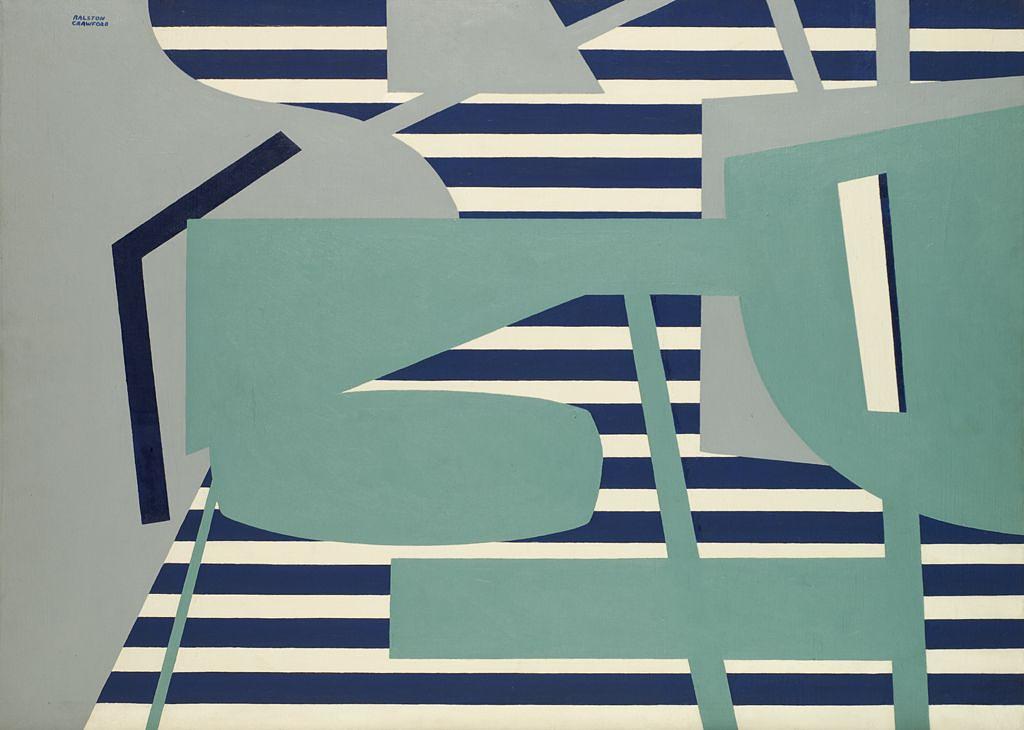
Sanford Tanks 2, St. Petersburg to Tampa, Electrification, Pawn Shop, 3rd Avenue 2, Poydras Street Coffee Wharf, Kewalo Close-Up, Factory with Lights, Blue And White, Lights in an Aircraft Plant i 3rd Avenue Elevated. Gornji rang pokazuje godinu i muzej za svako od njih.

Koliko je poznatih dela umetnika Ralston Crawford?Otkrij odgovor

Naš katalog sadrži 23 dela umetnika Ralston Crawford, datiranih od 1936 do 1973.

Gde se mogu videti najpoznatiji originali umetnika Ralston Crawford?Otkrij odgovor

Većinom u Art Institute of Chicago (Čikago). Tabela muzeja iznad sadrži njih sve.

U kom periodu je Ralston Crawford stvorio/la svoje najpoznatije slike?Otkrij odgovor

U 1950s: 6 od 20 dela na ovoj stranici nastalo je tada, od čega je 3rd Avenue Elevated.

Ko je najraniji, a koje je najkasnije čuveno delo umetnika Ralston Crawford?Otkrij odgovor

Na ovoj stranici, najstarije delo je iz Electrification (1936), a najnovije iz Croix De Vie Memories (1973).

Ralston Crawford: portret umetnika

Ralston Crawford: Pioneer of Geometric Abstraction

Ralston Crawford (1906-1978) stands as a pivotal figure in American abstract art, recognized for his masterful blend of precisionist observation and geometric exploration. Born September 5, 1906, in St. Catharines, Ontario, Canada, Crawford’s artistic journey began amidst the industrial landscapes of Buffalo, New York—a formative experience that would profoundly shape his visual vocabulary. His early studies at Otis Art Institute in California laid the groundwork for a distinctive style characterized by sharp realism alongside an increasingly sophisticated embrace of abstraction.
  • Early Influences: Crawford’s initial artistic endeavors mirrored the stylistic concerns of precisionist artists like Niles Spencer and Charles Sheeler, capturing the stark beauty of factories, bridges, and shipyards with meticulous detail. These works demonstrated a commitment to representing tangible realities with unwavering accuracy.
  • The Bauhaus Impact: A pivotal encounter with the Bauhaus school in Germany during his travels broadened Crawford’s artistic horizons. Exposure to the pioneering ideas of Piet Mondrian and Wassily Kandinsky instilled in him a fascination for geometric abstraction—a stylistic shift that would become central to his oeuvre.
  • Exploring Diverse Subjects: Beyond industrial scenes, Crawford pursued explorations into other realms of experience. His visits to Spain documented the fervor of bullfighting and the solemn rituals of Holy Week in Seville, while New Orleans captivated him with its vibrant jazz culture and distinctive cemeteries—subjects that demanded a new visual language beyond mere representation.

Geometric Abstraction and Nuclear Witness

Crawford’s artistic evolution culminated in his embrace of geometric abstraction during the mid-1940s, spurred by assignments from Fortune magazine to record the detonation of atomic weapons at Bikini Atoll. This experience served as a catalyst for rethinking visual representation altogether. As Crawford eloquently stated, “I don't feel obligated to reveal the forms. They may be totally absent to the viewer of the work, or even to myself, but what is there, however abstract, grows out of something i have seen.” He sought to distill essence into simplified geometric shapes—a deliberate departure from traditional realism—reflecting a profound engagement with the anxieties and transformations of the postwar era.
  • Notable Works: Among Crawford’s most celebrated pieces are “Electrification,” depicting an industrial plant bathed in stark light, and “Lights in an Aircraft Plant,” capturing the rhythmic repetition of machinery. These works exemplify his masterful manipulation of geometric forms to convey mood and atmosphere.
  • Recognition and Legacy: Crawford's artistic achievements garnered considerable acclaim throughout his career, securing his place within the pantheon of American abstract painters. His artworks are proudly displayed in prominent museums across the United States and beyond—including Honolulu Museum of Art, Metropolitan Museum of Art, Museum of Modern Art, Whitney Museum of American Art, Walker Art Center, and Toledo Museum of Art—testaments to the enduring power of his vision.

A Quiet Reflection on Place and Memory

Crawford’s artistic legacy extends beyond stylistic innovation; it encompasses a deep sensitivity to place and memory. His final resting place is St. Louis Cemetery No. 3 in New Orleans, alongside the graves of numerous Catholic saints—a location that served as inspiration for several paintings exploring themes of spirituality and decay. Crawford's work continues to resonate with viewers today, inviting contemplation on the relationship between observation, abstraction, and the human experience.