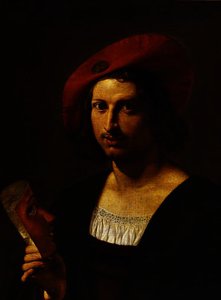
Portret Pietro Paolini

16 najpoznatijih slika umetnika Pietro Paolini, izbor iz galerije

Ažurirano: новембар 2026 · rangirano prema našem koeficijentu popularnosti (pretrage, posete i porudžbine za svako delo) · 16 dela Pietro Paolini u našem katalogu

Ukratko

Od svih originala koje je Pietro Paolini ostavio, najpoznatiji je Young Artist Working by Lamplight (1625), koji se nalazi u kolekciji Muzej finih umetnosti u Bostonu, Boston. Odmah za njima slede Bacchic Concert (1625) i Allegory of Death. Naš katalog sadrži 16 dela umetnika Pietro Paolini; galerija je čuvala 16 dela koja svet najviše admira, od kojih je svako prikazano sa svojim datumom, muzejom i pričom.

1603 – 1681, Lucca Baroque Najviše dela: Muzej finih umetnosti u Bostonu

Top 10 slika umetnika Pietro Paolini: izbor galerije

1
Young Artist Working by Lamplight (1625) čiji je Pietro Paolini

Young Artist Working by Lamplight

1625 · Oil On Canvas · Muzej finih umetnosti u Bostonu, Boston

In Young Artist Working by Lamplight, Pietro Paolini presents an intimate scene of quiet concentration. A young man is captured in a moment of intense focus, his gaze directed upward toward a classical bust. This gesture suggests a profound engagement with the themes of study and the pursuit of artistic mastery. The figure is enveloped by a profound black void in the background, which pushes the subject into the immediate…

2
Bacchic Concert (1625) čiji je Pietro Paolini

Bacchic Concert

1625 · Oil · Dallas Museum of Art, Dallas

The scene unfolds within the Bacchic Concert, a lively oil painting by Pietro Paolini. Created about 1625, the work captures a spirited gathering of musicians caught in a moment of intense musical expression. This composition finds its home within the permanent collection of the Dallas Museum of Art, where it remains a significant example of the artist's early period in Rome.

3
Allegory of Death čiji je Pietro Paolini

Allegory of Death

Oil

A heavy silence hangs over the table where nine figures congregate. Light spills across the scene, catching the curve of a ceramic bowl and the sharp edge of an open book. There is a quiet tension in the way the figures lean toward one another, their faces caught in a moment of shared breath and unspoken thought. A baby rests among the adults, a small pulse of life amidst the…

6
Achilles among the Daughters of Lycomedes (1630) čiji je Pietro Paolini

Achilles among the Daughters of Lycomedes

1630 · Oil · J. Paul Getty Museum, Los Anđeles

The scene unfolds within the court of a king, centered on the tension of a hidden identity. In this work, titled Achilles among the Daughters of Lycomedes, the artist Pietro Paolini captures a moment of profound deception. The hero Achilles moves among the daughters of Lycomedes, disguised in the guise of a woman to escape a dark prophecy. He exists here not as the warrior of legend, but as a…

Izbor umetnika Pietro Paolini se nastavlja, od 11 do 16

Motivi koji su privlačili pažnju Pietro Paolini

Četiri teme koje se najčešće ponavljaju u ovim originalima, svaka sa svojim vrhunskim primerom.

Muzeji u kojima se čuvaju originalna dela umetnika Pietro Paolini

7 muzeja u kojima se nalazi najviše slika sa ove stranice.

Muzej Grad Radovi umetnika Pietro Paolini Slike iz ovog spiska
Muzej finih umetnosti u Bostonu, BostonMuzej finih umetnosti u Bostonu Boston 2 Young Artist Working by Lamplight, Fruit and Vase of Flowers on a Ledge
Dallas Museum of Art, DallasDallas Museum of Art Dallas 1 Bacchic Concert
Auckland Art Gallery Toi o Tāmaki, OklendAuckland Art Gallery Toi o Tāmaki Oklend 1 The fortune teller
Musée Fesch, Eks-en-ProvansMusée Fesch Eks-en-Provans 1 Portrait of woman with a little girl in the Palais Fesch of Ajaccio.
J. Paul Getty Museum, Los AnđelesJ. Paul Getty Museum Los Anđeles 1 Achilles among the Daughters of Lycomedes
Walters Art Museum, BaltimoreWalters Art Museum Baltimore 1 Allegory of the Five Senses
Galleria Nazional d Art Antica, РимGalleria Nazional d Art Antica Рим 1 The Mystic Marriage of St Catherine of Alexandria

Pietro Paolini iz godine u godinu: originalna dela koja definišu svaku od njih

Tek deceniju, od 1625 do 1632, svet je dobio svako datirano originalno delo Pietro Paolini u ovom odabiru: evo ih, godinu po godinu.

Radovi po godinama

Izaberite godinu da biste videli originalna dela.

Pitanja kolekcionara o slikama umetnika Pietro Paolini

Po kojem delu je Pietro Paolini najpoznatiji/a?Otkrij odgovor

Young Artist Working by Lamplight (1625), Muzej finih umetnosti u Bostonu, Boston. Slede Bacchic Concert (1625) i Allegory of Death.

Koliko je godina imao/la Pietro Paolini kada je nastalo delo Young Artist Working by Lamplight?Otkrij odgovor

22 godina: Young Artist Working by Lamplight datira iz 1625, a Pietro Paolini je rođen/a 1603.

Koja su deset najpoznatijih slika umetnika Pietro Paolini?Otkrij odgovor

Young Artist Working by Lamplight, Bacchic Concert, Allegory of Death, The fortune teller, Portrait of woman with a little girl in the Palais Fesch of Ajaccio., Achilles among the Daughters of Lycomedes, The Concert, Portrait Of A Young Man Wearing A Wide-Brimmed Red Hat With A Badge, And Holding A Mask, Fruit and Vase of Flowers on a Ledge i The Sense of Smell. Gornji rang pokazuje godinu i muzej za svako od njih.

Koliko je slika ostavio Pietro Paolini?Otkrij odgovor

Naš katalog sadrži 16 dela umetnika Pietro Paolini, datiranih od 1625 do 1632.

U kojim muzejima se nalaze remek-dela umetnika Pietro Paolini?Otkrij odgovor

Većinom u Muzej finih umetnosti u Bostonu (Boston), Dallas Museum of Art (Dallas) i Auckland Art Gallery Toi o Tāmaki (Oklend). Tabela muzeja iznad sadrži njih sve.

U kojim godinama je Pietro Paolini naslikao svoja najpoznatija dela?Otkrij odgovor

U 1625: 2 od 16 dela na ovoj stranici nastalo je tada, od čega je Young Artist Working by Lamplight.

Koja su prva i poslednja čuvena originalna dela umetnika Pietro Paolini?Otkrij odgovor

Na ovoj stranici, najstarije delo je iz Young Artist Working by Lamplight (1625), a najnovije iz The Mystic Marriage of St Catherine of Alexandria (1632).

Koje je motive Pietro Paolini najčešće birao/la?Otkrij odgovor

Woman (5), People (4) i Dark background (2), kroz svih 16 dela na ovoj stranici.

Koju je tehniku najčešće koristio/la Pietro Paolini?Otkrij odgovor

Oil, za 5 od 16 dela na ovoj stranici.

Kojem umetničkom pravcu pripada Pietro Paolini?Otkrij odgovor

Baroque, sudeći po originalima na ovoj stranici.

Čija se dela umetnika Pietro Paolini nalaze u Muzej finih umetnosti u Bostonu?Otkrij odgovor

Young Artist Working by Lamplight i Fruit and Vase of Flowers on a Ledge: Muzej finih umetnosti u Bostonu, Boston čuva 2 dela sa ove stranice.

Pietro Paolini: život i delo

The Quiet Genius of Lucca: The Life and Legacy of Pietro Paolini

In the vibrant, shadow-drenched landscape of the Italian Baroque, few artists possessed the subtle, observational grace of Pietro Paolini. Affectionately known to his contemporaries as il Lucchese, Paolini was far more than a mere follower of the dramatic Caravaggesque tradition; he was a painter who breathed a unique, psychological intimacy into every canvas. Born in 1603 in the storied city of Lucca, the youngest son of Tommaso Paolini and Ginevra Raffaelli, his early life was steeped in the cultural refinement of his native Tuscany. While history often remembers the thunderous, violent contrasts of Caravaggio, Paolini carved out a space for a more nuanced naturalism, one that favored the quiet tension of a moment captured over the overt spectacle of martyrdom or myth.

Paolini’s artistic journey was shaped by a series of profound encounters with the great masters of his age. His formative years were deeply intertwined with the workshop of Angelo Caroselli, a figure whose role in Paolini's life has recently been re-evaluated from that of a simple master to a sophisticated collaborator. Through Caroselli, Paolini was introduced to the eclectic and experimental currents flowing through Rome, where he encountered the second generation of naturalists, including Bartolomeo Manfredi and Cecco del Caravaggio. This Roman period was essential in honing his ability to manipulate chiaroscuro—the dramatic interplay of light and dark—not just for theatrical effect, but to illuminate the subtle textures of skin, fabric, and the profound human emotions hidden within a gaze.

A Synthesis of Styles: From Venice to Lucca

The evolution of Paolini’s brushwork reached a new level of sophistication during his travels through the Italian peninsula. A pivotal sojourn to Venice between 1629 and 1631 allowed him to absorb the luminous grandeur of Paolo Veronese and the restless, energetic compositions of Tintoretto. This exposure to Venetian colorism provided a vital counterpoint to his Roman training; where Rome gave him structure and shadow, Venice gifted him with a sense of atmospheric breadth and compositional theatricality. Upon returning to Lucca, Paolini began to synthesize these disparate influences into a cohesive visual language that was entirely his own—a style characterized by meticulous detail, symbolic depth, and an almost scientific devotion to the natural world.

His oeuvre is remarkably diverse, ranging from intimate cabinet pictures to sweeping allegorical scenes. He found particular success in:

  • Still Life Painting: Where he demonstrated a masterful command over texture, capturing the glint of glass and the organic decay of fruit with startling realism.
  • Genre Scenes: Depicting everyday life with a sense of dignity and psychological weight, often featuring musicians or scholars lost in thought.
  • Allegorical Compositions: Using complex iconography to explore deeper philosophical and moral themes through the lens of contemporary reality.

The Academy and Eternal Significance

As his reputation grew, Paolini’s commitment to his roots became evident through his establishment of an Academy of Painting in Lucca. This was not merely a personal achievement but a profound gift to his city, as the academy served as a crucible for the next generation of Lucchese artists, ensuring that the traditions of naturalism and meticulous observation would endure long after his death in 1681. His legacy is found not only in the masterpieces held in prestigious collections like the Walters Art Museum but in the very way he taught his students to look at the world—not as a collection of static objects, but as a living, breathing drama of light and shadow.

Today, Pietro Paolini stands as a testament to the enduring power of the individual voice within a movement. He took the monumental language of the Baroque and softened its edges, replacing raw aggression with a profound, quiet intelligence. In his hands, the canvas became a window into the human soul, capturing the fleeting beauty of the mundane and the eternal weight of the unspoken.