


1


Ažurirano: новембар 2026 · rangirano prema našem koeficijentu popularnosti (pretrage, posete i porudžbine za svako delo) · 9 dela Philipp Hoyoll u našem katalogu
Ukratko
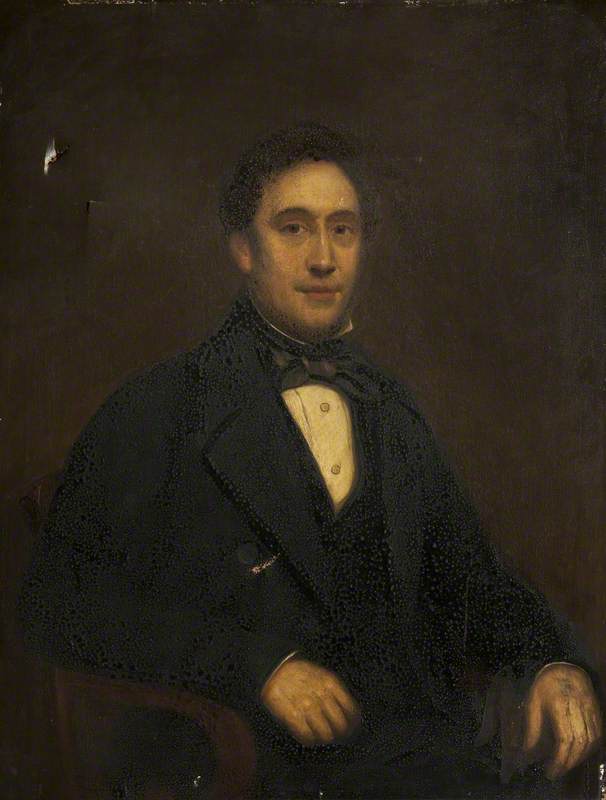
Za ljubitelje galerije, najpoznatije delo umetnika Philipp Hoyoll je Isaac Simpson (1860), čiji se original nalazi u muzeju Harris Museum - Art Gallery, Preston. Thomas Hart (1799–1859), JP (1859) i Stephen Simpson (1860) čine triju koju svako oko prepoznaje. Od 9 dela umetnika Philipp Hoyoll u našem katalogu, galerija u nastavku predstavlja 9 najpoznatijih dela, od kojih je svako originalno, sa navedenom godinom nastanka, muzejom i onim što ga čini jedinstvenim.



4 muzeja u kojima se nalazi najviše slika sa ove stranice.
| Muzej | Grad | Radovi umetnika Philipp Hoyoll | Slike iz ovog spiska |
|---|---|---|---|
 Harris Museum - Art Gallery |
Preston | 3 | Isaac Simpson, Stephen Simpson, Mary Simpson |
 Wigan Arts And Heritage Service |
Wigan | 1 | Portrait of an Unknown Man |
 Bolton Museum And Art Gallery |
Bolton | 1 | James Taylor Staton (1817–1875) |
 Blackburn Town Hall |
Blackburn | 1 | Thomas Thwaites |
Originalna dela umetnika Philipp Hoyoll na ovoj stranici datiraju u periodu od 3 godina, od 1859 do 1861: galerija prikazuje najpoznatija od svakog perioda.
Izaberite godinu da biste videli originalna dela.
Isaac Simpson (1860), Harris Museum - Art Gallery, Preston. Slede Thomas Hart (1799–1859), JP (1859) i Stephen Simpson (1860).
44 godina: Isaac Simpson datira iz 1860, a Philipp Hoyoll je rođen/a 1816.
Naš katalog sadrži 9 dela umetnika Philipp Hoyoll, datiranih od 1859 do 1861.
Većinom u Harris Museum - Art Gallery (Preston), Wigan Arts And Heritage Service (Wigan) i Bolton Museum And Art Gallery (Bolton). Tabela muzeja iznad sadrži njih sve.
U 1860: 4 od 9 dela na ovoj stranici nastalo je tada, od čega je Isaac Simpson.
Na ovoj stranici, najstarije delo je iz Thomas Hart (1799–1859), JP (1859), a najnovije iz James Taylor Staton (1817–1875) (1861).
Isaac Simpson, Stephen Simpson i Mary Simpson: Harris Museum - Art Gallery, Preston čuva 3 dela sa ove stranice.
In the grand, sweeping tapestry of nineteenth-century British art, few threads are as finely woven as those left by Philipp Hoyoll. A master of Victorian portraiture, Hoyoll possessed a rare, almost supernatural ability to bridge the gap between mere physical likeness and the profound psychological depth of his subjects. Born in 1816, his life unfolded during an era of immense transformation in England—a time when the rigid structures of the past were beginning to dance with the burgeoning complexities of a modernizing world. While much of his early life remains shrouded in the soft mists of history, his artistic presence is undeniably luminous, marked by a commitment to meticul and realism that captured the very essence of the British elite.
The foundation of Hoyoll’s brilliance can be traced back to his formative training under the legendary Thomas Hudson. To study under Hudson was to inherit the mantle of the "Grand Manner," a prestigious tradition that demanded clarity, restraint, and an idealized sense of beauty rooted in classical ideals. From this mentorship, Hoyoll absorbed more than just technical proficiency; he learned the art of storytelling through the gaze and the subtle positioning of a sitter. He understood that a portrait was not merely a record of a face, but a window into a character, a way to immortalize the inner life of the individual through the careful application of light and shadow.
Hoyoll’s work is characterized by an unwavering dedication to anatomical accuracy and a breathtaking command over subtle tonal gradations. When one observes his portraits, there is an immediate sense of intimacy, as if the viewer has been granted a private audience with history itself. His brushwork, though precise, never felt clinical; rather, it breathed life into the textures of silk, the weight of velvet, and the soft luminescence of skin. This technical prowess allowed him to navigate the complex social landscape of his time, securing prestigious commissions from some of the most influential figures of the Victorian age.
His portfolio serves as a gallery of the era's prominent personalities, reflecting the social hierarchy and the philanthropic spirit of the nineteenth century. Notable among his achievements are his depictions of:
Through these works, Hoyoll did more than paint faces; he documented the social fabric of an empire. His ability to balance the formal conventions of his era with a burgeoning interest in psychological realism allowed him to transcend the limitations of traditional portraiture. He captured the ennui, the pride, and the quiet strength of his subjects, ensuring that their legacies would endure long after the era of the Grand Manner had faded into memory.
As the nineteenth century progressed, the art world began to shift toward more experimental and impressionistic styles, yet the work of Philipp Hoyoll remained a steadfast pillar of classical excellence. His contribution to British portraiture lies in his ability to maintain the dignity of the subject while infusing the canvas with a palpable sense of humanity. He stood at the intersection of tradition and evolution, using the tools of the old masters to explore the complexities of a new age.
Though he passed away around 1875 or 1876, leaving behind a body of work that continues to fascinate historians and art enthusiasts alike, Hoyoll’s impact remains. His paintings are not merely relics of a bygone period; they are vibrant, breathing testimonies to the human condition. To study Hoyoll is to encounter the heart of Victorian England—a world of elegance, duty, and an enduring search for identity through the mirror of art.


