Portret Maxwell Gordon Lightfoot

10 najpoznatijih slika umetnika Maxwell Gordon Lightfoot, izbor iz galerije

Ažurirano: новембар 2026 · rangirano prema našem koeficijentu popularnosti (pretrage, posete i porudžbine za svako delo) · 10 dela Maxwell Gordon Lightfoot u našem katalogu

Ukratko

Od svih originala koje je Maxwell Gordon Lightfoot ostavio, najpoznatiji je Male Figure Seated (1909). Odmah za njima slede Male Figure Standing (1909) i Knapweed, Thistles and Other Flowers in a Vase (1907). Naš katalog sadrži 10 dela umetnika Maxwell Gordon Lightfoot; galerija je čuvala 10 dela koja svet najviše admira, od kojih je svako prikazano sa svojim datumom, muzejom i pričom.

1886 – 1911 Najviše dela: Walker Art Gallery

Top 10 slika umetnika Maxwell Gordon Lightfoot: izbor galerije

1
Male Figure Seated (1909) čiji je autor Maxwell Gordon Lightfoot

Male Figure Seated

1909 · Oil

A naked man sits upon a wooden chair, positioned in the center of the frame. He is oriented toward a large painting that occupies the majority of the wall behind him. The man's gaze is directed at the canvas, creating a sense of quiet observation within an indoor setting, likely a studio or an art gallery. The scene is defined by a stillness that suggests a moment of solitary contemplation.…

2
Male Figure Standing (1909) čiji je autor Maxwell Gordon Lightfoot

Male Figure Standing

1909 · Painting

The room holds its breath as the figure remains poised in the center of the frame. A nude man stands with a quiet, unyielding confidence, his muscular physique rendered with a precision that speaks of long hours spent observing the subtle shifts of light across skin. He is positioned before a heavy curtain, a backdrop that suggests the private, focused atmosphere of an art museum or a dedicated studio. There…

9
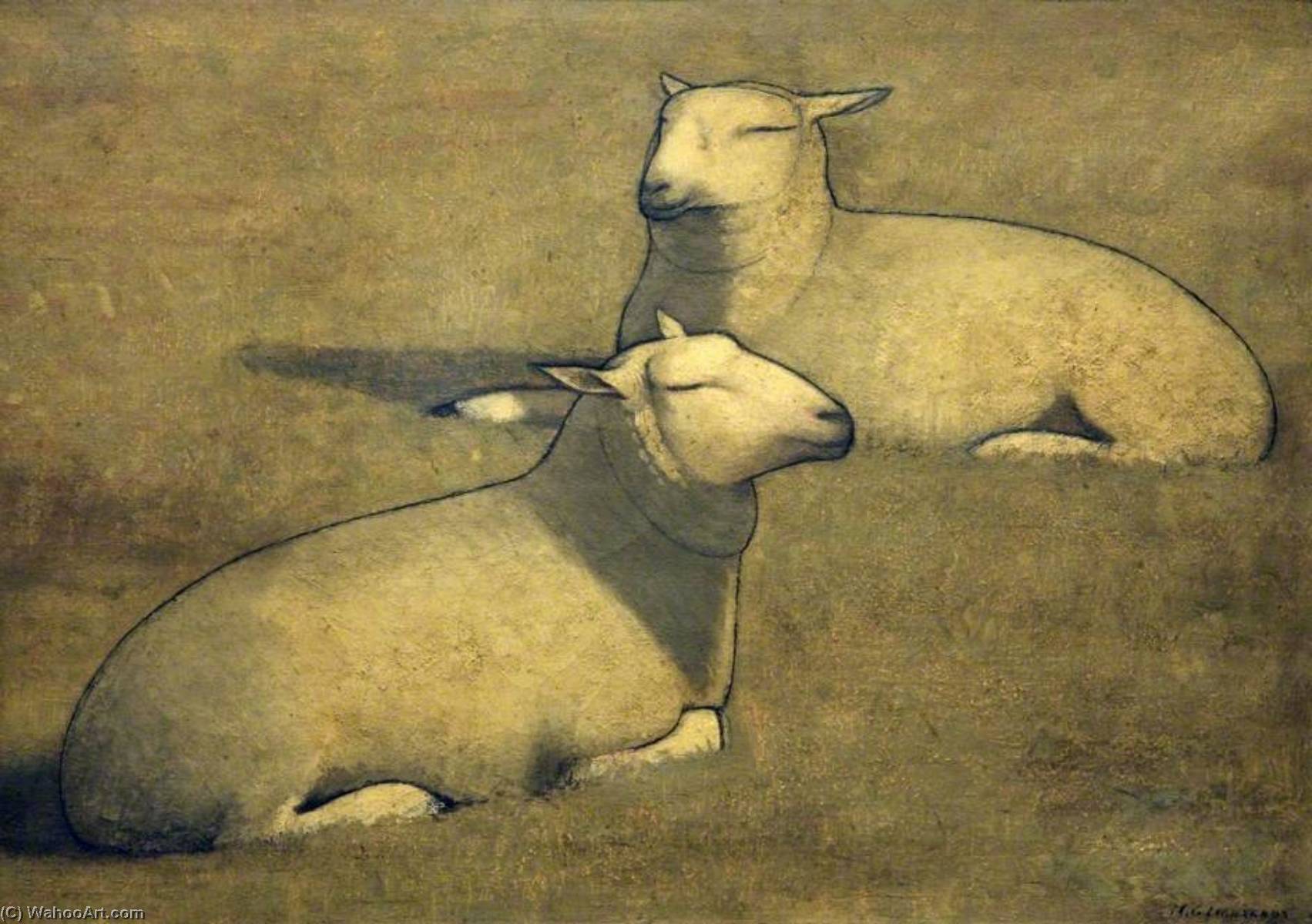
Study of Two Sheep (1910) čiji je autor Maxwell Gordon Lightfoot

Study of Two Sheep

1910 · Oil On Canvas · Walker Art Gallery, Liverpud

The painting "Study of Two Sheep" by Maxwell Gordon Lightfoot is a captivating representation of rural life, showcasing the beauty and simplicity of two sheep in a grassy field. Created in 1910, this oil on canvas piece measures 51 x 64 cm and is currently housed at the Walker Art Gallery in Liverpool, United Kingdom. A Peaceful Scene The scene depicted in "Study of Two Sheep" is one of peace…

10
View of Conway from Above Gyffin (1910) čiji je autor Maxwell Gordon Lightfoot

View of Conway from Above Gyffin

1910 · Walker Art Gallery, Liverpud

The Walker Art Gallery in Liverpool, United Kingdom, is home to a stunning collection of fine and decorative arts, including the captivating painting "View of Conway from Above Gyffin" by Maxwell Gordon Lightfoot. Created in 1910, this oil on canvas piece measures 57 x 76 cm and showcases the artist's exceptional skill in capturing the essence of rural life. A Serene Landscape The painting depicts a picturesque scene of a…

Motivi koji su privlačili pažnju Maxwell Gordon Lightfoot

Četiri teme koje se najčešće ponavljaju u ovim originalima, svaka sa svojim vrhunskim primerom.

Muzeji u kojima se čuvaju originalna dela umetnika Maxwell Gordon Lightfoot

1 muzeja u kojima se nalazi najviše slika sa ove stranice.

Muzeji Grad Radovi umetnika Maxwell Gordon Lightfoot Slike iz ovog spiska
Walker Art Gallery, LiverpudWalker Art Gallery Liverpud 6 Knapweed, Thistles and Other Flowers in a Vase, Cwmyoy Brest from Llanthony Valley, Flowers in a Blue and White Vase

Maxwell Gordon Lightfoot iz godine u godinu: originalna dela koja definišu svaku od njih

Radovi Maxwell Gordon Lightfoot iz ovog perioda u ovom odabiru obuhvataju samo 4 godina, od 1907 do 1910: kratka karijera, prikazana ovde godinu po godinu.

Radovi po godinama

Izaberite godinu da biste videli originalna dela.

Pitanja kolekcionara o slikama umetnika Maxwell Gordon Lightfoot

Po kojem delu je Maxwell Gordon Lightfoot najpoznatiji/a?Otkrij odgovor

Male Figure Seated (1909). Slede Male Figure Standing (1909) i Knapweed, Thistles and Other Flowers in a Vase (1907).

Koliko je godina imao/la Maxwell Gordon Lightfoot kada je nastalo delo Male Figure Seated?Otkrij odgovor

23 godina: Male Figure Seated datira iz 1909, a Maxwell Gordon Lightfoot je rođen/a 1886.

Koja su deset najpoznatijih slika umetnika Maxwell Gordon Lightfoot?Otkrij odgovor

Male Figure Seated, Male Figure Standing, Knapweed, Thistles and Other Flowers in a Vase, Cwmyoy Brest from Llanthony Valley, Flowers in a Blue and White Vase, Landscape, Abergavenny, Portrait of a Bearded Man, The Interior of a Barn, with Two Labourers Resting and an Old Man about to Embrace a Child Accompanied by a Woman, Study of Two Sheep i View of Conway from Above Gyffin. Gornji rang pokazuje godinu i muzej za svako od njih.

Koliko je slika ostavio Maxwell Gordon Lightfoot?Otkrij odgovor

Naš katalog sadrži 10 dela umetnika Maxwell Gordon Lightfoot, datiranih od 1907 do 1910.

U kojim muzejima se nalaze remek-dela umetnika Maxwell Gordon Lightfoot?Otkrij odgovor

Većinom u Walker Art Gallery (Liverpud). Tabela muzeja iznad sadrži njih sve.

U kojim godinama je Maxwell Gordon Lightfoot naslikao svoja najpoznatija dela?Otkrij odgovor

U 1909: 4 od 10 dela na ovoj stranici nastalo je tada, od čega je Male Figure Seated.

Koja su prva i poslednja čuvena originalna dela umetnika Maxwell Gordon Lightfoot?Otkrij odgovor

Na ovoj stranici, najstarije delo je iz Knapweed, Thistles and Other Flowers in a Vase (1907), a najnovije iz Cwmyoy Brest from Llanthony Valley (1910).

Čija se dela umetnika Maxwell Gordon Lightfoot nalaze u Walker Art Gallery?Otkrij odgovor

Knapweed, Thistles and Other Flowers in a Vase, Cwmyoy Brest from Llanthony Valley i Flowers in a Blue and White Vase: Walker Art Gallery, Liverpud čuva 6 dela sa ove stranice.

Maxwell Gordon Lightfoot: život i delo

A Fleeting Brilliance: The Tragic Artistry of Maxwell Gordon Lightfoot

The history of British art is often written in the long, enduring strokes of masters who lived to see their legacies cemented by time. Yet, there exists a more poignant, haunting chapter found in the brief, luminous career of Maxwell Gordon Lightfoot. Born on July 19, 1886, in the Granby Street district of Liverpool, Lightfoot was a figure of immense promise whose life was tragically extinguished at the age of twenty-five. To look upon his work is to witness a soul caught in the transition between the meticulous traditions of the nineteenth century and the burgeoning, experimental spirit of early twentieth-century modernism. His story is not merely one of technical skill, but of a profound, atmospheric sensitivity that captured the ephemeral beauty of the English landscape and the quiet dignity of the human form.

Lightfoot’s artistic lineage was shaped by both familial circumstance and rigorous academic discipline. The unusual name he bore—a tribute from his mother to a father lost at sea—served as a constant, subtle reminder of the fragility of life, perhaps an element that would later manifest in the melancholic undertones of his compositions. His formal education began at the Chester Art School in 1901, providing him with a foundational mastery of draftsmanship. This was further refined during his time in Liverpool, where he attended evening classes at the Sandon Terrace Studios under the guidance of Gerald Chowne and J. Herbert McNair. These mentors, steeped in the delicate traditions of flower painting and the innovative aesthetics of the Glasgow Four, instilled in him an appreciation for subtle color palettes and structural harmony.

From Chromolithography to the Avant-Garde

Before he was recognized as a rising star of the London art scene, Lightfoot honed his observational precision through a practical apprenticeship. Working as a chromolithographer for Turner and Dunnett, a firm specializing in seed catalogues, he learned the intricate dance of color layering and design. This period of commercial printmaking was far from a detour; rather, it provided him with an invaluable understanding of tonal depth and the graphic power of sepia and earth tones—elements that would become hallmarks of his later paintings. The precision required for botanical illustration undoubtedly informed the meticulous detail found in his more complex figure studies.

The true metamorphosis of his style occurred when he moved to London to study at the prestigious Slade School of Fine Art between 1907 and 1909. At the Slade, Lightfoot emerged as a formidable talent, earning accolades in figure painting, head painting, and composition from the cast. It was during this era that he found himself orbiting the Camden Town Group, a collective known for its gritty, Impressionistic approach to urban and domestic life. While his association with the group was relatively brief, his presence alongside contemporaries such as C.R.W. Nevinson and Mark Gertler placed him at the very heart of Britain's avant-garde movement. His work began to bridge the gap between the pastoral and the modern, utilizing muted browns, deep greens, and evocative sepia tones to create scenes that felt both timeless and intensely atmospheric.

A Legacy Written in Shadows and Light

Despite the immense talent that led critics to predict a "most distinguished career in the highest rank of painting," Lightfoot’s journey ended abruptly with his death in September 1911. The loss of such a vibrant talent left a void in the British art world, leaving behind a body of work that serves as a poignant "what if" in art history. His paintings, characterized by their soft, atmospheric light and soulful depictions of figures, remain a testament to a mastery that was never fully realized but was nonetheless deeply felt.

The historical significance of Lightfoot lies in his ability to capture the quiet, often overlooked moments of existence through a lens of refined Impressionism. His contributions can be summarized by several key artistic pillars:

  • Atmospheric Pastoralism: A unique ability to render the English landscape not just as scenery, but as an emotional space filled with mist, shadow, and light.
  • Technical Versatility: The seamless integration of his printmaking background into fine art, resulting in highly textured and tonally rich compositions.
  • Humanity in Form: A profound sensitivity in his figure studies, where the subjects possess a quiet, introspective dignity.
  • Modernist Connection: His role as a bridge between traditional academic training and the experimental energy of the Camden Town Group.

Today, the works of Maxwell Gordon Lightfoot continue to resonate with those drawn to the beauty of the ephemeral. He remains a symbol of the fleeting nature of genius, an artist whose brief time in the sun left behind shadows of immense beauty and enduring grace.