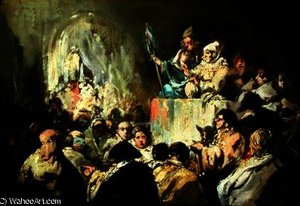
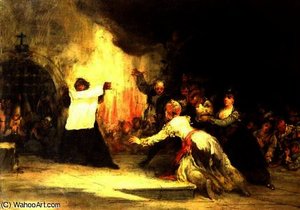
Portret Lukas Velaskez

Slike umetnika Lukas Velaskez: Najpoznatijih 46 kroz oči galerije

Ažurirano: новембар 2026 · rangirano prema našem koeficijentu popularnosti (pretrage, posete i porudžbine za svako delo) · 47 dela Lukas Velaskez u našem katalogu

Ukratko

Iz perspektive galerije, najpoznatije delo umetnika Lukas Velaskez je This Is What Is Called Reading (1850). Mariano Goya (1850) i Allegorical caprice. The Avarice (1852) čine triju koju svako oko prepoznaje. Od 47 dela umetnika Lukas Velaskez u našem katalogu, galerija u nastavku predstavlja 46 najpoznatijih dela, od kojih je svako originalno, sa navedenom godinom nastanka, muzejom i onim što ga čini jedinstvenim.

1817 – 1870, Madrid Romanticism Najviše dela: Museo Carmen Thyssen Málaga

Top 10 slika umetnika Lukas Velaskez u galeriji

1
This Is What Is Called Reading (1850) čiji je Lukas Velaskez

This Is What Is Called Reading

1850 · Oil On Panel

The room feels heavy, thick with the scent of old paper and the dim warmth of an interior space. A central figure sits, hunched slightly over a book, lost in a world of ink and thought. The light catches the pale fabric of their garment, pulling them out of the surrounding gloom, while the shadows press in from the edges of the frame. Nearby, two other figures move through the…

2
Mariano Goya (1850) čiji je Lukas Velaskez

Mariano Goya

1850 · Oil · Goya Museum, Kastres

The portrait captures a moment of dignity and quiet introspection. There is no movement here, only the steady presence of a figure caught in a moment of repose. The darkness surrounding him does not feel empty; it feels heavy, pressing against the light that defines his features. The work remains a study of light meeting shadow on a human face. A single, steady look.

3
Allegorical caprice. The Avarice (1852) čiji je Lukas Velaskez

Allegorical caprice. The Avarice

1852 · Oil On Canvas · Museo Lázaro Galdiano, Madrid

A single man sits at a table, anchored in a sea of murky ochre and deep brown. Around him, the air thickens with the presence of the unseen. Grotesque figures and spectral crowds swirl in a chaotic dance, their forms blurring into the heavy, atmospheric shadows. The light does not fall from a window; it breathes from within the scene, flickering from candles on the table and casting long, jagged…

4
The Procession (1850) čiji je Lukas Velaskez

The Procession

1850 · Oil On Canvas · Walters Art Museum, Baltimore

The air feels heavy and thick with the scent of old stone and incense as a dense crowd surges through a narrow European street. A monochrome tide of humanity moves from the left, pushing toward the foreground in a chaotic, rhythmic swell. There is a palpable sense of urgency in the way the figures press against one another, their forms blurring into a singular, moving mass. In the lower-left corner,…

5
The Communion (1855) čiji je Lukas Velaskez

The Communion

1855 · Oil · Muzej lepih umetnosti u Bilbauu, Bilbao

A single light source pierces a cavernous gloom, catching the heavy folds of cream-colored fabric. In this dim space, a central figure stands, perhaps a priest, performing a sacred rite. The air feels thick with the scent of old stone and beeswax. Around him, a group of devotees or monks gathers in the shadows, their forms partially swallowed by the deep blackness of the background. The scene is one of…

6
Night Round or the Eve of the Three Kings (1857) čiji je Lukas Velaskez

Night Round or the Eve of the Three Kings

1857 · Oil On Canvas

Night Round or the Eve of the Three Kings is an oil on canvas painted by Lucas Velázquez. Created about 1857, the work captures a nocturnal procession. The scene depicts a festive gathering, perhaps a religious or folk celebration, moving through the dark. The title points toward the Eve of the Three Kings.

7
The Rosary of Dawn (1860) čiji je Lukas Velaskez

The Rosary of Dawn

1860 · Oil On Canvas · Museo Carmen Thyssen Málaga, Malaga

The air is thick with the scent of damp earth and the heavy tension of a brewing storm. In the dim, grey light of a Madrid dawn, a violent struggle erupts on the outskirts of town. This is not a quiet moment of prayer, but a chaotic clash of brotherhoods. Two religious processions, meant to honor the Virgin, find themselves locked in a desperate fight for the right of way.…

8
Inside Church (1860) čiji je Lukas Velaskez

Inside Church

1860 · Oil · Nacionalni muzej lepih umetnosti, Buenos Aires

The oil painting depicts a crowded interior, likely a cathedral or a large church, defined by a heavy use of chiaroscuro. In the foreground, a group of figures occupies the lower half of the composition. A woman wearing a light-colored skirt appears to be in motion, her posture suggesting a dance or an energetic movement. The surrounding crowd is rendered with loose, gestural brushstrokes that prioritize the sense of rapid…

9
A Procession (1859) čiji je Lukas Velaskez

A Procession

1859 · Oil · Hispanic Society Museum - Library, New York

In this 1859 oil painting, we find ourselves positioned low, almost as if we are walking alongside the crowd. A religious procession moves through a landscape that feels heavy, dark, and restless. The composition is crowded, pulling the viewer into the thick of the throng. There is a palpable sense of motion here, driven by energetic, gestural brushstrokes that refuse to settle. On the left, a warm, glowing light—perhaps the…

10
Manolito Guasquez and the Fool of Coria (1865) čiji je Lukas Velaskez

Manolito Guasquez and the Fool of Coria

1865 · Oil · Musée Bonnat-Helleu, Bajan

In Manolito Guasquez and the Fool of Coria, Lucas Velázquez presents a tightly cropped group of three figures. The composition focuses on an intimate, somber arrangement where the subjects occupy the majority of the frame. A prominent figure dominates the foreground, wearing a large, dark, pointed hat and an ornate, light-colored collar. This central subject maintains a direct gaze toward the viewer, establishing an immediate connection. Behind this primary figure,…

Slike umetnika Lukas Velaskez, rangirane od 11 do 46

11Maja with Lapdog (1865) čiji je Lukas VelaskezMaja with Lapdog1865 · Museo Carmen Thyssen Málaga 12La Fusillade (1869) čiji je Lukas VelaskezLa Fusillade1869 · Goya Museum 13Carnival Scene (1864) čiji je Lukas VelaskezCarnival Scene1864 · Hispanic Society Museum - Library 14Goring at a Village Bullfight (1855) čiji je Lukas VelaskezGoring at a Village Bullfight1855 · Museo Carmen Thyssen Málaga 15Bullfight in a village (1850) čiji je Lukas VelaskezBullfight in a village1850 · Nacionalni muzej lepih umetnosti 16The Defence of Saragossa (1850) čiji je Lukas VelaskezThe Defence of Saragossa1850 · Wallraf-Richartz-Museum 17The Ambush (1860) čiji je Lukas VelaskezThe Ambush1860 · Birmingham Museum and Art Gallery 18Landscape with Figures (1858) čiji je Lukas VelaskezLandscape with Figures1858 · Hispanic Society Museum - Library 19Procession Attacked by a Bull (1860) čiji je Lukas VelaskezProcession Attacked by a Bull1860 · Hispanic Society Museum - Library 20Victims of War (1864) čiji je Lukas VelaskezVictims of War1864 · Hispanic Society Museum - Library 21The Bullfight (1864) čiji je Lukas VelaskezThe Bullfight1864 · Hispanic Society Museum - Library 22Landscape with Aqueduct (1874) čiji je Lukas VelaskezLandscape with Aqueduct1874 · Museo Carmen Thyssen Málaga 23Martincho's Other Folly in the Bull Ring at Saragossa čiji je Lukas VelaskezMartincho's Other Folly in the Bull Ring at Saragossa 24The Sermon čiji je Lukas VelaskezThe SermonUpton House 25L'Extrême onction La Extremaunción čiji je Lukas VelaskezL'Extrême onction La Extremaunción 26Condemned by the Inquisition čiji je Lukas VelaskezCondemned by the InquisitionFundación Antonio de Nebrija 27La Fusillade El Fusilamiento čiji je Lukas VelaskezLa Fusillade El Fusilamiento 28Arab Caravans Arriving at the Coast čiji je Lukas VelaskezArab Caravans Arriving at the CoastMuseo Carmen Thyssen Málaga 29A Venice Canal (1868) čiji je Lukas VelaskezA Venice Canal1868 30La Romeria de San Isidro à San Antonio de la Florida čiji je Lukas VelaskezLa Romeria de San Isidro à San Antonio de la FloridaRhode Island School of Design Museum of Art 31Cave Of Bandits čiji je Lukas VelaskezCave Of Bandits 32The Siege Of Saragossa čiji je Lukas VelaskezThe Siege Of Saragossa 33The Inquisition čiji je Lukas VelaskezThe Inquisition 34Inquisition Scene čiji je Lukas VelaskezInquisition Scene 35Women On A Balcony čiji je Lukas VelaskezWomen On A BalconyMusée Hyacinthe Rigaud 36The Garrotte čiji je Lukas VelaskezThe GarrottePalais des Beaux-Arts de Lille 37Addressing a Masked Crowd čiji je Lukas VelaskezAddressing a Masked Crowd 38Las presidentas čiji je Lukas VelaskezLas presidentas 39Masquerade čiji je Lukas VelaskezMasquerade 40A Scene of Exorcism čiji je Lukas VelaskezA Scene of Exorcism 41Course de taureaux Corrida de toros čiji je Lukas VelaskezCourse de taureaux Corrida de toros 42Vue d'un estuaire avec des pêcheurs et un château imaginaire čiji je Lukas VelaskezVue d'un estuaire avec des pêcheurs et un château imaginaire 43La Diligence sous l'orage La Diligencia bajo la tormenta čiji je Lukas VelaskezLa Diligence sous l'orage La Diligencia bajo la tormentaGoya Museum 44Arriving at the Theatre on the Night of a\nMasked Ball čiji je Lukas VelaskezArriving at the Theatre on the Night of a\nMasked BallMuseo Carmen Thyssen Málaga 45Bullfight and greasy pole (1860) čiji je Lukas VelaskezBullfight and greasy pole1860 · Nacionalni muzej likovnih umetnosti Kube 46The bullfight čiji je Lukas VelaskezThe bullfightNacionalni muzej likovnih umetnosti Kube

Motivi koji su privlačili pažnju Lukas Velaskez

Četiri teme koje se najčešće ponavljaju u ovim originalima, svaka sa svojim vrhunskim primerom.

Muzeji u kojima se čuvaju originalna dela umetnika Lukas Velaskez

8 muzeja u kojima se nalazi najviše slika sa ove stranice.

Muzej Grad Radovi umetnika Lukas Velaskez Slike iz ovog spiska
Museo Carmen Thyssen Málaga, MalagaMuseo Carmen Thyssen Málaga Malaga 6 The Rosary of Dawn, Maja with Lapdog, Goring at a Village Bullfight
Hispanic Society Museum - Library, New YorkHispanic Society Museum - Library New York 6 A Procession, Carnival Scene, Landscape with Figures
Goya Museum, KastresGoya Museum Kastres 3 Mariano Goya, La Fusillade, La Diligence sous l'orage La Diligencia bajo la tormenta
Nacionalni muzej lepih umetnosti, Buenos AiresNacionalni muzej lepih umetnosti Buenos Aires 2 Inside Church, Bullfight in a village
Nacionalni muzej likovnih umetnosti Kube, HavanaNacionalni muzej likovnih umetnosti Kube Havana 2 Bullfight and greasy pole, The bullfight
Museo Lázaro Galdiano, MadridMuseo Lázaro Galdiano Madrid 1 Allegorical caprice. The Avarice
Walters Art Museum, BaltimoreWalters Art Museum Baltimore 1 The Procession
Muzej lepih umetnosti u Bilbauu, BilbaoMuzej lepih umetnosti u Bilbauu Bilbao 1 The Communion

Lukas Velaskez, najprepoznatljivija dela svake godine

20 godina umetnosti umetnika Lukas Velaskez, od 1850 do 1869: galerija ih prati godinu za godinom, kroz njihova najpoznatija originalna dela.

Radovi po godinama

Izaberite godinu da biste videli originalna dela.

Slike umetnika Lukas Velaskez: odgovori galerije

Koja je najpoznatija slika umetnika Lukas Velaskez?Otkrij odgovor

This Is What Is Called Reading (1850). Slede Mariano Goya (1850) i Allegorical caprice. The Avarice (1852).

Koliko je godina imao/la Lukas Velaskez kada je dovršio/la This Is What Is Called Reading?Otkrij odgovor

33 godina: This Is What Is Called Reading datira iz 1850, a Lukas Velaskez je rođen/a 1817.

Koja su najbolja 10 dela umetnika Lukas Velaskez?Otkrij odgovor

This Is What Is Called Reading, Mariano Goya, Allegorical caprice. The Avarice, The Procession, The Communion, Night Round or the Eve of the Three Kings, The Rosary of Dawn, Inside Church, A Procession i Manolito Guasquez and the Fool of Coria. Gornji rang pokazuje godinu i muzej za svako od njih.

Koliko je dela stvorio/la Lukas Velaskez?Otkrij odgovor

Naš katalog sadrži 47 dela umetnika Lukas Velaskez, datiranih od 1850 do 1869.

Gde se nalaze najpoznatiji originali umetnika Lukas Velaskez?Otkrij odgovor

Većinom u Museo Carmen Thyssen Málaga (Malaga), Hispanic Society Museum - Library (New York) i Goya Museum (Kastres). Tabela muzeja iznad sadrži njih sve.

Kada je Lukas Velaskez stvorio svoje najpoznatije slike?Otkrij odgovor

U 1850: 5 od 46 dela na ovoj stranici nastalo je tada, od čega je This Is What Is Called Reading.

Koja su najranija i najkasnija poznata dela umetnika Lukas Velaskez?Otkrij odgovor

Na ovoj stranici, najstarije delo je iz This Is What Is Called Reading (1850), a najnovije iz La Fusillade (1869).

Kojim se motivima Lukas Velaskez najčešće bavio?Otkrij odgovor

People (13), Figures (8) i Crowd (5), kroz svih 46 dela na ovoj stranici.

U kojoj je tehnici najviše radio/la Lukas Velaskez?Otkrij odgovor

Oil On Canvas, za 9 od 46 dela na ovoj stranici.

Sa kojim umetničkim pravcem je Lukas Velaskez povezan/a?Otkrij odgovor

Romanticism, sudeći po originalima na ovoj stranici.

Koje originale umetnika Lukas Velaskez poseduje Museo Carmen Thyssen Málaga?Otkrij odgovor

The Rosary of Dawn, Maja with Lapdog i Goring at a Village Bullfight: Museo Carmen Thyssen Málaga, Malaga čuva 6 dela sa ove stranice.

Lukas Velaskez: umetnik

Eugenio Lucas Velázquez: A Romantic Visionary of Spanish Life

Eugenio Lucas Velázquez, a name often intertwined with the enigmatic figure of Eugenio Lucas Padilla, remains a captivating and somewhat elusive figure in 19th-century Spanish art. Born in Madrid in 1817 to a middle-class family initially involved in cabinetmaking, his artistic journey began not through formal academic training but through an intense, almost obsessive study of the masterpieces housed within the Museo del Prado. This early immersion in the works of Goya and Velázquez profoundly shaped his aesthetic sensibilities, laying the foundation for a distinctive style characterized by vibrant color palettes, dynamic brushwork, and a deep engagement with the realities of everyday Spanish life – a genre he masterfully captured under the banner of *costumbrista* art.

Lucas’s artistic development was marked by a deliberate rejection of the rigid conventions of the Real Academia de Bellas Artes de San Fernando. While he briefly attended, he quickly abandoned the prescribed Classicism, preferring instead to forge his own path inspired by Goya's expressive spirit and the raw emotion evident in his depictions of Spanish society. This decision led him to meticulously copy paintings from the Prado for years, a practice that, while initially viewed as unorthodox, ultimately honed his technical skills and deepened his understanding of composition and technique.

The Influence of Goya and Parisian Modernity

Goya’s profound impact on Lucas Velázquez is undeniable. The artist absorbed Goya's penchant for capturing the dramatic intensity of human emotion, his masterful use of light and shadow, and his unflinching portrayal of both the sublime and the grotesque. However, Lucas didn’t simply imitate; he channeled Goya’s spirit into a distinctly Romantic vision. Furthermore, a pivotal trip to Paris in 1852 proved transformative. Exposed to the burgeoning artistic currents of the time – particularly the influence of Eugène Delacroix – Lucas embraced looser brushwork and a heightened sense of drama, incorporating elements of French Romanticism into his own style.

This Parisian sojourn wasn’t merely an aesthetic encounter; it represented a crucial shift in perspective. Lucas began to depict scenes from Spanish life with a greater emphasis on social commentary and the struggles of ordinary people. He moved beyond simple genre paintings, exploring themes of poverty, rural labor, and the complexities of human relationships – subjects that resonated deeply with the Romantic sensibility.

A Court Painter and Patronage

Despite his independent spirit, Lucas Velázquez’s career was inextricably linked to patronage. Following a successful exhibition in 1850, he secured commissions from wealthy patrons, including the influential Marqués de Salamanca, who famously had one of Goya's unsettling Black Paintings removed from his palace and installed within Lucas’s collection. This association with the upper echelons of Spanish society afforded him financial stability and access to a wider audience, but it also shaped the subject matter of many of his works – often depicting scenes of aristocratic leisure and social gatherings.

Queen Isabel II recognized Lucas's talent, bestowing upon him the title of Honorary Court Painter and elevating him to the Order of Charles III. This honor solidified his position within the artistic establishment and further enhanced his reputation as a leading figure in Spanish Romanticism. His paintings frequently depicted scenes of courtly life, offering glimpses into the opulent world of the Spanish monarchy.

Themes and Style: Costumbrismo and Fantastic Elements

Lucas Velázquez’s art is primarily defined by *costumbrista* painting – a genre that sought to document and celebrate the customs, traditions, and everyday life of Spain. However, his work transcends mere documentation; he imbued these scenes with a potent emotional charge, often incorporating fantastical elements and dreamlike imagery. His paintings are not simply representations of reality but rather evocative narratives that explore the complexities of human experience.

Lucas’s distinctive style is characterized by bold color palettes, dynamic brushwork, and an expressive use of light and shadow. He frequently employed a technique known as *alla prima*, working directly onto the canvas without extensive underpainting, resulting in paintings with a sense of immediacy and spontaneity. His compositions are often asymmetrical and crowded, reflecting the bustling energy of Spanish life.

Legacy and Recognition

Despite the challenges posed by his relatively small body of signed works – a factor that has complicated efforts to fully attribute his oeuvre – Eugenio Lucas Velázquez remains a significant figure in Spanish Romantic art. His paintings offer a compelling glimpse into the social, cultural, and emotional landscape of 19th-century Spain. His influence can be seen in the work of subsequent generations of Spanish artists, and his evocative depictions of everyday life continue to resonate with viewers today.

Lucas’s legacy is further cemented by his son, Eugenio Lucas Villaamil, who also pursued a career as an artist, carrying on the family tradition of capturing the spirit of Spain through vibrant color and expressive brushwork. Together, father and son contributed significantly to the development of Spanish Romantic painting, leaving behind a rich artistic heritage that continues to be studied and appreciated.